
home → TEMPLATES → CALL SHEETS
Actor Call Sheet Template
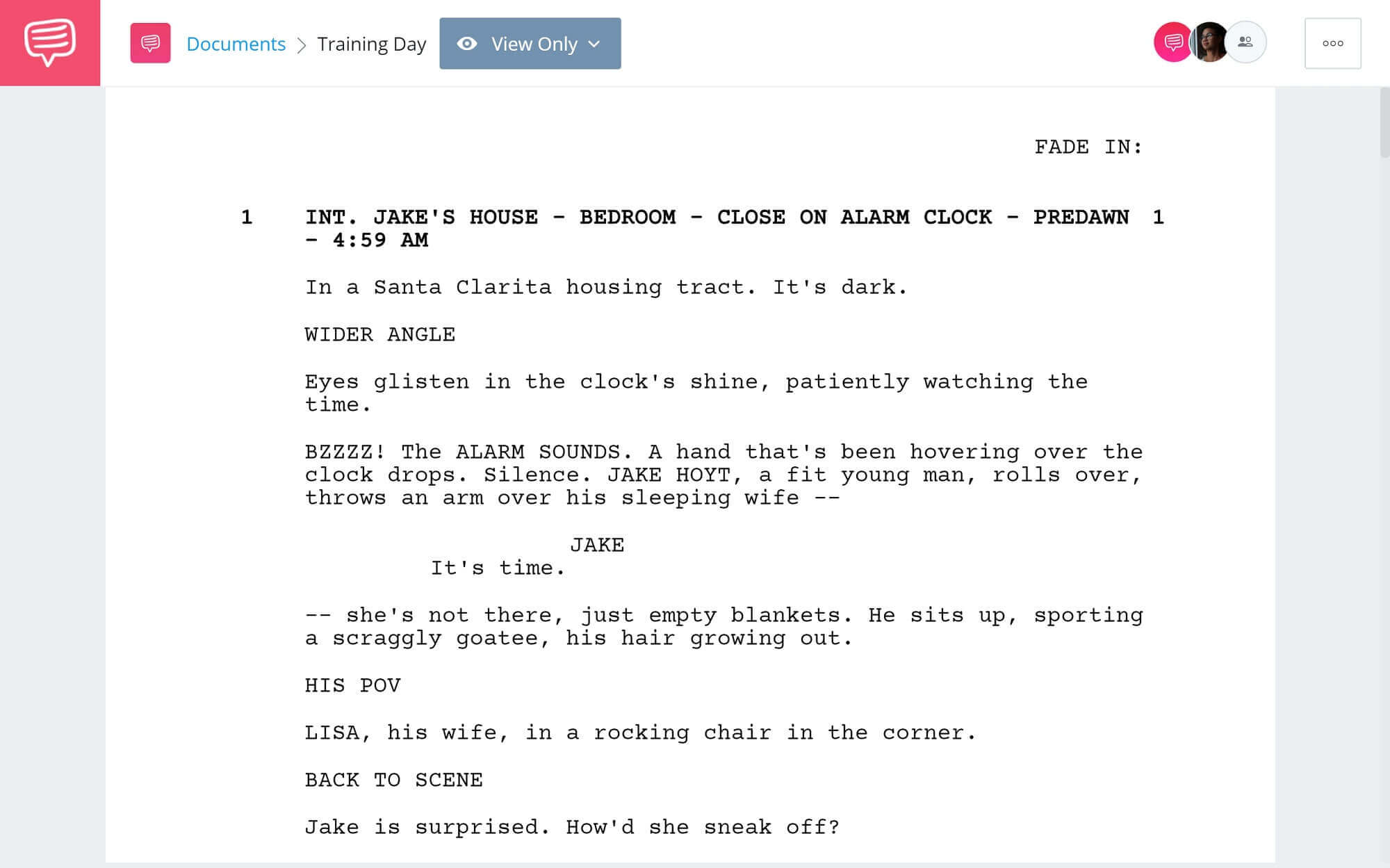
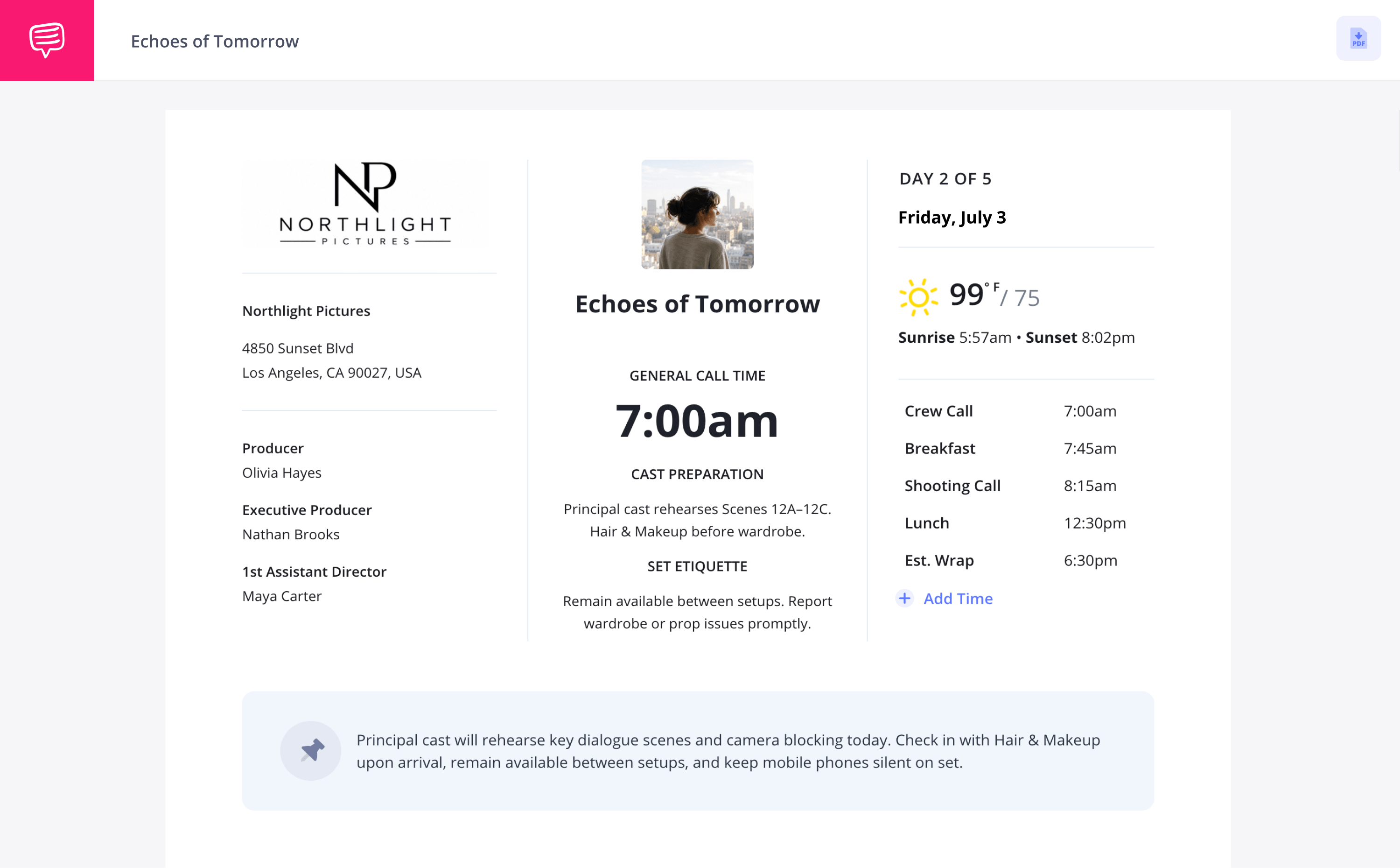
Actor Call Sheet Template
The cast list is one of the most important aspects of any production schedule, which is why an actor call sheet template can help you properly format this section of your document. But understanding how a good cast list is formatted also means understanding how the rest of a production call sheet is formatted as well. So, let’s jump into the most essential steps to creating both a call sheet for actors and a call sheet for every other angle of a production day.
We’ll use StudioBinder’s call sheet software to showcase our examples, so follow along with us or with any kind of call sheet you prefer!
1. Begin with header details
Whether it’s your lead actors, your crew, or your extras, everyone needs to know the general shooting call time and date, so let’s add that information to your actor call sheet template first. As soon as you start a new project, you’ll be prompted to enter these details in the pop-up:
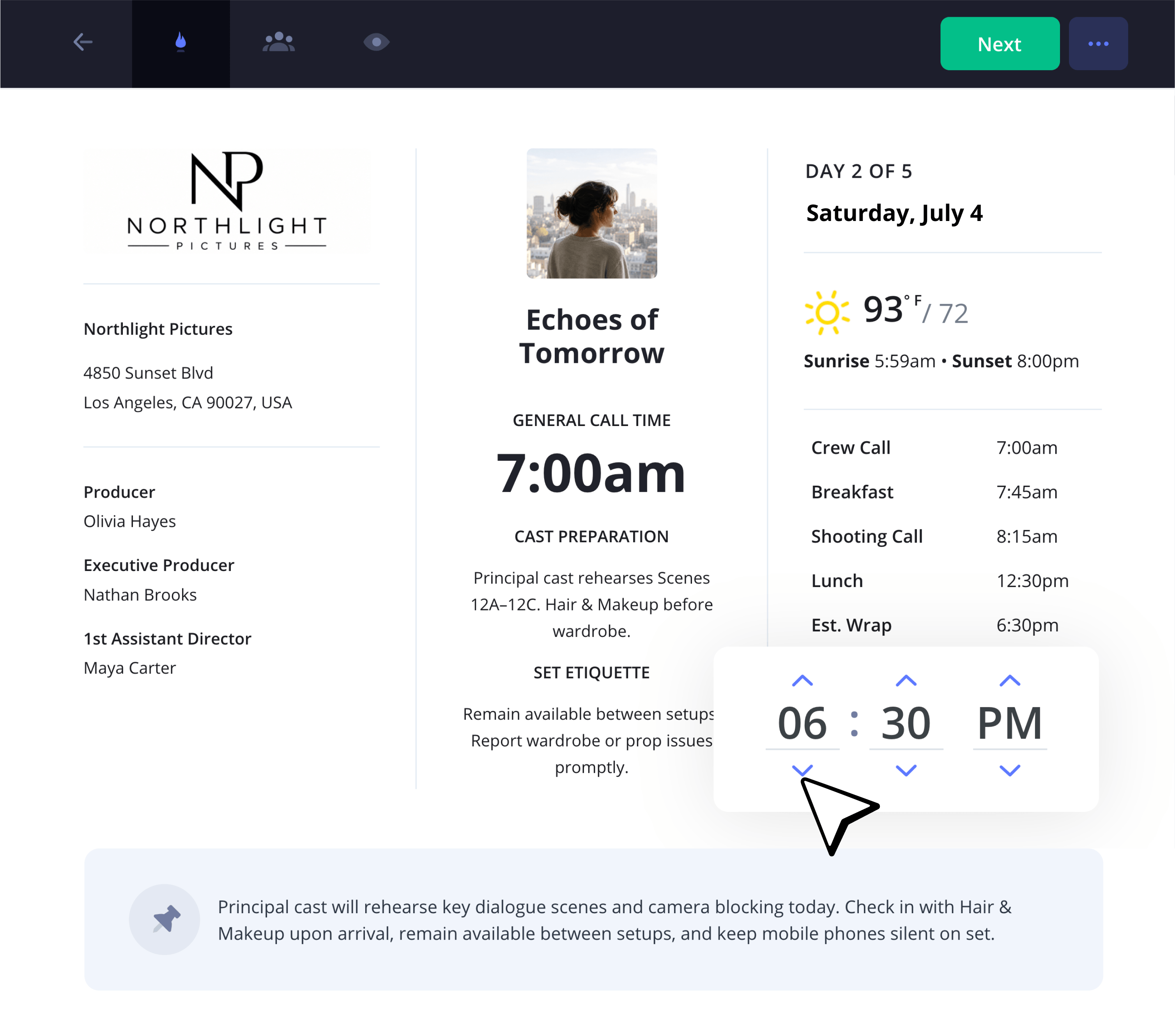
Now that your actor call sheet template has the date and time front and center, let’s get all the rest of the important details in the header. For any film or tv call sheet, this typically includes the executive producer, the 1st AD, the studio address, and of course, the project title.
2. Add shooting locations
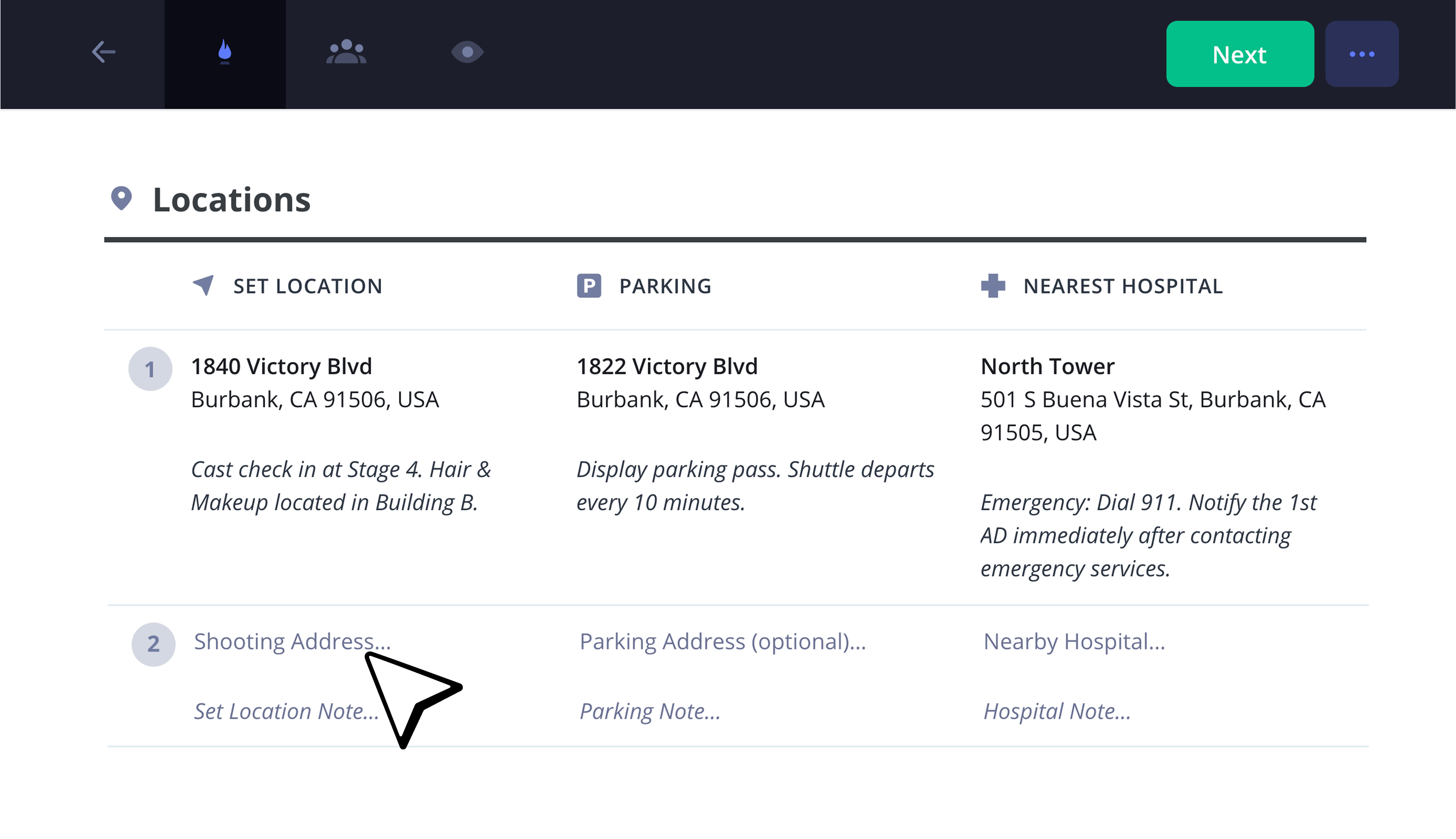
Film location will be some of the first information your actors and crew look for, so this section should go right below the header on your actors call sheet.
Your location grid should display the address of your sets, the address for any nearby crew parking lots, and the address of the nearest hospital to each set.
Make sure you also check with the hospital to make sure they have a 24/7 emergency room. This is especially essential for long shoot days expected to go into late hours (and for stunt actors too!).
3. Create a shooting schedule
Next you’ll want to display the full shooting schedule for the day on your actor call sheet template. When you add a new scene column, make sure the cast ID feature is toggled on, then list each of the actors’ ID numbers in that field.
You’ll establish each actor’s ID number next in the cast grid, so you may want to come back to this part.
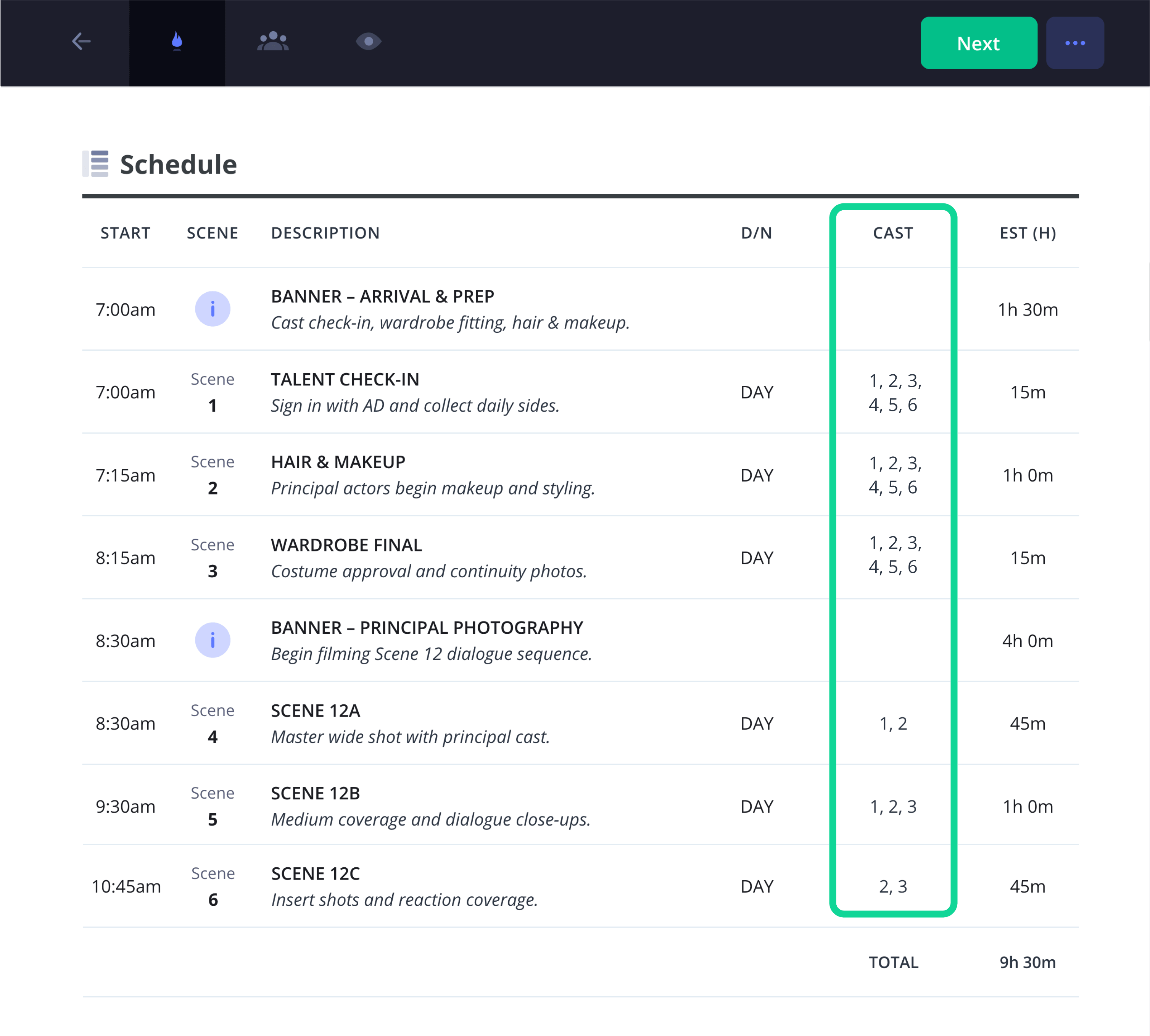
Stage location, script pages, and estimated shoot time are also good to keep toggled on in the schedule grid. This way both your actors and actor assistants know the lines they need to memorize and the amount of prep time they require. A very important aspect of your actor call sheet template.
4. Add actors and crew
Now the main event: filling out the cast, crew, and extras grid on your actor call sheet template.
Once you have your actor IDs, names, and title roles written, coordinate with each actor’s assistant for the best pickup times relative to their on-set call time. This will vary from actor to actor, so be precise.
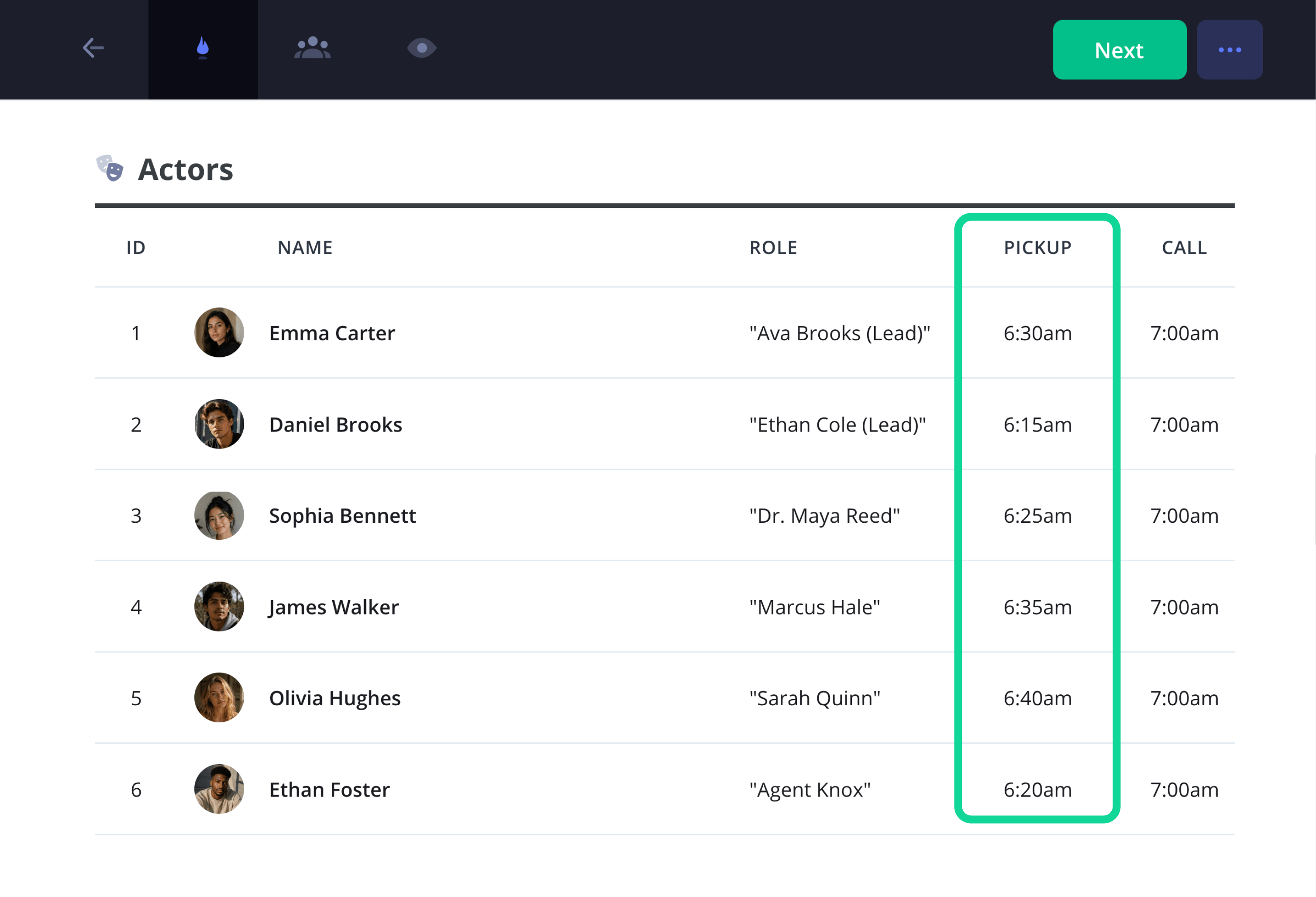
Your crew grid will need less information than your actor call sheet template grid section, so you can keep that one at about 3 to 4 rows.
Your extras grid can be thought of almost like a casting call list, because it’s less about coordinating each background actor’s transfer to set, and more about communicating where they’ll need to be when production is ready for them.
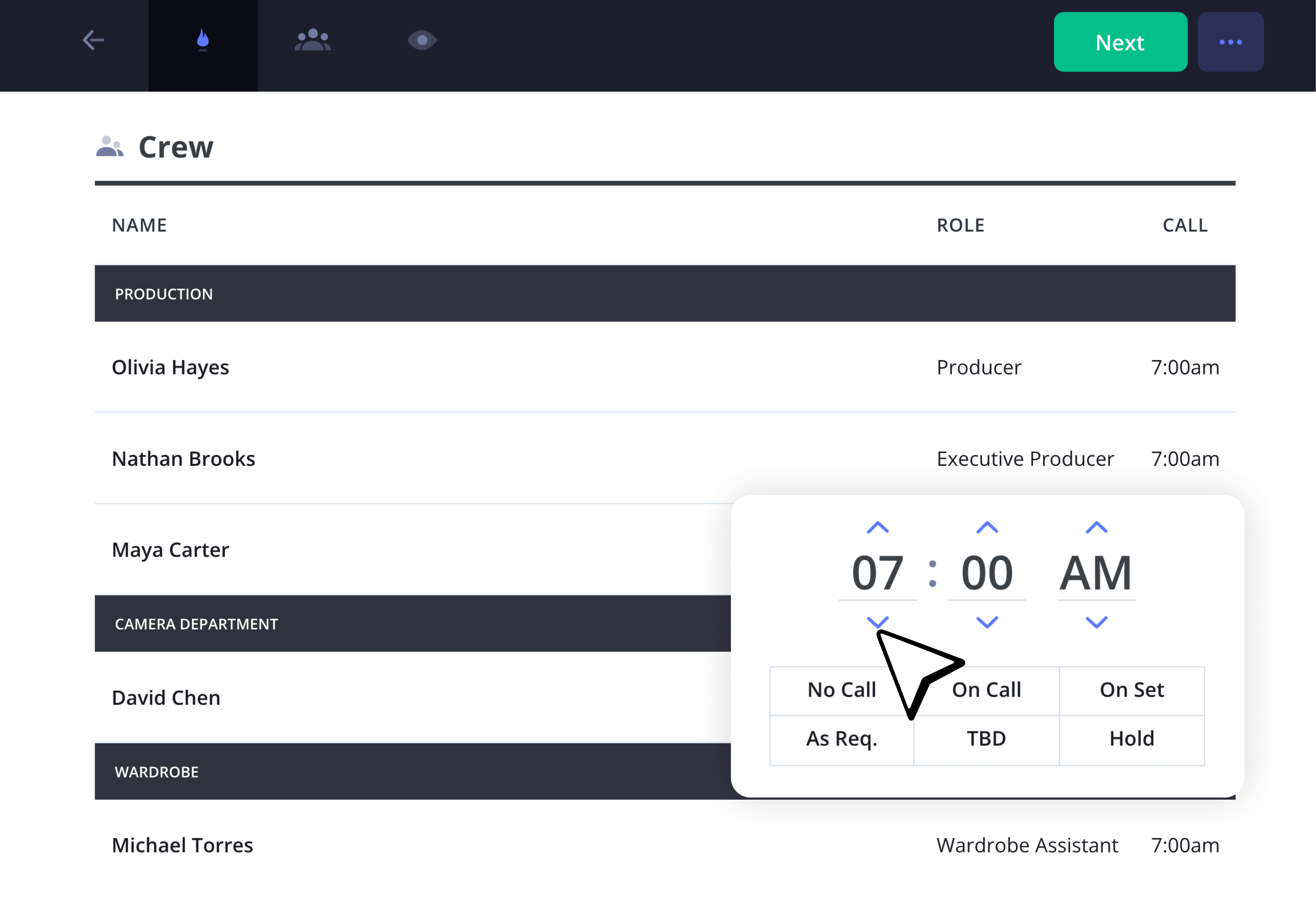
One thing to remember with actors is that their schedules change on a dime. That’s why it’s convenient to be able to open your actors call sheet and shift any time by simply clicking and readjusting it on the fly!
5. Organize department notes
There’s nothing worse than having a top billing actor’s first day on set be a mismanaged production nightmare. Which is why including a Department Notes section on your actor call sheet template that covers all the small yet important information for the day will be a great help.
As you can see on our own call sheet example, we have quite a lot of notes from quite a lot of departments that just came down the pipeline.
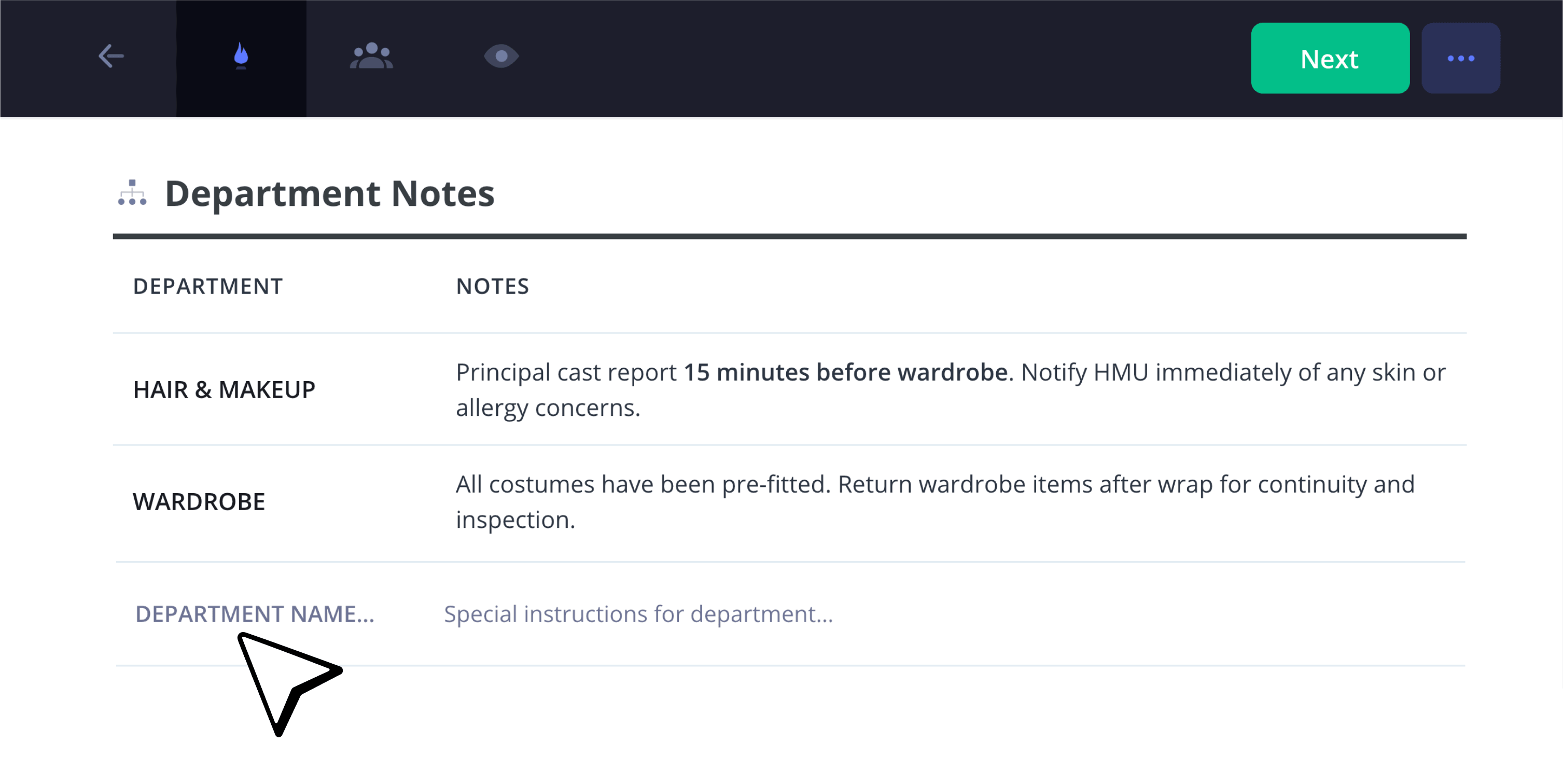
So, we’ll simply condense and rework this information into bite-size, yet direct and to the point notes. We’ll also add each department head’s walkie channel in the notes in case anyone on set needs further information.
6. Write private notes
As you finish filling out your actor call sheet template, you may want to include a small message with one or several of your cast members’ copies.
A call sheet for actors doesn’t always explain every last detail, so maybe this message contains some extra essential info. Or, maybe the director just wants to pass along a friendly thank you to one of the actors for bringing such a beautiful performance to the table.
Whatever the case, just checkmark one or several of the cast names that you want to attach a message with, then write your message in their ‘private note’ field.
Now your call sheet actor status includes a message and you’re all ready to send your document off to the entire production!
7. Send and track call sheet
Your actor call sheet template is good to go now, so just give it one last thorough look before clicking Send Call Sheet.
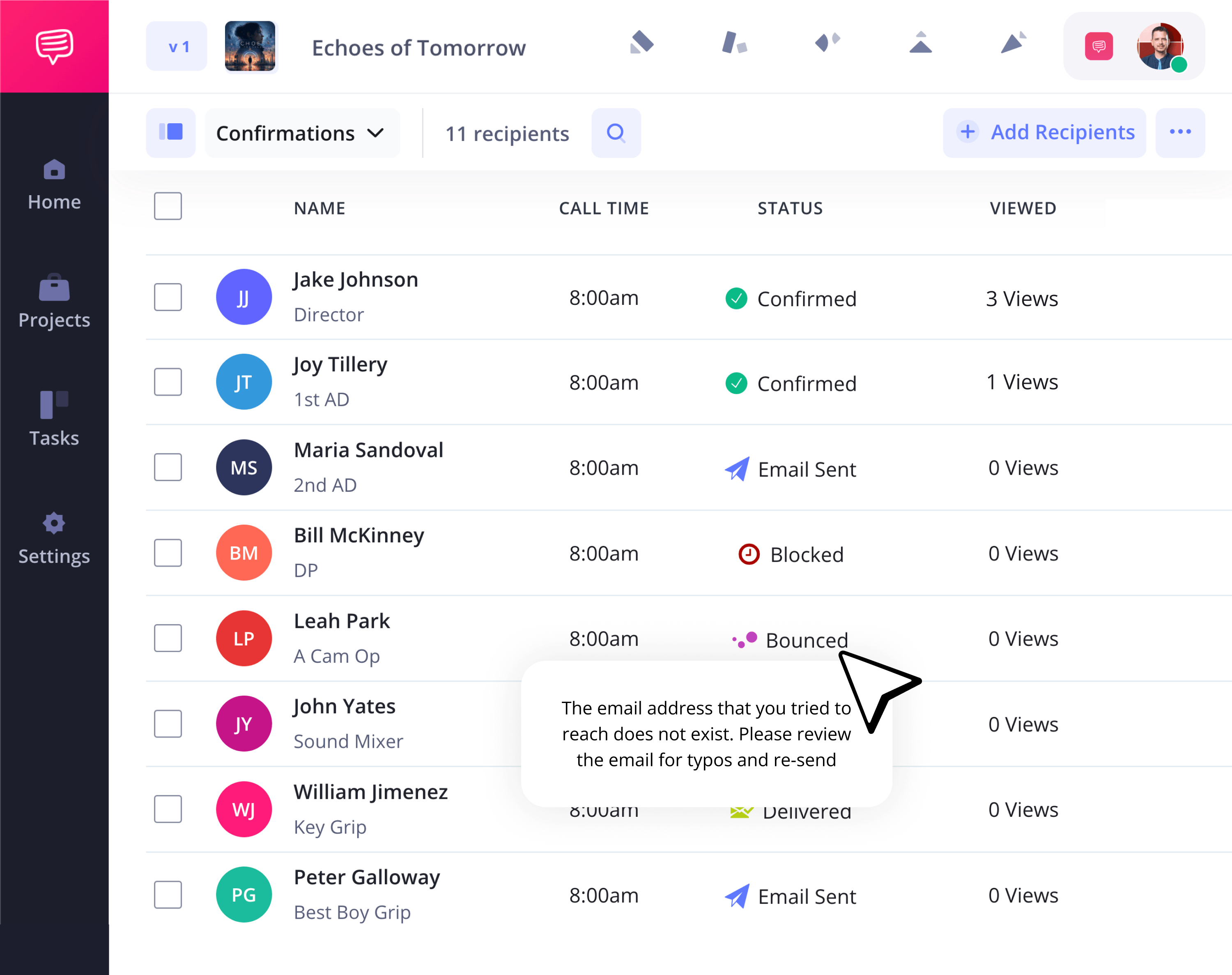
From here, you’ll be able to monitor who in your cast and crew has received and opened your sent call sheet.
But let’s say one actor’s call sheet status says ‘bounced.’ This likely means the email was entered incorrectly, so reach out to make sure you have the right spelling!
And, scene!
Now that you know how to properly put together an actor call sheet template, there’s no telling how much the whole cast of your film production will enjoy their time on your team’s set!
And if you’re looking for more than just actors call sheet template docs, be sure to browse through the full spectrum of StudioBinder’s free call sheet templates when you get a chance.
Frequently asked questions
The sheet that has the list of actors is called a call sheet. Call sheets are used in all film and television productions. They essentially act as a schedule for a full shooting day, listing the location, schedule, and of course, the full cast and crew. The cast or actor list shows all the actors in the production, along with their expected arrival and wrap time for the day.
Yes, there are sometimes different call sheets for different actors. Although it’s not very common since the cast list is most often included as a section on the call sheet. Some productions will offer personalized call sheets that only show a particular actor or group of actors’ schedules. But again, this is an exception, not a norm for most productions.
To read a call sheet for actors, the first thing you’ll do is find the cast list on the call sheet. Then you’ll look for your name on the grid and read all the connected information in your column. You’ll often notice a couple sections that display your pickup time, call time, and wrap time. If there’s a section marked as ‘H/MU,’ this section indicates the time you’ll need to arrive for hair and makeup.
If you’re #1 on the call sheet, that means you’re the lead actor playing the lead character of your production. The expression, ‘#1 on the call sheet’ also alludes to the fact that the entire production revolves around this actor. They’re playing the main character, and their built-in audience is expected to help the box office or ratings considerably. This also means they’re the top paid actor by far on the production. Think Robery Downey Jr. as Iron Man in the Avengers, he was definitely #1 on the call sheet of that movie.
Key steps
Schedule your music video today
A music video call sheet keeps your entire production day organized and on schedule so your performers and crew can work efficiently and in sync.
Get started for free
