Most people think horror begins with something obvious. A monster. A murder. A scream in the dark. Folk horror works differently. It starts with a feeling that something is wrong long before anyone says it out loud. A smile held too long. A town festival nobody can properly explain. A group of people acting perfectly normal in ways that make your skin crawl.
You see it in Midsommar when the sun never seems to set. You feel it in The Wicker Man when the villagers keep singing as if they already know the ending. In The Witch, it hangs over every prayer and every silent look across the dinner table.
What is folk horror, exactly? It is a horror subgenre built around isolated communities, rural settings, and belief systems rooted in folklore, ritual, or pagan tradition. The threat usually comes from a group rather than a single monster, with outsiders trapped inside a moral order they do not understand until it is too late.
The genre has existed for decades, from the rural nightmares of 1970s Britain to the modern revival led by filmmakers like Ari Aster and Robert Eggers. Today, folk horror movies continue to thrive because they tap into fears about belonging, ritual, and the danger of communities that demand absolute loyalty.
Folk Horror meaning
First, let's define what folk horror is
Before we jump into popular folk horror films or how they compare with various subgenres within horror, let's define what folk horror actually is.
Folk horror definition
What is folk horror?
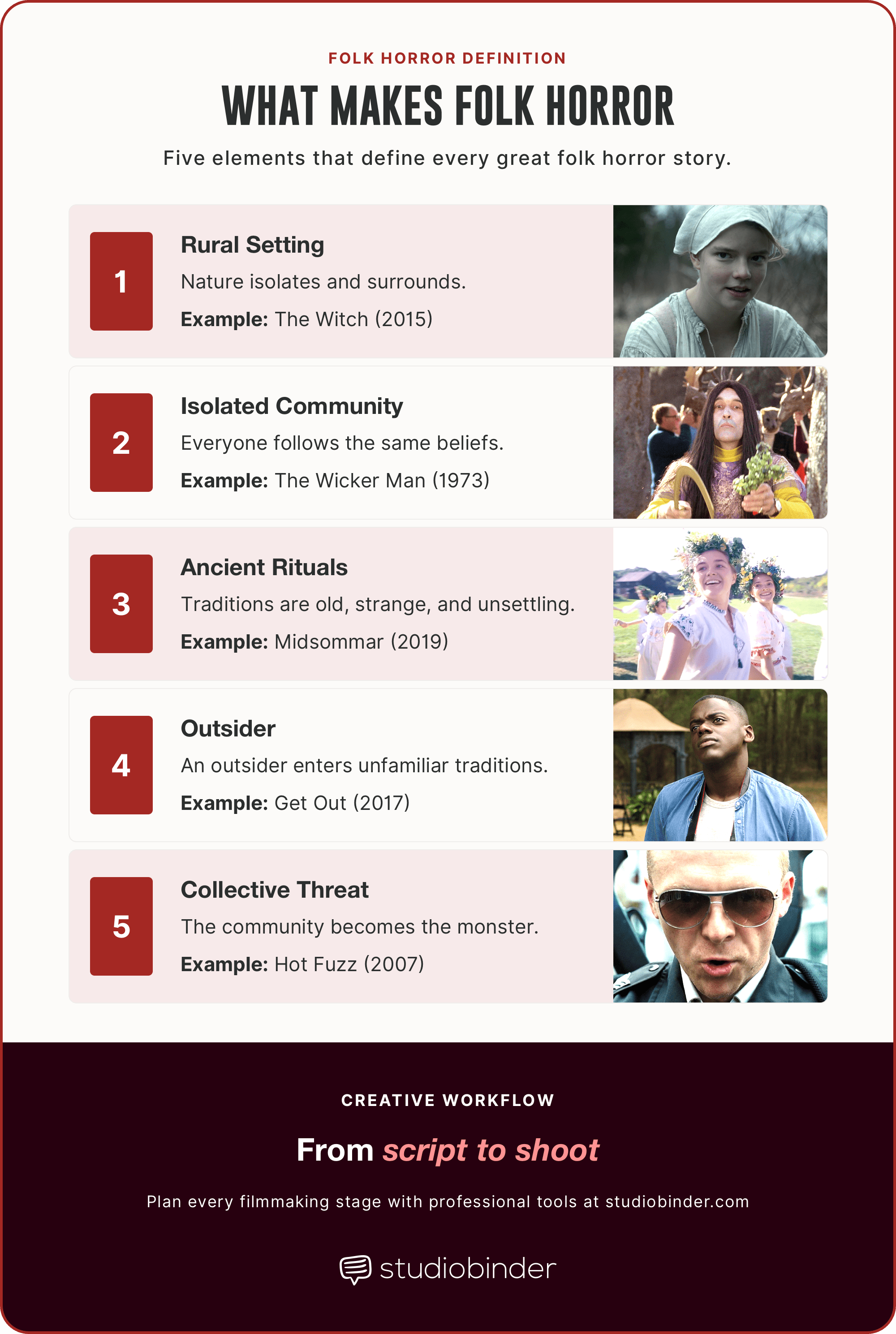
Folk horror centers on three interlocking elements: an isolated community, a rural environment, and a belief system tied to folklore, ritual, or pagan tradition. The horror comes from collective belief and communal behaviour rather than a single killer or creature. An outsider enters a closed moral system and slowly discovers its logic too late to escape it.
That distinction matters. Folk horror is not simply horror set in the countryside. A remote cabin in the woods does not automatically make a film folk horror. The threat has to emerge from shared belief, ritual practice, or a community enforcing its own worldview.
This is what separates folk horror from backwoods horror. In films like The Texas Chain Saw Massacre, the danger comes from violent individuals. In folk horror, the entire community participates in the threat.
It also differs from supernatural horror. Ghost stories and possession films often centre on an external evil force. Folk horror usually keeps the terror grounded in human belief systems. Even when supernatural elements exist, the real danger comes from the people who embrace them.
Core Elements of Folk Horror:
- Rural settings that feel isolated from the modern world
- Close-knit communities with their own customs and beliefs
- Ancient folklore rooted in myths, legends, or pagan traditions
- Rituals and ceremonies that drive the story's central conflict
- An outsider protagonist trapped inside an unfamiliar community
- Collective danger where the community becomes the real threat
What is folk horror
How folk horror differs from other horro subgenres
What is folk horror and what makes it so unique? Many horror subgenres overlap, but folk horror has a very specific structure. Understanding how folk horror fits among the broader family of horror subgenres makes its particular dread easier to recognize.
But there are a few distinctions that make folk horrors different than their counterparts.
Defining elements and story tropes • What is folk horror
For example, slasher films focus on individual killers. The threat is personal and physical. In folk horror, the threat is communal. Entire groups enforce the violence together.
Supernatural horror centres on ghosts, demons, or cursed objects. Folk horror may include supernatural elements, but belief itself is usually the real engine of fear. Ritual matters more than spectacle.
Analog horror creates dread through found footage and archival media formats. Folk horror creates it through community ritual and social conformity. Both exploit isolation, but in opposite directions — one technological, one pre-modern.
Eco-horror treats nature as the antagonist. Folk horror uses nature differently. Forests, fields, and isolated villages create atmosphere, but the real danger comes from the people living within them.
Drama and folk horror also share psychological territory — characters under social pressure, moral systems in conflict — but drama rarely frames the outcome as existential.
That communal structure is what gives folk horror its unique sense of dread. The protagonist is not simply trapped in a dangerous place. They are trapped inside a social order they cannot decode.
Related Posts
what is folk horror
The origins of folk horror
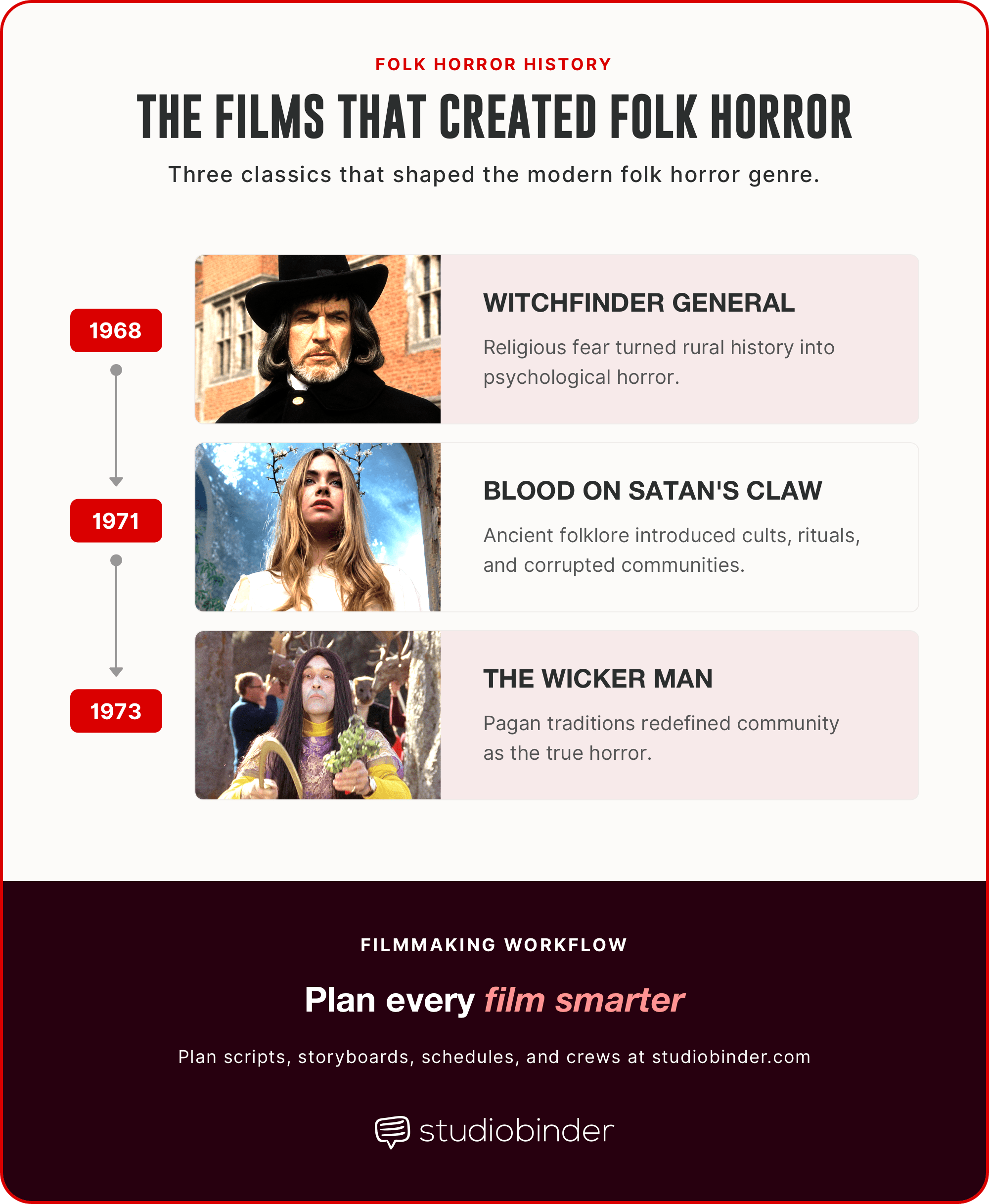
If you're still wondering what is folk horror, then let's examine where it came from exactly. The cinematography and visual language of British folk horror were shaped by three films released between 1968 and 1973. Together, they formed what fans and scholars now call the "Unholy Trinity" and laid the foundation for british folk horror as a recognised form.
Britain in the 1960s–70s and the Unholy Trinity
The roots of british folk horror can be traced back to this trinity released between 1968 and 1973.
Influential genre history • What is folk horror
Witchfinder General (1968)
Witchfinder General follows a travelling witch hunter during the English Civil War. Vincent Price plays Matthew Hopkins as a man using religion to justify cruelty and public violence.
The film's mise-en-scène turns the English countryside into a space of spiritual contamination. Rural East Anglia becomes a landscape shaped by paranoia, torture, and moral certainty. The film lighting uses harsh natural daylight — no stylised shadows — to make the violence feel mundane rather than theatrical.
The horror comes from zealotry rather than magic. The countryside feels spiritually poisoned long before anything supernatural appears.

Witchfinder General • What is folk horror
Blood on Satan's Claw (1971)
Blood on Satan's Claw shifts the focus toward corrupted youth and ancient evil buried beneath the land itself.
The film follows a village where children begin forming a cult around a demonic force uncovered in a field. Unlike traditional occult horror, the terror spreads socially. The community slowly turns against itself through shared ritual and belief.
That collective corruption became central to later folk horror movies.
![The Blood on Satan's Claw (1971) BLU-RAY TRAILER [HD]](https://i.ytimg.com/vi/dIFHqlU58T8/hqdefault.jpg)
Blood on Satan's Claw • What is folk horror
The Wicker Man (1973)
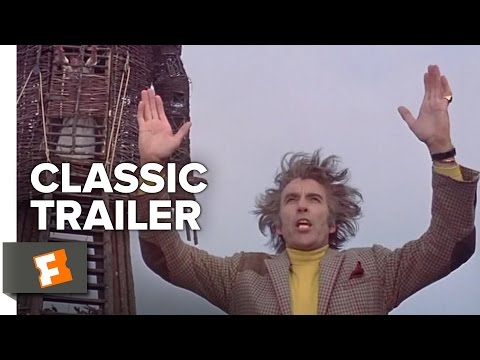
The Wicker Man remains the defining text of the genre.
Police Sergeant Neil Howie arrives on the isolated Scottish island of Summerisle to investigate a missing girl. Instead, he finds a self-contained pagan community whose customs clash completely with his Christian worldview.
Every interaction unsettles him. Children sing about fertility rituals in school. Villagers speak openly about sacrifice and harvest cycles. Nobody behaves the way he expects them to.
The horror comes from gradual realisation. Howie is never physically isolated, yet he is completely alone socially and morally. The diegetic music and ritual song that fills every scene creates dread precisely because the community is performing it with complete sincerity. Close-ups of Howie's face catching these performances carry the entire emotional weight.
The community already knows the role he is meant to play.
These three films established the foundations of folk horror:
- Rural isolation
- Ritual belief
- Pagan influence
- Moral rigidity
- Outsider protagonists
More importantly, they created a type of horror built around community enforcement rather than individual violence.
The Wicker Man • What is folk horror
what is folk horror
How the term "folk horror" was coined
Interestingly, these films existed long before anyone grouped them together under a shared label and answered 'what is folk horror.'
Director Piers Haggard used the phrase "folk horror" while discussing Blood on Satan's Claw, but the term did not become widely popular until Mark Gatiss explored the genre in his BBC documentary A History of Horror.
That delay matters. Folk horror was identified retroactively. Critics and audiences recognised that these films shared a structure, mood, and thematic obsession decades before the genre itself had a stable name.
In some ways, the genre had to be rediscovered before it could fully exist.
Related Posts
What is folk horror
The core themes of folk horror
What is folk horror thematically? The themes of folk horror are fewer and more concentrated than in most horror genres. The genre returns to the same obsessions across every decade because they address something permanent in the way communities form and enforce identity.
Rural Isolation and the Fear of Community
Most horror films fear isolation because nobody is around to help. Folk horror reverses that idea.
The terror comes from being surrounded by people.
In folk horror, communities operate according to their own logic. Outsiders cannot appeal to modern law, shared morality, or social norms because those systems no longer apply. The wide, establishing landscape shots that open many folk horror films do not signal freedom. They signal the removal of any external oversight.
This is why isolated villages appear so often in folk horror movies. Physical separation allows communities to preserve traditions untouched by the outside world. What is folk horror if not the encapsulation of this separation from the larger world?
Example: The Wicker Man
In The Wicker Man, Sergeant Howie spends the entire film surrounded by smiling, singing villagers. Nobody hides their beliefs from him. That openness is what makes the film disturbing.
The community is not chaotic. It is organised, confident, and united.
Howie slowly realises there was never any possibility of control. The island already decided his fate before he arrived. What is folk horror? It's this unsettling realization.
What is folk horror
Paganism, ritual, and sacrifice
What is folk horror when it comes to pagan traditions? Pagan belief sits at the centre of many folk horror stories, but it is rarely treated as decorative imagery.
Ritual is the engine driving the narrative forward.
Harvest ceremonies, fertility rites, seasonal festivals, and sacrificial traditions all create systems of meaning for the community. The rituals feel frightening because they possess internal logic. The people performing them genuinely believe they are necessary. That symbolism — the maypole, the effigy, the communal meal — is never arbitrary. Each element functions as a load-bearing metaphor for social control.
Folk horror also relies heavily on allusion to pre-Christian mythology, Celtic tradition, and agricultural folklore. The intertextuality between these genuine historical belief systems and the fictional communities on screen gives the genre its ethnographic weight.
That specificity separates pagan horror from generic occult imagery. Folk horror tends to ground its rituals in identifiable traditions and historical practices.
Example: Midsommar
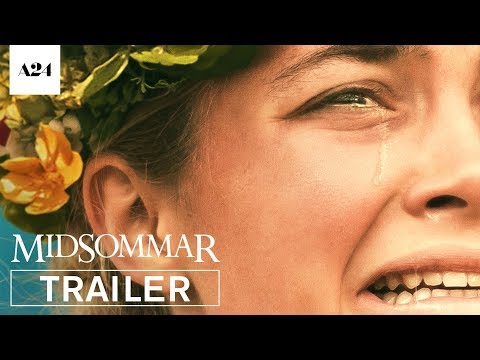
Midsommar is usually the first modern answer to what is folk horror in film. It uses Swedish midsummer traditions with near-documentary precision. Director Ari Aster fills the film with ceremonial detail, from clothing embroidery to communal meals and seasonal symbolism.
Midsommar • What is folk horror
The rituals feel believable because the community treats them as normal daily life.
In a New York Times interview, Aster described the film as a breakup story built through folk horror structure. That emotional focus matters. Dani's grief becomes the mechanism through which the commune absorbs her.
The horror comes from watching outsiders slowly understand what those traditions actually demand.
what is folk horror
The outsider vs. the community
The outsider structure is one of the defining tropes of folk horror and defining what is folk horror.
A protagonist enters an unfamiliar environment believing they understand the world rationally. That confidence blinds them to the danger around them. The narrative progression is almost always the same: arrival, confusion, partial understanding, revelation, too late.
The plot works because the audience usually notices the warning signs first. That dramatic irony creates much of the genre's tension.
Different films approach this structure differently.
Example: The Wicker Man
Sergeant Howie approaches Summerisle as a detective. He assumes logic and authority will give him control over the situation.
Instead, his certainty isolates him further. His ritual speeches and confrontations with the locals are exercises in talking to people who already know the ending.
Example: Midsommar
Dani enters the commune emotionally vulnerable after a personal tragedy. Unlike Howie, she is searching for belonging rather than authority.
That emotional need makes her easier for the community to absorb.
In The New Yorker's review of Midsommar, Richard Brody describes the film as a "backward horror story." The phrase captures the film perfectly. Dani moves emotionally toward the commune instead of trying to escape it.
Example: The Witch
In The Witch, the outsider dynamic becomes internal. A Puritan family isolates itself from wider society and slowly fractures under fear, religious paranoia, and suspicion.
The family loses any stable relationship to community, religion, or safety.
Director Robert Eggers grounds the film in historical language and religious detail drawn from seventeenth-century records. In The New Yorker's review of The Witch, Anthony Lane notes how tangible and physically real the world feels even as paranoia overtakes the family.
That realism is central to why the film works as folk horror. The terror grows directly out of belief.
Related Posts
what is folk horror
The folk horror revival
What is folk horror when it comes to how modern filmmakers reimagined classic folk horror themes for new audiences?
The 2010s Wave — The Witch, Hereditary, Midsommar
Folk horror experienced a major revival during the 2010s. Independent studios like A24 helped bring the genre back into mainstream conversation through slow-burn horror films focused on grief, ritual, and social control.
The revival gave the genre a new three-act structure consciousness. Where the original British films often felt episodic and folklorically meandering, the A24 generation builds toward a plot twist — a moment of revelation about the protagonist's true role — with classical precision.
The visual grammar also shifted. Dutch angles and low-key lighting gave way to bright, daylight horror in Midsommar. Non-diegetic music became more aggressive and dissonant in Hereditary. Filmmakers began using Dutch angle shots to signal psychological distortion even within otherwise naturalistic frames.
The revival also proved commercially viable. The Witch grossed more than $40 million worldwide against a production budget of roughly $4 million. (Box Office Mojo) Meanwhile, Midsommar earned nearly $48 million globally on a reported $9 million budget. (Box Office Mojo) These were not massive studio horror films. They were atmospheric, ritual-heavy folk horror movies built around mood and psychological dread.
Why Folk Horror Resonates Today
The question is what is folk horror to viewers and why does it still resonate today. At its core, folk horror tends to thrive during moments when collective identity becomes culturally unstable.
The genre asks uncomfortable questions about belonging. How much individuality are people willing to sacrifice in exchange for community, certainty, or shared purpose? These questions echo those at the centre of dystopian fiction, which similarly frames the community as an instrument of control rather than support.
Modern folk horror often focuses on characters emotionally disconnected from wider society before they encounter isolated groups. That vulnerability creates the conditions for manipulation. The colour grading and LUT choices in contemporary folk horror — muted, desaturated, naturalistic palettes in The Witch; supersaturated summer brightness in Midsommar — reinforce that psychological distance visually.
The genre also reflects growing distrust around institutions and social systems. Folk horror communities reject outside authority entirely. They build their own rules, histories, and moral frameworks instead. The intertextual relationship to real historical grievances — dispossession, colonial violence, religious persecution — gives modern folk horror an additional layer of political weight that the British originals largely lacked.
That tension between individual freedom and communal obligation remains deeply contemporary.
What is folk horror GENRE CHECKLIST
What makes a film 'folk horror'?
The essential characteristics that separate folk horror from other horror genres is key to understanding what is folk horror all around.
The Defining Checklist
Not every horror film set in the countryside is folk horror. The genre depends on several elements working together in combination.
Most folk horror films include:
- Rural setting
- Isolated community
- Ritual belief
- Outsider protagonist
- Collective threat
The strongest examples usually contain all five.
The camera shots and camera angles across these films share a grammar: wide shots that emphasise spatial isolation, medium shots that show the community operating as a unit, and close-ups that isolate the protagonist within the group. Camera movement — slow tracking shots, handheld proximity — positions the audience as unwilling witnesses.
Ritual sequences frequently use montage editing to compress ceremonial time, making traditions feel ancient and rehearsed. The storyboard approach in folk horror production tends toward deliberate, composed frames rather than dynamic action cutting.
The setting should feel removed from modern institutions or oversight. Communities operate independently and preserve their own traditions.
The threat also needs to come from the group itself. A single supernatural creature is not enough.
Some films blur the boundaries of the genre in interesting ways.
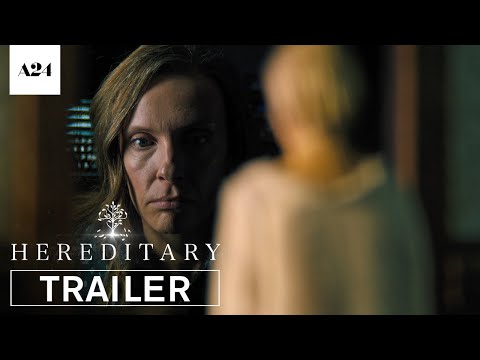
Example: Hereditary
Hereditary contains cult structures and ritual manipulation, but it lacks the rural setting traditionally associated with British folk horror.
Hereditary • What is folk horror
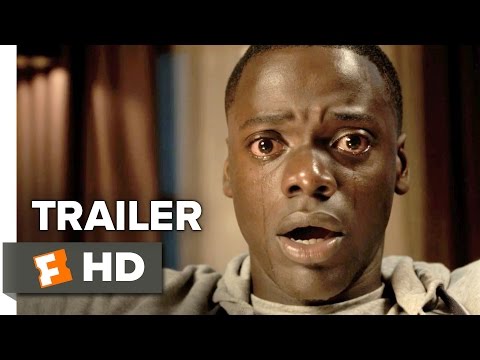
Example: Get Out
Get Out shares the outsider structure and communal menace central to folk horror, even though it operates more as a social thriller than pagan horror.
Get Out Trailer • What is folk horror
Example: Rosemary's Baby
Rosemary's Baby uses community conspiracy and ritual horror inside an urban apartment building.

Rosemary's Baby • What is folk horror
The genre's borders remain flexible, but the core structure stays recognisable.
For filmmakers: Folk horror's visual identity starts in pre-production. Choosing isolated locations, designing the community's visual rituals, and building storyboards that specify how the community moves and looks as a unit are all decisions made before the camera rolls. A shot list that maps out the outsider's visual containment — how the frame closes in as the protagonist loses agency — is one of the most direct ways to build folk horror dread into the production itself.
For screenwriters: Folk horror scripts depend on playable action and deferred revelation. The community must behave with complete internal consistency. Characters pursue genuine objectives within their own moral framework. Writing that screenplay logic — the community's rules, the outsider's gradual recognition of them — is what separates a well-crafted folk horror script from a plot that simply places characters in a rural setting and calls it horror.
Related Posts
Frequently Asked Questions
Folk horror FAQs
Folk horror is a horror subgenre focused on isolated communities, rural settings, and belief systems rooted in folklore, ritual, or pagan tradition. The threat usually comes from collective behaviour rather than a single monster, with outsiders trapped inside a social order they do not fully understand.
Yes. Midsommar contains nearly every defining feature of folk horror: rural isolation, communal ritual, pagan belief, and an outsider protagonist slowly absorbed into a closed society.
The film also openly references The Wicker Man, one of the genre's foundational texts.
Many critics consider Witchfinder General the first major folk horror film.
However, some argue earlier films like Night of the Demon already contained many of the genre's defining themes and structures.
The "Unholy Trinity" refers to three British folk horror films released between 1968 and 1973:
- Witchfinder General
- Blood on Satan's Claw
- The Wicker Man
Together, they established the genre's core themes and visual language.
Not exactly.
Pagan horror focuses specifically on pre-Christian belief systems and ritual practices. Folk horror is broader. It can include pagan horror, but it also covers religious extremism, communal violence, and isolated belief systems more generally.
All pagan horror can fit within folk horror, but not all folk horror is pagan horror.
Some of the most influential modern folk horror movies include:
- Midsommar (2019)
- The Witch (2015)
- The Ritual (2017)
- Apostle (2018)
- In the Earth (2021)
- Men (2022)
Each film approaches the genre differently, but all centre on ritual, isolation, and communal belief.
UP NEXT
The best folk horror movies
Understanding what is folk horror naturally leads to another question: which films define the genre best?
Our next guide breaks down the best folk horror movies ever made, from the British classics that created the genre to the modern films reinventing it for contemporary audiences.

Share your vision with elegant shot lists and storyboards.
Create robust and customizable shot lists. Upload images to make storyboards and slideshows.