Musicals are one of cinema's most technically demanding genres. The best musical movies pull off something other genres rarely attempt: Songs, choreography, editing, cinematography, and storytelling all have to work together at the same time. When they fail, they feel artificial. When they work, they create moments no other genre can achieve. The best musical movies of all time span nearly a century of filmmaking. From classic musicals of the Hollywood golden age to modern musical movies like La La Land and Hamilton, the genre constantly reinvents itself for new generations. This list is built for people who love cinema,…
The Blood Meridian book is often called the greatest American novel of the 20th century. Many readers also call it one of the most brutal books ever written. Blood Meridian, Cormac McCarthy's 1985 novel, sits at the edge of what fiction can do. It is historical and philosophical at the same time. It is precise in detail but elusive in meaning. This article breaks down the Blood Meridian book - what the story is, why it is difficult, and whether it is worth reading. It also answers the question film lovers keep asking: why has no one managed to adapt…
Two masks. One smiling. One weeping. The comedy and tragedy masks are among the oldest symbols in theatre. They appear everywhere, from stage logos to award ceremonies. But they are not just decorative. They represent the two core forms of drama. Comedy and tragedy are not simply about humour or sadness. They are dramatic forms with distinct structures, rules, and outcomes. One moves toward resolution. The other moves toward irreversible loss. Every piece of drama sits somewhere between them.This article defines both forms, explains the comedy and tragedy masks meaning, and breaks down the key difference between comedy and tragedy…
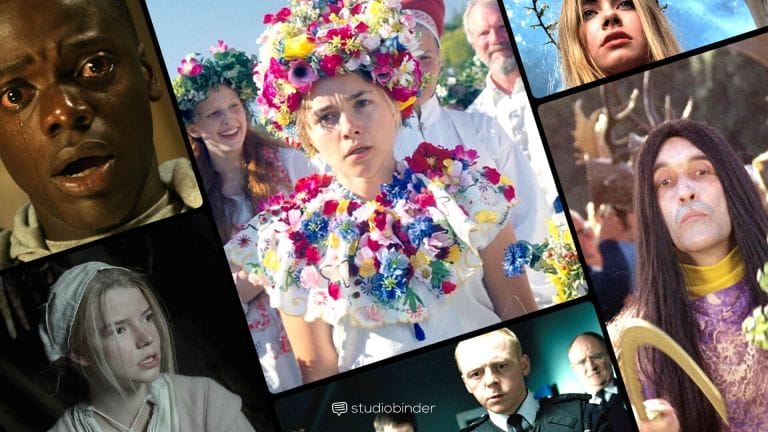
Most people think horror begins with something obvious. A monster. A murder. A scream in the dark. Folk horror works differently. It starts with a feeling that something is wrong long before anyone says it out loud. A smile held too long. A town festival nobody can properly explain. A group of people acting perfectly normal in ways that make your skin crawl. You see it in Midsommar when the sun never seems to set. You feel it in The Wicker Man when the villagers keep singing as if they already know the ending. In The Witch, it hangs over…
The best villains are not terrifying because they are evil. They are terrifying because they believe they are right. Hannibal Lecter sees himself as intellectually superior. Thanos believes genocide is mercy. Walter White convinces himself every monstrous act is for his family long after that stops being true. Their conviction is what makes them dangerous.This guide breaks down what makes a good villain work, the different types of villains in screenwriting, and how to write a villain from the inside out — covering motivation, backstory, moral conviction, and the craft decisions that separate a memorable antagonist from a plot device.Continue…
Episode 4 of Adolescence ends without the release most crime dramas build toward. Nobody breaks down screaming. Nobody delivers a speech that suddenly explains everything. A father sits across from his son and slowly realizes the boy he thought he understood has been living inside a world he never fully saw. The series leaves viewers with questions, but not the kind people usually expect from a murder mystery. By the end, the issue is no longer whether Jamie killed Katie. The harder question is how somebody so young drifted into violence while still looking, at times, painfully ordinary. To have…
Awoman stands in a laundromat trying to organize receipts for an IRS audit while her marriage quietly collapses around her. That is how Everything Everywhere All at Once begins. The setting could not be more ordinary. Taxes. Broken machines. Family disappointment. Yet within minutes, the film expands into parallel universes, martial arts, existential dread, and a cosmic bagel capable of swallowing reality itself.That contrast is the point.The film translates depression, immigrant anxiety, generational trauma, and nihilism into something visually chaotic but emotionally recognizable.The film looks like infinite possibility. Underneath, it is about a mother finally seeing her daughter clearly.But to…
Pagan horror movies tap into one of humanity's oldest fears: the idea that ancient belief systems never disappeared. They simply survived beneath the surface. These films transform forests, harvest rituals, seasonal festivals, and forgotten gods into sources of dread. Nature itself often feels conscious. Communities move with frightening unity. Sacrifice becomes sacred obligation rather than villainy. Pagan horror overlaps heavily with folk horror movies, but the focus is more specific. Folk horror is broadly about rural isolation, old customs, and community threats. Pagan horror centers explicitly on pre-Christian belief systems, ritual worship, and the return of ancient spiritual forces. The…
The 1970s changed American cinema forever. Studios gave directors unprecedented creative freedom. Filmmakers pushed stories into darker, riskier, and more personal territory. Many critics still consider this era the peak of American filmmaking, which is why conversations about the best 70s movies continue decades later.These are not just the best 70s movies by reputation.This was the age of New Hollywood. Directors like Francis Ford Coppola, Martin Scorsese, Robert Altman, and Steven Spielberg reshaped what mainstream movies could look and feel like. Influenced by European auteur cinema and the American New Wave, these filmmakers treated genre stories as vehicles for artistic…
Television drama is often mistaken for prestige. But great drama is not defined by budget or reputation. It is defined by consequence. The best TV dramas sustain tension across years without losing psychological truth. Characters change in ways that feel irreversible. Relationships evolve under pressure instead of resetting for the next episode. Television became uniquely suited to this form because of time. A film has two hours. A television drama can spend sixty hours watching somebody slowly become unrecognizable to themselves. Continue reading 20 Best TV Dramas of All Time, Ranked