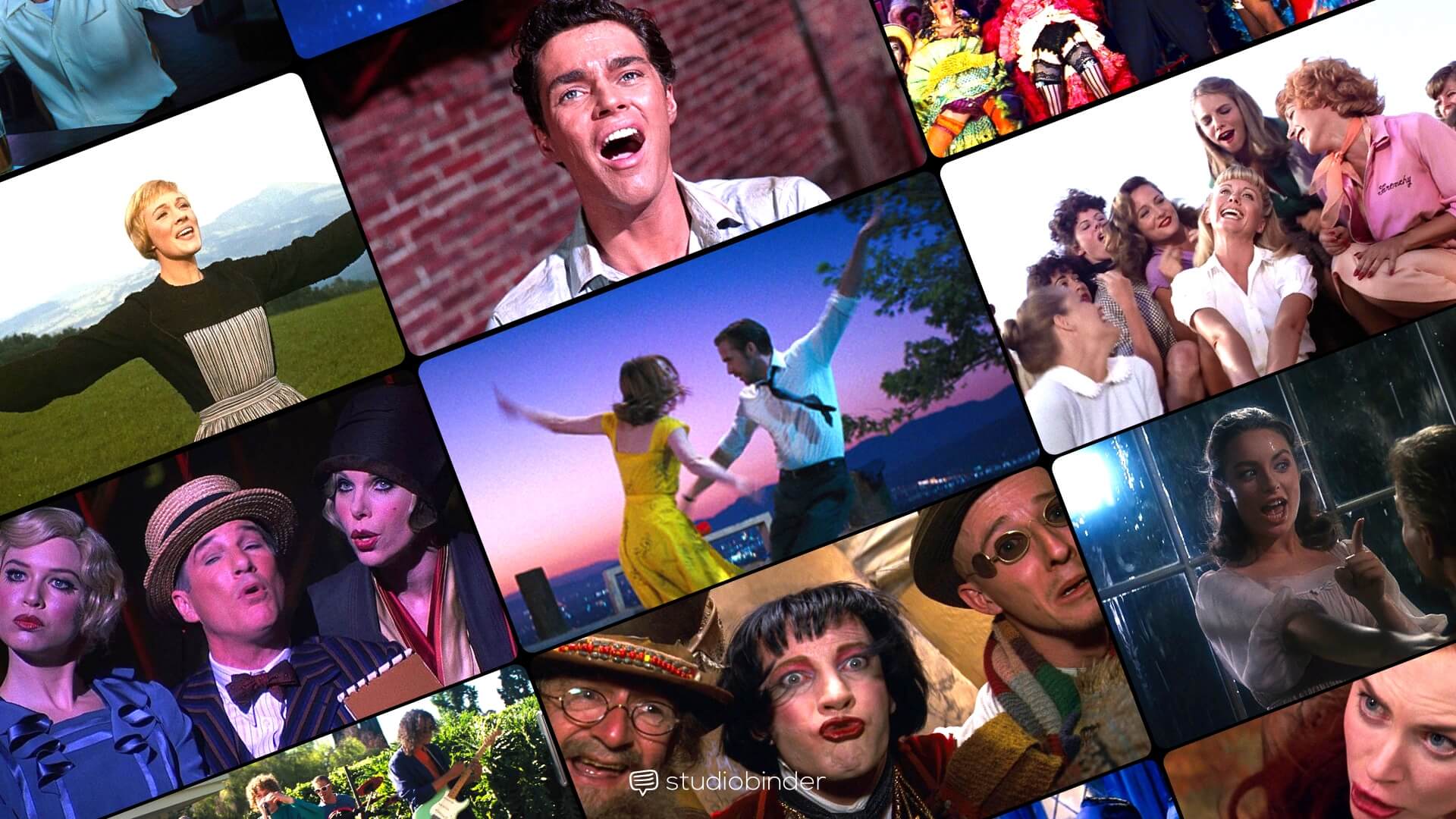
Musicals are one of cinema’s most technically demanding genres. The best musical movies pull off something other genres rarely attempt: Songs, choreography, editing, cinematography, and storytelling all have to work together at the same time. When they fail, they feel artificial. When they work, they create moments no other genre can achieve.
The best musical movies of all time span nearly a century of filmmaking. From classic musicals of the Hollywood golden age to modern musical movies like La La Land and Hamilton, the genre constantly reinvents itself for new generations.
This list is built for people who love cinema, not just people who love musicals. Every entry focuses on what makes the film cinematically important, whether that’s choreography, editing rhythm, production design, or camera movement.
Below are 15 of the best musical movies ever assembled in one list, along with a breakdown of what actually makes a musical film work on screen. These are the best movie musicals for anyone serious about cinema.
Best Musical Movies
First, let's define musical movie
In order to really get to the bottom of this musical movie ranking list, we'll have to first establish the basic definition of musical movies. Read below before continuing onto our official list.
Musical Movie Definition
What is a musical movie?
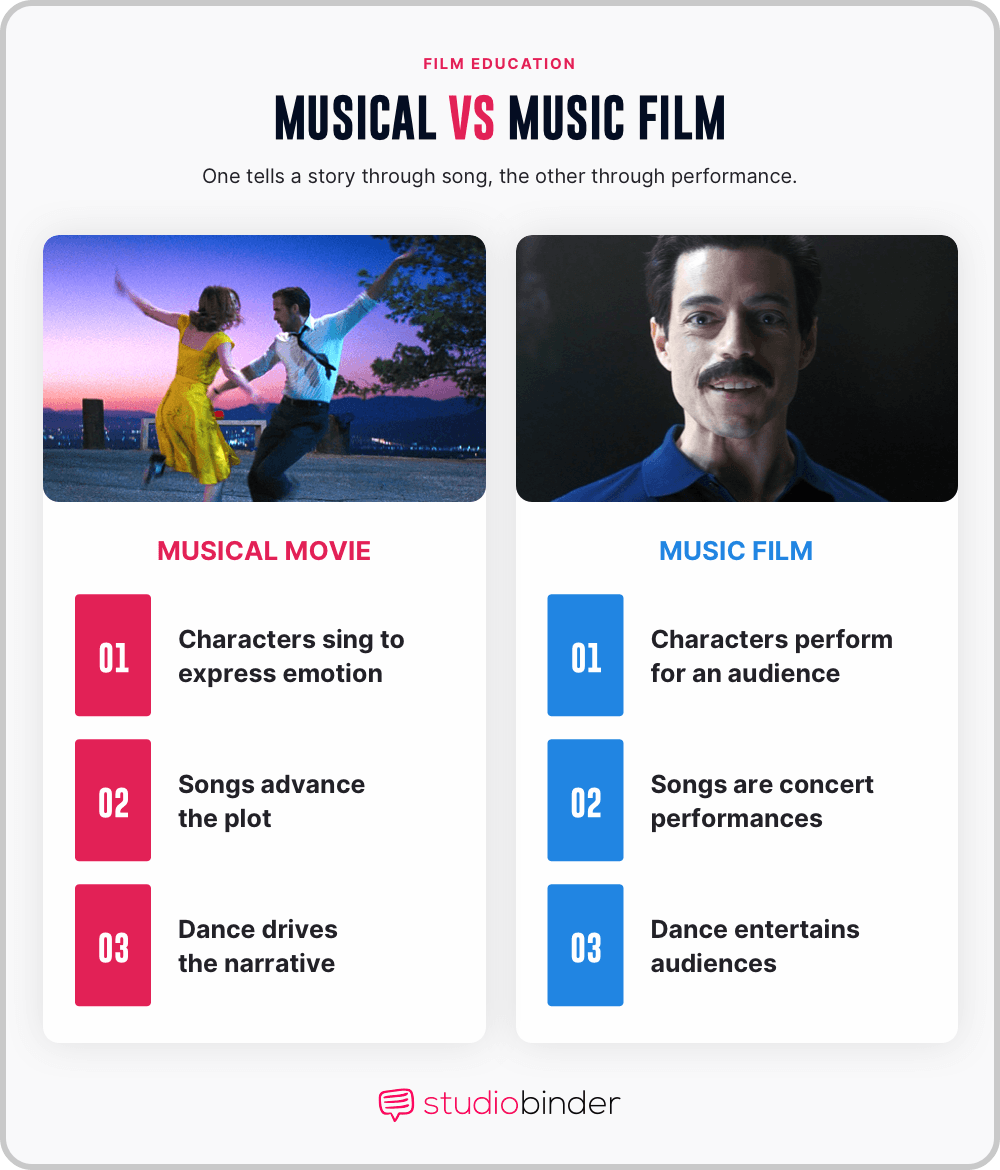
A musical movie is a film where songs and dance sequences advance the story, reveal character, or shift emotional stakes. Unlike a film with a strong soundtrack, the music is essential to the storytelling itself. If removing the songs would break the story, it is a true musical.
Best Musical Movies
Best musical movies of all time
From Hollywood's golden age to modern classics, these films represent the very best of what the musical genre has to offer. Each one combines unforgettable songs, memorable performances, and cinematic storytelling that continues to inspire audiences decades later.
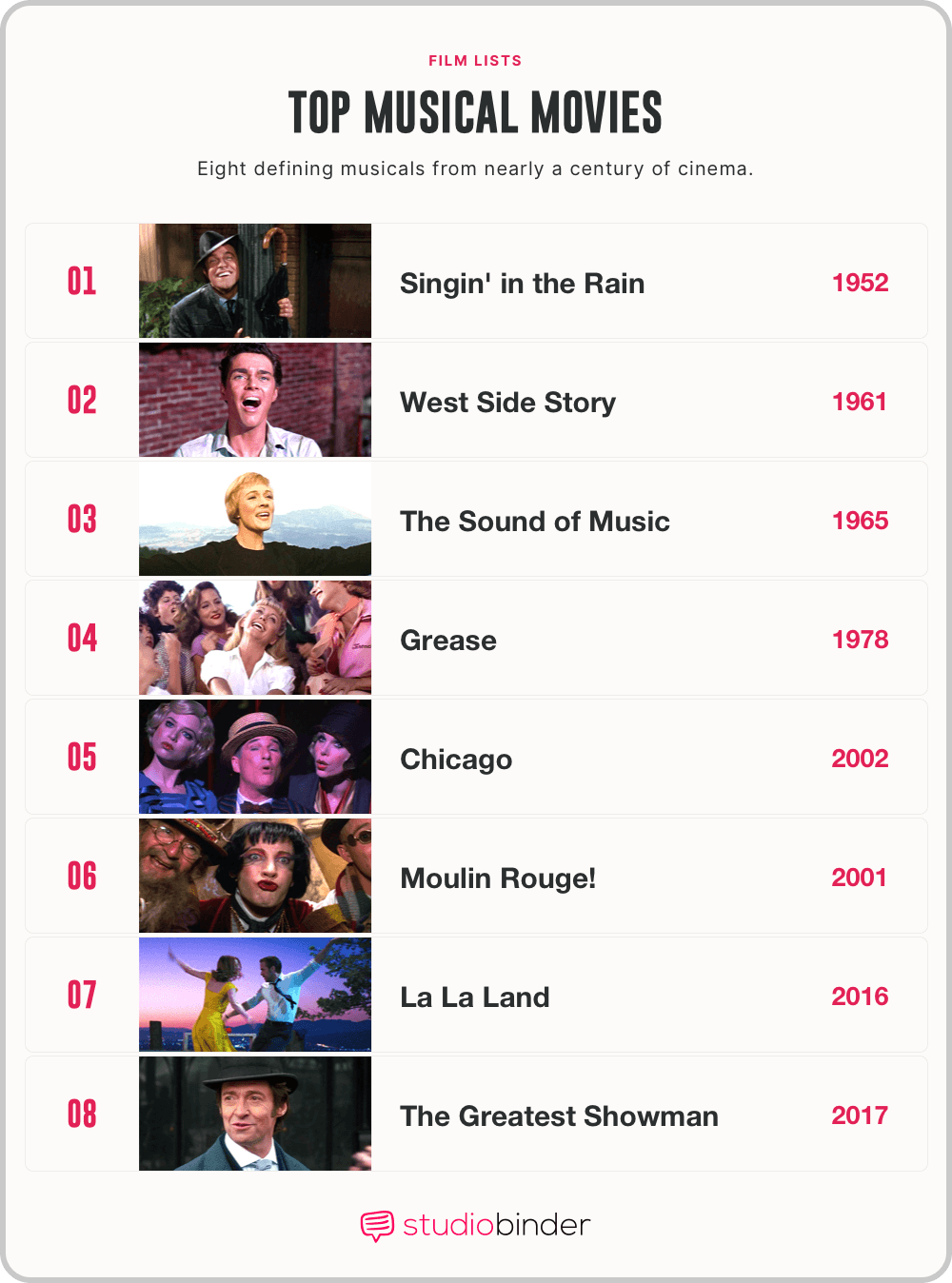
Defining Classics Across Cinema History • Best musical movies of all time
HOLLYWOOD CLASSIC
1. Singin' in the Rain (1952)
Directed by Stanley Donen and Gene Kelly
For many critics, Singin' in the Rain remains the gold standard of the movie musical — often cited as the greatest of the classic musicals produced during Hollywood's golden age. The film combines technically perfect choreography with visual comedy and fluid camera movement that still feels modern.
Gene Kelly’s choreography works because it feels character-driven rather than performative. Every movement communicates joy, panic, romance, or ego. The film also captures Hollywood during the chaotic transition from silent film to sound cinema, giving the musical film genuine historical texture — something most best musical movies lists note, but rarely examine in depth.
Kelly famously performed the title sequence while sick with a 103-degree fever. That context makes the scene's effortlessness remarkable.
The title sequence
The central number remains one of the most iconic scenes in film history.
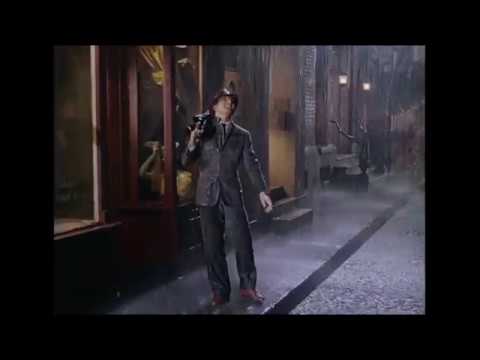
Singin' in the Rain • Best musical movies of all time
The sequence works because the camera moves with Kelly instead of simply observing him. The rain, lighting, choreography, and framing all become part of the same emotional rhythm.
FANTASY MUSICAL
2. The Wizard of Oz (1939)
Directed by Victor Fleming
The Wizard of Oz helped define how fantasy works on film. Its transition from sepia-toned Kansas into Technicolor Oz remains one of the great visual reveals in cinema history.
The shift matters emotionally, not just technically. Kansas feels restrained and limited. Oz explodes with saturated technicolor and theatrical production design. The visual transformation communicates wonder before a single line of dialogue explains anything.
That use of color still influences fantasy filmmaking today.
Dorothy enters Oz
The farmhouse door reveal changed audience expectations for cinematic spectacle.
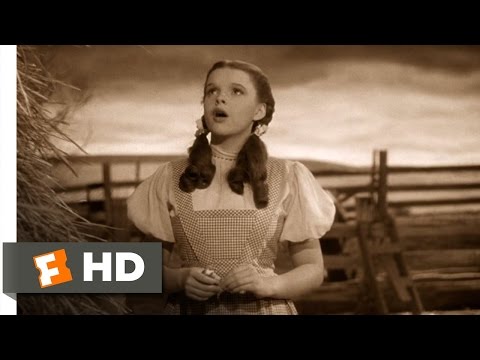
Somewhere Over the Rainbow • Best musical movies of all time
The moment still works because it feels tactile. Oz is not simply colorful. It feels physically alive.
MUSICAL DRAMA
3. West Side Story (1961)
Directed by Robert Wise and Jerome Robbins
West Side Story remains one of the most cinematically ambitious studio musicals ever made. Robert Wise handled the dramatic storytelling while Jerome Robbins oversaw choreography, creating a rare fusion of dance and visual storytelling.
The opening sequence alone is still studied in film schools. The camera glides from aerial city imagery into street-level territorial conflict between the Jets and Sharks. Dance becomes character psychology immediately.
Robbins was eventually removed during production after going significantly over schedule and budget — though his influence on the final film is total.
The opening sequence
Before anyone speaks, movement establishes the entire conflict.
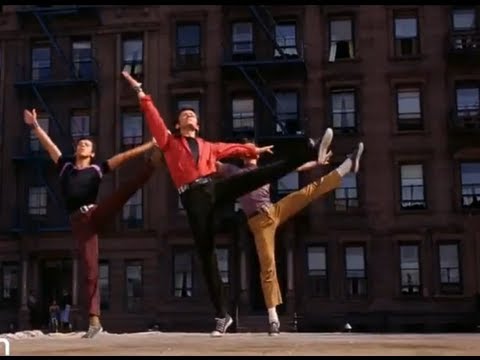
West Side Story • Best musical movies of all time
The choreography tells you who controls space, who feels threatened, and who belongs. The dance itself becomes narrative exposition.
FAMILY CLASSIC
4. The Sound of Music (1965)
Directed by Robert Wise
The Sound of Music became the highest-grossing film of its decade and held the title of highest-grossing film ever for five years. More importantly, it demonstrated how landscape could function as emotional architecture in a musical film.
The Austrian mountains are not just scenery. They reflect freedom, escape, innocence, and emotional scale. Wise uses geography to make the story feel expansive and mythic.
The opening helicopter shot over the Alps was technically ambitious for its era, achieved before such camera systems became standard.
Maria sings in the mountains
The opening sequence immediately establishes the film’s emotional language.

The Sound of Music • Best musical movies of all time
The scale of the landscape makes Maria feel both isolated and spiritually free. Few musicals use environment this effectively.
DARK MUSICAL
5. Cabaret (1972)
Directed by Bob Fosse
Cabaret completely rethought how musicals could function onscreen. Unlike most classic musicals, characters never suddenly sing in everyday life. Every musical number takes place inside the Kit Kat Klub.
That structural decision changes the entire feel of the film.
The performances comment on the political and emotional collapse happening outside the club rather than directly advancing the narrative. Songs become social commentary.
Fosse’s choreography is sharp, cynical, and deeply sensual. Every movement feels psychologically loaded.
“Wilkommen”
The opening number establishes the entire tone of the film instantly.

Willkommen • Best musical movies of all time
The sequence feels seductive and unsettling at the same time. That tonal contradiction defines the entire movie.
TEEN MUSICAL
6. Grease (1978)
Directed by Randal Kleiser
Grease became one of the most commercially successful musical films ever released. At the time, its soundtrack became the best-selling musical soundtrack in film history.
Kleiser deliberately avoided realism. The lighting, costumes, and heightened performances make the film feel like a nostalgic memory rather than an accurate recreation of the 1950s.
That stylized approach helped the film achieve enormous cultural staying power.
“You’re the One That I Want”
The carnival finale remains one of the genre’s most recognizable musical sequences.
![Grease - You're The One That I Want [HQ+Lyrics]](https://i.ytimg.com/vi/7oKPYe53h78/hqdefault.jpg)
You're The One That I Want • Best musical movies of all time
The sequence embraces pure fantasy. Reality no longer matters. Emotional energy becomes the entire point.
ART HOUSE MUSICAL
7. All That Jazz (1979)
Directed by Bob Fosse
All That Jazz may be the most formally experimental film on this list. Part autobiographical confession and part hallucination, the movie follows a self-destructive director and choreographer slowly collapsing under pressure.
Roy Scheider anchors the film with extraordinary exhaustion and charisma. Around him, Fosse constructs a movie driven by editing rhythm as much as choreography.
The structure feels fragmented on purpose. Reality, fantasy, memory, and performance constantly overlap.
“Bye Bye Life”
The finale transforms death into theatrical spectacle.

Bye Bye Life • Best musical movies of all time
The sequence feels overwhelming because Fosse stages mortality itself as performance. The film becomes both celebration and self-destruction simultaneously.
JUKEBOX MUSICAL
8. Moulin Rouge! (2001)
Directed by Baz Luhrmann
Moulin Rouge! reinvented the jukebox musical for a new generation of best musical movies fans. Baz Luhrmann fused rapid-cut editing, hyper-saturated visuals, and contemporary pop music into a completely new cinematic grammar.
At release, many critics found the style overwhelming. Over time, though, the film became hugely influential. Modern musical movies owe enormous debt to Luhrmann’s approach.
Editing pace becomes emotional storytelling here. Cuts happen rhythmically rather than invisibly.
“Elephant Love Medley”
The medley sequence demonstrates Luhrmann’s entire filmmaking philosophy.
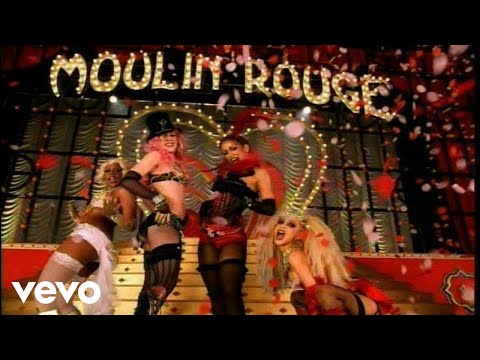
Lil' Kim, Mya, P!nk • Best musical movies of all time
The scene constantly shifts songs, camera angles, and emotional tone. The excess becomes part of the romance itself.
CRIME MUSICAL
9. Chicago (2002)
Directed by Rob Marshall
Chicago solved one of the hardest problems in musical adaptation. Instead of presenting songs as literal reality, Rob Marshall stages every musical number inside Roxie Hart’s imagination.
The real world feels gray, restrictive, and institutional. Roxie’s fantasy world explodes with theatrical glamour and movement. That contrast gives the film a strong cinematic identity rather than simply reproducing stage choreography onscreen.
Chicago became the first musical to win Best Picture since Oliver! in 1968.
“Cell Block Tango”
The sequence demonstrates how editing and choreography can work together.
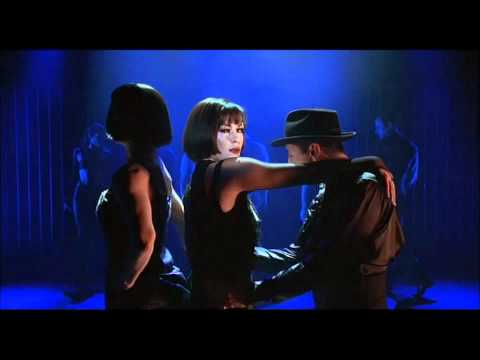
Cell Block Tango • Best musical movies of all time
Marshall cuts rhythmically between fantasy and confession, allowing choreography to become psychological storytelling.
MODERN CLASSIC
10. La La Land (2016)
Directed by Damien Chazelle
La La Land revived large-scale original musicals for modern audiences. Damien Chazelle deliberately rejected hyperactive music-video editing in favor of long takes and natural light.
The opening freeway number was shot on a closed stretch of Los Angeles highway with more than 100 dancers and minimal cuts. The sequence immediately announces the film’s visual philosophy.
The movie received 14 Academy Award nominations, tying the all-time record.
“Another Day of Sun”
The freeway opening became one of modern musical cinema’s defining sequences.

Another Day of Sun • Best musical movies of all time
The long takes allow viewers to appreciate the choreography spatially. The camera participates in the dance instead of fragmenting it.
Related Posts
SHOWBIZ MUSICAL
11. The Greatest Showman (2017)
Directed by Michael Gracey
The Greatest Showman became one of the biggest surprise hits of the 2010s. Despite a weak opening weekend, the film grew through word-of-mouth for months and eventually grossed more than $435 million worldwide.
Michael Gracey’s background in music videos heavily shaped the staging. The movie prioritizes momentum, emotional clarity, and visual spectacle above historical realism.
That approach connected strongly with audiences.
“This Is Me”
The anthem became the emotional centerpiece of the film.
This Is Me • Best musical movies of all time
The sequence works because the choreography and camera movement continually push forward. The staging physically embodies self-acceptance.
FEEL-GOOD MUSICAL
12. Mamma Mia! (2008)
Directed by Phyllida Lloyd
Mamma Mia! became one of the most commercially successful jukebox musicals ever made, grossing more than $600 million worldwide against a relatively modest film budget.
Phyllida Lloyd chose not to radically reinvent the material for cinema. Instead, she preserved much of the theatrical energy and directness of the stage production.
Critics were divided by that decision. Audiences loved it.
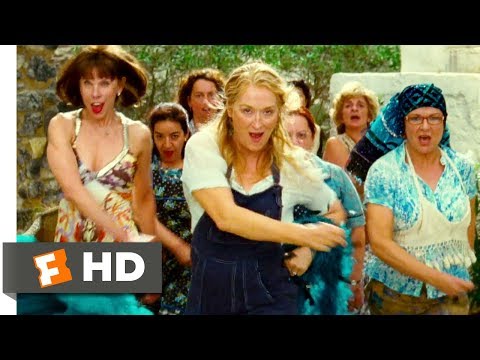
“Dancing Queen”
The pier sequence captures the film’s infectious energy perfectly.
Mamma Mia! • Best musical movies of all time
The scene succeeds because it prioritizes communal joy over technical perfection. That looseness became part of the film’s appeal.
EPIC MUSICAL
13. Les Misérables (2012)
Directed by Tom Hooper
Les Misérables changed how movie musicals approached vocal performance. Instead of relying on pre-recorded playback tracks, Hooper recorded actors singing live on set.
Performers wore earpieces connected to a live pianist, allowing tempo and emotional rhythm to shift naturally during scenes. The camera could respond directly to performance instead of forcing actors into rigid synchronization.
The result feels emotionally raw and immediate.
“I Dreamed a Dream”
Anne Hathaway delivers one of the film’s most devastating performances in a single sustained close-up.

I Dreamed A Dream • Best musical movies of all time
The lack of cuts forces viewers to stay emotionally present. The technical simplicity becomes the scene’s greatest strength.
HISTORICAL MUSICAL
14. Hamilton (2020)
Directed by Thomas Kail
Technically, Hamilton is a filmed stage production rather than a traditional musical film. It still belongs among the best musical movies because the camera direction transforms the experience into something genuinely cinematic.
Thomas Kail uses cranes, tracking shots, close-ups, and carefully timed edits to preserve the energy of live performance while guiding audience attention more precisely than theater alone can.
The result bridges stage and screen remarkably well.
“My Shot”
The number demonstrates how camera movement can intensify theatrical performance.
![My Shot - Hamilton (Original Cast 2016 - Live) [HD]](https://i.ytimg.com/vi/wk01z2f5akg/hqdefault.jpg)
My Shot Hamilton • Best musical movies of all time
The editing creates intimacy without losing the momentum of the live staging. The audience feels both theatrical scale and cinematic focus simultaneously.
BIOGRAPHICAL MUSICAL
15. Tick, Tick... Boom! (2021)
Directed by Lin-Manuel Miranda
Tick, Tick... Boom! works partly because it understands creative anxiety so specifically. The story follows composer Jonathan Larson struggling to finish a musical before turning thirty.
Lin-Manuel Miranda’s directorial debut balances theatricality with grounded emotional realism. Andrew Garfield’s performance drives the entire film through nervous energy and vulnerability.
Miranda also filled supporting roles with Broadway performers as homage to musical theater culture itself.
“30/90”
The opening number immediately establishes the film’s frantic creative energy.

tick, tick ... BOOM! • Best musical movies of all time
The sequence blends fantasy staging with emotional realism, setting up the film’s self-referential style perfectly.
Great Musical Elements
What makes a great musical movie?
The best musical movies succeed because every filmmaking department operates in complete synchronization. The writing, choreography, cinematography, costume design, editing, sound mixing, and production design all need to support the same emotional rhythm. If one element feels disconnected, the illusion breaks immediately.
Comparing Musical Movies Versus Music Films • Best musical movies of all time
That is why the best musical movies of all time feel almost effortless, even when the technical complexity behind them is enormous. The greatest musicals of all time share this quality: every department — writing, choreography, camera, sound — serves a single emotional purpose.
A strong musical also understands that songs are not interruptions. They are storytelling tools. In weaker musicals, the narrative pauses so the audience can enjoy a performance. In great musical films, the performance is the narrative.
The genre also depends heavily on tone management. Audiences must believe that characters would suddenly begin singing or dancing without the emotional reality collapsing. Directors solve this problem in different ways. Some films lean into theatrical fantasy like Moulin Rouge!. Others ground musical performance psychologically, like Chicago placing songs inside Roxie’s imagination.
The camera matters just as much as the choreography. Great directors do not simply record dance. They shape how audiences experience movement through framing, pacing, and editing. In La La Land, long takes allow viewers to appreciate physical performance spatially. In All That Jazz, editing rhythm becomes part of the choreography itself.
Related Posts
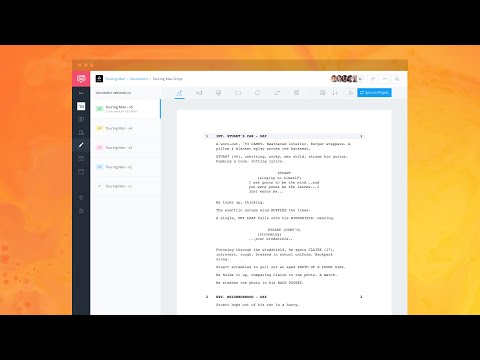
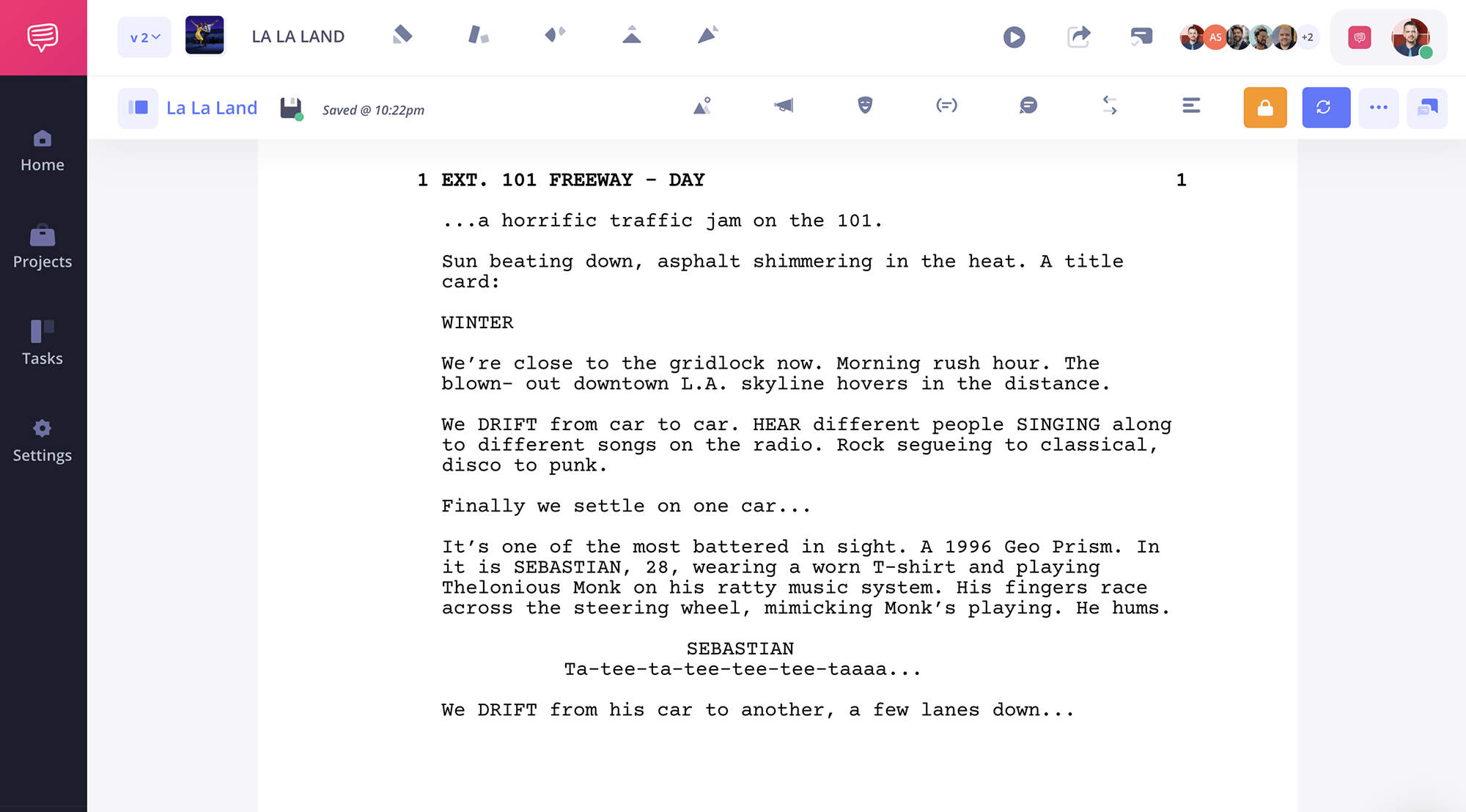
Filming a musical requires more than pointing a camera at choreography. Directors build shot lists that account for dancer positioning, musical tempo, and spatial continuity across takes.
StudioBinder's shot list tool lets directors map out every camera angle in advance, attach lens specs, and share the plan with cinematographers and choreographers in one place before shoot day.
Screenplay • Best musical movies of all time
The strongest movie musicals also understand escalation. Musical numbers should grow emotionally and visually alongside the story. Early songs may feel playful or intimate. Later sequences often become emotionally overwhelming because the audience now understands the stakes beneath the performance.
Songs that serve the story
The simplest test for a musical number is this: if you removed the song, would the scene lose emotional or narrative meaning?
In the best musical movies, the answer is always yes. In the best musicals ever made, songs are not decoration — they are the only language available for what the character needs to express.
Songs should accomplish something dialogue cannot. They can expose hidden emotion, compress time, heighten fantasy, or externalize psychological conflict. The music becomes a storytelling language rather than decoration.
“Somewhere” in West Side Story works because the song expresses impossible hope that the characters cannot realistically articulate in conversation. The number transforms longing into an emotional atmosphere.
The song turns romantic hope into cinematic space and movement
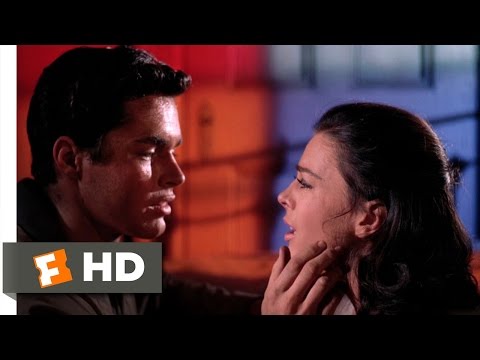
West Side Story • Best musical movies of all time
The choreography and camera movement create emotional yearning visually as well as musically. The number feels dreamlike because the characters are imagining a future they will likely never reach.
Choreography that communicates character
The greatest choreographers in the best movie musicals use movement as characterization.
Bob Fosse's dancers often appear sharp, cynical, and emotionally guarded because the choreography itself feels angular and controlled. Jerome Robbins gave the Jets and Sharks entirely different physical vocabularies in West Side Story — a technique that communicates gang identity without a single line of exposition. Jerome Robbins gave the Jets and Sharks entirely different physical vocabularies in West Side Story.
The dance does narrative writing work before anyone speaks.
When choreography exists purely as decoration, musicals start feeling emotionally empty no matter how impressive the spectacle becomes.
Cinematography built for movement
Musicals succeed or fail partly through camera design.
In La La Land and Singin’ in the Rain, the camera moves with performers like another dancer inside the choreography. The movement feels collaborative.
By contrast, some stage-to-screen adaptations rely too heavily on static wide shots. The choreography may be technically visible, but the filmmaking itself feels passive.
The camera should always have perspective and intention during a musical number.
Related Posts
Frequently Asked Questions
Best Musical Movies FAQs
There is no universal answer, but a few films consistently dominate critics’ lists. Singin' in the Rain is often ranked number one, particularly by the American Film Institute. Other major contenders include West Side Story, Cabaret, and The Wizard of Oz. Personally, Singin’ in the Rain remains the strongest combination of choreography, filmmaking, comedy, and cinematic joy.
If counted as a musical, The Lion King is the highest-grossing musical film ever with more than $1.6 billion worldwide. For a live-action traditional musical, Mamma Mia! became one of the genre’s biggest global successes with more than $600 million worldwide. Adjusted for inflation, The Sound of Music remains one of the largest box office hits in cinema history.
The Jazz Singer is widely recognized as the first feature-length film with synchronized sound and musical performances. Soon afterward, The Broadway Melody became the first full sound musical and the first musical to win Best Picture at the Academy Awards.
A movie is considered a musical when songs or dance sequences are essential to the storytelling. Characters sing or perform to express emotion, reveal character, or move the plot forward. A strong soundtrack alone does not make a film a musical. If removing the songs would break the story, it qualifies as a true musical film.
UP NEXT
Are there good musical movies on streaming?
Several of the best musical movies of all time are available on major streaming platforms. La La Land, Hamilton, and The Greatest Showman are on Disney+. Cabaret and Chicago can be found on Paramount+ and Amazon Prime Video. Singin' in the Rain, West Side Story, and The Wizard of Oz are available through HBO Max and Prime. Availability shifts by region and month, so checking Just Watch for your location is the fastest route.
The best movie musicals rely heavily on camera placement, movement, framing, and editing rhythm. Every musical number is built through visual storytelling as much as performance.
Next, go deeper into the visual language of filmmaking with our breakdown of the most important camera compositions and framing techniques in cinema.