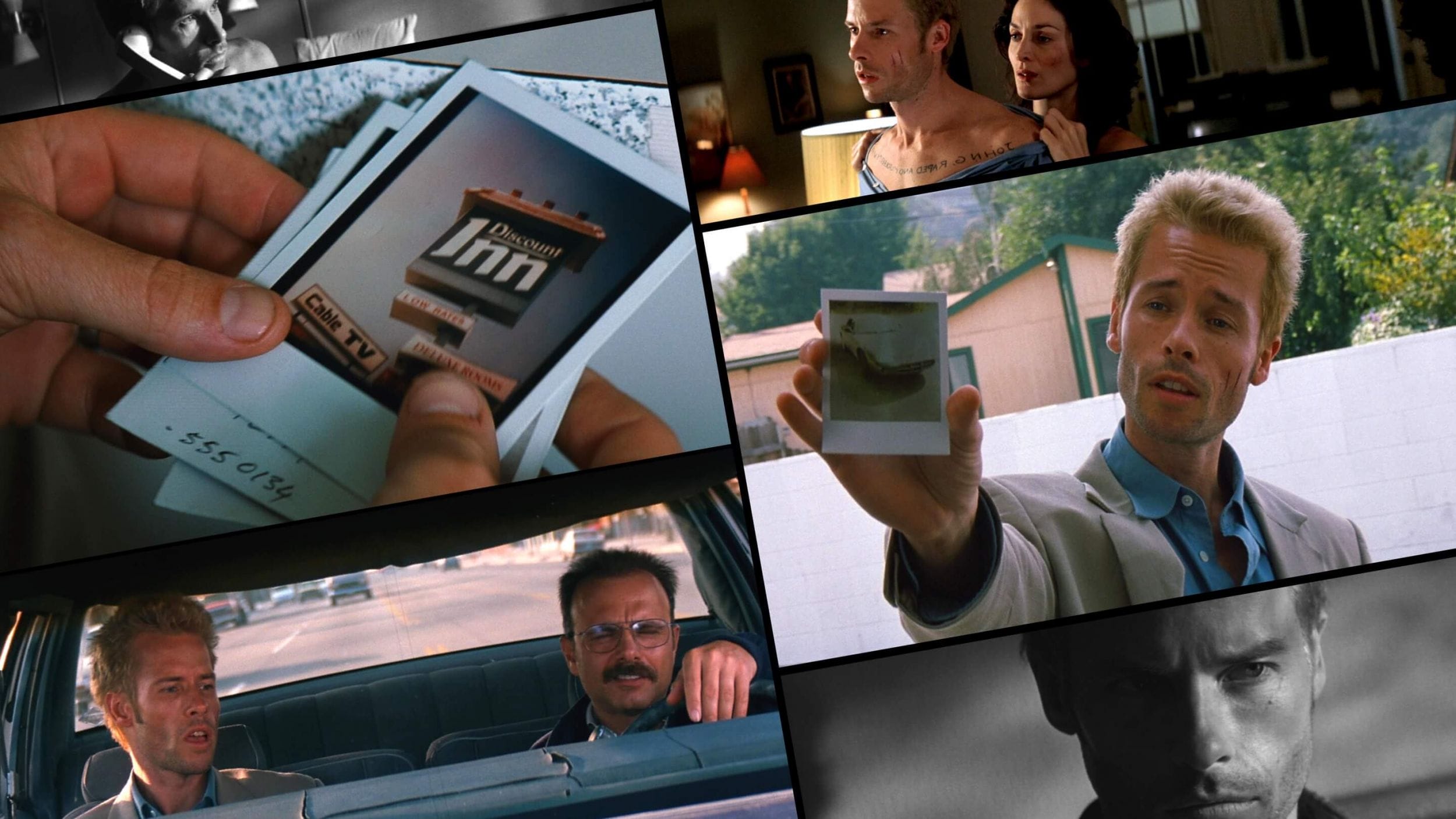
It’s been over two decades since the initial release of Christopher Nolan’s Memento, and it still sparks debate among cinephiles and film students. How did the film end? If you’ve just watched it for the first time and feel confused, you’re exactly where the film wants you to be. Prepare yourself for: Christopher Nolan’s Memento movie explained.
Film Memento explained
What is Memento about?
Beyond answering the mentally crippling question of, ‘can somebody explain Memento, please,’ we're also jumping into some fascinating behind the scenes information. While Christopher Nolan brought his own writing process and cinematic structure to the story, Memento actually started with his brother and future co-writer, Jonathan Nolan.
From Short Story to Screen
Memento began as a short story called "Memento Mori," written by Jonathan Nolan and published in Esquire in 2001 (though Christopher Nolan had already been developing the screenplay from an earlier version of the story). Jonathan's story is told from the first-person perspective of a man with anterograde amnesia, structured mostly in linear prose. The radical reverse chronology was Christopher's invention for the screenplay.
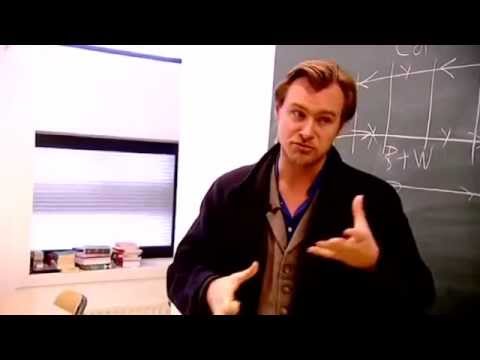
Nolan has spoken about the decision to withhold narrative information as an act of empathy rather than trickery. In a 2001 Filmmaker Magazine interview, he described his intention, saying, "We try to put you in his head and that's why the story is told backwards, because it denies the information that he's denying." This, in turn, becomes the film's entire emotional premise. If you don't know what Leonard knows, you experience his disorientation. If you learn what he learns at the moment he learns it, you feel his tragedy.
There are some big differences between the short story and the feature film. Jonathan's version contains more interiority and explicit self-awareness from the narrator. Christopher's film removes this. Leonard doesn't fully understand what's being done to him, and neither do we, until the final act collapses every assumption we'd built.
Cast Overview
Leonard Shelby (Guy Pearce) is the film's protagonist. Shelby is a former insurance investigator with anterograde amnesia, unable to form new memories after a brain injury sustained during the same attack that killed his wife. He navigates the world through Polaroids, tattoos, and notes.
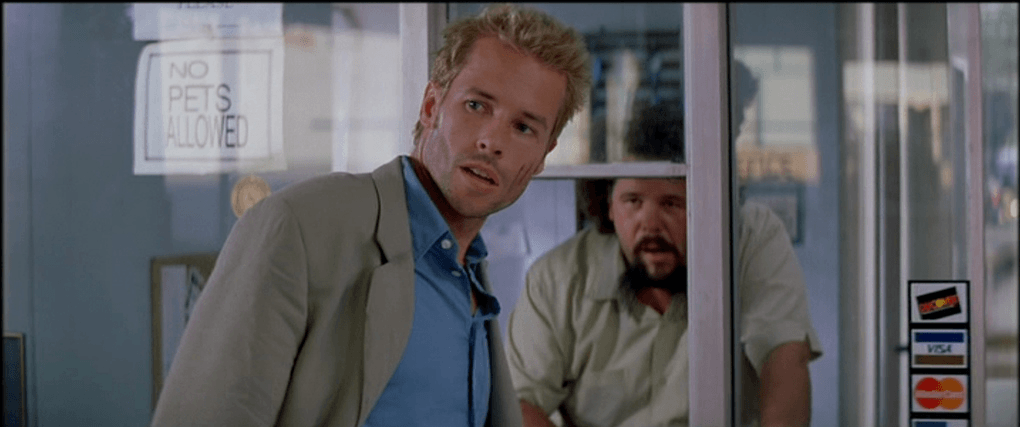
Leonard Shelby — Memento ending explained
Teddy / John Edward Gammell (Joe Pantoliano) is a cop who claims to be helping Leonard but has been using him as an unwitting hitman for at least a year, steering him toward targets who fit the "John G." profile.
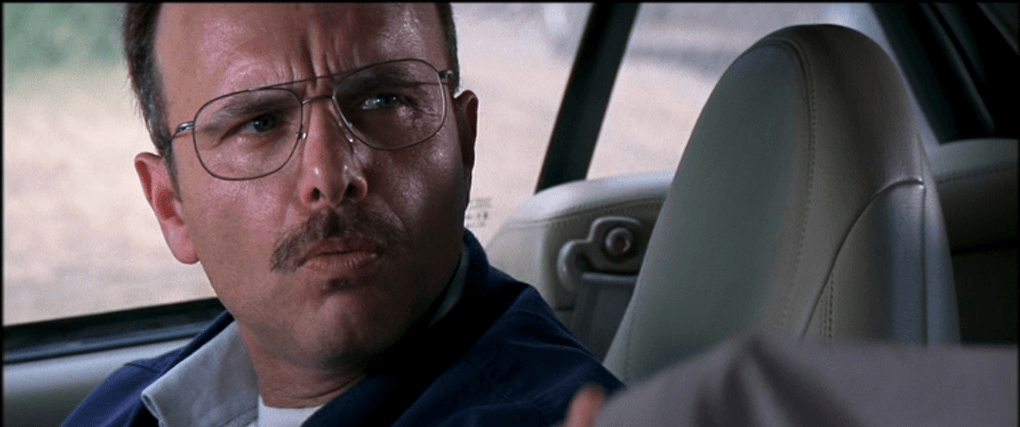
Teddy — Film Memento explained
Natalie (Carrie-Anne Moss) is a bartender whose boyfriend Jimmy Grantz was killed by Leonard (at Teddy's direction). She recognizes Leonard's condition and weaponizes it to eliminate a man named Dodd who is threatening her.
Related Posts
Quick answer to Memento explained
Memento ending explained
Here’s the short explanation. Leonard Shelby is a man with anterograde amnesia, otherwise known as short-term memory loss. He’s spent most of the film hunting the man who murdered and raped his wife. Through techniques like note-taking, Polaroid photos, and tattoos, Leonard has developed a system to pursue his wife’s killer despite his ailment. The story is filled with a bunch of untrustworthy characters whom Leonard and the audience are suspicious of. One of the characters, Teddy, claims to be a helpful friend, but Leonard has a Polaroid of him that says not to listen to his lies.
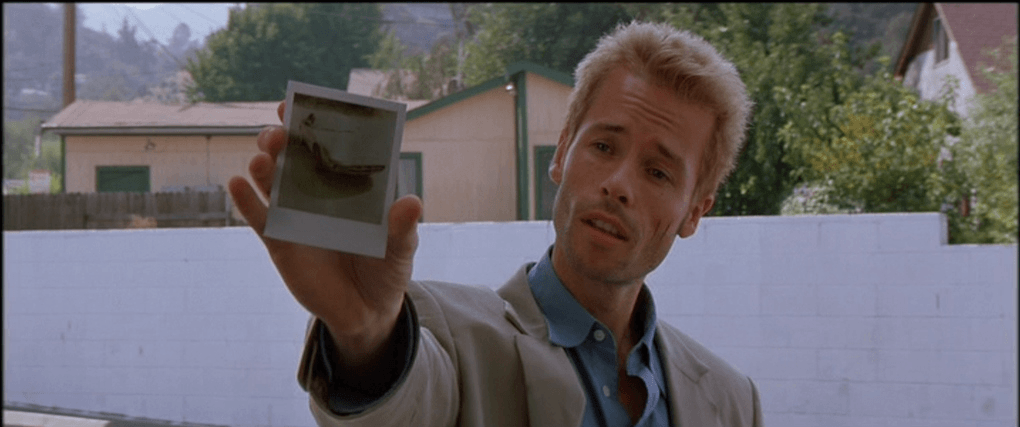
Leonard Shelby · Film memento explained
At the end of the film, Teddy reveals that Leonard had already found and killed the man he was after a year ago, but had forgotten due to his condition. Since then, Teddy has been manipulating him into killing drug dealers and splitting the money from the busted deals.
Teddy also reveals that the “Sammy Jankis” story that Leonard had been telling non-linearly throughout the film – a story about a man with short-term memory loss who accidentally killed his wife by insulin overdose — appears to be Leonard's own repressed memory of what he did.
When Teddy reveals all of this, Leonard is confused and unsure of what to believe — all he knows is he will soon forget. So Leonard makes a conscious decision to manufacture Teddy as his next target by writing a note to kill Teddy on a Polaroid of him. He destroys the evidence of the truth Teddy told him, and the film ends where it begins, with Leonard killing Teddy.
Related Posts
Explain Memento story structure
How does Memento's dual narrative structure work?
Continuing our Memento movie explanation, the story structure Nolan uses is central to understanding the film’s ending. It's also a huge part of understanding Nolan’s approach to storytelling and gives you insight into how he views time in the rest of his filmography. The film is primarily told in two non-linear stories.
The Reverse Chronological Color Sequences
Scene B occurs before Scene A in the story's actual chronology, but you see A before B. This places the viewer in a position to understand the consequences before we know the causes. We see someone behave a certain way before we understand why. We feel certainty before we learn we shouldn't.
Memory stores the emotional logic of the information it also contains. When you see something out of order, you fill the gap with inference. This is how Leonard operates with his condition and how the audience operates with limited narrative information. Nolan uses this to create drama.
Christopher Nolan Memento explanation · Explain Memento movie
The Chronological Black-and-White Sequences
The black-and-white sequences run forward in time. These scenes are primarily Leonard on the phone in his motel room, telling the story of Sammy Jankis — a man he investigated as an insurance adjuster before his injury, a man he concluded was faking his amnesia, a man whose wife eventually tested that conclusion by requesting repeated insulin injections until she died.
These sequences feel more trustworthy since we return to them over and over. Their consistency feel like an anchor which is then used in the ending plot twist. The Sammy Jankis story, told in this "reliable" forward sequence, is the film's deepest layer of an unreliable narrator.
How the Two Timelines Converge at the Ending
The film's two timelines converge in the final sequence. What the color sequences have been moving backward toward, and what the black-and-white sequences have been moving forward toward, is the same moment: the moment just before Leonard shoots Teddy in the opening scene.
That opening scene — shown in reverse, with the Polaroid fading and the bullet returning to the gun — is actually the story's ending. The film's structure is a loop.
Christopher Nolan Memento ending chronology
What is the chronological order of events in Memento?
If we were to unscramble the scenes of Memento and put them into chronological order, we would get a linear plot that made more sense, but lacks the full engagement and suspense of Nolan’s original structure. Afterall, the structure as it is helps us consider the themes of self-deception / confirmation bias. Still, it’s interesting to understand the film both linearly and non-linearly, which is why we put together the chart below.
Memento movie plot explained
Memento’s plot explained
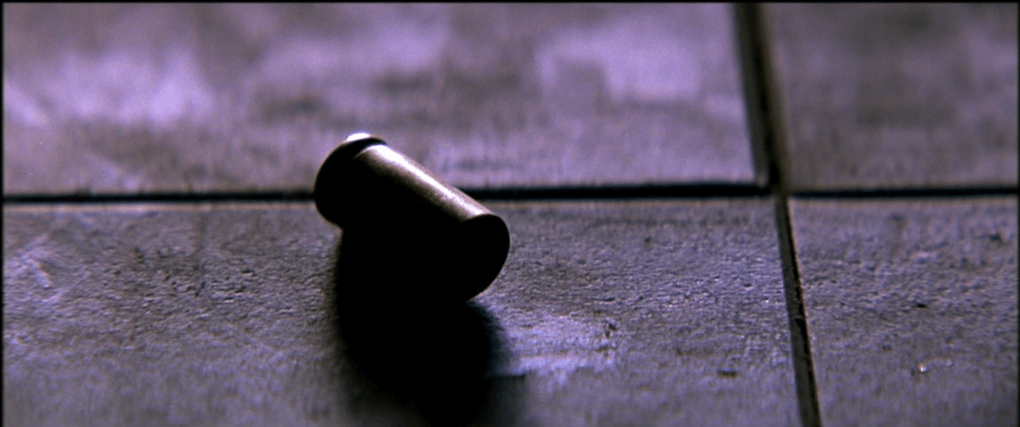
To explain the movie Memento further, let’s run through the plot. The film opens on a Polaroid photograph developing in reverse. The image on it fades as if it's moving closer to being undeveloped instead of developed. A dead man on the floor returns to life. The bullet that shot him returns to the gun.
Memento Opening Scene · Explain Memento movie
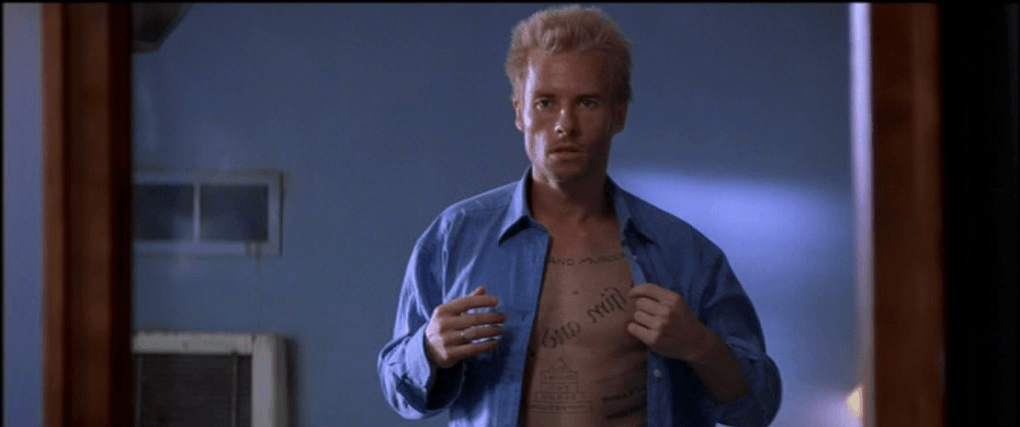
We meet Leonard Shelby in a motel room, holding a Polaroid of a man named Teddy (who we just saw him kill) with a note on the back: Don't believe his lies. He has tattoos covering his chest and arms, a stack of annotated photographs. We learn that he has a condition from an injury that inhibits him from creating new memories. He only remembers everything before the injury.
The color sequences move backward in time, so each scene we watch actually precedes the one before it. This backward movement in time is slowly revealed with each scene.
Leonard is hunting a man called John G. — the attacker who raped and killed his wife. His system is elaborate: annotated Polaroids, handwritten notes, and the most important facts tattooed directly onto his skin so they can't be lost. His chest tattoo reads: John G. raped and murdered my wife.
Memento Ending Explained
Throughout the film, Leonard tells a story about a man named Sammy Jankis. On Leonard’s hand is a tattoo that reads Remember Sammy Jankis. Leonard tells the story over the phone, a storyline presented in black and white that moves forward in time, and is intercut with the backward-moving color timeline.

Explain the movie Memento — Testing Sammy Jankis
Sammy Jankis, as told by Leonard, was an insurance case he investigated before the attack. Sammy had the same condition Leonard now has. Leonard concluded Sammy was faking and denied his claim. Sammy's wife tested her husband by asking him to administer her insulin, again and again. He complied each time without remembering he had already done it, and she died. Leonard tells this story as a cautionary tale to remember.
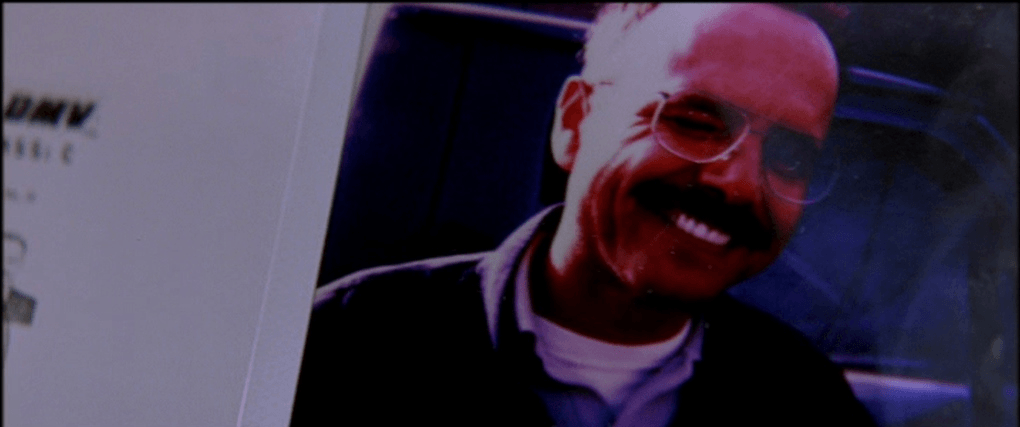
Two people enter his orbit. Natalie is a bartender who presents herself as sympathetic and gives him a lead on a man named Dodd, whom Leonard tracks down and confronts. Teddy is a cop who keeps appearing to Leonard, allegedly as a helpful friend, but always slightly suspicious. Leonard's own note says not to trust him.
Was Teddy a Good Guy? — Memento
The investigation tightens. Leonard's notes direct him to an abandoned building where he finds Jimmy Grantz — right age, right initials, right profile. Everything fits.
Related Posts
Memento movie ending explained
What happens at the end of Memento?
So, what exactly happened in the final scenes of this hardboiled Neo-noir thriller? We’ve decided to provide a clear structure for Memento’s ending below, because while so much of it may appear convoluted, a closer look reveals some fascinating interconnectivity.
Leonard kills Jimmy Grantz
Leonard kills Jimmy in the abandoned building. As Jimmy dies, he says one word: Sammy.
Leonard puts on Jimmy's suit and starts to move the body to the basement, but begins to lose the memory of why he killed this man. He runs out seeking help and sees Teddy. Teddy helps him but is stuck by the suspicious Leonard, who holds a gun to Teddy and demands the truth.
Teddy’s full confession
He tells Leonard the truth — or his version of it. Leonard already found the real John G. a year ago with the help of Teddy who is a cop. Leonard killed him, forgot, and Teddy saw an opportunity in Leonard. Teddy exploits Leonard's condition, using him as a hitman with no memory of his own crimes, siccing him on drug dealers so that he can get the money from the busted-up drug deals. The cherry on top is that the Sammy Jankis story, Teddy says, is actually about Leonard. But Leonard repressed the memory as a story of a past insurance investigation. Leonard listens and is unsure what to make of the truth, or if it's truth at all.
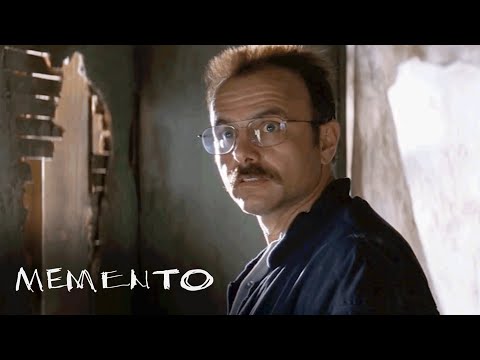
Teddy Reveals Leonard Already Got Revenge | Memento film explained
Leonard's deliberate choice
Leonard leaves and writes on the back of Teddy's Polaroid a note that will cause him to kill Teddy (which brings us back to the opening scene). He writes on the back of Teddy’s Polaroid the only thing that will push him to take a life — He killed your wife. He goes to a tattoo shop to tattoo Teddy’s license plate to his thigh as a fact that it belongs to the man who killed his wife.
He knows exactly what he's doing. His own voiceover says so: Do I lie to myself to be happy? In your case, Teddy… yes, I will.
The film cuts briefly to Leonard in bed beside his wife — warm, alive, her eyes opening. Then the Polaroid develops, and we are back at the beginning, and Teddy is already dead.
Is Teddy good in Memento?
Is Teddy a villain, or was he trying to help Leonard?
The easy answer is yes. Teddy manipulated a brain-damaged man into committing murders and pocketed the proceeds. The more nuanced answer is — it depends on how you look at it. Teddy seemingly helped Leonard find the real attacker a year prior with a Polaroid to prove it. Whatever his motives, Leonard got his revenge. At that point, Teddy faced a choice: tell Leonard the truth and watch him dissolve into purposelessness, or let the system keep running to his own advantage. What might have begun as mercy evolved into opportunism.
Explain Memento ending
Should you believe Teddy?
Teddy has nothing to gain from telling Leonard the truth in that parking lot. Leonard will forget it in minutes. It reads less like manipulation and more like exhaustion as proof that he’s a man who has been managing a lie for a year and has run out of reasons to continue.
Nolan has said Teddy is essentially telling the truth in that final scene. The tragedy is that the one honest thing Teddy ever tells Leonard is exactly what Leonard chooses not to believe.
Who is Sammy Jankis
Is the Sammy Jankis story true, or is it really Leonard's?
Leonard tells the Sammy Jankis story constantly — to Teddy, to Natalie, to a stranger on the phone. It's his cautionary tale about a man with his condition whose wife tested him with insulin injections until she died. He tells it to explain himself. To establish that he, unlike Sammy, understands what he is.
The film doesn't quite believe him.
What the Film Shows
The visual evidence is precise and easy to miss. During a black-and-white sequence, as Leonard describes Sammy sitting catatonic in a mental institution, a figure walks across the camera for literally a single frame; Leonard himself is sitting in Sammy's chair.
The insulin injection scenes are equally loaded. The hands in the flash aren't Sammy's — wrong build, wrong details. The woman in the background wears a gold necklace and a white V-neck that appear throughout the film on Leonard's wife. Different story, same woman.
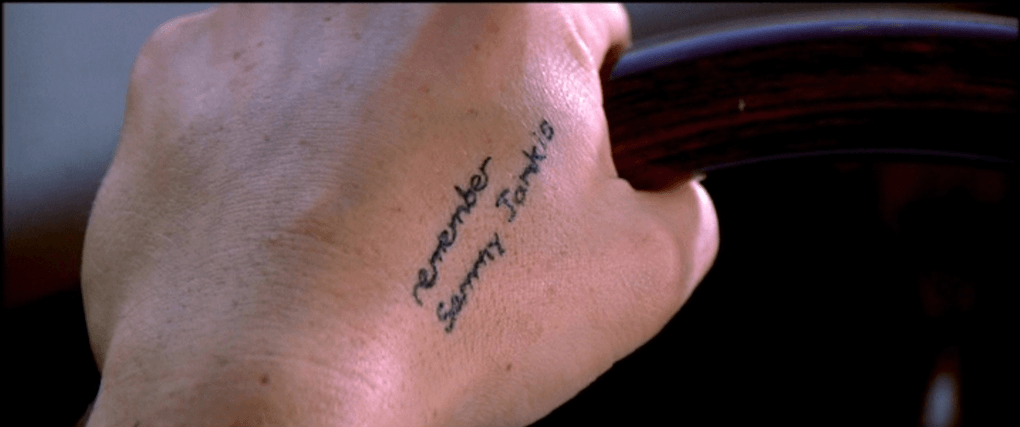
Leonardo Tattoo
What Teddy Claims
Sammy was real, Teddy says. Leonard did investigate him. But Sammy had no wife. The insulin story is Leonard's own memory so unbearable he offloaded it onto an existing case and gave it a different name. His wife survived the attack. She came home. She tested him. He failed.
Why Leonard Denies It
Leonard's denial isn't a symptom of his amnesia. It's a choice. Accepting the Sammy theory means accepting that he killed his wife — that the man who grieves her is also the man who caused her death. The revenge mission only holds together if he remains the wronged party. So the wronged party is what he stays.
His memory system, designed to protect him from manipulation, has become the most sophisticated self-deception device imaginable. He can't accumulate contradictory evidence. He only trusts what he's already written down, already decided to preserve. The confirmation bias isn't incidental to his condition — it's the whole architecture.

Memento 2000 Ending Scene
The tattoo reads Remember Sammy Jankis. On first watch, a professional reminder from a case that taught him something. On rewatch, a command — remember that Sammy did this, not you — the most important lie he ever told himself, burned into his skin so he can never stop believing it.
Related Posts
Memento movie explained
Did Leonard kill his own wife?
Most likely, yes. His wife survived the original attack. She came home. She lived with Leonard in his condition until, at some point, she tested him the same way Sammy's wife tested Sammy — asking him to administer her insulin, believing that if he truly loved her, something in him would remember he already had. He didn't remember. She died from the overdose, not the assault.
Leonard then did what the film shows him doing throughout: he found an existing story, attached the unbearable parts to it, and filed it under someone else's name. Sammy Jankis became the man who killed his wife by insulin. Leonard became the grieving husband with a mission.
The film's visual evidence points here. Leonard appears in Sammy's institutional chair. The woman administering the insulin wears his wife's necklace and his wife's shirt. Teddy states plainly that Sammy had no wife. Nolan has said the answers are in the film for an attentive viewer — and what the attentive viewer finds, consistently, is Leonard's own story wearing Sammy's face.
The alternative reading, that his wife died in the attack as Leonard believes, rests on trusting his pre-injury memory. That trust is reasonable in theory. In practice, the film gives us a man who was already reshaping his own history before anyone else could touch it.
Leonard doesn't know what he did. That may be the only mercy the film allows him.
Memento characters
How does Natalie Manipulate Leonard in Memento?
She figures it out fast. Leonard is wearing Jimmy's suit, driving Jimmy's car, and he cannot hold a thought for longer than a few minutes. Natalie has all of this within the first conversation and knows exactly what it means.
She needs Dodd gone, a man from the drug trade threatening her, and Leonard is a ready-made solution. He will act on instructions he believes he wrote himself and forget everything inconvenient before the next scene.
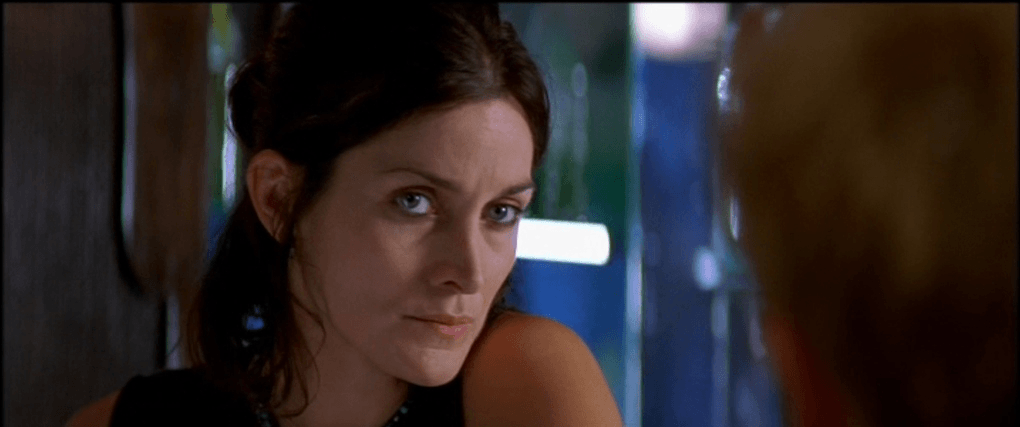
How does Natalie Manipulate Leonard in Memento?
The film shows the mechanics directly. She baits him into a rage, lets it build, then quietly removes every pen from the room before walking out. She waits. She comes back. Leonard has nothing written down so he has nothing. She hands him a prepared note about Dodd and he accepts it as his own intelligence.
Dodd disappears. Jimmy Grantz, almost certainly, follows the same logic. Teddy manipulated Leonard across months and carries something like exhaustion about it by the end. Natalie does it in an afternoon. The speed of it, how little she seems to weigh it, is what makes her the most unsettling presence in the film.
Themes in Memento explained
What are the main themes of Memento?
The organizing themes underneath Memento's narrative revolve around control, specifically, the belief in it and the impossibility of it.
Control as illusion
Leonard's photographs, notes and tattoos are all designed to keep him functional and pointed in a direction. He believes the system works. It has been compromised from the beginning by Teddy's redirections, Natalie's planted information, and Leonard's own curation of what went in. The system records whatever version of reality its keeper chose to preserve at the moment he wrote it down.
Control as illusion
Guilt, memory, and self-deception
The revenge mission is not really about justice. Underneath it is guilt, buried so deep that Leonard built an entire parallel narrative to keep it from surfacing. Sammy Jankis is what that guilt looks like when it has been processed, renamed and made survivable.
His memory system and his self-deception operate as one thing. He cannot accumulate contradictory evidence, cannot revise the record. Whatever he chose to believe at the moment he wrote it down is what he carries forward.
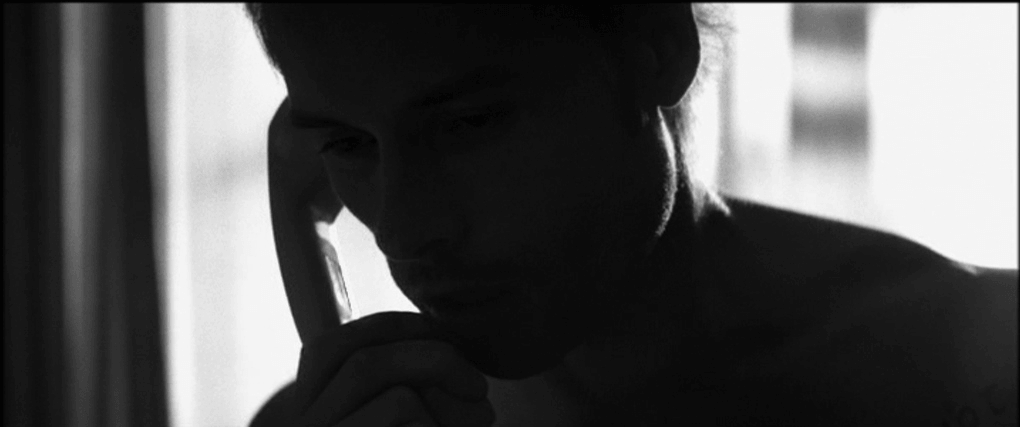
Guilt, memory, and self-deception
The impossibility of genuine revenge
Leonard cannot feel the satisfaction of revenge because he cannot remember achieving it. The release, the sense of resolution, all of it requires a continuity he doesn't have.
Teddy tells him the revenge was completed a year ago. Leonard had it, felt it, lost it before it could mean anything. What he has is the mission, which is a different thing entirely. The mission gives him purpose, identity, a reason to be in motion. So the mission continues, and Leonard drives away from every ending he will never remember reaching.
Nolan’s interpretations of Memento ending
What has Christopher Nolan said about Memento's ending?
The impossibility of genuine revenge
In an interview with Filmmaker Magazine, Nolan explains his befuddlement with the audience's unwillingness to believe in Teddy’s confession at the end of the film. He says, “The most interesting part of that for me is that audiences seem very unwilling to believe the stuff that Teddy [Pantoliano] says at the end – and yet why? I think it’s because people have spent the entire film looking at Leonard’s photograph of Teddy, with the caption: “Don’t believe his lies.” That image really stays in people’s heads, and they still prefer to trust that image even after we make it very clear that Leonard’s visual recollection is completely questionable.”
In other words, the audience falls for the same trick Leonard does. We've been conditioned by Leonard's own unreliable notes to distrust the one person who may be telling the truth. Nolan elaborated further on why Teddy's credibility problem is almost unfairly stacked against him: "For me, the crux of the movie is that the one guy who might actually be the authority on the truth of what happened is played by Joe Pantoliano, who is so untrustworthy, especially given the baggage he carries in from his other movies — he's already seen by audiences as this character actor who's always unreliable." This may seem like a direct answer from Nolan, but the DVD release and director commentary further complicate things.
Easter egg Memento story explanation
What are Memento’s four DVD endings?
Nolan recorded four separate commentary tracks for the film's final act, each framing the ending differently — one in which he confirms Teddy is telling the truth, and one in which he describes Teddy as a pathological liar who has known Leonard long enough to push his buttons with perfect precision.

Memento Doesn’t Have One Ending… It Has Four
On that fourth track, Nolan notes: "It is a fairly standard device that the bad guy comes along at the end of the movie and gives us the exposition, and to me it's amazing that people don't question that character. They just accept the answers because they're so desperate for answers in the story." Nolan intentionally misleads the audience to do exactly what his film does — leave it ambiguous and uncertain enough for the audience to further engage with the story.
Related Posts
Memento 2000 explained
Why is Memento's ending still talked about 25 years later?
Memento never fully resolves, and what it refuses to resolve is not a plot point but a question about the self. Leonard's tragedy is accessible because everyone relies on incomplete, self-serving memories to construct who they are. The system Leonard builds externally is something most people run internally, without noticing.
The film rewards returning to it. A viewer who goes back carries the ending into every scene and watches the whole thing change. That capacity for total transformation on a second viewing keeps people coming back twenty-five years on.

Memento Breakdown | Ending Explained, Easter Eggs, Hidden Details & Things You Missed
Nolan never stopped working on these questions. The Prestige, Inception, Interstellar, all of them follow men who build systems around a loss they cannot process. Memento is where that obsession started, and it remains the most direct version of it.
Nolan’s unique story structure
Why is Memento told backwards?
The structure puts the audience in Leonard's position. Watching events out of order, we know consequences before causes, feel certainty before we have earned it, and make judgments about characters before we have enough information. We do what Leonard does, and we get things wrong in the same ways he does.

Memento — Telling a Story In Reverse
It also reflects how films are actually understood. Audiences experience movies forward but make sense of them backward, reinterpreting early scenes in light of later ones. Memento makes that process visible by collapsing it into the viewing experience itself.
Nolan has said he wanted to stay entirely inside Leonard's head, to never give the audience a vantage point Leonard himself couldn't have. The backwards structure is how that intention becomes form.
Frequently Asked Questions
Memento Ending FAQs
Yes, according to Teddy. About a year before the film's present day, Teddy helped Leonard find and kill the real attacker. Leonard completed his mission and immediately forgot it had happened. Everything in the film takes place after the revenge has already been done.
The film's visual evidence points toward it being Leonard's. A single-frame shot places Leonard in Sammy's institutional chair. The woman administering insulin wears clothing associated with Leonard's wife throughout the film. Teddy states that Sammy had no wife. The most supported reading is that Leonard took a real case he once investigated and attached his own guilt to it.
Nolan has said the answers are in the film for an attentive viewer, and the evidence points toward Teddy being truthful in that scene. He has nothing to gain from the confession, Leonard will forget it within minutes, and the film's visual corroboration supports what Teddy describes.
Because accepting the truth would leave him with nothing. No mission, no purpose, no identity beyond a man sitting alone in motel rooms. He makes a conscious, reasoned decision to manufacture Teddy as a target and keep the loop running. His own voiceover says as much.
Most likely yes. The film's evidence suggests she survived the attack, came home, and died from an insulin overdose Leonard administered without remembering he already had. The Sammy Jankis story exists to carry that guilt under a different name.
Anterograde amnesia is the inability to form new long-term memories following brain injury, while retaining memories from before the event. The most documented real case is Henry Molaison, whose hippocampus was surgically removed in 1953. Memento's portrayal is broadly accurate. Leonard retains procedural memory, holds information for a few minutes, and keeps his pre-injury past intact. The film takes some dramatic license with the precision of his system but treats the condition with more care than most.
It puts the audience in Leonard's position. We experience consequences before causes, form judgments before we have enough information, and feel certainty we haven't earned. Nolan wanted to stay entirely inside Leonard's head and never give the audience a vantage point Leonard himself couldn't have. The structure is how that commitment becomes form.
UP NEXT
Christopher Nolan Movies, Ranked
Christopher Nolan has spent twenty-five years making films about people who build elaborate systems around something they cannot face directly — Memento was where that started. From The Prestige to Inception to Oppenheimer, the same obsessions with memory, time and identity run through all of it, just at increasing scale. Here's every Christopher Nolan film, ranked.
Up Next: Christopher Nolan Movies, Ranked →

Share your vision with elegant shot lists and storyboards.
Create robust and customizable shot lists. Upload images to make storyboards and slideshows.