After Oppenheimer dominated the 2024 Oscars and earned nearly $900 million worldwide, all eyes turned to Christopher Nolan’s next move. Christopher Nolan’s The Odyssey was his answer—a bold adaptation of Homer’s epic. Shot across multiple continents on IMAX and released on July 17, 2026, it sports a star-studded cast that includes Matt Damon, Tom Holland, Anne Hathaway, Zendaya, and Robert Pattinson.

Watch: What Makes an Epic Movie
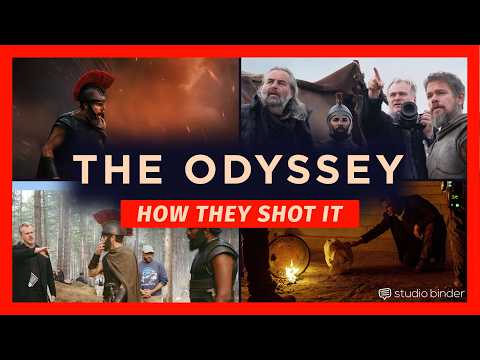

Subscribe for more filmmaking videos like this.
Christopher Nolan, The Odyssey movie
What is Christopher Nolan’s The Odyssey?
The Odyssey is a historical action epic written and directed by Christopher Nolan. The film is an adaptation of Homer’s ancient Greek epic poem of the same name, which is widely considered one of the most influential texts of Western literature.
The film is said to have cost an estimated production budget of $250 million for the film, making it the most expensive of his career.
The production went global, shooting in locations across Morocco, Greece, Italy, Sicily, Scotland, Iceland, Ireland, Western Sahara, and Hollywood soundstages over a six-month period. The film was also the first feature film in history to shoot entirely on IMAX 70mm film cameras.
Related Posts
Production of The Odyssey Christopher Nolan
What are the facts on Nolan’s The Odyssey?
Want a straightforward breakdown of all the facts about The Odyssey Christopher Nolan IMAX epic? Below is a list of all the credited information for the film.
- Release Date: July 17, 2026
- Studio: Universal Pictures
- Production Company: Syncopy (Christopher Nolan & Emma Thomas)
- Format: Shot entirely on IMAX 70mm film cameras — a first for any feature film
- Genre: Epic Fantasy / Action / Adventure / Historical
- Source Material: The Odyssey by Homer (c. 8th century BCE)
- Director/Writer: Christopher Nolan
- Composer: Ludwig Göransson
- Visual Effects: DNEG and Wētā Workshop
- Editor: Jennifer Lame
- VFX Supervisor: Andrew Jackson
- Estimated Budget: $250 million
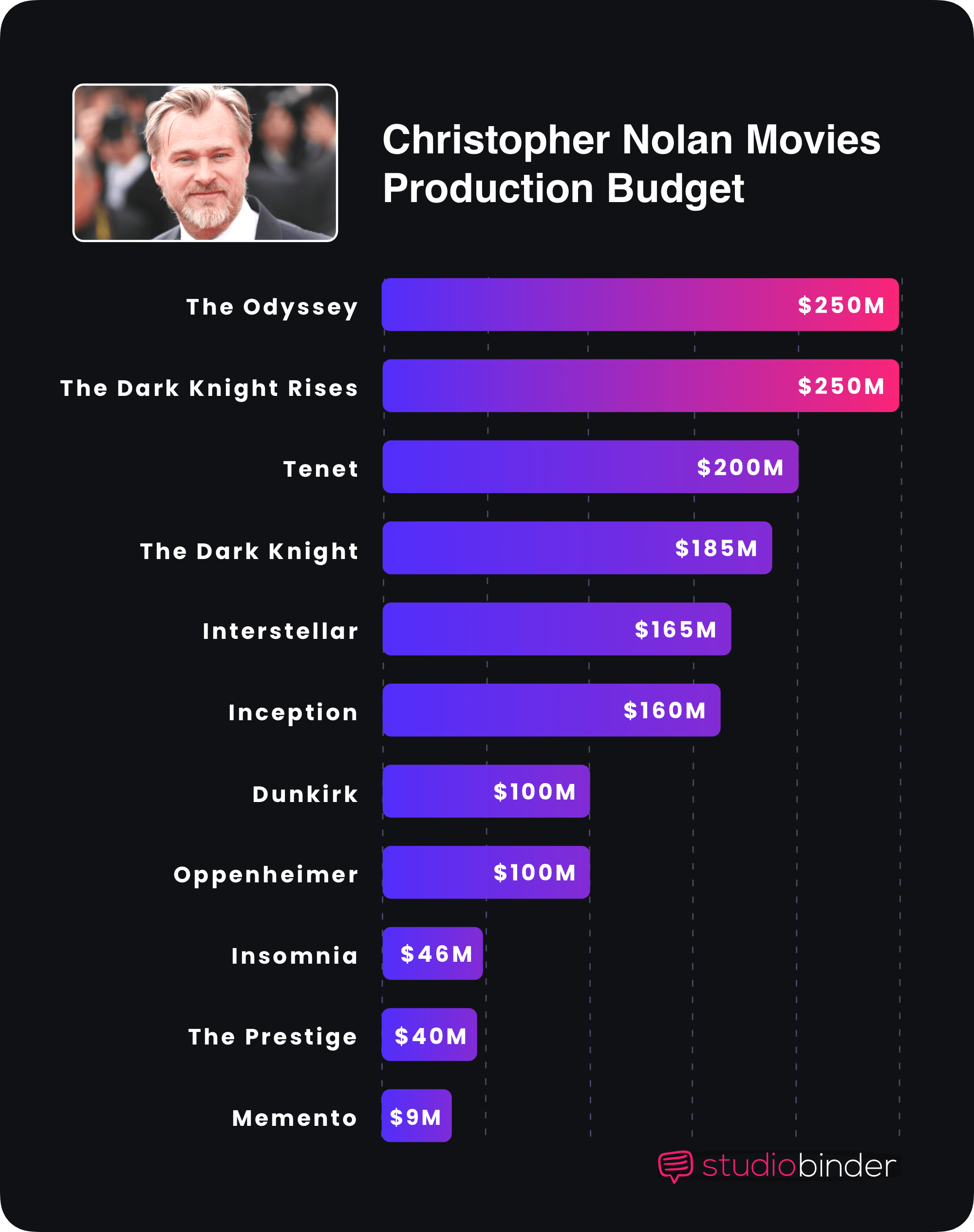
Christopher Nolan Movies Production Budget
Christopher Nolan’s The Odyssey
First look at The Odyssey's film stills
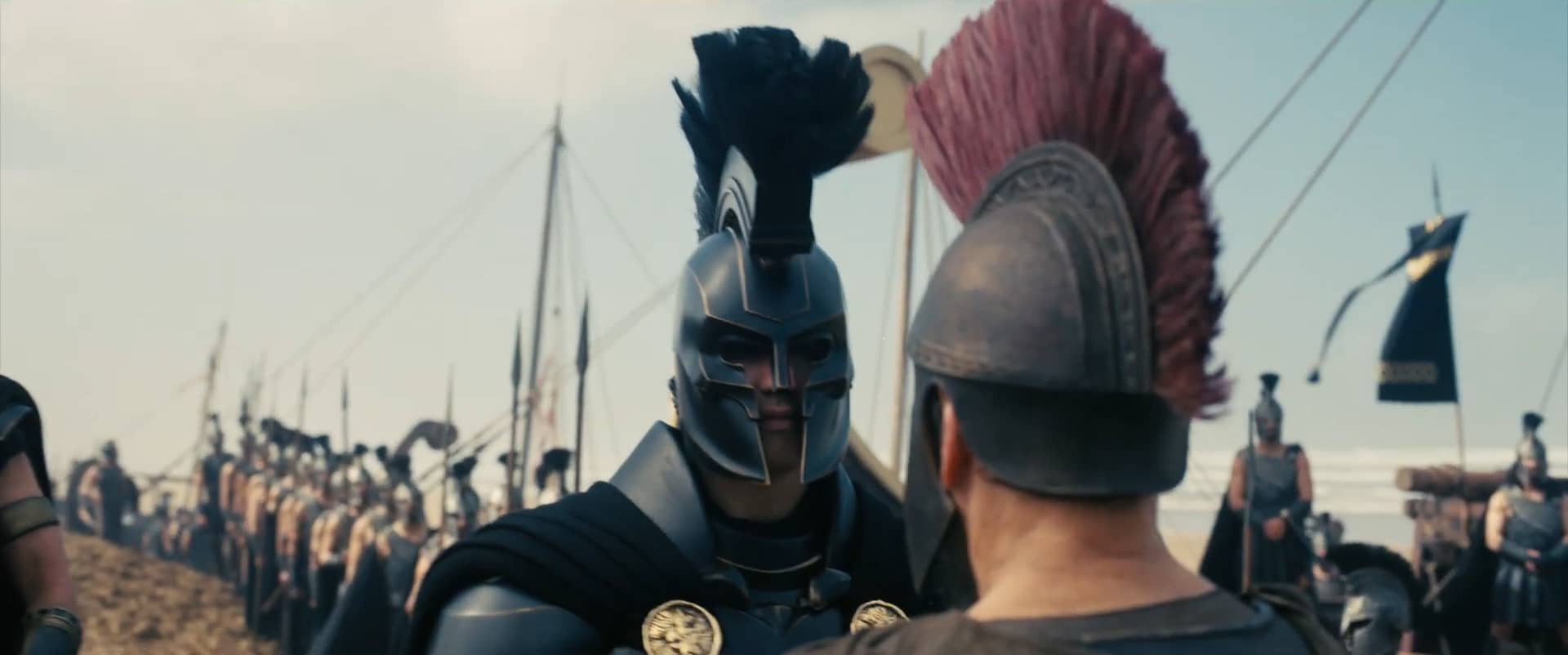
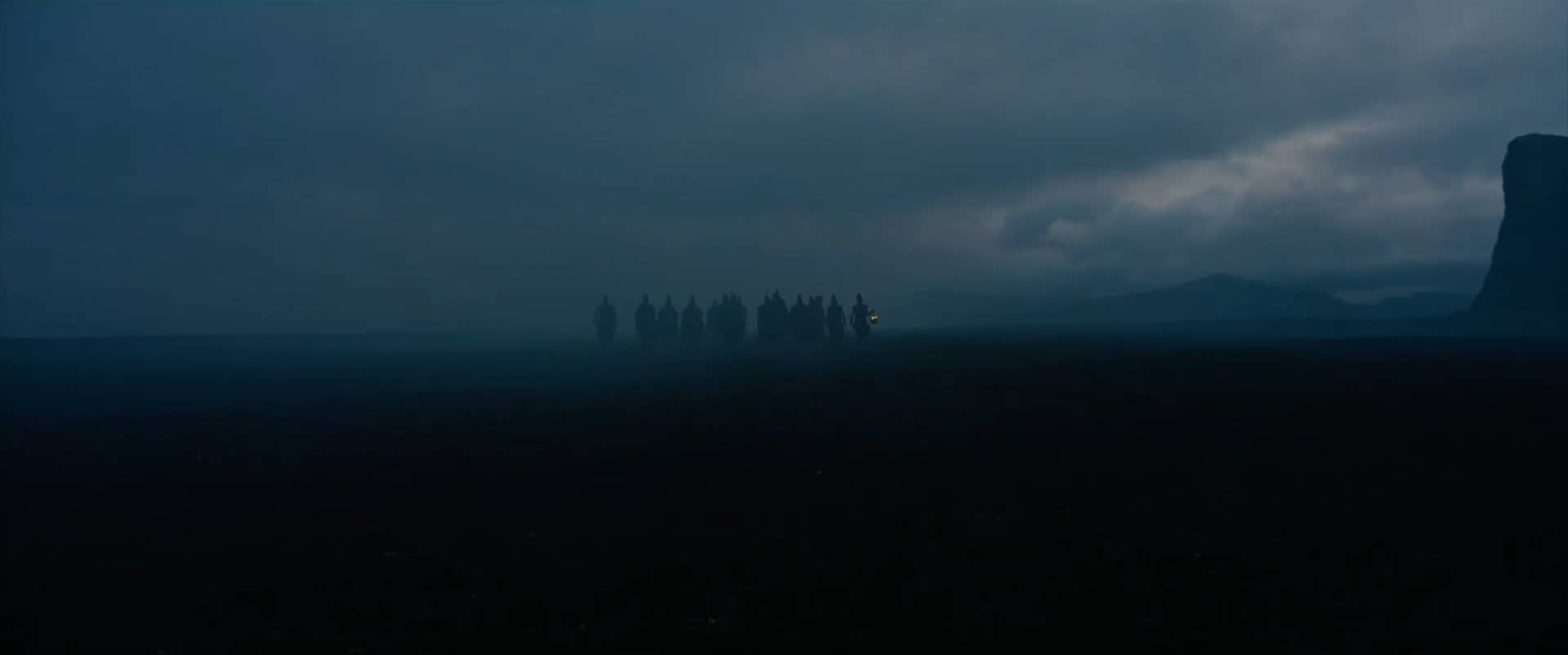
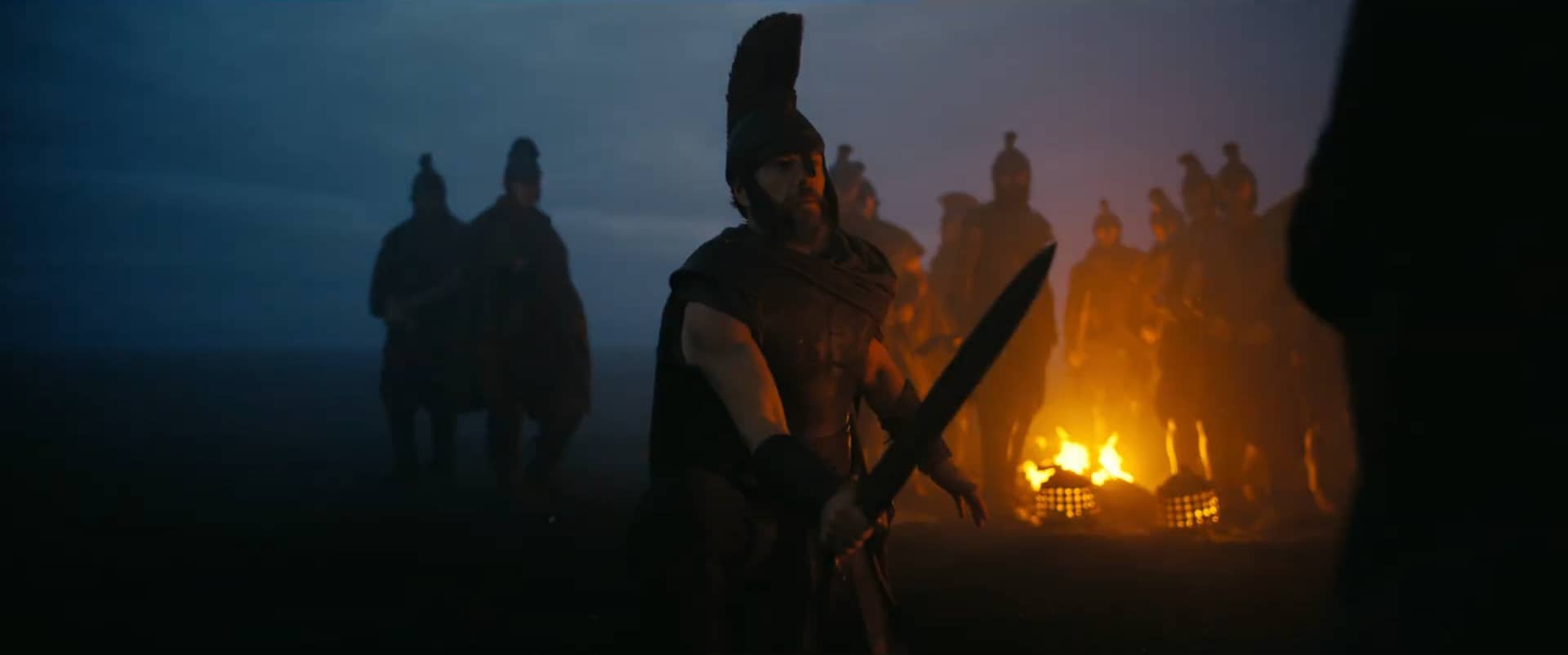
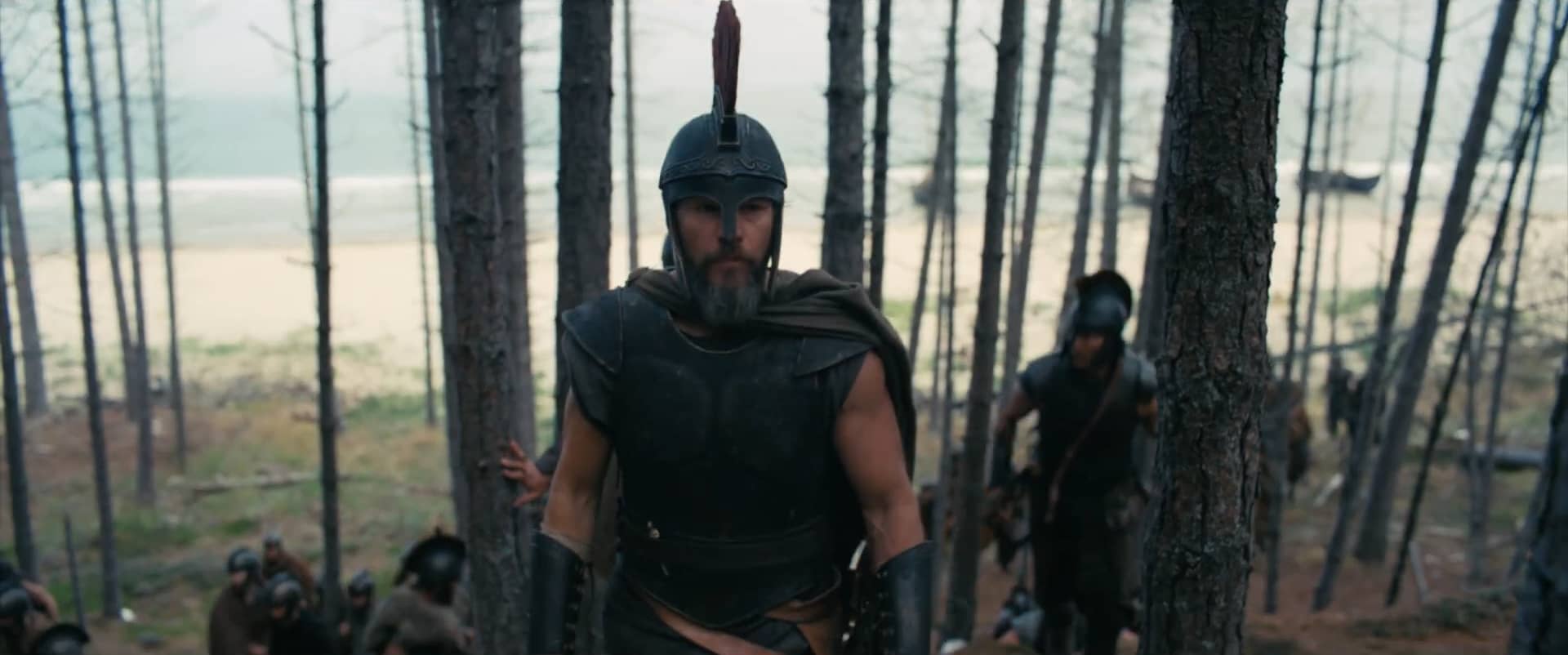
The Odyssey visuals are a technical marvel. With praise to Nolan’s Oppenheimer and Interstellar cinematographer, Hoyte van Hoytema, here is only a small taste of the visual beauty of the film. Dive into the below image gallery to explore the most stunning visuals The Odyssey has to offer.
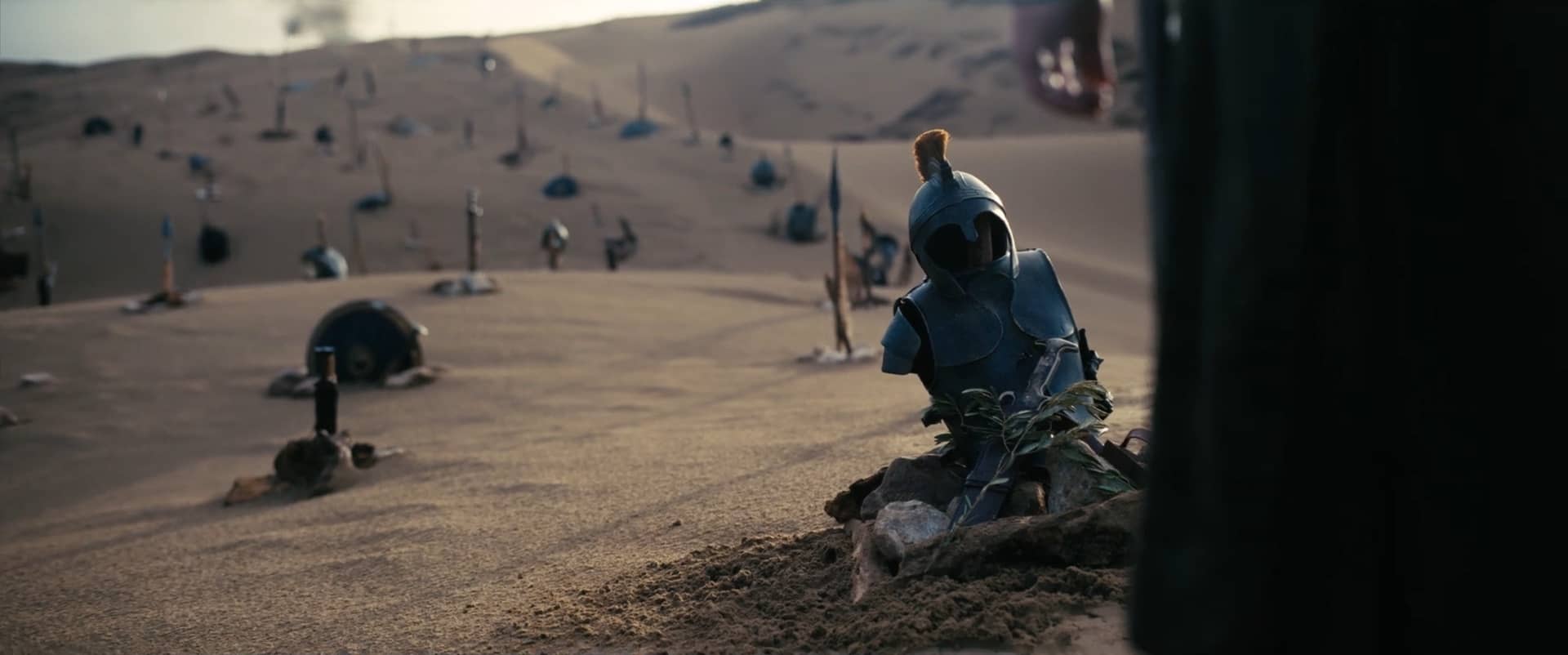
Battle armor · Christopher Nolan’s The Odyssey
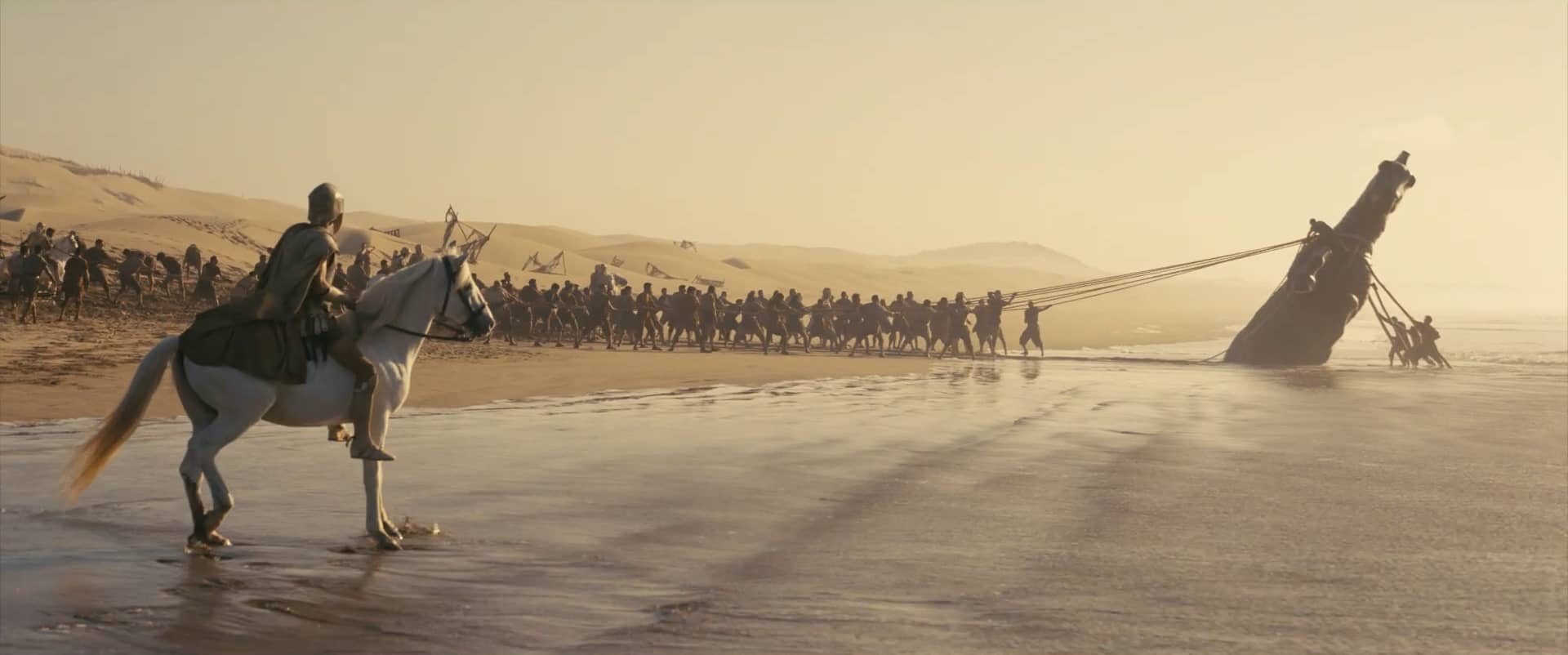
Trojan Horse · Christopher Nolan’s The Odyssey
Trojan warrior · Christopher Nolan’s The Odyssey
Warriors in the distance · Christopher Nolan's Odyssey
Matt Damon as Odysseus · Christopher Nolan’s The Odyssey
The Odyssey Christopher Nolan cast
Who are the cast members of The Odyssey?
Nolan is known to work with the same circle of talent throughout his films. And like Oppenheimer before it, The Odyssey movie Christopher Nolan made assembled a massive ensemble cast of A-list and character actors.
Matt Damon as Odysseus · Christopher Nolan’s The Odyssey
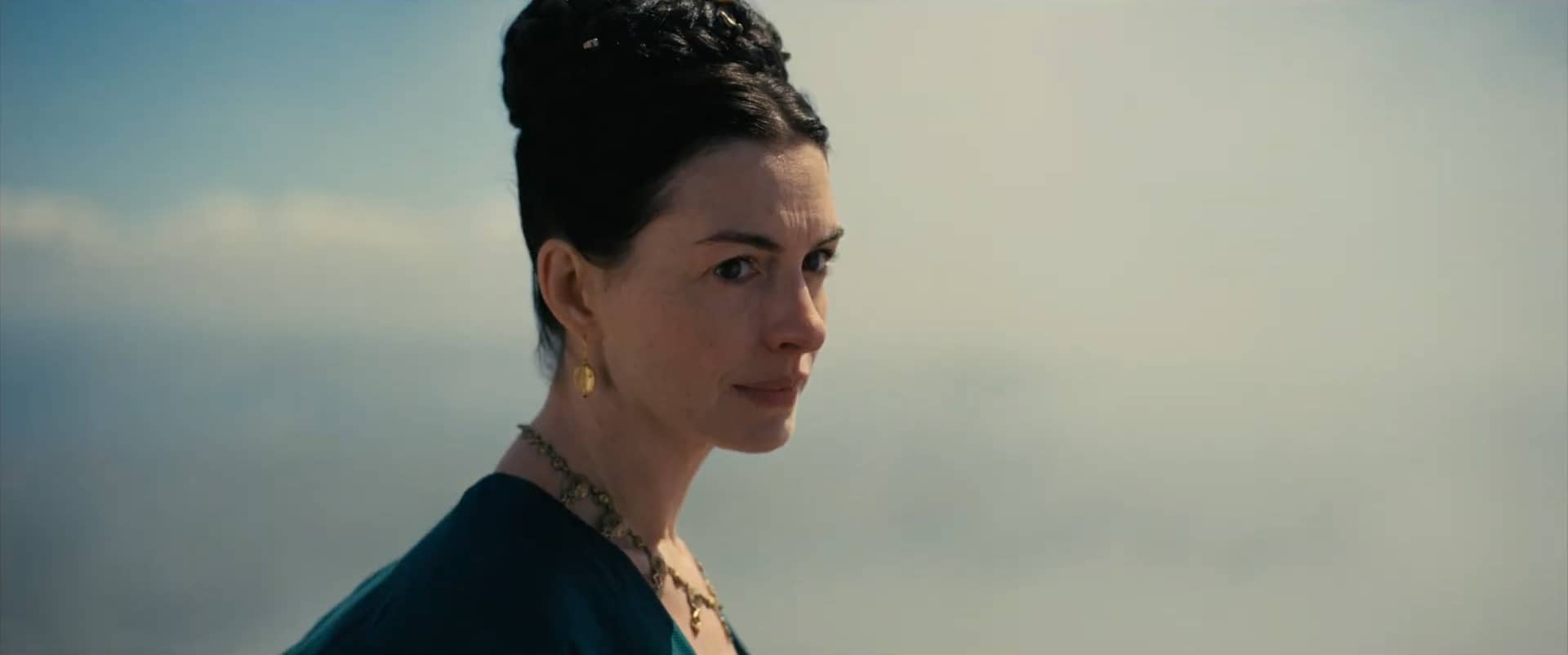
Anne Hathaway as Penelope · The Odyssey
In addition to Matt Damon and Anne Hathway, this is the above-the-line stars of Christopher Nolan's The Odyssey:
Roles in The Odyssey:
- Matt Damon as Odysseus. Damon previously appeared in Nolan’s Interstellar and Oppenheimer.
- Tom Holland as Telemachus — Odysseus’s son. This is his first Nolan collaboration.
- Anne Hathaway as Penelope — Odysseus’s wife. Hathaway previously worked with Nolan on The Dark Knight Rises and Interstellar, making this a reunion over a decade in the making.
- Zendaya as Athena — The goddess of wisdom who protects and guides Odysseus. This was Zendaya’s first Nolan film, and reunited her on screen with Holland, her real-life partner, following several Spider-Man collaborations.
- Robert Pattinson as Antinous — The most aggressive of the suitors pursuing Penelope. Pattinson previously starred as Neil in Nolan’s Tenet.
- Charlize Theron as Circe — The powerful enchantress who crosses paths with Odysseus and his crew. First Nolan collaboration.
- Jon Bernthal as Menelaus — The king of Sparta, whose wife Helen’s abduction sparked the Trojan War.
- Benny Safdie as Agamemnon — The supreme commander of the Greek forces at Troy.
- John Leguizamo as Eumaeus — Odysseus’s loyal swineherd who helps him reclaim his household.
- Mia Goth as Melantho — One of Penelope’s maids who has been fraternizing with the suitors.
- Elliot Page — as the Greek soldier and Ithacan pawn, Sinon. Previously appeared in Nolan’s Inception.
- Lupita Nyong’o — Plays a dual role as Helen of Troy and her sister Clytemnestra. First Nolan collaboration.
Related Posts
Christopher Nolan The Odyssey trailer
Relive the trailer for The Odyssey
Want to relive the immense hype and anticipaton for The Odyssey? The trailer dropped in December 2025 by Universal Pictures. Take a look below.
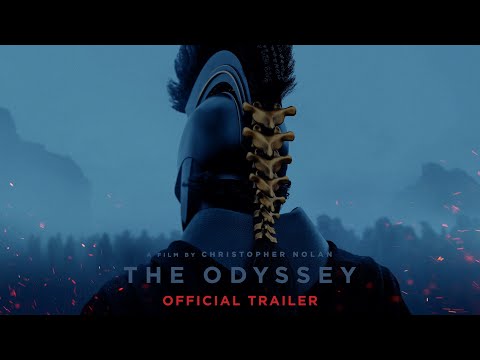
Christopher Nolan’s The Odyssey - Trailer
Direction of Christopher Nolan, The Odyssey
How did Christopher Nolan adapt The Odyssey?
While discussing the The Odyssey film Christopher Nolan made in an Empire Magazine interview, he called the story "foundational" and said he'd been looking for gaps in cinematic culture.
Specifically, Nolan recognized that the mythological films he grew up on (Ray Harryhausen and the like) had never been given the budget and credibility of a serious Hollywood production.
After all, Nolan is adapted a story that's been around for nearly three millennia, which is kind of insane to think about when you're also capturing that same story with state-of-the-art IMAX camera technology that's never been used before.
This is exactly the reason why (and how) Christopher Nolan movies feel so epic, like our video essay breaks down below:

What makes some movies feel epic? · Christopher Nolan’s The Odyssey
Did You Know
Nolan screened Lawrence of Arabia in 70mm for the cast mid-shoot, according to Collider. He paused production in Los Angeles to show David Lean's epic to the entire cast and crew — a film he considers, alongside Kubrick's 2001, a key influence on The Odyssey.
As far as the supernatural elements of The Odyssey, Nolan faced a bit of a creative obstacle. He needed to find a way to “approach mythological elements in a sort of real-world way.”
He described his direction to Empire, saying, “The big breakthrough creatively in thinking about the gods was that everything that is now explained by science was once supernatural. Lightning, thunder, earthquakes, volcanoes... people are literally seeing gods everywhere; not even the evidence of gods, they're seeing the actions of gods."
In The Odyssey Christopher Nolan approach, divine intervention feels like weather. Poseidon's grudge shows up as a sea that won't stop trying to drown you. Zeus makes his presence known through thunder and fire. The gods are everywhere, just not in the way you'd picture them.
Similarly, look at how he pulled off Oppenheimer — a film where he recreated the Trinity nuclear test without CGI, using practical explosions and in-camera effects on IMAX film to make the audience feel like they were standing at ground zero.

Making Oppenheimer · Christopher Nolan’s The Odyssey
As usual for Nolan, The Odyssey follows a non-linear framework — opening in the middle of the story, weaving between timelines, building toward a bloody homecoming. It reads like a blueprint for the kind of filmmaker who told Dunkirk across three overlapping time scales and Memento in reverse.

The Shape of Christopher Nolan’s Films · Christopher Nolan’s The Odyssey
Add in a psychologically fractured protagonist, mythology rendered through practical spectacle instead of green screens, and IMAX cameras capturing all of it for the first time in history, and the parallels to Nolan’s best films start to pile up:
Nolan Film | Parallel to The Odyssey |
|---|---|
Dunkirk (structure) | Three overlapping timelines collapsed into one story. |
Inception (mythic scale) | Fantastical dream layers, each with its own rules and dangers. |
Oppenheimer | A dialogue-driven drama about physics could feel like a spectacle on IMAX. |
Memento (psychology) | A protagonist defined by fractured identity and obsession. |
Christopher Nolan’s The Odyssey
What was the release date and production timeline?
The Odyssey movie Christopher Nolan directed was released in theaters worldwide on July 17, 2026. That July window lines up with Nolan’s biggest releases: The Dark Knight, Inception, Dunkirk, and Oppenheimer all debuted in the same month.
- Universal officially announced the film on December 23, 2024, that "Christopher Nolan's next film The Odyssey is a mythic action epic shot across the world using brand new IMAX film technology."
- Matt Damon and Tom Holland were the first cast members attached in October 2024, with Damon confirmed as Odysseus by February 2025. A wave of casting followed — Zendaya, Hathaway, Pattinson, Theron, Nyong'o, Safdie, Bernthal, and others were all announced between late 2024 and early 2025.
- The first official image of Matt Damon in costume — wearing a red-plumed Corinthian helmet — was released by Universal in February 2025, the same month principal photography began.
- Filming occurred from approximately February through August 2025 across the world Morocco, Greece, Italy (including the island of Favignana off Sicily, believed to be Homer's "goat island"), Scotland, Iceland, Western Sahara, Ireland, and Hollywood soundstages.
- IMAX tickets for opening weekend went on sale in July 2025 — a full year before The Odyssey Nolan release date — and sold out within hours. (Variety)
- Post-production - DNEG and Wētā Workshop handled visual effects, Jennifer Lame editing, Andrew Jackson supervising VFX, and Ludwig Göransson composing the score. (Rotten Tomatoes)
Christopher Nolan’s The Odyssey
Odyssey filming locations and production details
Locations: With a hefty budget and a story demanding ancient and epic locations, Nolan went global for the film. Production spanned Morocco, Greece (the Messinia region of the Peloponnese), Italy (including Favignana, the Sicilian island believed to be Homer's "goat island"), Scotland, Iceland, Western Sahara, Ireland, and Hollywood soundstages.

Christopher Nolan’s The Odyssey on LA sound stages
Cinematography: The Odyssey is the first feature film ever shot entirely on IMAX 70mm cameras. Nolan has used the format on Dunkirk, Interstellar, Tenet, and Oppenheimer, but always blended it with other formats. This time he went all-in, and IMAX CEO Richard Gelfond confirmed the production uses never-before-seen IMAX technology. One of the best cinematographers in the biz, Hoyte van Hoytema, Nolan's DP since Interstellar, is confirmed to have returned.
Score: Ludwig Göransson, who won the Oscar for his Oppenheimer score, returned as composer.
Visual Effects: DNEG and Wētā Workshop handled VFX, with Andrew Jackson back as supervisor. Nolan's "tactile realism" approach assured the gods and supernatural elements were depicted through natural phenomena rather than overt fantasy. Thanks to the grandiose source material, this was his most effects-heavy film to date.
Christopher Nolan, The Odyssey adaptation
Why is The Odyssey a perfect story for Christopher Nolan?
If you look at Nolan’s filmography as a whole, the Odyssey feels like the story he had been building toward. Nolan’s past use of time, non-linear storytelling, and character all led him here.
Time: Nolan is obsessed with the manipulation and experience of time. Memento runs backward. Inception layers time dilation across dream levels. Interstellar bends time through relativity. Dunkirk runs three separate timelines at different speeds. Tenet literally reverses the flow of time like in our breakdown of Nolan’s reverse fight scene below.

Tenet Fight Scene Explained
The Odyssey’s structure, even in its source material, tells a story told out of order, spanning ten years, where the past and present collide in the final act. Nolan of course used this to continuing building on his signature obsession.
Obsession and Homecoming: Nearly every Nolan protagonist is driven by a single consuming goal. Cobb wants to get home to his children. Cooper wants to get home to Murph. Even Batman is trying to reclaim his city.
Odysseus is the original version of this archetype: a man who crosses the known world, defies gods, and rejects immortality itself to get back to his wife and son.
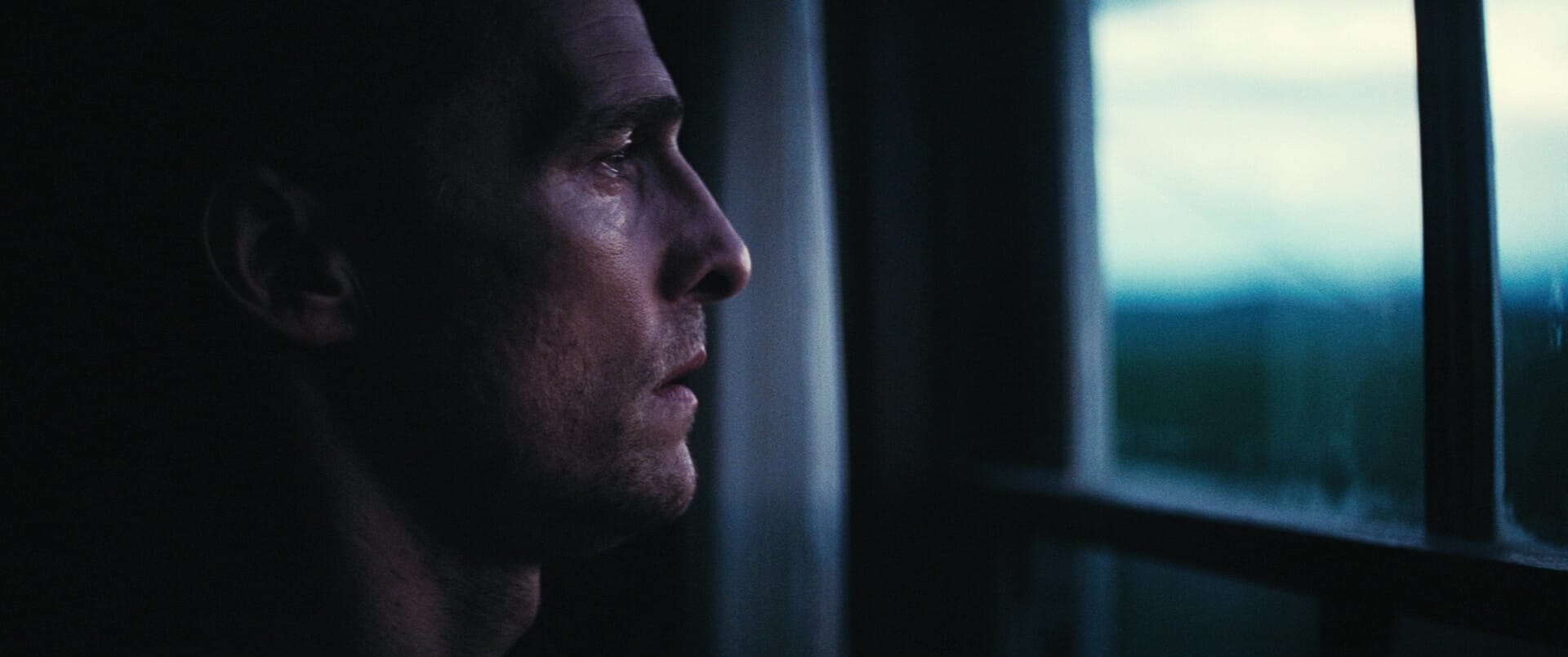
Interstellar (2014) • Christopher Nolan's The Odyssey
Identity and Deception: Nolan characters hide behind masks, literal and figurative. Batman. The Joker. The competing magicians in The Prestige. Leonard Shelby’s broken memory in Memento.
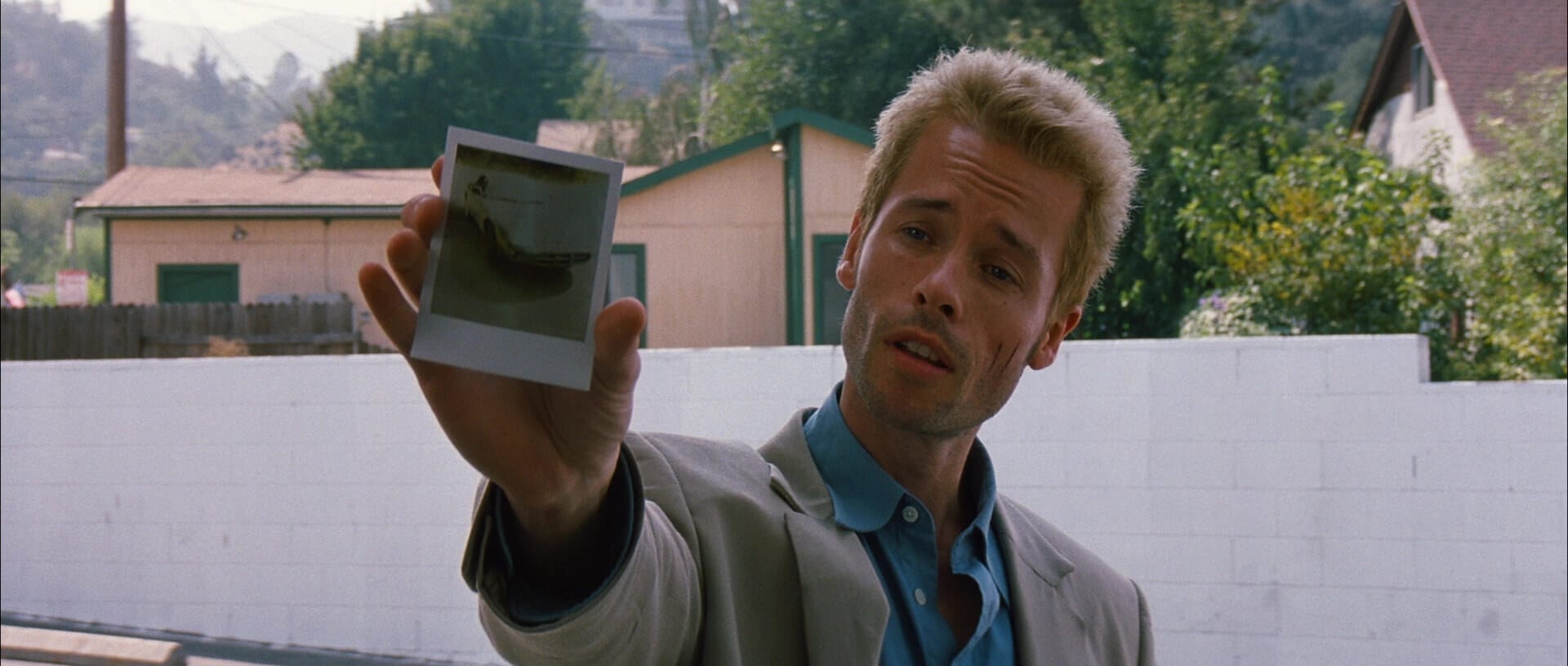
Memento (2000) • Christopher Nolan's The Odyssey
Odysseus is one of literature’s great deceivers. He tells the Cyclops his name is “Nobody,” he returns home disguised as a beggar, and the poem constantly asks who this man really is after all he has been through.
Moral Ambiguity: Nolan rarely deals in pure heroes or villains, good or evil. So, we can expect the same in his Greek epic adaptation. Oppenheimer created the atomic bomb and then agonized over it. Cobb manipulated his own wife’s mind. Batman surveilled an entire city to get to The Joker.
Odysseus is no simple hero either. He’s brilliant but arrogant, brave but reckless, and his own pride (like taunting Polyphemus) directly causes years of additional suffering for himself and his men, distancing them even further from home.

Christopher Nolan's Films Core Themes Chart
Christopher Nolan’s The Odyssey
The art of Nolan’s direction
Timeline structure — The Odyssey tells its story out of order — it opens mid-journey, flashes back, and weaves between multiple characters in different locations. That's Nolan's entire filmography in one sentence.
In fact, he’s been obsessed with manipulating the shape of time in story since his initial feature film The Following.

How Nolan makes Films · Christopher Nolan’s The Odyssey
The film cuts between Telemachus in Ithaca and Odysseus's flashbacks, with the Trojan War sequences functioning as memory. Safdie and Bernthal were cast as Agamemnon and Menelaus, which means those war scenes have real weight behind them.
Mythological realism — Nolan didn't dodge Homer's fantastical elements entirely. Poseidon's wrath is a wall of ocean. Zeus speaks through lightning. The gods are everywhere, but you won't see them sitting on clouds. Zendaya's Athena is a prime example. She's ambiguous. She may be a literal Godess, or simply representative of a tragic result of Odysseus' Trojan pillaging.
Check out Elliot Page's pre-release explanation on how they made Christopher Nolan’s The Odyssey below.

Elliot Page on Christopher Nolan’s The Odyssey
Visual tone — Forget polished marble. Christopher Nolan’s The Odyssey sports a gritty, weathered ancient world closer to lived-in warfare than the clean aesthetic of Troy. The costumes quickly drew criticism from historians for their anachronistic armor. But this movie is a myth shot on IMAX, not a documentary. Nolan prioritized how it looks on a six-story screen, not whether the helmet matches what a Mycenaean soldier would have actually worn.
Christopher Nolan The Odyssey Plot
What is The Odyssey book about?
Since The Odyssey is one of the most classic and beloved tales ever created, let's explore the original text a bit.
The basic plot of Homer’s Odyssey
Homer’s Odyssey dates back to roughly 2,700–2,800 years ago with scholars generally dating it to somewhere between 750 and 650 BCE. The epic follows Odysseus, the King of Ithaca. After ten years fighting in the Trojan War, Odysseus and his men set sail for home. But what should be a short voyage turns into another decade of hell.
Along the way, they face monsters, gods with grudges, and one bad decision after another that slowly leads to Odysseus losing every single man he left Troy with.
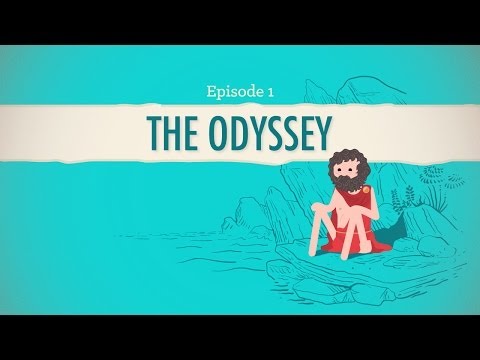
A Long and Difficult Journey, or The Odyssey: Crash Course Literature 201
Odysseus ends up stranded and alone, held captive on an island by a nymph who wants to keep him forever, until the gods finally step in and let him go. Meanwhile, back home, his wife Penelope is under siege. Over a hundred men have moved into the palace, convinced Odysseus is dead, each one competing to marry her and take his throne. His son Telemachus, who grew up without a father, goes in search of answers about what happened to him.
Odysseus eventually makes it back to Ithaca in disguise, and the final act is a bloody reckoning — he and Telemachus take back the palace by force. It's a story about a man trying to get home, and what that home even means after twenty years of war and wandering.
Major Characters in the Epic
Odysseus: King of Ithaca and a cunning warrior and strategist who conceived the Trojan Horse. He's not the strongest warrior on the battlefield. His defining trait is his mind or mētis (cunning intelligence).
Penelope: Odysseus’s wife, who spends twenty years fending off suitors while maintaining hope for her husband’s return. She famously delays the suitors by weaving a burial shroud by day and unraveling it each night.
Telemachus: Odysseus and Penelope’s son, who has grown up without his father in a household overrun by suitors. His coming-of-age journey to find his father mirrors Odysseus’s own voyage home.
Athena: Goddess of wisdom and war, Athena acts the divine protector of Odysseus and his son Telemachus. She often appears in disguise to guide and help them on their journeys.
Circe: A powerful enchantress and minor goddess who initially turns Odysseus’s men into swine but eventually becomes an ally.
Calypso: A nymph who rescues Odysseus after he's shipwrecked and holds him on her island for seven years against his will. She offers him immortality if he stays. Odysseus turns her down because he'd rather return home to Penelope than live forever without her.
Polyphemus: The Cyclops, son of Poseidon. Odysseus blinds him to escape and save his men. This triggers Poseidon’s vengeful wrath that keeps Odysseus and his men from returning home to Ithica.
Antinous: The most prominent of the suitors who have occupied Odysseus’s palace. His pursuit of Penelope and Odysseus’s wealth reveals his arrogance and cruelty, and is described as a "serpent's head".
Core Themes of The Odyssey
Homecoming: This is the central theme and drive of the epic poem. Odysseus’s main objective is to get home. The story circles the ache for home, belonging, loved ones, and the feeling of returning home after a long absence.
Identity and Disguise: Odysseus operates under false names and disguises throughout his journey and upon his return home. He famously tells the Cyclops his name is “Nobody.” After decades of war, wandering, and absence, the question of who Odysseus really is, to himself, to his family,is one of the poem’s deepest explorations.
Fate vs. Free Will: The gods intervene throughout the poem, but Odysseus’s choices, often reckless ones like taunting Polyphemus, are what most fundamentally shape his fate. The poem lives in the constant tension between divine control and human agency.
Related Posts
Homer’s The Odyssey in cinema
What are the previous film adaptations of The Odyssey?
Before Christopher Nolan, The Odyssey has been adapted many times over the past century of cinema, though none at the scale Nolan is attempting. Below is a list of past Odyssey adaptations.
L’Odyssée (1911) — Giuseppe de Liguoro’s early Italian silent film, one of the first cinematic takes on the story.
Ulysses (1954) — Directed by Mario Camerini, starring Kirk Douglas as Odysseus. A straightforward Italian-produced adventure film that covers the major beats of the epic.
The Odyssey (1997) — An Emmy-winning NBC television miniseries starring Armand Assante as Odysseus, with a larger-than-TV budget and practical effects for the era. Often cited as the most complete adaptation to date.
O Brother, Where Art Thou? (2000) — One of the Coen brothers’ best films. It’s a loose, comedic retelling set in Depression-era Mississippi.
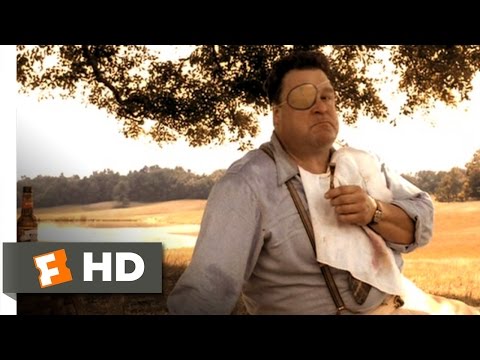
O Brother, Where Art Thou? - Big Dan Teague (2000)
George Clooney plays an Odysseus analogue (Ulysses Everett McGill) on a road movie through the American South. Not a direct adaptation, but deeply informed by the poem’s structure, characters, and themes.
Frequently Asked Questions
The Odyssey movie FAQs
Christopher Nolan’s The Odyssey is an adaptation of Homer’s ancient Greek epic poem. It follows Odysseus, the king of Ithaca, on his perilous ten-year journey home after the Trojan War. Along the way, he encounters mythical creatures like the Cyclops Polyphemus, the enchantress Circe, and the Sirens, while his wife Penelope and son Telemachus fight to maintain order back in Ithaca against a horde of aggressive suitors.
Yes. Universal Pictures confirmed in December 2024 that Nolan’s next film is a direct adaptation of Homer’s epic poem, described as “a mythic action epic shot across the world using brand new IMAX film technology.” Nolan is writing and directing.
No. Filming wrapped in August 2025 after a six-month shoot across Morocco, Greece, Italy, Scotland, Iceland, Western Sahara, Ireland, and Hollywood soundstages. The film is now in post-production, with DNEG and Wētā Workshop handling visual effects.
July 17, 2026, in theaters worldwide. IMAX screenings will be a major part of the rollout, and IMAX opening-weekend tickets went on sale in July 2025 — a year before release — and sold out within hours.
The confirmed cast includes Matt Damon as Odysseus, Tom Holland as Telemachus, Anne Hathaway as Penelope, Zendaya as Athena, Robert Pattinson as Antinous, Charlize Theron as Circe, Jon Bernthal as Menelaus, Benny Safdie as Agamemnon, John Leguizamo as Eumaeus, Mia Goth as Melantho, Lupita Nyong’o, Elliot Page, Travis Scott, Himesh Patel, Bill Irwin, Samantha Morton, and many more.
Yes. A 70-second teaser debuted in theaters in July 2025 and subsequently leaked online. A full official trailer was released in December 2025, accumulating over 121 million global views in its first 24 hours. A second trailer featuring Travis Scott arrived in January 2026.
The Odyssey is the first feature film in history to be shot entirely on IMAX’s 70mm film cameras. IMAX CEO Richard Gelfond confirmed the film uses never-before-seen IMAX technology.
This hasn’t been officially detailed, but Nolan’s track record (Memento, Dunkirk, Inception, Oppenheimer) strongly suggests a non-chronological approach. Homer’s original poem is itself non-linear, beginning in medias res, so the source material naturally lends itself to Nolan’s storytelling style.
Likely not in a strict archaeological sense. Early images revealed armor and costumes that historians have criticized as anachronistic for the Mycenaean Bronze Age. Nolan has spoken about prioritizing a cinematic interpretation of the myth over strict historical reconstruction. His approach suggests the film will feel grounded and realistic in tone, even if the specific period details don’t conform to what scholars believe the historical setting would have looked like.
UP NEXT
Christopher Nolan movies ranked
Now that we’ve gone over Christopher Nolan’s The Odyssey, what's next? How about we go over our list of Christopher Nolan’s past movies ranked from worst to best.
Up Next: Christopher Nolan Movies, Ranked →

Share your vision with elegant shot lists and storyboards.
Create robust and customizable shot lists. Upload images to make storyboards and slideshows.