
A darkened theater. The murmur of the audience fading as the lights dim. Anticipation palpable in the air. Suddenly, the curtain lifts and a different world comes alive right before your eyes. This is the magic of a play.
From ancient Greek tragedies to modern Broadway musicals, plays have evolved and adapted to reflect the changing times and societies. They have and will continue to hold a special place in our culture and hearts.
What is a Play in Theatre?
First, let’s define a play
Plays have always been a way for humans to tell stories and share experiences. They provide a platform for exploration, reflection, and understanding of the human condition. But what, one may ask, is the essence that makes a play, a play? Let's dive into the definition.
PLAY DEFINITION
What is a play?
At its core, a play is a form of storytelling that is performed live on stage. It can be comedic or tragic, thought-provoking or purely entertaining. Plays are usually divided into acts and scenes, with characters interacting and moving the story forward through dialogue, action, and music. While there are some variations in structure and style, most plays follow this basic format.
What is a Play Defined By?
- Live Performance
- Character Interaction
- Narrative
- Emotional Engagement
What is a Play Composed Of?
The Anatomy of a Play
Over time, plays have undergone changes and evolution, but the fundamental elements remain largely unchanged. This video analyzes the vital elements of a play and why each is important to an overall production.
What is a Play
Let's look at the fundamental components of a play and explore their respective functions.
Act
An act is a major division within a play, often chosen to indicate a change in time or location, or to present a different part of the narrative. In traditional Western theater, a full-length play is typically divided into two or three-act structure.
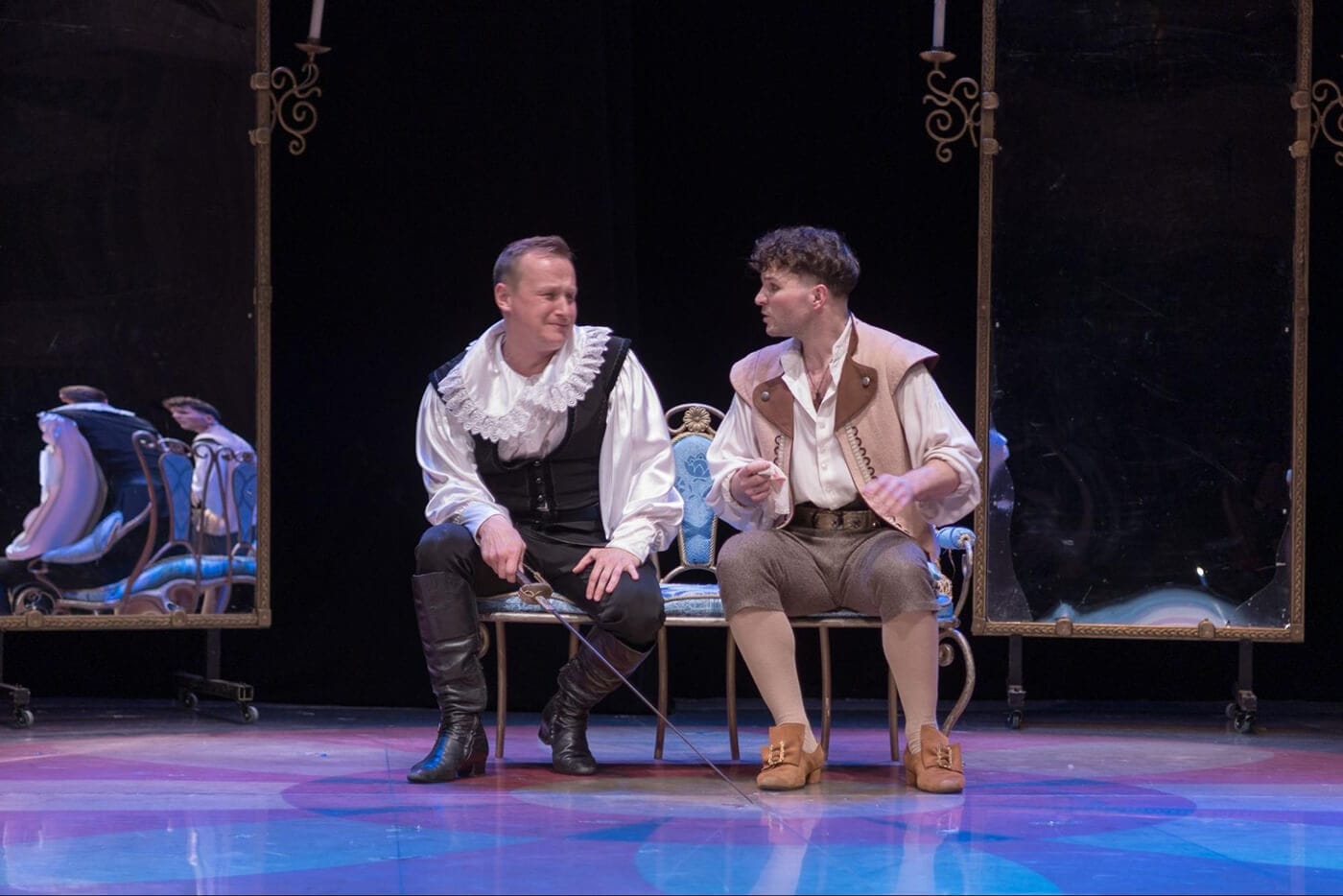
Act Example in a Play
Scene
Within acts, we have scenes. A scene is a smaller division of a play, typically involving a specific set of characters in a particular time and place. It is a building block of the narrative, driving the story forward.
Characters
Characters are the individuals portrayed in a play. They are the agents of the story, whose conflicts and interactions form the basis of the plot. Main characters drive the plot, while supporting characters add depth and complexity to the narrative.
Dialogue
Dialogue is the verbal exchange between characters in a play. It serves to reveal the characters' thoughts and emotions, advance the plot, and provide information to the audience.
Stage Directions
Stage directions are instructions written into the script of a play, indicating actor movements, the delivery of dialogue, or details of the set. They help to visualize the narrative and guide the performance.
Set and Props
The set refers to the physical surroundings in which the action of the play takes place. Props are items used by characters during a performance. Both help to create a realistic environment and aid in storytelling.
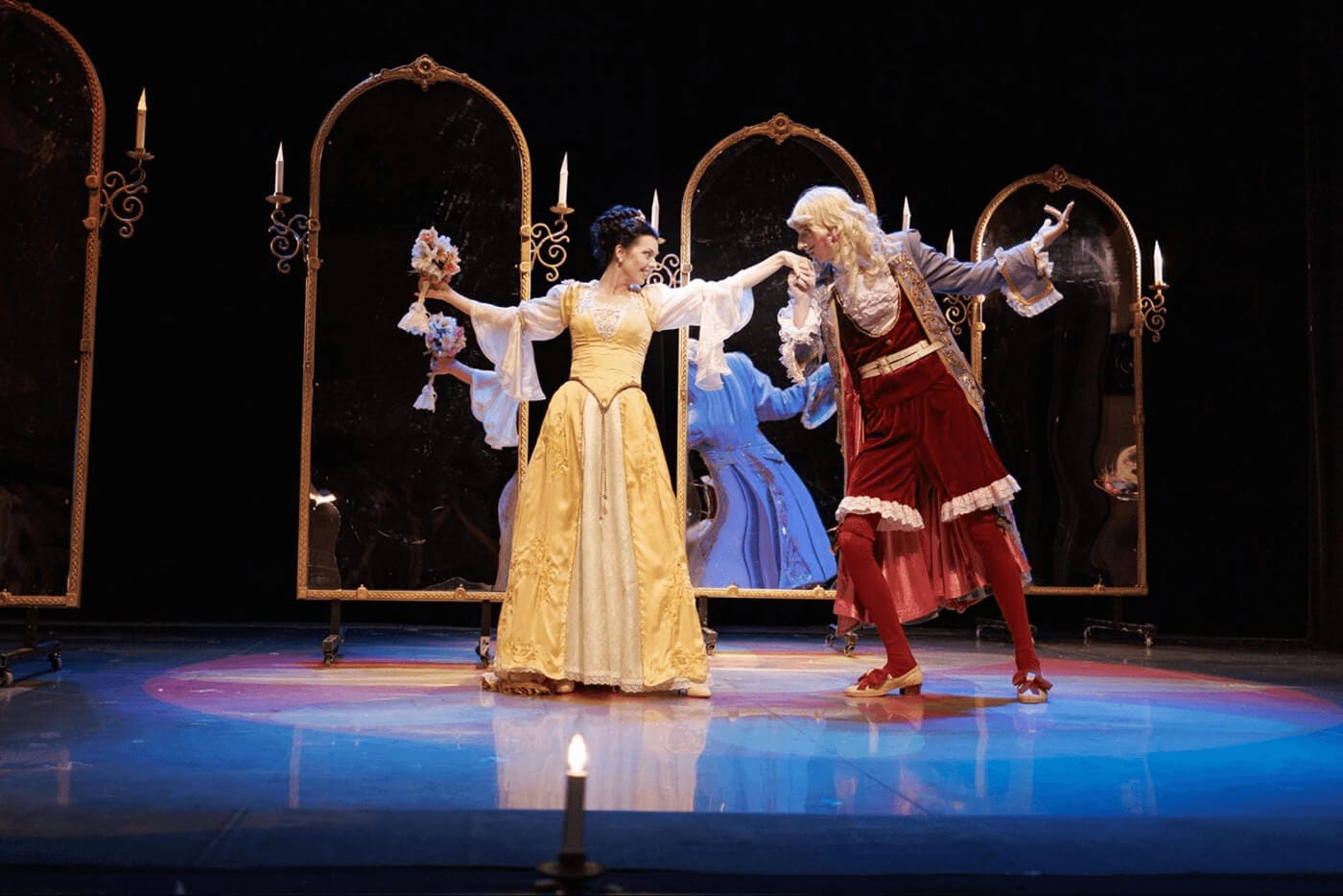
Men and Women Dancing in a Play
Theme
The theme of a play is its central idea or message. It's an underlying concept that the playwright explores through the narrative, characters, and dialogue.
Understanding these elements provides insights into the craft of playwriting and enriches our appreciation of theatrical performances. Now let’s turn our attention to the history of the play through time.
History of Theatre
The Birthplace of Theatre
The genesis of theatre and plays can be traced back to Ancient Greece around the 5th century BCE. The celebration of the god Dionysus became the platform for the performance of the first plays, which were initially integrated into religious festivals.
Ancient Greek Theater
Renowned Greek playwrights like Sophocles, Euripides, and Aristophanes have left an indelible mark with their tragedies and comedies, some of which are still performed today.
Types of Plays
The Rise of Mystery and Morality Plays
As we move into the Middle Ages, plays took on a religious tone in Europe. Mystery plays, presenting biblical stories, and morality plays, illustrating moral lessons through allegorical tales, were common. These plays, often organized by guilds, were performed in open spaces and were integral in educating the largely illiterate population about religion and morality.
Theatre in the Renaissance
Renaissance and Beyond
The Renaissance period witnessed a renewed interest in classical Greek and Roman theatre, giving birth to the well-known genre of Elizabethan drama in England.
Shakespeare's Early Days: Crash Course
This era is famously associated with playwrights like William Shakespeare and Christopher Marlowe. As time progressed, the 18th and 19th centuries ushered in a wave of realism and naturalism in plays, reflecting societal changes and challenging previously held beliefs.
Related Posts
Neoclassicism in Plays
Neoclassicism and Commedia dell'arte
In the 17th century, the Neoclassical Period took root, particularly in France, emphasizing order, logic, and restraint, and adhering to the three unities of time, place, and action.
The era was dominated by playwrights like Jean Racine and Molière. In contrast, Commedia dell'arte, originating in Italy, embraced improvisation, stock characters, and bawdy humor, influencing later forms of farce and pantomime.
Romanticism in Theatre
Romanticism and the Well-Made Play
The 19th century was marked by the rise of Romanticism, where emotions and individualism took center stage. This period also saw the popularity of melodrama, with its emphasis on sensationalism and moral polarization.
The 'Well-Made Play' format, characterized by a tight plot and a focus on suspense, was also established during this time, with playwrights like Eugène Scribe and Victorien Sardou at the helm.
Theatre Movements
Realism, Expressionism, and the Absurd
The early 20th century was dominated by realism and naturalism, portraying authentic characters and situations. This was followed by expressionism, with its distorted and subjective depictions of reality.
The mid-20th century, marked by the aftermath of World War II, gave birth to the Theatre of the Absurd, mirroring the existential crisis and the absurdity of human existence in playwrights like Samuel Beckett and Eugène Ionesco.
Why THEATRE OF THE ABSURD is Important
Each period, with its distinctive style and themes, served as a stepping stone towards the diverse, innovative, and inclusive stage of modern plays we recognize in contemporary theatre.
Contemporary Plays
The Contemporary Stage
Playwriting in the 21st century is diverse and dynamic. Today's plays explore new themes, styles, and storytelling modes that resonate with audiences. They address complex issues like identity, politics, mental health, and societal transformation, reflecting the complexities of the modern world.
Modern plays embrace innovative stagecraft and technologies, from immersive theater to digital-enhanced performances. This fusion of technology and storytelling expands the possibilities, creating unique experiences for audiences.
Contemporary playwrights like Lynn Nottage, David Mamet, and Sarah Kane have made significant contributions to modern theater. Their thought-provoking works entertain and challenge audiences to think critically and empathetically about the human experience.
Despite the rise of other entertainment forms, plays remain popular. Live performances bring stories to life in an immediate and visceral way. Looking ahead, plays will continue to evolve, reflecting and shaping our world, and uniting us through shared stories.
Theatre offers a reflection of our society, a mirror held up to our collective joys, sorrows, fears, and hopes. They challenge us, entertain us, and most importantly, remind us of our shared humanity.
In the immortal words of Oscar Wilde, "I regard the theatre as the greatest of all art forms, the most immediate way in which a human being can share with another the sense of what it is to be a human being."
Up Next
How to Write a Play
If these explorations into the world of plays have sparked an interest in you, if you find yourself inspired and intrigued by the possibility of crafting your own narrative for the stage, then you're in for a treat. Stay tuned for our next article where we explore the process of writing a play.