Spoonerisms. We’ve all been there.
You’re mid-sentence, totally in the zone, when your brain and mouth part ways. Suddenly, instead of calling someone a smart fellow, you’ve just accused them of being a fart smeller. Everyone cracks up. You do too—while quietly wondering: what just happened?
Or maybe you’re recommending a book you read over the weekend, Lord of the Flies, but it comes out of your mouth as Ford of the Lies.
It’s awkward. It’s funny. And it’s way more common than you’d think.
These happy accidents of speech are called spoonerisms, meaning a twist of sounds that turns normal words into comedy gold. In this article, we’ll break down what a spoonerism actually is, where it came from, share some iconic (and ridiculous) spoonerism examples, and explain why it still matters—especially if you’re a writer, director, or performer, or anyone who plays with words for a living.
WHAT IS SPOONERISM
First, let’s define Spoonerism
So, what is a spoonerism, exactly? A spoonerism is what happens when the beginning sounds of two words get flipped — turning an anecdote about your weekend plans to see Barbenheimer into a double feature of Harben Beimer. Sometimes they slip out by accident, other times they’re used on purpose — but they almost always get a laugh.
Let’s take a closer look at what’s actually happening when these slips occur — and where the term came from. Before we dive into the history, we’ll clarify spoonerisms meaning and how this odd speech error reveals the mechanics of language
SPOONERISM DEFINITION
What is a Spoonerism?
A spoonerism is a verbal error in which a speaker accidentally transposes the initial sounds or letters of two or more words, often to humorous effect.
What are spoonerisms?
- Swap the first consonants or syllables of adjacent words
- Can happen accidentally or be used deliberately for humor
- Named after Reverend William Spooner, who famously made these slips
- Often used in comedy, literature, and political satire
- Related to linguistic phenomena like malapropisms and mondegreens
- Typically involve real words, just in the wrong places
- Common in fast or unscripted speech, where phonetic planning breaks down
Now that we’ve got a solid understanding of what a spoonerism is and how it works, let’s see it in action.
This classic sketch comedy skit from The Two Ronnies, watch how deliberate spoonerisms turn an ordinary monologue into a masterclass in comedic timing.

Spoonerism Example in Two Ronnies
SPOONERISM HISTORY
The Man Who Put The Spoon In Spoonerism
The term spoonerism is named after Reverend William Archibald Spooner, a 19th-century Oxford don whose tongue sometimes worked faster than his brain. A respected scholar and Anglican priest, Spooner was known for accidentally swapping the initial sounds of words during lectures—once supposedly toasting our queer old dean instead of our dear old Queen. (Though that one’s likely apocryphal, it’s too good not to repeat.)
To define spoonerism in historical terms is to see how a professor’s verbal quirks became linguistic legend. Most of the famous examples linked to Spooner were probably invented by his students—either affectionately or mischievously—but the name stuck. And so did the concept.
Today, a spoonerism isn’t just a speech slip. It’s a creative tool. A comic beat. A linguistic remix that tickles the ear and trips up even the most practiced speaker. Like many great terms in language, it started as an accident—and ended up immortalized.
SPOONERISM MEANING
When The Brain Gets Ahead of The Mouth
Psycholinguists believe this happens during the speech planning phase—that split-second before we speak, when the brain is assembling sounds on the fly. If the brain gets ahead of the mouth, it can misfire, and driving a car becomes criving a dar. This type of slip—technically known as a phonemic exchange—offers surprising insight into how language is constructed in real time.
Or, as the tongue might put it: teal rime.
But sometimes, the comedy doesn’t come from a single clean swap—it comes from letting the chaos run wild.
Enter Archie Campbell’s “Rindercella”. In this classic Hee Haw bit, Campbell retells the story of Cinderella with every key sound hilariously flipped. Rindercella goes to the bancy fall, meets a prandsome hince, and—you guessed it—loses her slass gipper. It’s a full routine built on spoonerism logic, stretched to the edge of absurdity and delivered with slow-burn Southern charm.
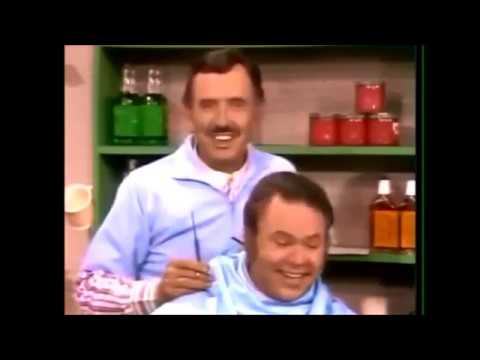
Archie Campbell's Rindercella Story
What makes it work isn’t just the wordplay—it’s the rhythm, the restraint, and the escalating confusion. Campbell plays it straight, even as the language unravels. It’s not a linguistic malfunction; it’s intentional nonsense told with such conviction that it circles all the way back to brilliance.
Think of it like your mental autocorrect glitching before your mouth hits “send”. You meant to compliment someone’s well-oiled bike, but out comes well-boiled ike. These slips reveal how language is constructed on the fly - not pulled from memory like a script, but actively generated in real time. Fatigue, distraction, stress, or even speed can disrupt that flow, increasing the odds of a spooneristic mix-up.
While often dismissed as silly mistakes, spoonerisms offer a surprising window into the mechanics of communication — revealing just how fast, fluid, and fragile human speech really is.
Take this spoonerism example from The Office, where Pam jokingly says pobody’s nerfect, and Dwight immediately panics, thinking she’s having a stroke. It’s textbook spoonerism — a pitch-perfect moment of character-driven humor.
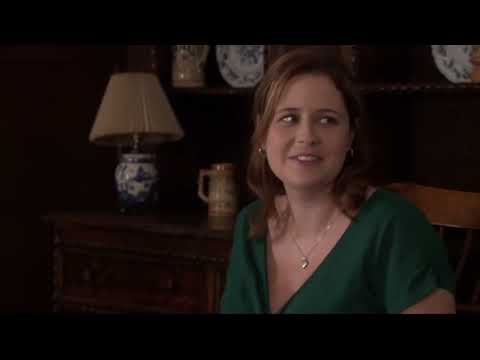
The Office Spoonerism Example
SPOONERISM EXAMPLES:
Spot Famous Spoonerisms in History, Literature, Comedy, and Music
Some spoonerisms are totally accidental — others are crafted with wit and intention. Either way, they’ve become staples of clever dialogue, comedic timing, and even pop branding. Here are some of the most memorable (and modern) examples.
Runny Babbit – Shel Silverstein
Silverstein’s 2005 children’s book is a playful spoonerism-fest. From Runny Babbit (Bunny Rabbit) to Toe Jurtle (Joe Turtle), the book showcases how deliberate sound-swaps can drive an entire narrative voice.
Pepped in Stew – Brian P. Cleary
In his poem “Translation”, Cleary writes about a boy who speaks only in spoonerisms. With lines like belly jeans for jelly beans and pepped in stew (stepped in poo), it’s a playful triumph of linguistic creativity.
Cunning Stunts – Metallica (Live DVD title)
The band’s 1998 concert DVD was cheekily titled as a spoonerism of stunning c—ts. It walks a fine line between clever and provocative, showing how spoonerisms can be edgy and attention-grabbing.
Golf Wang – Tyler, The Creator
Tyler’s streetwear brand flips Wolf Gang (from his collective Odd Future Wolf Gang Kill Them All) into a name that’s as irreverent as his art. A spoonerism turned cultural stamp.
Com Truise – Musician stage name
A synthwave artist who turned the name Tom Cruise — yes, the one who does his own stunts — into a surreal, retro-futurist identity. A modern example of how spoonerisms can shape branding, aesthetics, and personal style.
At first glance, spoonerisms are just silly slips of the tongue — the kind of thing that earns a laugh, then gets forgotten (or memorialized).
But dig a little deeper, and you’ll find something more:
They’re a glimpse into the real-time processes of how we speak, think, and connect.
Whether they happen by accident or design, spoonerisms tap into the joyful chaos of language. They show how even our mistakes can be meaningful — how a tiny misfire in the brain can unlock humor, surprise, or even a sense of shared humanity.
So, when someone asks, “What is a spoonerism?”, think of those delightful slips and realize even our mistakes have charm. After all, pobody’s nerfect.
UP NEXT
What Is a Pun
Love spoonerisms? You’ll love puns. In our next article, we dive into another laugh-out-loud form of wordplay. Learn what makes a pun land, how to craft your own, and why these witty turns of phrase work so well in scripts, dialogue, and everyday conversation.
Up Next: What is a Pun →