
Emotive language can be used to elicit emotional responses. But what is emotive language? And how can it be used to elicit emotional responses? We’re going to answer those questions by outlining an emotive language definition, as well as some emotive language examples. By the end, you’ll know what emotive language is, and how to use it in your own writing!
What is Emotive Language?
First, let’s define connotation and denotation
There are a lot of reasons why language is difficult to learn – but one of the biggest reasons is because of the difference between connotation and denotation.
What is connotation? Connotation is a non-literal framing of a term that intends to add an association beyond its literal meaning. Connotations can have negative, neutral or positive implications on a term. Take happiness as the neutral for example: the negative connotation of happiness could be mania and the positive connotation could be vibrancy.
What is denotation? Denotation is a literal framing of a term or sign. Denotations have no subjective, symbolic or otherwise non-literal meaning. Take the term "hot" for example: the denotation of hot is having or giving off heat. Consequently, the connotation of hot could be used to suggest the attractiveness of a person. In short, denotation is using words exactly how they are meant to be understood.
Writers often use words with specific connotations to elicit emotional responses from their readers. In this way, connotations are integral to emotive language. But what is emotive language? Let’s formally define emotive language.
EMOTIVE LANGUAGE DEFINITION
What is emotive language?
Emotive language is the use of words and phrases to elicit emotional responses. Writers can use all aspects of language – nouns, verbs, etc. – to support emotive language – but it is most easily identified in adjectives.
Emotive Language Examples:
- The dog desperately darted towards the falling ice cream
- Tears swelled in her eyes as she happily said “I do.”
- The crowd bustled with frenetic energy.
Emotive Language Meaning Explained With Examples
What does emotive language mean?
Emotive language can be communicated in a lot of different ways: abstract nouns, adjectives, verbs, etc. Let’s take a look at a few different emotive language examples.
Abstract nouns: freedom, wisdom, love, fear, hope, etc. These terms are impossible to measure, which make them abstract. For example, “love is a long lost letter.”
Adjectives: fun, scary, exciting, huge, embarrassing, etc. These terms are used to describe regular nouns. For example, “the rollercoaster was scary.”
Verbs: play, eat, etc. These terms describe the action of doing. For example, “I eat sushi at the restaurant down the street.”
But emotive language can change our ideas of abstract nouns, adjectives, and verbs.
It can turn a boring-sounding sentence like “I eat sushi at the restaurant down the street” into an emotive-sounding sentence like “I furiously devour california rolls at the Kaitenzushi on Hollywood Boulevard.” This change in style gives the reader a greater impression of emotion and detail.
Writers use emotive language to connect with their reader/audience.
We imported the The Lord of the Rings: The Return of the King script into StudioBinder’s screenwriting software to take a closer look at an iconic example of emotive language.
In this scene, Aragorn rallies his troops with a morale-boosting speech. Click the link below, and pay attention to Aragorn’s choice of words.
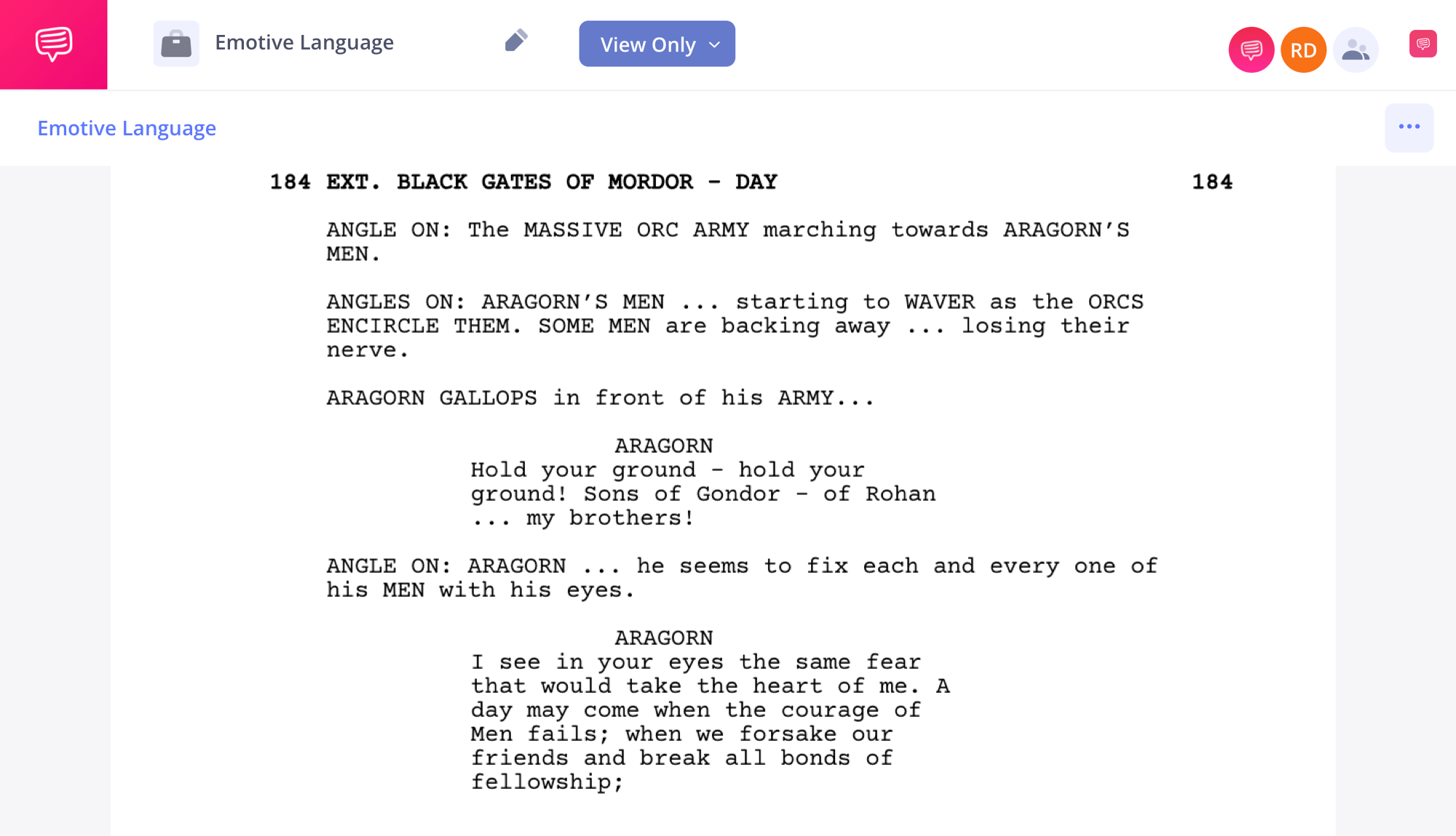
What is Emotive Language? • Emotive Language Example from The Lord of the Rings: The Return of the King Screenplay
Aragorn uses abstract nouns like “fear, courage, and fellowship;” adjectives like “shattered;” and verbs like “fails, forsake, break, etc.” – all of these contribute to the emotive language. Screenwriters Peter Jackson, Philippa Boyens, and Fran Walsh expertly play with emotive language to elicit emotional responses from the reader. Of course, this technique is played up in the film.
What is Emotive Language? • Emotive Language Example from The Lord of the Rings: The Return of the King
Actor Viggo Mortensen embodies the emotive language and deftly communicates it to the audience.
All mediums of storytelling – literature, film, games, etc. – can use emotive language to elicit emotional responses from their audience. Be strategic; be smart; and be considerate of the words you use and the effect they may have and you will become a master of emotive language.
Up Next
What is Figurative Language?
Emotive language is just one part of linguistics. Want to learn more about the study of language? Check out our next article on figurative language, where we define figurative language, and break down examples from Arrival, Spider-Man, and more. By the end, you’ll know what figurative language is and how to incorporate it in your own writing!