

There are thousands of podcasts available to stream on every topic imaginable, so it’s no real surprise that the market caught up quickly. With just some simple software, anyone can start a podcast. But how do you know which software to choose? Just like podcasts: there are tons. Most of the best podcast recording software can both record and edit. But let’s go through our top picks so you can determine what’s best for you and your needs.
Podcast DAW
Get started with podcasting
If you’re new to the podcasting world, you’ll need a tool to record and edit your podcast. These are called Digital Audio Workstations (DAW). Most DAWs can edit and record, some master your podcast automatically, while others take care of it all for you. Some software solutions are web based, others are to install computer programs.
Whatever you’re looking for, there are options to start a podcast on a budget.
Summary of the best podcast recording apps:
The best podcast recording software depends on your setup—whether you're recording remote interviews, producing a video podcast, or editing audio professionally. Here’s a quick comparison of the top tools based on features, pricing, and use case.
Software | Key Features | Price | Best For | Platform | |
|---|---|---|---|---|---|
1 | Local recording, 4K video, separate tracks, AI transcription | Free / Paid plans | Remote interviews (video/audio) | Web | |
2 | Multitrack editing, advanced audio tools, noise reduction | Subscription (Adobe CC) | Professional audio production | Mac, Windows | |
3 | Free, open-source, multitrack recording, plugins | Free | Beginners on a budget | Mac, Windows, Linux | |
4 | AI editing, text-based editing, overdub, transcription | Free / Paid plans | AI-powered editing workflows | Mac, Windows | |
5 | AI voice enhancement, browser recording, text editing | Free / Paid plans | AI + browser-based workflows | Web | |
6 | Local recording, high-quality audio, cloud backups | Paid plans | Professional remote interviews | Web | |
7 | Remote recording, separate tracks, browser-based, soundboard | Free / Paid plans | Remote podcasting beginners | Web | |
8 | Built-in recording, hosting, distributing | Free | All-in-one beginners | Web | |
9 | Editing, color correction, visual effects, audio mixing | Free/ paid (one-time subscription) | Video podcast recording | Mac, Windows | |
10 | Built-in Apple DAW, easy editing, music integration | Free | Mac beginners | Mac, iOS | |
11 | Automated editing, hosting integration, easy publishing | Subscription | All-in-one beginners | Web | |
12 | Audio, separate tracks real-time monitoring | Free/Paid plans | Remote podcasting | Web | |
13 | Live streaming, browser-based recording, guest interviews | Free / Paid plans | Live video podcasts | Web | |
14 | Automatic leveling, voice-focused tools, simple UI | Paid (one-time/subscription) | Journalists & storytellers | Mac, Windows | |
15 | Lightweight DAW, customizable, low cost | Low-cost license | Advanced users on a budget | Mac, Windows | |
16 | Multitrack recording, editing, mixing tools | Free/Paid plans | Advanced users | Web |
Best podcasting recording software
Plan your podcast with an outline
The best podcast recording software can only take you so far—what really shapes a great episode is how well it’s planned. A clear structure keeps your recording focused, efficient, and easier to edit.
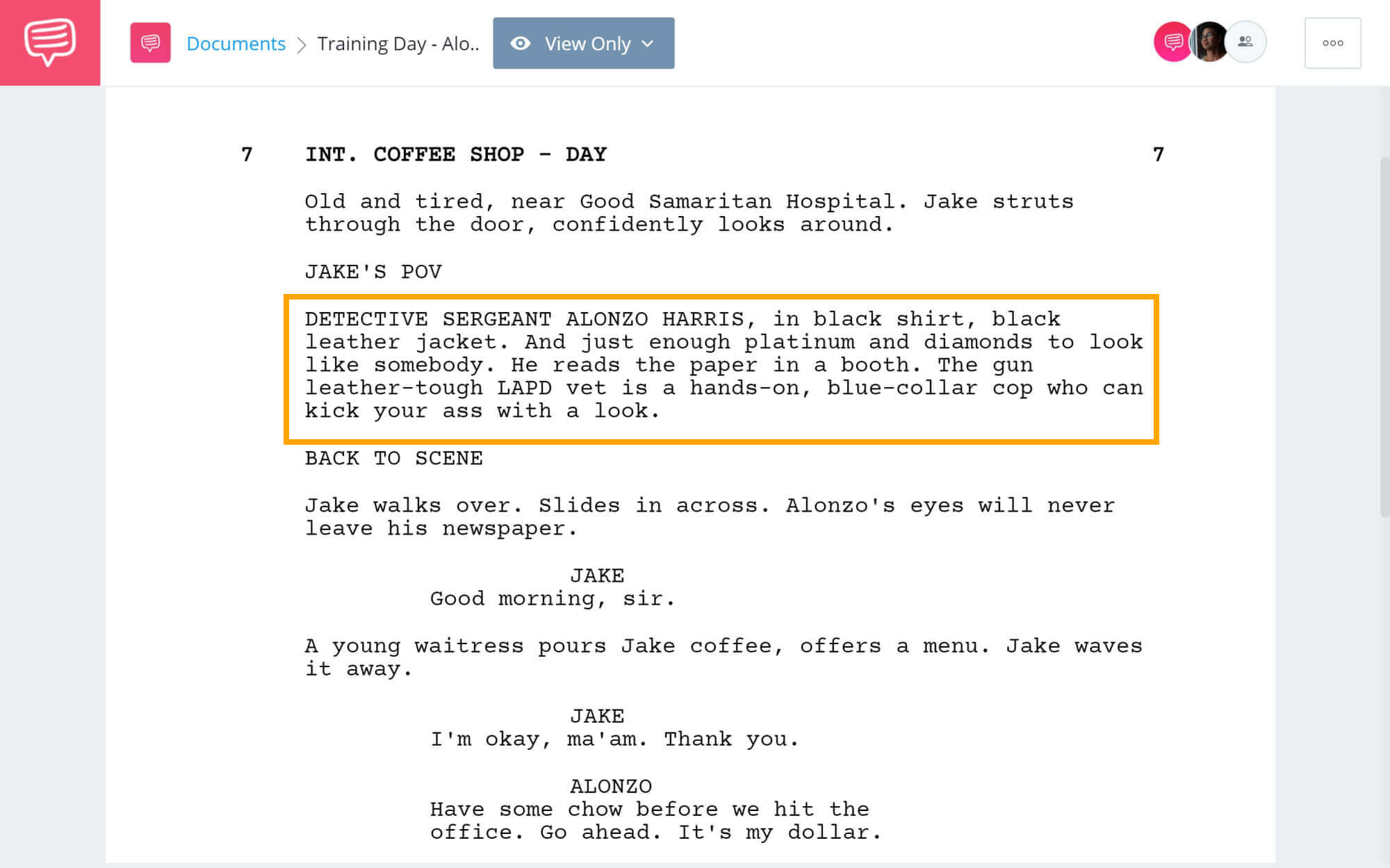
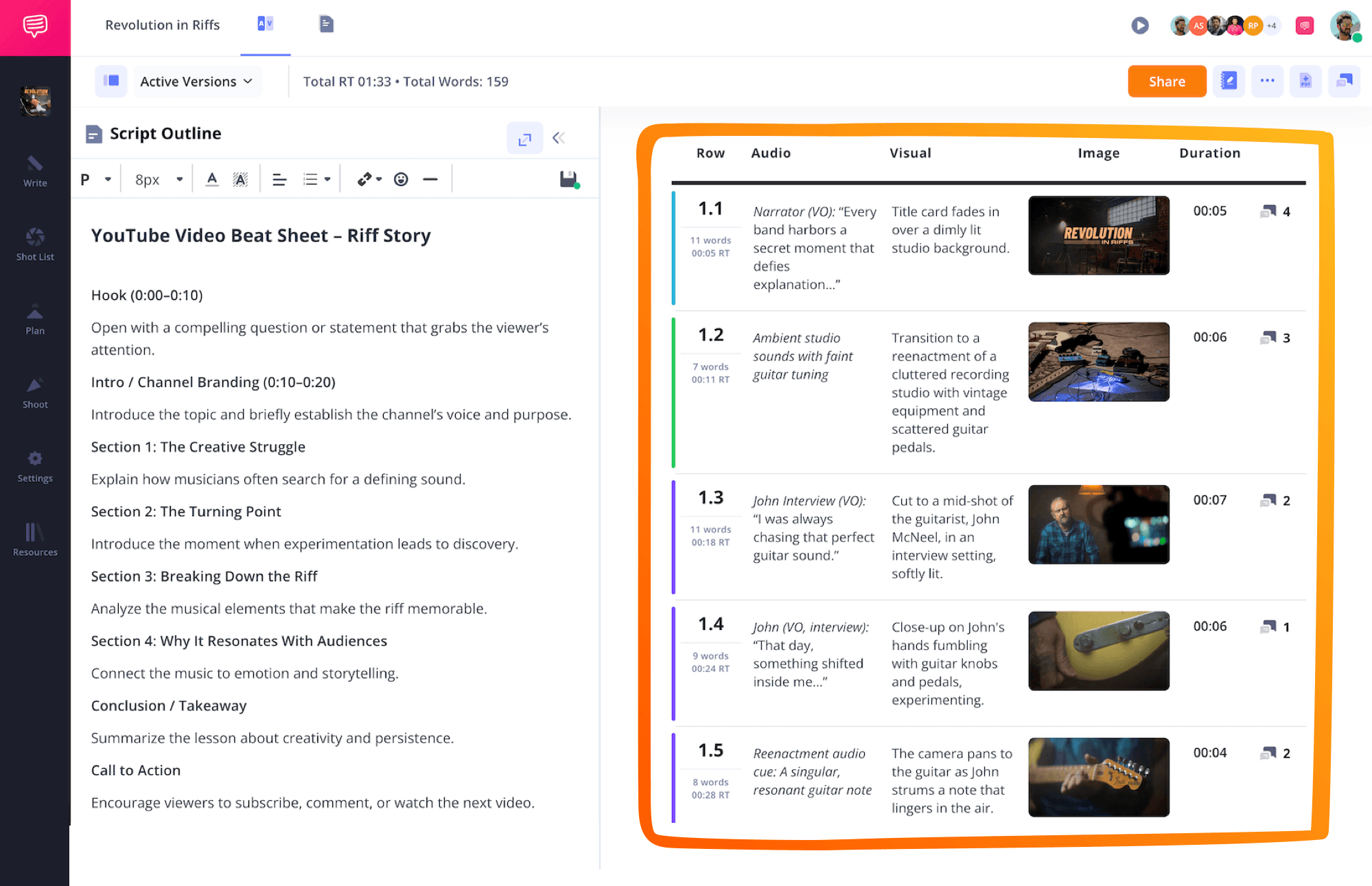
1. Create a podcast script outline
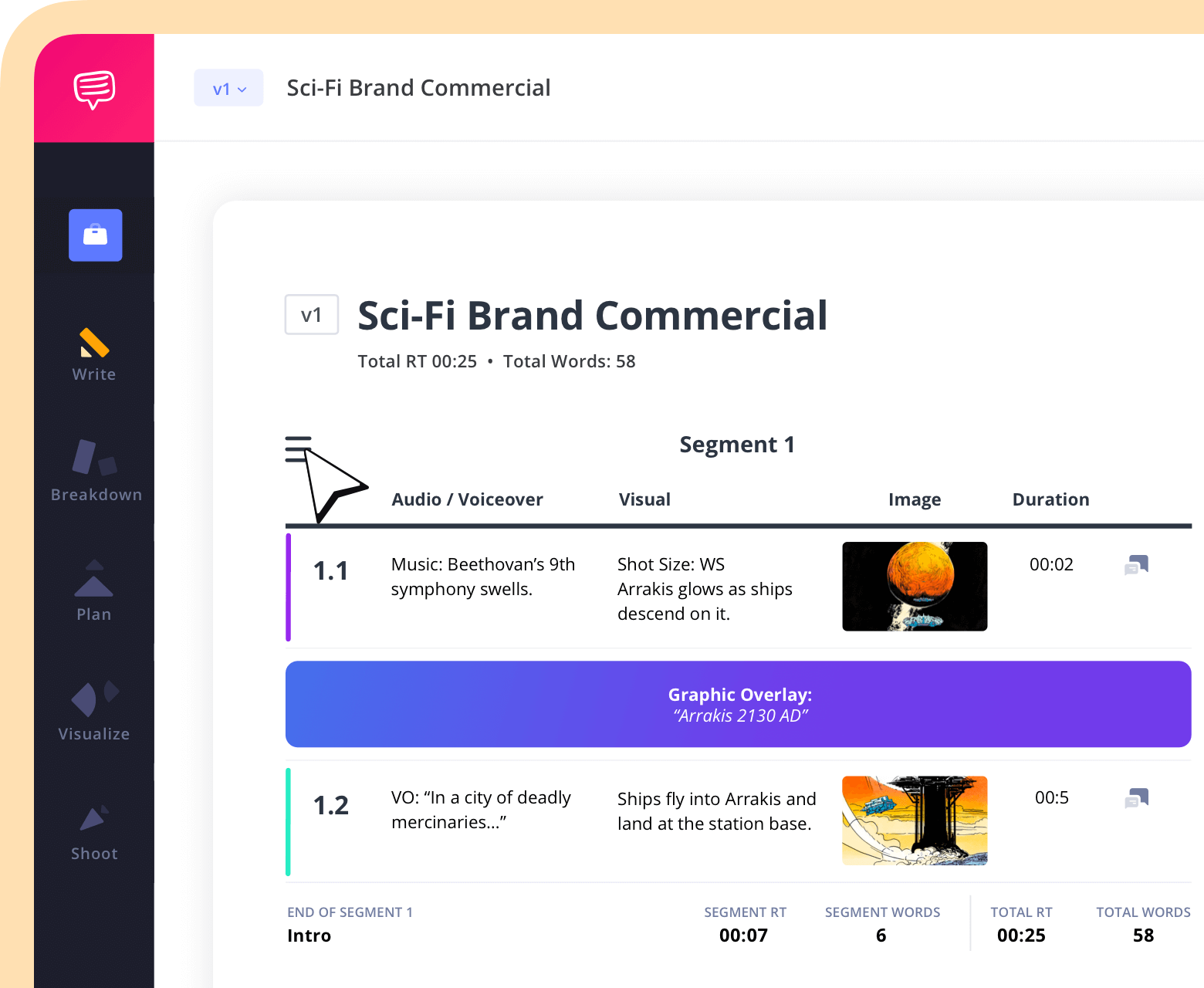
Before you record, map out your episode with a simple outline—intro, key segments, transitions, and outro. StudioBinder’s script tools help you organize your ideas so you stay on track and avoid unnecessary tangents during recording.
Create a podcast script outline · How to record podcast software
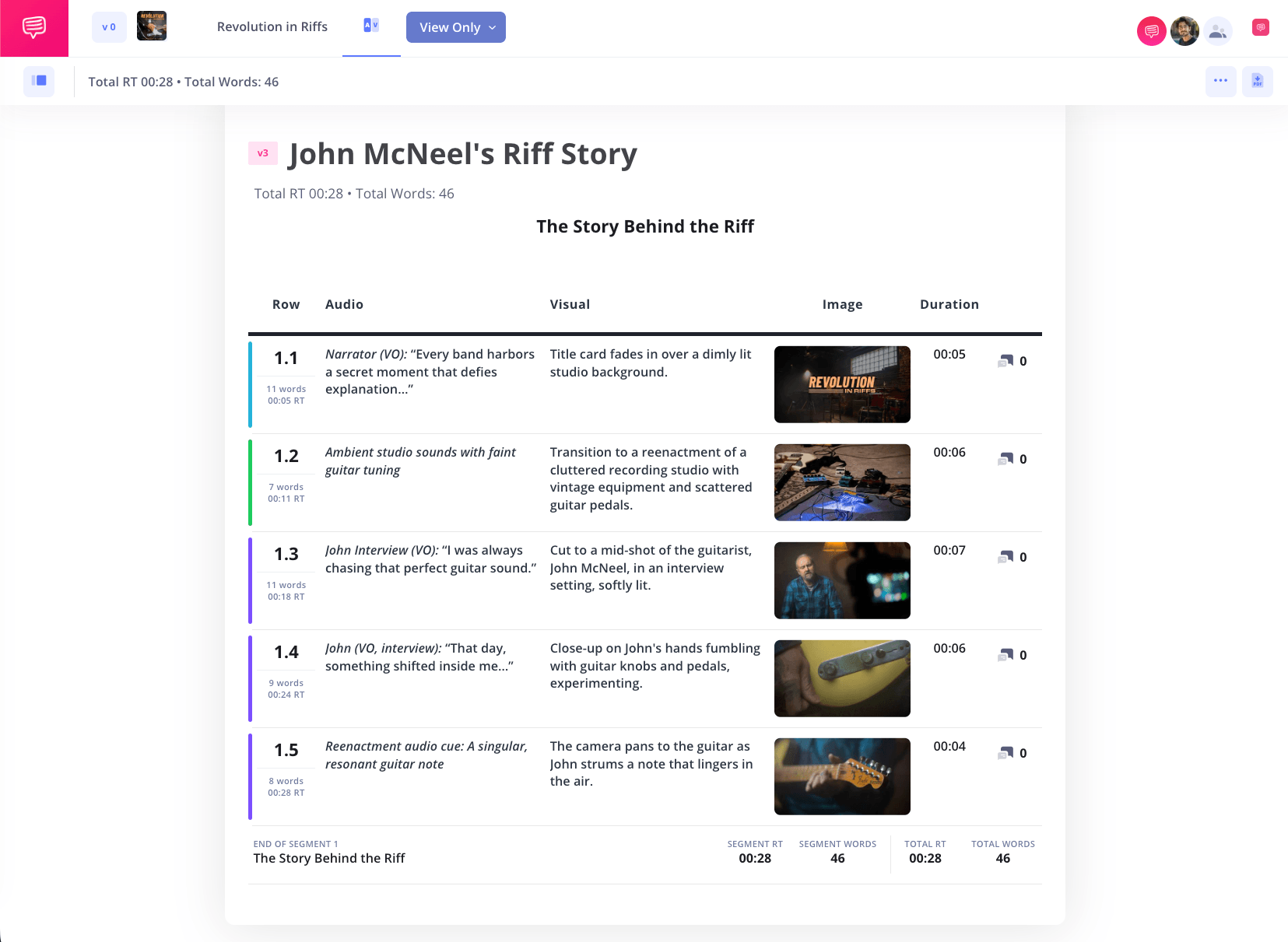
2. Create an AV script from your outline
For video podcasts or more produced formats, an AV script lets you plan both audio and visuals side by side. This means aligning dialogue, music cues, and camera direction before you ever hit record.
Create an AV script from your outline · How to record podcast software
3. Plan a smoother recording session
With a clear outline or AV script in place, recording becomes faster and more intentional. Instead of figuring things out mid-session, you’ll have a roadmap that works seamlessly with any podcast recording software you choose.
Related Posts
Best podcast recording software
1. Riverside
If you want a podcast recording platform that handles nearly everything in one place, Riverside is hard to beat.
- Free plan available (limited features)
- Paid plan starting at $15 per month
Best for studio-quality remote podcasts with local audio capture.
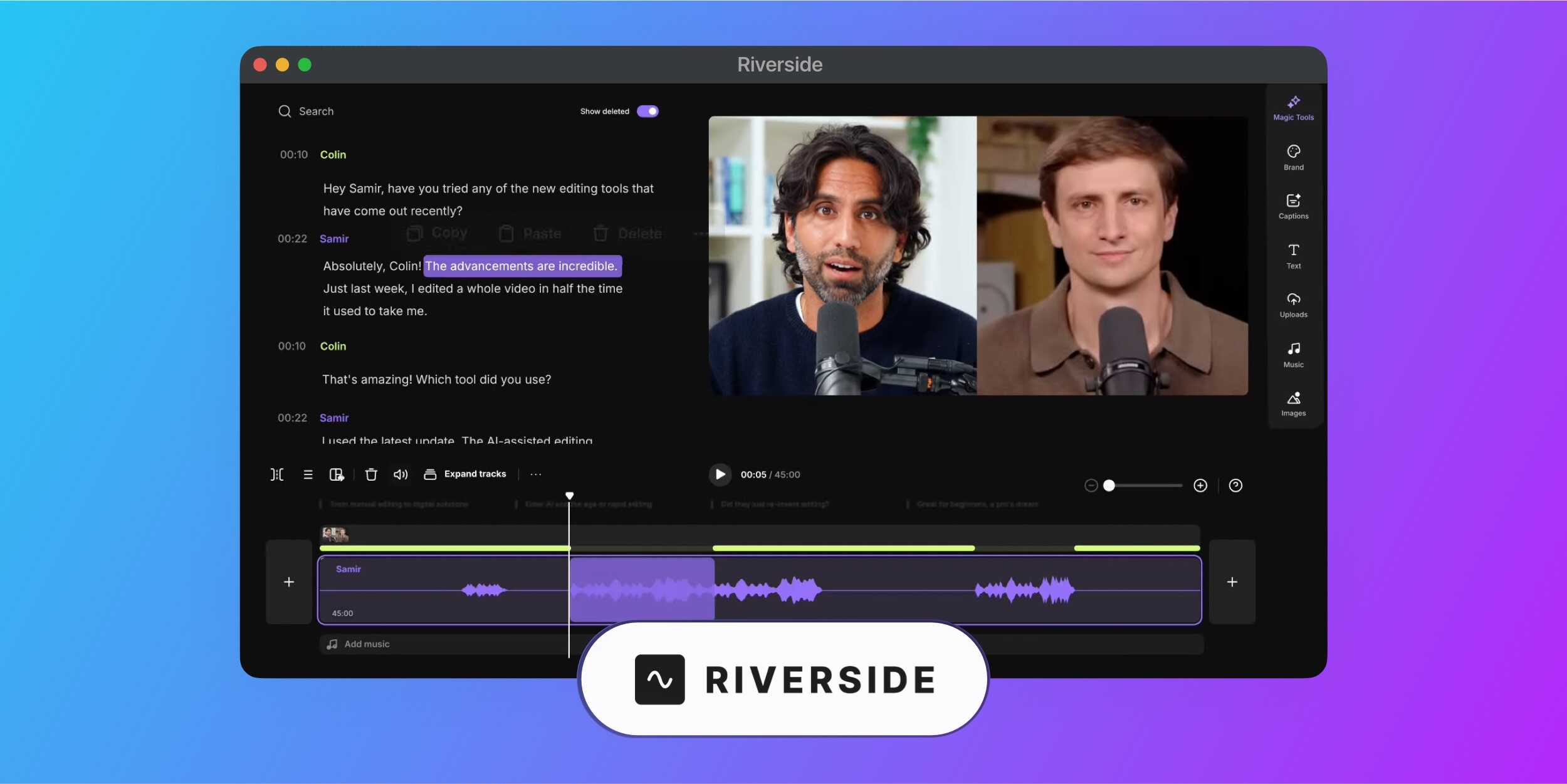
Riverside is best for studio-quality remote podcasts with local audio capture.
Advantages:
The biggest advantage of Riverside is its local recording technology. This captures audio and video directly on each participant’s device instead of relying on internet quality. This means you get crisp recordings even if your connection isn’t perfect. It also combines recording, editing, and exporting into one platform, making your workflow more streamlined.
Key features:
Riverside’s standout feature is its local recording technology, which captures high-quality audio and video directly on each participant’s device rather than relying on internet stability. It also includes built-in AI tools like automatic transcription, text-based editing, and clip generation to speed up your post-production workflow. The platform supports separate audio and video tracks for each participant, giving you more control during editing.
Pros and Cons:
Pros:
- Excellent audio and video quality, even with weak internet.
- All-in-one workflow (record, edit, export).
- Intuitive interface for beginners and pros alike.
- Reliable for remote interviews.
Cons:
- Free plan is limited.
- Occasional upload or syncing delays reported by users.
Audio Editing Software for Podcasts
2. Adobe Audition
If you’re looking for complete control over your podcast’s sound, Adobe Audition is one of the most powerful tools available.
- Free trial available
- Subscription starting a $22.99 per month
Ideal for enhanced audio with professional-grade editing tools.
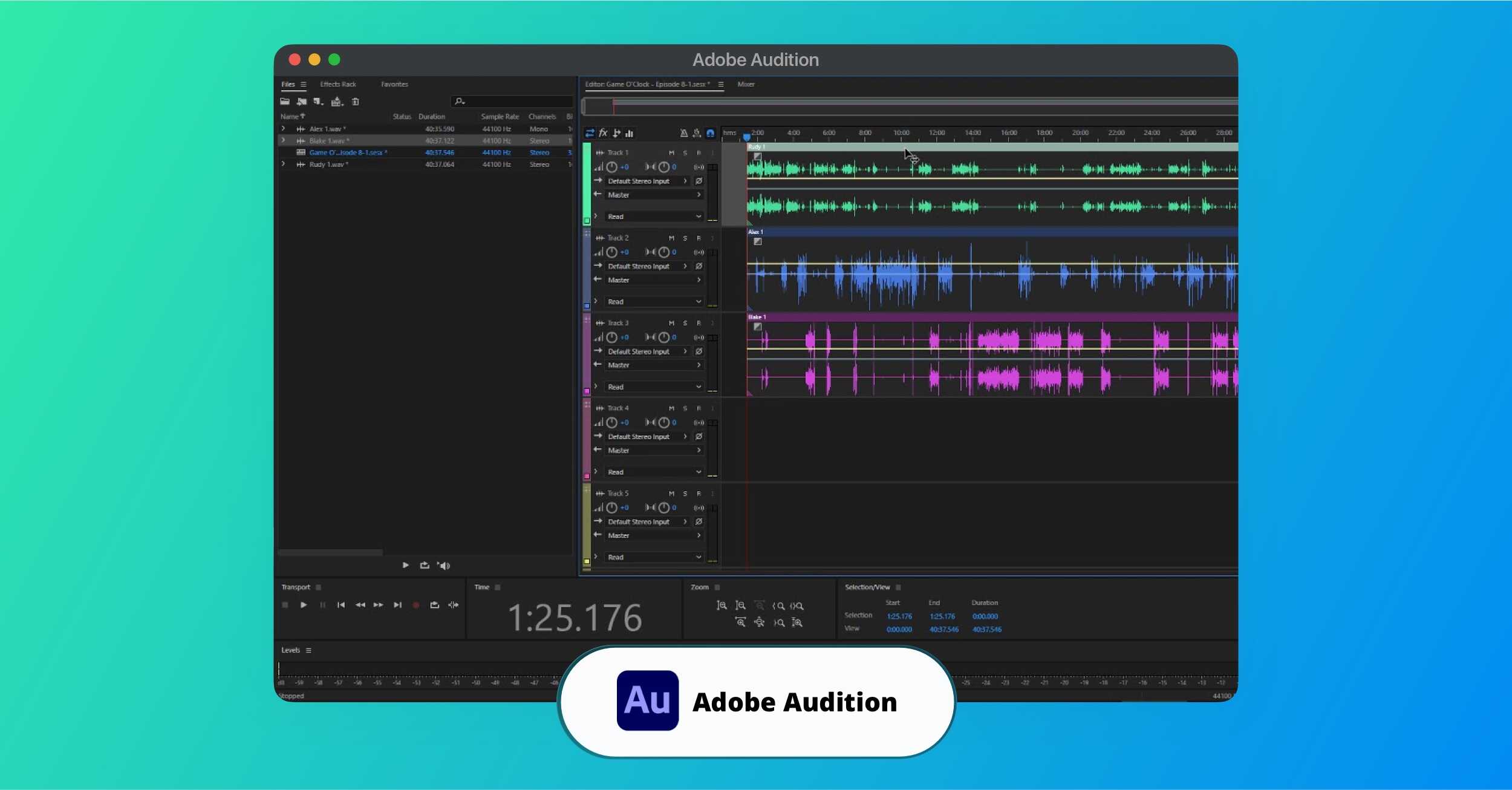
Adobe Audition is ideal for enhanced audio with professional-grade editing tools.
Advantages:
Adobe Audition excels in detailed audio editing, making it ideal if you want to fine-tune every element of your podcast. From noise reduction to multi-track mixing, it takes the extra step beyond basic recording software. It also integrates seamlessly with other Adobe apps like Premiere Pro. This is especially useful if you’re producing video podcasts.
Key features:
Adobe Audition offers a full suite of professional audio tools, including multitrack editing, waveform editing, and advanced noise reduction capabilities. You can clean up background noise, balance levels, and apply effects with precision. The software also supports batch processing and detailed spectral editing. This allows you to isolate and fix specific sound issues.
Pros and Cons:
Pros:
- Industry-standard audio editing tools.
- Exceptional audio cleanup and restoration features.
- Seamless integration with Adobe Creative Cloud.
Cons:
- Steeper learning curve for beginners.
- No built-in remote recording features.
Free podcast recording software
3. Audacity
If you want a completely free way to record and edit your podcast, Audacity remains one of the most popular options available.
Free and open-source
Strong choice for recording and editing podcasts with simple tools.
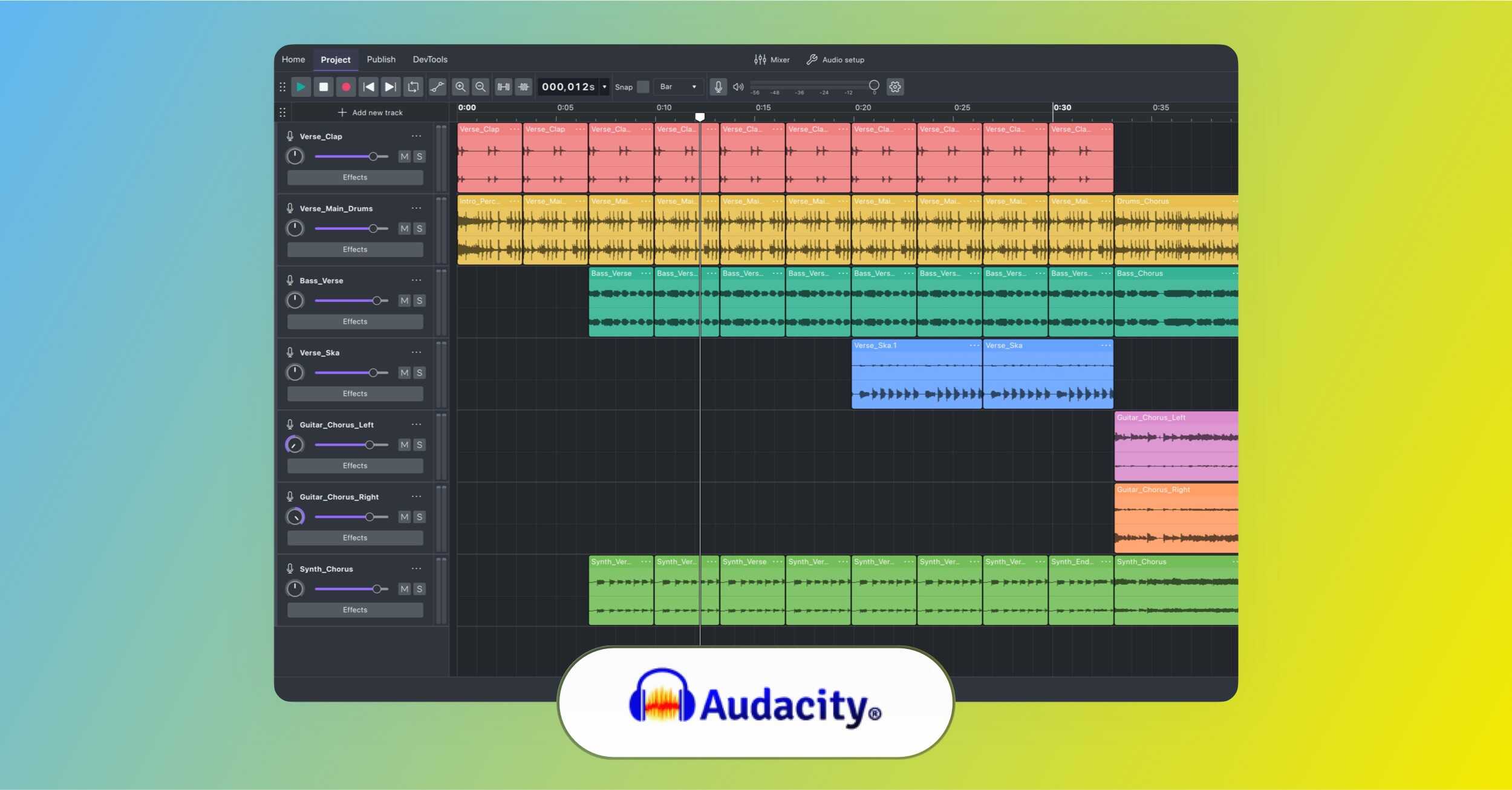
Audacity is a strong choice for recording and editing podcasts with simple tools.
Advantages:
Audacity’s biggest advantage is that it gives you solid recording and editing capabilities at zero cost. You can record, cut, mix, and enhance your audio without needing any paid software. It’s also highly customizable with plugins, making it a podcast recording software free of too many additional needs.
Key features:
Audacity provides multi-track audio editing, allowing you to record and layer multiple audio sources with ease. It includes built-in effects like noise reduction, equalization, and compression to help clean up your recordings. The platform supports a wide range of audio formats and offers plugin compatibility for additional effects and tools.
Pros and Cons:
Pros:
- Completely free.
- Strong core editing tools for beginners.
- Wide plugin support for added functionality.
Cons:
- Less intuitive interface.
- Limited real-time collaboration tools.
Trusted by over 1M creatives
AV scripts with built-in timing
Write in two-column format, track runtime, and share with version control
Free podcast recording software
4. Descript
If you want to edit your podcast as easily as editing a Word document, Descript is a highly innovative tool.
- Free plan available
- Subscription starting at $12 per month
Great for editing spoken text with powerful AI tools.
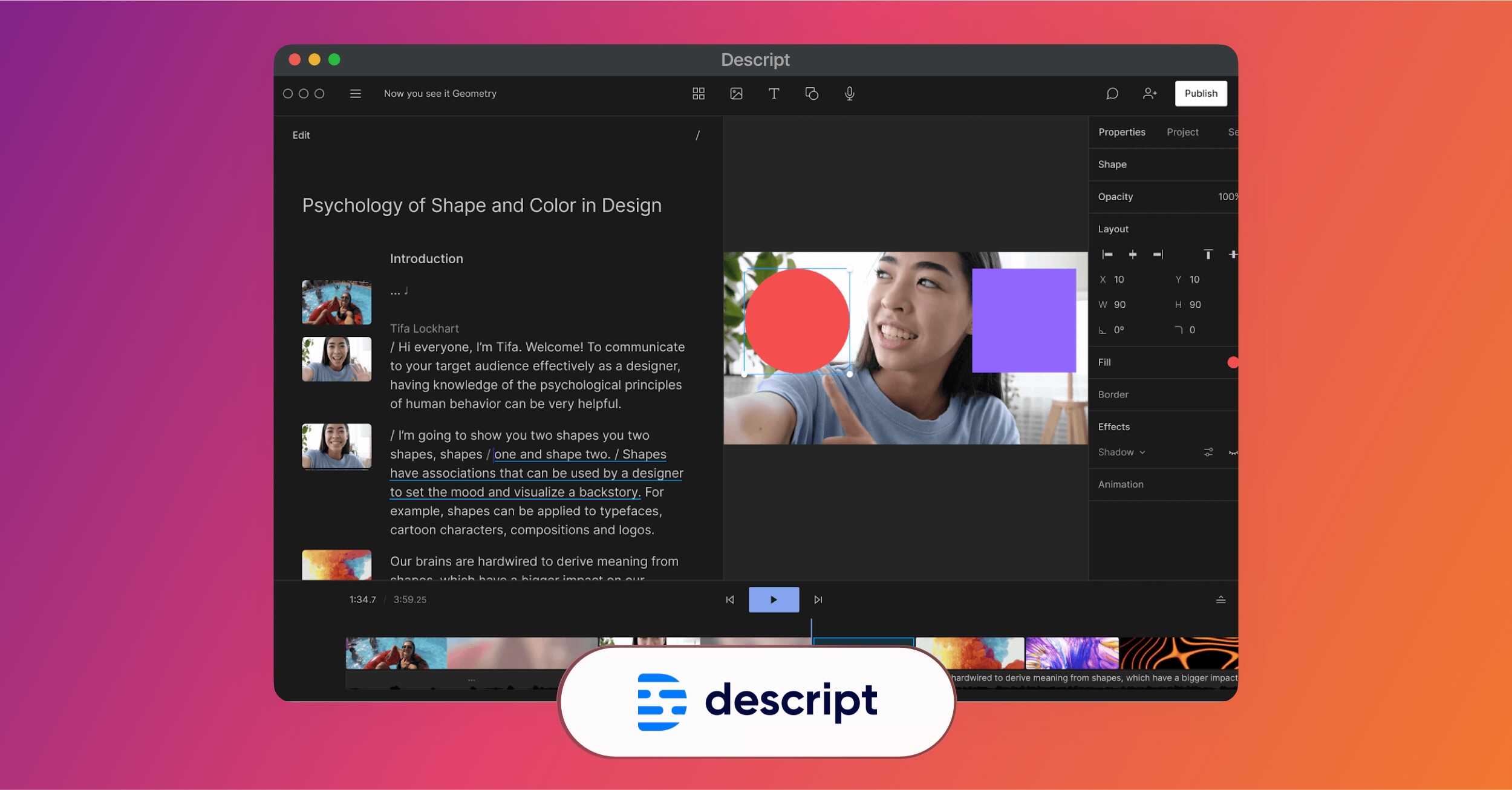
Descript is great for editing spoken text with powerful AI tools · How to record podcast software
Advantages:
Descript’s biggest advantage is its text-based editing system, which lets you edit audio by simply editing the transcript. This dramatically speeds up post-production, especially for dialogue-heavy podcasts. Its AI tools also help automate time-consuming tasks like filler word removal and voice cleanup.
Key features:
Descript allows you to record, transcribe, and edit your podcast in one place. Its AI-powered tools include automatic transcription, filler word removal, and Overdub, which lets you generate voice corrections using your own voice model. It also supports multitrack editing and screen recording, making it useful for both audio and video podcasts.
Pros and Cons:
Pros:
- Very fast editing workflow.
- Reliable AI tools for cleanup and automation.
- All-in-one recording and editing platform.
Cons:
- Transcription limits on lower-tier plans.
- Occasional accuracy issues with AI features.
- Requires internet connection for full functionality.
Remote podcast recording software
5. Podcastle
Podcastle is a fast-rising platform that blends recording, editing, and AI tools into a single, easy-to-use interface.
- Free plan available
- Subscription starts at $14.99 per month
Among the best when it comes to AI recording and editing tools.

Podcastle is among the best when it comes to AI recording and editing tools · Best podcast recording software
Advantages:
Podcastle makes podcast production more accessible by automating many of the technical steps involved in editing. Its AI-powered enhancements can help you clean up audio and improve clarity without requiring manual adjustments. This makes it especially appealing if you’re a beginner or solo creator.
Key features:
Podcastle includes remote recording, multitrack editing, and AI-powered tools like noise removal and voice enhancement. It also offers text-based editing and automatic transcription, helping streamline post-production. The platform supports both audio and video recording, making it versatile for different podcast formats. Its browser-based setup means you can start recording quickly without installing additional software.
Pros and Cons:
Pros:
- Strong AI tools for audio enhancement.
- Supports both audio and video podcasts.
Cons:
- Less established than competitors like Riverside
Remote podcast recording software
6. SquadCast
If your podcast relies on remote interviews, SquadCast is a very trusted platform.
- Free trial available
- Subscription starts around $20 per month
Ideal for recording high-quality remote interviews with reliable local audio.

SquadCast is ideal for recording high-quality remote interviews with reliable local audio.
Advantages:
SquadCast is built specifically for remote podcasting, which means it prioritizes audio quality. Its local recording system ensures that each participant’s audio is captured clearly, regardless of internet connection issues. This is a great paid option upgrade when you’re looking to step away from Skype or Zoom.
The host sends a link to the guest (a max of three guests). The cloud records the interview as an audio file and uploads it to the cloud on the host’s drive in real time.
Key features:
SquadCast uses local recording technology to capture great audio and video for each participant. It offers separate tracks for easy editing and includes cloud backups. The platform also integrates directly with Descript, allowing for seamless editing and transcription after recording.
Pros and Cons:
Pros:
- Excellent remote recording quality.
- Seamless integration with Descript.
- Easy for guests to join.
Cons:
- Limited built-in editing tools.
Remote podcast recording software
7. Zencastr
Zencastr is another popular platform for remote podcast recording, offering local recording and browser-based convenience.
- Free plan available
- Subscription starts at $24 per month
Great for consistent, browser-based audio recording.
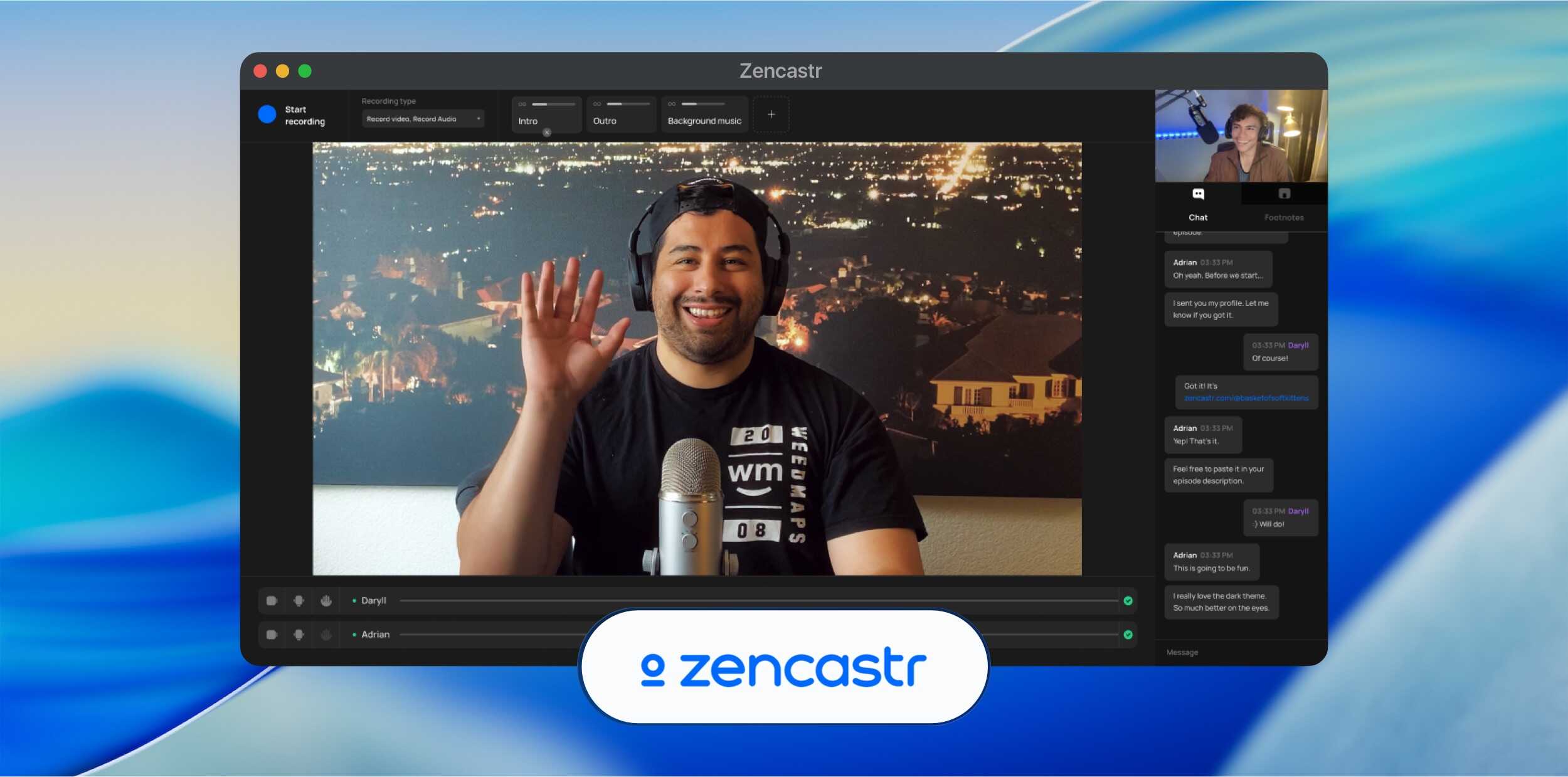
Zencast is great for consistent, browser-based audio recording.
Advantages:
Zencastr offers high-quality local recording without requiring downloads, making it easy for your podcast guests to join. It also provides automatic post-production tools, which can simplify editing if you’re at the beginner stage. This podcast software is by far the most superior to other long distance options.It doesn’t compromise on audio quality. It records each guest as a separate lossless WAV track and saves it to the host’s drive and cloud services. The final audio is mixed into a single track with levels already adjusted. For this alone, it’s one of the top podcast recording softwares out there.
Key features:
Zencastr records each participant locally to ensure consistent audio quality, even during unstable connections. It includes automatic post-production features that help balance your levels and improve clarity. The platform also supports video recording and provides separate tracks for editing flexibility.
This podcast software records each guest as a separate lossless WAV track and saves it to the host’s drive and cloud services. The final audio is mixed into a single track with levels already adjusted. For this alone, it’s one of the top podcast recording softwares out there.
Pros and Cons:
Pros:
- WAV and MP3 recording.
- Easy for remote interviews.
- Built-in post-production tools.
Cons:
- Interface is less polished than competitors.
- Occasional syncing issues reported.
Best podcast recording software
8. Spotify
If you want to record, host, and distribute your podcast in one place, Spotify for Creators is one of the easier ways to get started.
Free to use
Reliable for recording, hosting, and publishing podcasts in one platform.

Spotify is reliable for recording, hosting, and publishing podcasts in one platform.
Advantages:
Spotify for Creators removes many of the barriers to entry by combining recording, hosting, and distribution into one platform. You can publish your podcast directly to Spotify and other platforms without needing additional services. It’s one of the most accessible tools on this list.
Key features:
Spotify for Creators allows you to record, edit, and publish episodes directly from your browser or mobile device. It includes basic editing tools, hosting, and distribution to major platforms. The platform also offers monetization options and audience analytics.
Pros and Cons:
Pros:
- Easy distribution to Spotify and more.
- Beginner-friendly interface.
Cons:
- Limited editing capabilities.
- Less control over audio quality.
- Not ideal for advanced production.
Podcast recording tools
9. DaVinci Resolve
Especially if your podcast includes video, DaVinci Resolve is a highly powerful tool.
- Free version available
- One-time purchase of $295
Ideal for video podcasts in need of advanced editing and audio tools.
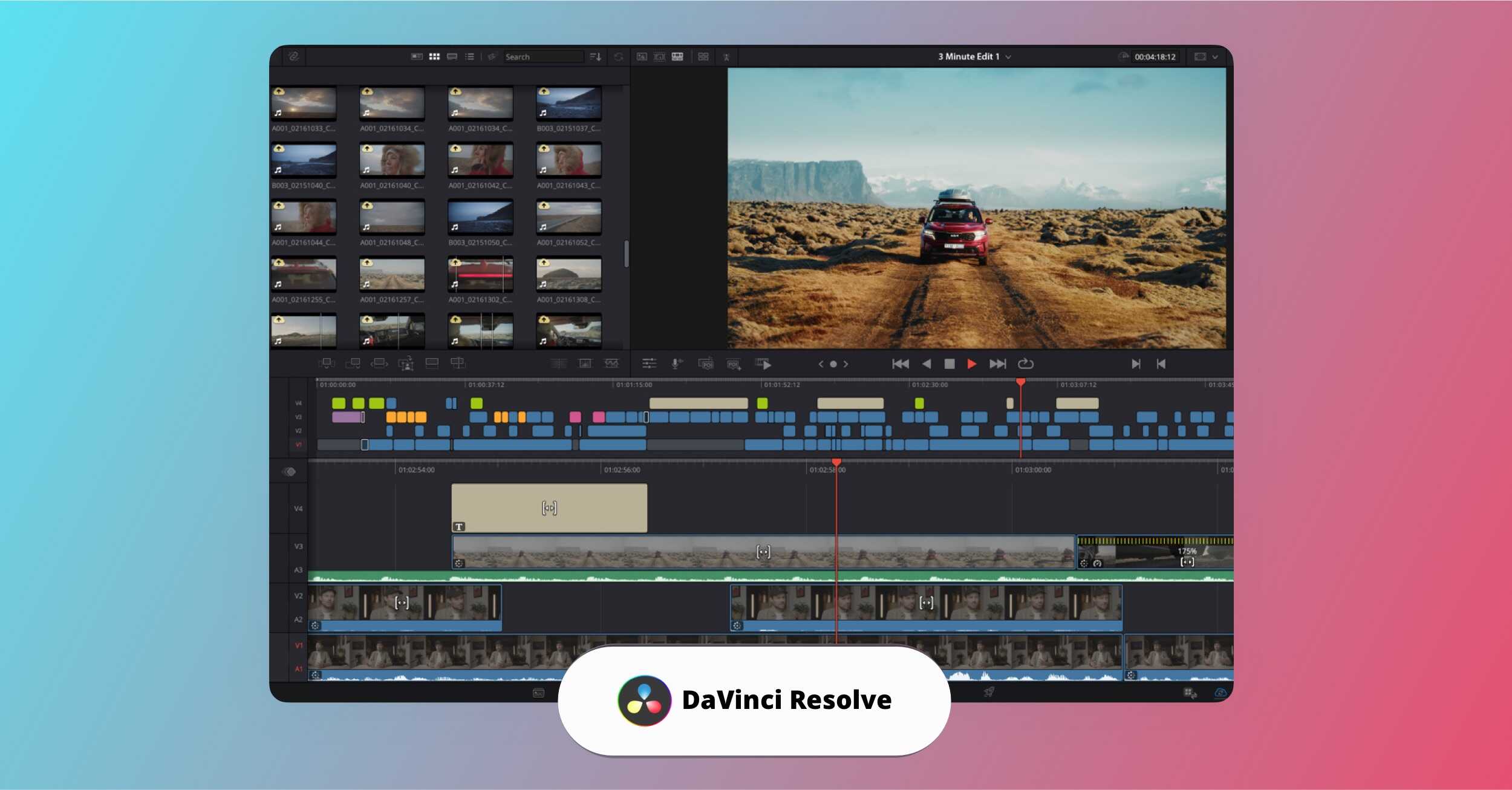
Davinci Resolve is ideal for video podcasts in need of advanced editing and audio tools.
Advantages:
DaVinci Resolve stands out by combining high-end video editing with professional audio tools in a single platform. This makes it ideal if you’re producing video podcasts or want to expand into visual content. Its free version is also unusually stacked, giving you access to tools that are typically locked behind paywalls in other podcast software.
Key features:
DaVinci Resolve includes a complete post-production suite with dedicated modules for editing, color correction, visual effects, and audio mixing. Its Fairlight audio system allows for multi-track recording, detailed mixing, and professional-grade sound design within the same project. You can also sync audio and video seamlessly.
Pros and Cons:
Pros:
- Free version has lots of advanced features.
- Combines video editing and audio production.
- Professional-grade color and audio tools.
Cons:
- Requires a relatively powerful computer.
- Overly complex for audio-only podcasters.
Podcast recording features
10. GarageBand
If you’re a Mac user, GarageBand is one of the easiest ways to start recording a podcast.
Free on macOS and iOS devices
Great choice for recording podcasts on Mac with built-in tools.

GarageBand is a great choice for recording podcasts on Mac with built-in tools.
Advantages:
GarageBand is accessible and easy to learn, making it ideal for beginners. It provides enough features to produce a clean, professional-sounding podcast without overwhelming you. Its integration with Apple’s ecosystem also makes it convenient if you’re already accustomed to Mac.
Key features:
GarageBand offers multitrack recording, basic audio editing tools, and a library of built-in effects. You can record vocals, add music, and mix tracks within a simple interface. The software also includes presets for voice enhancement, helping improve podcast audio quickly.
Pros and Cons:
Pros:
- Free and pre-installed on Apple devices.
- Easy to learn.
Cons:
- For Mac users only.
- Not ideal for complex productions.
Reliable podcast recording
11. Alitu
Alitu is designed to simplify podcast production by automating a large portion of the technical steps involved.
- Free trial available
- Subscription starts at $38 per month
Reliable for automated podcast editing and cleanup.
Alitu is a reliable for automated podcast editing and cleanup · Best podcast recording software
Advantages:
Alitu removes much of the complexity from podcast production by handling audio cleanup and leveling automatically. This makes it especially useful for beginners or busy creators. It also integrates recording, editing, and publishing into one workflow.
Key features:
Alitu automatically cleans up audio, balances levels, and reduces background noise without requiring manual adjustments. It includes recording tools, episode assembly, and publishing features in one platform. The software also allows you to add music and transitions easily.
Pros and Cons:
Pros:
- Automated workflow.
- Saves time in post-production
- Makes the entire process from production to editing pretty simple
Cons:
- Limited recording/manual control.
- Not ideal for advanced users.
Free podcast recording software
12. Cleanfeed
Cleanfeed is a browser-based recording tool known for delivering high-quality and reliable audio.
- Free version available
- Subscription starting at $36 a month
Reliable for recording audio remotely for interviews and broadcasts.

Alitu is a reliable for automated podcast editing and cleanup · Podcast recording software free
Advantages:
Cleanfeed prioritizes audio quality above all else, making it ideal if you’re doing interviews and live recordings. It’s lightweight and reliable, even in demanding situations. Connect with multiple people across Mac, Windows, Android, Linux.
Key features:
Cleanfeed allows you to record high-quality audio directly in your browser with minimal setup. It supports separate tracks and real-time monitoring. The platform is optimized for low-latency communication, making it suitable for professional broadcast environments. Its interface is more focused on performance rather than extra features.
Pros and Cons:
Pros:
- Excellent audio quality.
- Reliable for live interviews.
Cons:
- Limited manual control.
- Not for iOS users (no iPhone or iPad)
Trusted by over 1M creatives
AV scripts with built-in timing
Write in two-column format, track runtime, and share with version control
Best podcast recording software
13. StreamYard
StreamYard excels with a focus on live production and audience interaction.
- Free plan available
- Subscription starting at $35.99 a month
Solid choice for recording live video podcasts with ease.

StreamYard is a solid choice for recording live video podcasts with eases · Podcast recording software free
Advantages:
StreamYard makes it easy to go live and engage with your audience in real time. It’s simple to use and doesn’t require downloads. This makes it ideal especially if you’re a creator focused on live content.
Key features:
StreamYard allows you to stream and record podcasts directly from your browser while broadcasting to multiple platforms simultaneously. It includes tools for branding, guest invitations, and on-screen graphics. The platform also supports recording sessions for later editing.
Pros and Cons:
Pros:
- Great for live streaming.
- Multi-platform broadcasting.
Cons:
- Limited audio editing tools.
- Not ideal for audio-only podcasts.
Free podcast recording software
14. Hindenburg
Hindenburg Journalist is a solid choice, specifically for storytelling and spoken-word audio.
- Free trial available
- Subscription starting at $12 a month
Solid choice for editing spoken-word podcasts using storytelling-focused tools.

Hindenburg is a solid choice for editing spoken-word podcasts using storytelling-focused tools · Best software for podcast recording
Advantages:
Hindenburg simplifies audio editing by focusing on storytelling rather than technical complexity. It automatically levels your audio and helps maintain consistent sound quality. This makes it ideal if narrative-driven podcasts are what you want to use it for. Overall, it’s designed for podcasters and radio broadcasters with a higher production value compared to its competition.
Key features:
Hindenburg includes automatic audio leveling, voice profiling, and multitrack editing tailored for spoken-word content. It also offers tools for organizing and structuring long-form audio projects. The interface is designed to minimize technical distractions. Best for recording, editing and the ability to upload your files straight to Libsyn or SoundCloud.
Pros and Cons:
Pros:
- Sets audio levels automatically.
- Clipboard saves interview clips for later.
- Uploads straight to streaming services
Cons:
- Smaller user base.
- Limited advanced features.
Podcast DAW
15. Reaper
Reaper is a customizable digital audio workstation that offers professional-level tools.
- Free trial available
- One-time payment starting at $60
Provides a well-structured DAW for podcast editing.

Reaper provides a well-structured DAW for podcast editing · Best software for podcast recording
Advantages:
Reaper provides advanced audio editing capabilities at a fraction of the cost of other professional tools. It’s also highly customizable, allowing users to tailor the workflow to their needs.
Key features:
Reaper supports multitrack recording, advanced editing, and a wide range of plugins. The software is lightweight but still powerful, capable of handling complex projects. Its flexibility makes it suitable if you’re using it for audio or music production.
Pros and Cons:
Pros:
- Highly customizable.
- Active user community.
Cons:
- Steeper learning curve.
- No built-in remote recording.
Podcast recording tools
16. Pro Tools
Pro Tools has long been considered the industry standard for audio production when it comes to music and film specifically.
- Free version available
- Subscription starting at $9.99 per month
Reliable for producing podcasts with professional grade audio software.

Pro Tools is a reliable for producing podcasts with professional grade audio software · Best software for podcast recording
Advantages:
Pro Tools offers precision and industry credibility. It’s widely used in professional studios, making it a trusted choice if you’re working in high-end production. It’s also capable of supporting complex audio workflows.
Key features:
Pro Tools includes advanced multitrack recording, editing, and mixing tools used in professional studios around the world. It supports high-end plugins, automation, and detailed sound design capabilities. Its workflow is built for complex audio production environments.
Pros and Cons:
Pros:
- Industry-standard software.
- High-quality audio processing.
Cons:
- Steep learning curve.
- Overkill for most podcasters.
Podcast DAW
Best Podcast Recording Software by Use Case
The right podcasting tool often depends on how you plan to record, edit, and publish your show. Whether you’re just starting out or producing a professional series, below are the best podcast recording software options based on specific use cases.
Best for Beginners
If you’re new to podcasting, you’ll want the simplest options. Spotify for Creators is one of the easiest ways to get started since it lets you record, host, and distribute your podcast all in one place. For Mac users, GarageBand is another reliable option, offering an intuitive interface with just enough features to produce clean, professional-sounding episodes without feeling overwhelmed.
Best Free Software
For creators on a budget, Audacity remains one of the best free podcast recording tools available. It gives you solid recording and editing capabilities with no subscription needed. If you’re working with video as well, DaVinci Resolve offers an incredibly powerful free version that includes both audio and video production tools.
Best for Remote Interviews
If your podcast relies on guest interviews, you’ll want software that ensures consistent audio quality. Riverside is the top choice here thanks to its local recording technology, which captures high-quality audio regardless of internet issues. SquadCast and Zencastr are also strong options, offering reliable browser-based recording and separate tracks for each participant.
Best for Video Podcasts
As video podcasting continues to grow, using the right tools is essential. DaVinci Resolve is ideal for creators who want full control over both video and audio in one platform. For live or streaming-focused podcasts, StreamYard makes it easy to broadcast and record episodes directly to platforms like YouTube.
Best for Professionals
If you’re aiming for the highest level of audio quality and control, professional DAWs are the way to go. Adobe Audition offers advanced editing and audio restoration tools, while Pro Tools remains the industry standard for studio-level production. For a more affordable but still powerful option, Reaper provides extensive customization and pro-level features.
Best AI-Powered Tools
AI is quickly transforming podcast production, making editing faster and more accessible. Descript is a top-notch choice with text-based editing, transcription, and voice cloning tools that streamline your workflow. Podcastle is another strong contender. It uses AI to enhance audio quality and simplify production. This is especially useful for solo creators.
Free podcast recording software
Extra resources on the best podcast recording software
If it turns out our list doesn’t offer the type of podcasting software to fit your personal needs, we’ve provided the below alternate options for you to look into as well.
Free podcast recording software
How to record a podcast in 7 steps
Recording a podcast may seem overwhelming at first, but the process becomes much more manageable when it’s broken down into clear steps. From planning your content to promoting your final episode, each stage plays a role in creating a polished, professional show. Here’s a straightforward workflow you can follow from start to finish.
1. Plan
Start by defining your podcast’s topic, format, and audience. Outline your episode with key talking points or a loose script to keep things focused without sounding overly rehearsed.
2. Choose gear
You don’t need a full studio setup to get started. Even though a quality microphone and headphones can make a significant difference, the substance of your speaking matters most. Choose recording software that fits your workflow, whether that’s a simple tool like GarageBand or a more advanced platform like Riverside.
3. Record
Find a quiet environment and test your levels before you begin recording. Speak clearly, stay consistent with your mic distance, and don’t worry about small mistakes, you always have the option to edit them out later.
4. Edit
Editing is where your podcast really comes together. Clean up background noise, remove long pauses or mistakes, and balance your audio levels to create a smooth listening experience.
5. Export
Once your edit is complete, export your episode in a standard format like MP3. Make sure your file settings balance quality and file size so it’s easy to upload and stream.
6. Publish
Upload your episode to a hosting platform like Spotify for Creators or another podcast host. Add a compelling title, description, and episode artwork to help your content stand out.
7. Promote
After publishing, share your episode across social media, email newsletters, and other platforms where your audience can be found. Consistent promotion helps grow your reach and eventually build a loyal listener base.
Podcast recording tools
Criteria for podcast recording software
With so many of the best podcast recording software tools available, choosing the right one comes down to your own requirements and workflow. Some platforms prioritize simplicity, while others offer advanced controls for professional production. Here are the key factors to consider before deciding which software is right for you.
Core Functionality
Make sure your core functionality is set so you can make the podcasting magic happen.
High-quality audio recording (local or multitrack)
Reliable performance for solo and remote recordings
Basic editing tools like trimming, splitting, and leveling
Export options in standard formats (MP3, WAV)
Compatibility with your operating system or browser
Standout Features
Put the time into looking for the platform that includes features capable of making your work stand out even more.
AI tools like transcription, noise removal, or text-based editing
Video recording capabilities for video podcasts
Built-in hosting or publishing integrations
Live streaming or audience interaction features
Cloud recording backups and automatic file syncing
Usability
Consider your skill level and which podcast platform can meet you where you’re at.
Intuitive interface that’s easy to navigate
Minimal setup required for recording sessions
Smooth workflow from recording to export
Learning curve based on your experience level
Availability of tutorials or onboarding guides
Customer Support
Remember, a podcast platform is only as good as its committed customer service and consistent updates.
Access to help centers, documentation, or tutorials
Responsive customer support via chat or email
Active user community or forums
Regular updates and bug fixes
Clear onboarding resources for new users
Budget
Put time into weighing your pricing options wisely, especially if you’re working with a smaller budget.
Free plans or trial options available
Monthly vs. annual subscription pricing
One-time purchase vs. recurring costs
Feature access across different pricing tiers
Overall value compared to your production needs
Free podcast recording software
Recording vs editing vs hosting
When choosing podcast software, it’s important to understand that not all tools serve the same purpose. Some are designed for capturing audio, others for refining it, and some handle distribution entirely. Knowing the difference will help you build a workflow that actually fits your needs.
Recording tools
Recording software is used to capture your audio (and sometimes video), whether you’re recording solo or with remote guests. Tools like Riverside, SquadCast, and Zencastr specialize in high-quality recording, often using local capture to avoid internet issues. These platforms are focused on getting clean, reliable raw audio before you move into editing.
Editing DAWs
Editing software—often called DAWs (Digital Audio Workstations)—is where you refine your podcast. Programs like Adobe Audition, Audacity, and Reaper let you cut mistakes, balance audio levels, and enhance sound quality. These tools offer more control, but they typically require more time and a steeper learning curve.
Hosting platforms
Hosting platforms are where your podcasts live once they’re finished. Services like Spotify for Creators handle storage, distribution, and analytics, making it easy to publish your episodes to platforms like Spotify and Apple Podcasts. Some tools combine hosting with recording, but many creators still use dedicated hosts for better control and insights.
Software Type | Purpose | Examples | Best For |
|---|---|---|---|
Recording Tools | Capture audio/video | Riverside, SquadCast, Zencastr | Interviews, remote recording |
Editing DAWs | Edit and enhance audio | Audition, Audacity, Reaper | Post-production, sound design |
Hosting Platforms | Publish and distribute podcasts | Spotify for Podcasters | Distribution and analytics |
Free podcast recording software
How to pick podcast recording software
Choosing the right podcast recording software comes down to how you plan to create your show. Your budget, technical skill level, and whether you’re recording solo or with guests will all influence the best option for you. Instead of chasing the most popular tool, focus on the one that fits your type of workflow.
By aligning your needs with the right features, you can choose software that supports your podcast and scales with you as your production grows.
Free podcast recording software
What features do they have?
The best podcast recording software is less about capturing audio and more about making your entire workflow smoother from start to finish. Whether you’re recording solo episodes or remote interviews, the right features can save you time, improve sound quality, and simplify editing and publishing. Here are the key features to look for when choosing a platform.
High-quality audio recording (WAV or lossless formats)
Local recording for remote interviews to avoid connection issues
Multitrack recording for better editing control
Built-in editing tools like trimming, splitting, and leveling
Noise reduction and audio enhancement features
AI tools such as transcription, AI audio cleanup, or text-based editing
Video recording capabilities for video podcasts
Cloud storage and automatic backups
Easy export options in multiple formats (MP3, WAV)
Integration with hosting or publishing platforms
User-friendly interface with minimal setup required
Related Posts
Free podcast recording software
Benefits of podcast recording software
Podcast recording software helps you create a polished, professional product with (hopefully) less effort. The right platform can improve your audio quality, streamline your workflow, and make it easier to produce and publish episodes consistently. Here are some of the biggest benefits you can expect.
Improves audio quality with built-in recording and enhancement tools.
Simplifies editing with intuitive or automated workflows.
Saves time with AI features like transcription and noise removal.
Enables remote interviews with reliable recording technology.
Provides multitrack recording for better control in post-production.
Streamlines your workflow from recording to export.
Supports video podcasting alongside audio recording.
Offers cloud storage and backup for your recordings.
Makes publishing easier with integrations or built-in hosting.
Scales with your needs, from beginner setups to professional production.
Trusted by over 1M creatives
AV scripts with built-in timing
Write in two-column format, track runtime, and share with version control
Free podcast recording software
Podcast recording software pricing
Podcast recording software ranges from completely free tools to premium platforms with advanced features and subscription plans. The right choice depends on your budget, but also on how much control, quality, and automation you want in your workflow. While beginners can start for free, investing in paid software often unlocks better audio interface integration, remote recording reliability, and time-saving features.
Average Pricing Comparison
Software Type | Typical Cost Range | What You Get |
|---|---|---|
Free Tools | $0 | Basic recording and editing features |
Entry-Level Paid Plans | $10–$20/month | Improved quality, longer recordings, more tools |
Mid-Tier Platforms | $20–$40/month | Remote recording, multitrack, AI features |
Professional Software (DAWs) | $20–$60/month or one-time fee | Advanced editing, full control, pro workflows |
One-Time Purchase Software | $60–$300 (one-time) | Full-featured tools without subscription |
In most cases, browser recording tools are enough to get started, but upgrading to a paid plan can significantly improve your production quality and efficiency. As your podcast grows, investing in the right tools can save time and help you produce more consistent, professional content.
Free podcast recording software
Questions about podcasting recording
Riverside is widely considered the best overall podcast recording software due to its high-quality local recording, remote interview capabilities, and all-in-one workflow. It’s especially strong for creators who want professional results without a complicated setup.
Yes, Audacity is one of the best free options, offering solid recording and editing tools with no cost. For an all-in-one solution, Spotify for Podcasters also provides free recording, hosting, and distribution.
Riverside, SquadCast, and Zencastr are among the best tools for remote podcast interviews because they use local recording to ensure consistent audio quality. These platforms are designed specifically to handle multi-guest recordings without relying on internet stability.
Not always, many tools like Descript and Riverside include built-in editing features that are enough for most podcasts. However, if you want more control and advanced audio processing, dedicated editing software like Adobe Audition or Reaper can be beneficial.
You should look for features like high-quality audio recording, ease of use, remote recording capabilities, and editing tools that match your workflow. Your budget, experience level, and whether you’re producing audio-only or video podcasts should also guide your decision.
Up next
Filmmaking software and tools
Podcast software is obviously essential to creating a podcast, but there are more tools you can use to take it to the next level. Video podcasts, for example, are also within reach as long as you have the right software. In the next post, we'll go through the best software for screenwriting, editing, scheduling, and more.
