Few words are as loaded or controversial as “propaganda.” But what does the term actually mean? Is it a way to spread misinformation, manipulate public opinion, or influence behavior? A function of manipulation onto a populace? A funny Walt Disney cartoon starring Donald Duck? All this and much more, propaganda has been around for a very long time but seems to be more recognized (at least by name) since the nineteenth century. We will provide a definition of propaganda, along with notable examples, primarily in art and film.
Define Propaganda
Defining Propaganda
Propaganda can be difficult to define and analyze in film and media. This is partly because the term propaganda has had more than one meaning over time, even though only one is commonly used today.
But it can also be hard to define because of how vague it is and how broadly it is applied, which will be noted below and beyond.
PROPAGANDA DEFINITION & meaning
What is propaganda?
Propaganda is the spreading of information for the purpose of advancing a belief or cause that goes against another belief or cause. It has often been seen in relation to war, with all sides in a conflict presenting their version of propaganda to motivate their side and villainize the enemy. Propaganda can also be found domestically via films, posters, advertising, and music, all for the same purposes.
The etymology of “propaganda” comes from the Latin propagare, which was used in reference to the Catholic organization “Congregation for propagating the faith”. In its earliest days, the word “propaganda” specifically referred to this organization before taking its more contemporary context in the late nineteenth century.
Propaganda characteristics include:
- Manipulative imagery and language to propagate a belief or cause.
- Exaggerated or distorted qualities applied to people, places, or events.
- False or misleading information meant to persuade people of falsehoods.
Propaganda Information
Key characteristics of propaganda
There are various characteristics that define propaganda in today's culture, including the following:
- Appeals to emotion over logic or evidence
- Repeats simplified messages or slogans
- Frames issues as “us vs them”
- Selectively presents facts while omitting others
- Uses symbols, imagery, or authority figures to persuade
The infographics below breaks down the entire flow to understand how it works in film, art and media.
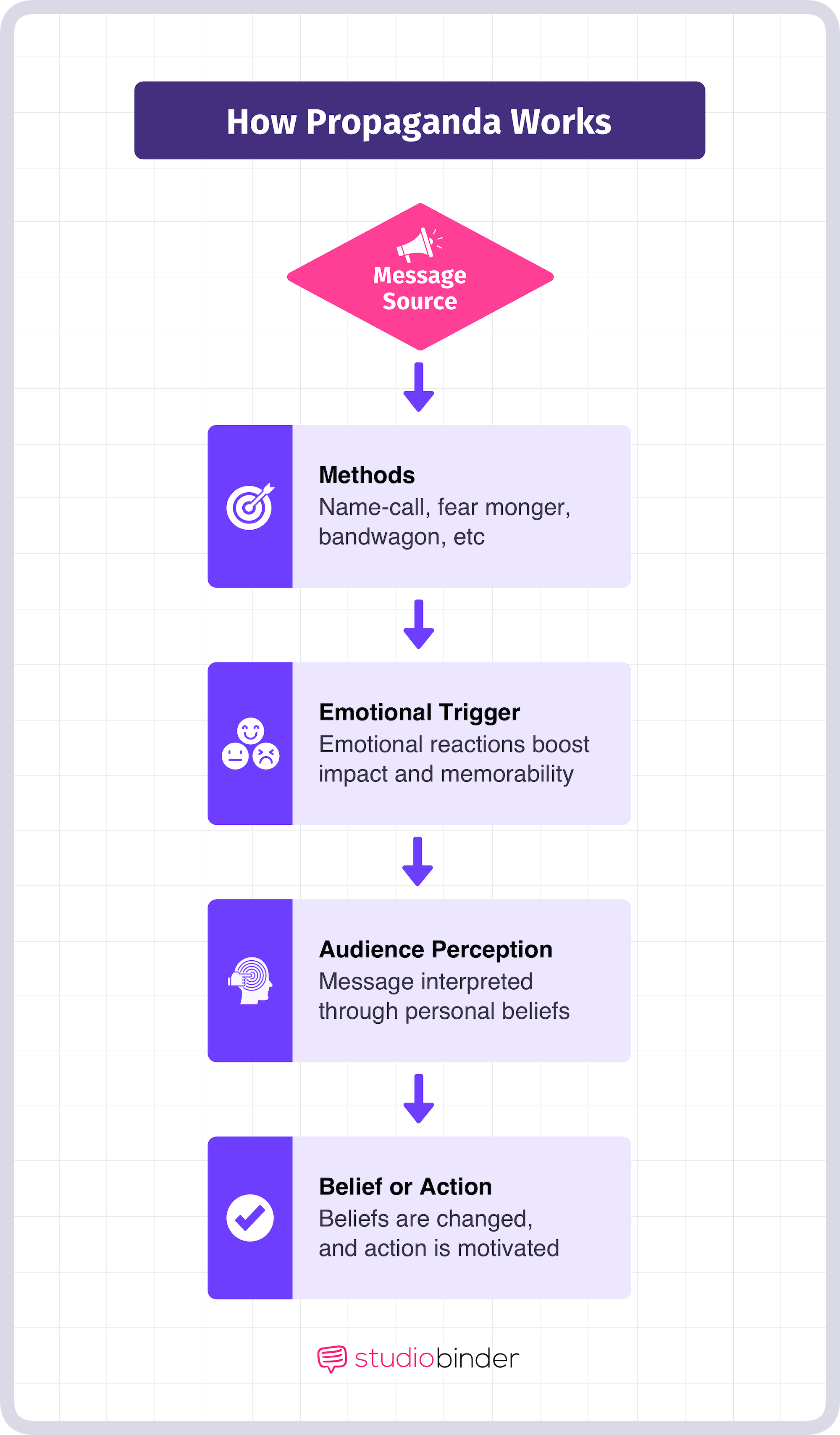
What is propaganda and how does it work exactly?
Propaganda Techniques
Examples and techniques of propaganda
Propaganda techniques are deliberate communications tactics designed to sway people's emotions, thoughts or behavior. These methods primarily focus on repetition, symbolism, and selective information to influence perception instead of promoting critical thinking.
Propaganda can take many different forms and most instances can be seen in mass media, art, music and film which have used these strategies for more than a century.
In fact, psychological research on the illusory truth effect finds that repetition can increase how accurate a statement feels by roughly 15–20%, meaning that information that is repeated is more likely to be believed, even if people are aware that it may be false. This effect is widely documented across cognitive psychology research
Below are some of the most widely recognized propaganda techniques, many of which appear frequently in art, film, advertising, and political media.
Technique | What it does | How it's used |
|---|---|---|
Name-calling | Attaches a negative label to an individual or group | Portraying enemies as “evil,” “vermin,” or “traitors” |
Glittering generalities | Uses vague but emotionally positive words | Appeals to “freedom,” “honor,” or “patriotism” without specifics |
Transfer | Associates an idea with a respected symbol | Flags, uniforms, religious imagery, heroic music |
Testimonial | Uses a respected or famous figure to endorse a message | Celebrities, authority figures, or “experts” backing a cause |
Plain folks | Frames the speaker as relatable and ordinary | Leaders presented as “just like you” |
Card stacking | Selects only facts that support one side | Omitting inconvenient information or counterarguments |
Bandwagon | Shows widespread support to influence agreement | Montage of cheering crowds in The Battle of Midway |
Famous propaganda art examples
Propaganda posters explained
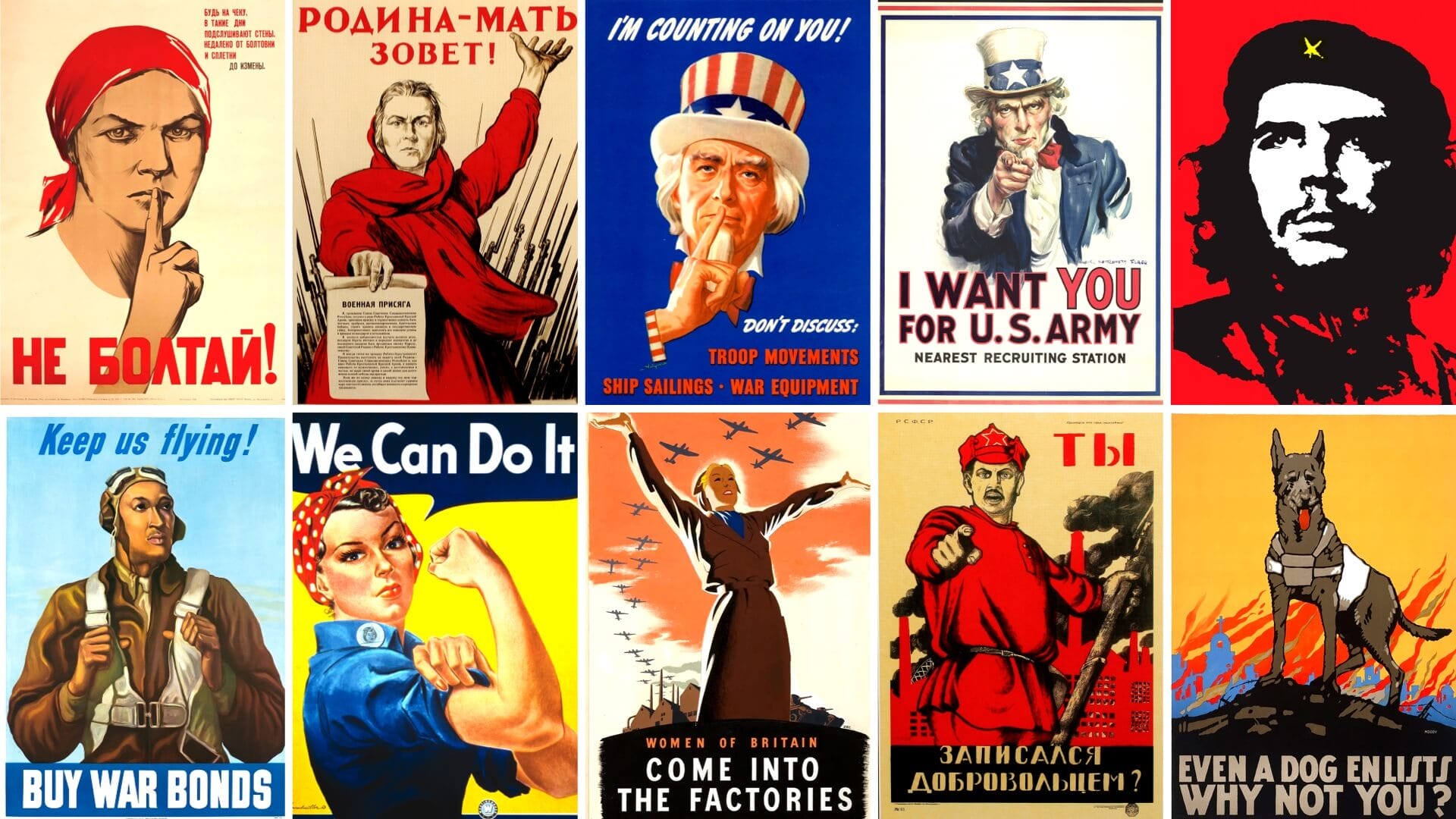
It’s hard to precisely answer ‘when was propaganda first used,’ but during the rise and peak of what we associate with “classic” post 19th century propaganda (1900s-1940s), a variety of artwork (often presented as posters) were made. Political campaigns asked for citizens to chip in to help soldiers abroad, others asked for the citizens to take direct part in the war being fought. There were also plenty that used racist imagery to remind you who the enemy was.
What is propaganda • American Propaganda
So, how does propaganda work? The idea of what counts as propaganda or the purpose of propaganda can get muddled, as recruitment posters (Uncle Sam saying “I WANT YOU”) and motivational art (J. Howard Miller’s “We Can Do It!”) could technically be counted as propaganda, especially in the context of the war effort and nationalism. Those examples may not be directly attacking a side or trying to tell you things to make you think something (true or false) about the enemy. However, like all good propaganda, their main intent is still to manipulate and/or encourage people to act for a patriotic purpose. It's really all about something that attempts to influence you directly.
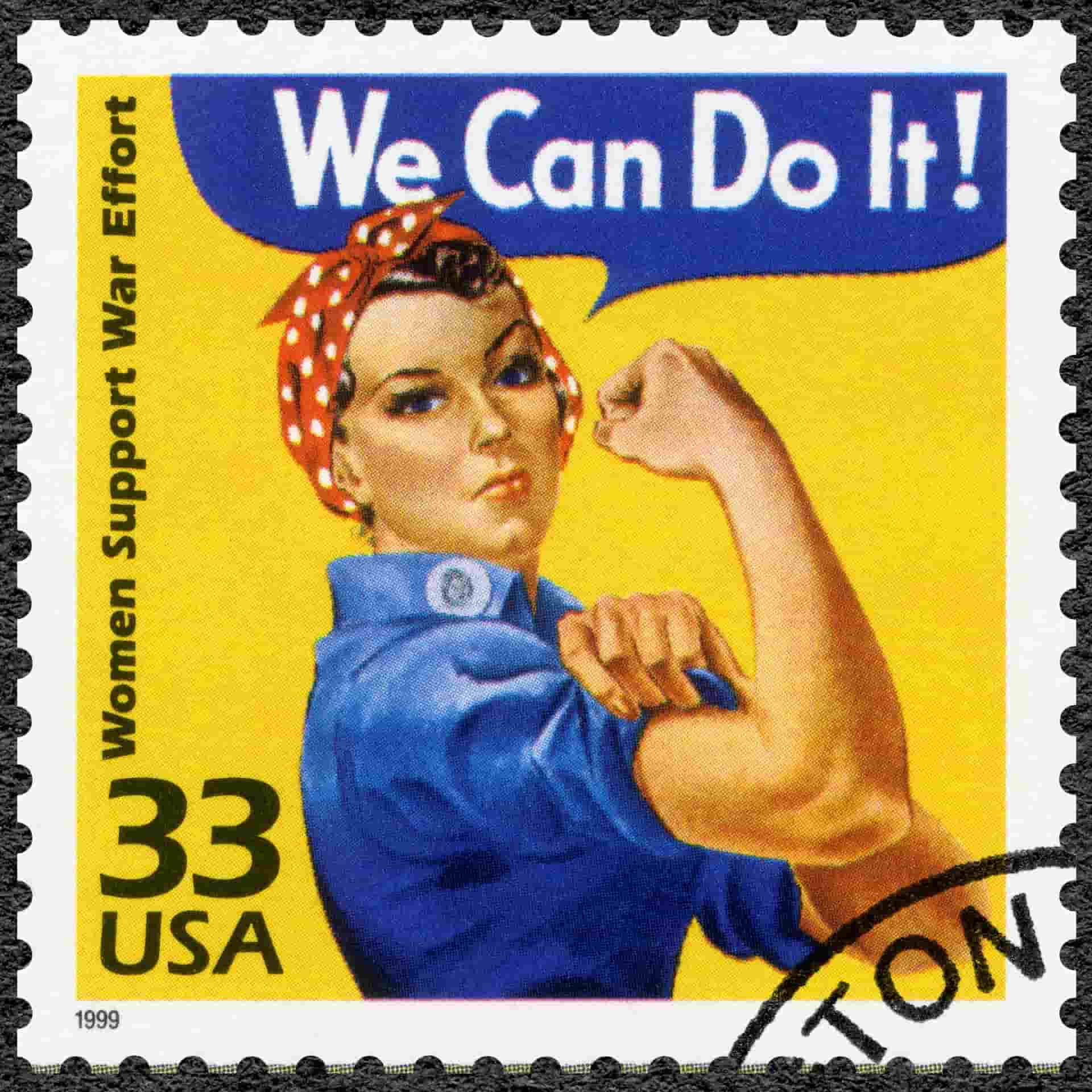
What is propaganda • propaganda meaning
Propaganda artwork has also taken a life of its own outside of its original context. The “We Can Do It!” poster from the United States, featuring an example of Rosie the Riveter, became more popular decades after it was originally made for WWII. Keep Calm and Carry On is another example of propaganda concept, as it became much more popular in the 21st century than the 20th century (even though the intent was to motivate Brits during Nazi bombing raids). And of course, Soviet propaganda still has a cult fan base.
Related Posts
Propaganda Film Examples
Examples of propaganda in film
Propaganda also made its mark in the world of cinema, so there is no shortage of propaganda films (or films that could be classified as propaganda). Some movies were explicitly made as works of propaganda while others were less explicit with working in propaganda theory and eliminating other points of view.
When it comes to how films influence audiences, this is evident when studying films closely. In the majority of cases, you'll notice common themes in most films which include the following:
- Establishing authority through low-angle shots or heroic framing
- Creating emotional momentum with montage and music
- Reinforcing ideology using symbols, uniforms, and gestures
- Depicting collective identity through crowds and repetition
- Simplifying conflict by portraying clear heroes and villains
Research from the Reuters Institute for the Study of Journalism found that 59% of people globally say video content is the most influential format when it comes to shaping opinions, underscoring why film has long been an effective medium for propaganda.
There were also movies that can be classified as more anti-war than propaganda, but are often referred to as propaganda all the same (Casablanca and The Great Dictator are two notable examples).
The two World Wars had propaganda films left and right, so much so that it would be too much to list them here. More notable propaganda films during these periods would include Sergei Eistenstein’s Battleship Potemkin, which promoted Communist ideals (and is a strong example of Soviet montage).

What is propaganda • propaganda techniques
A more explicit example from Eistenstein would be October, which was done for the tenth anniversary of the October Revolution which led to the formation of the USSR.
When it comes to propaganda techniques in film, you can use various methods to enhance the effectiveness like the illustration from below:
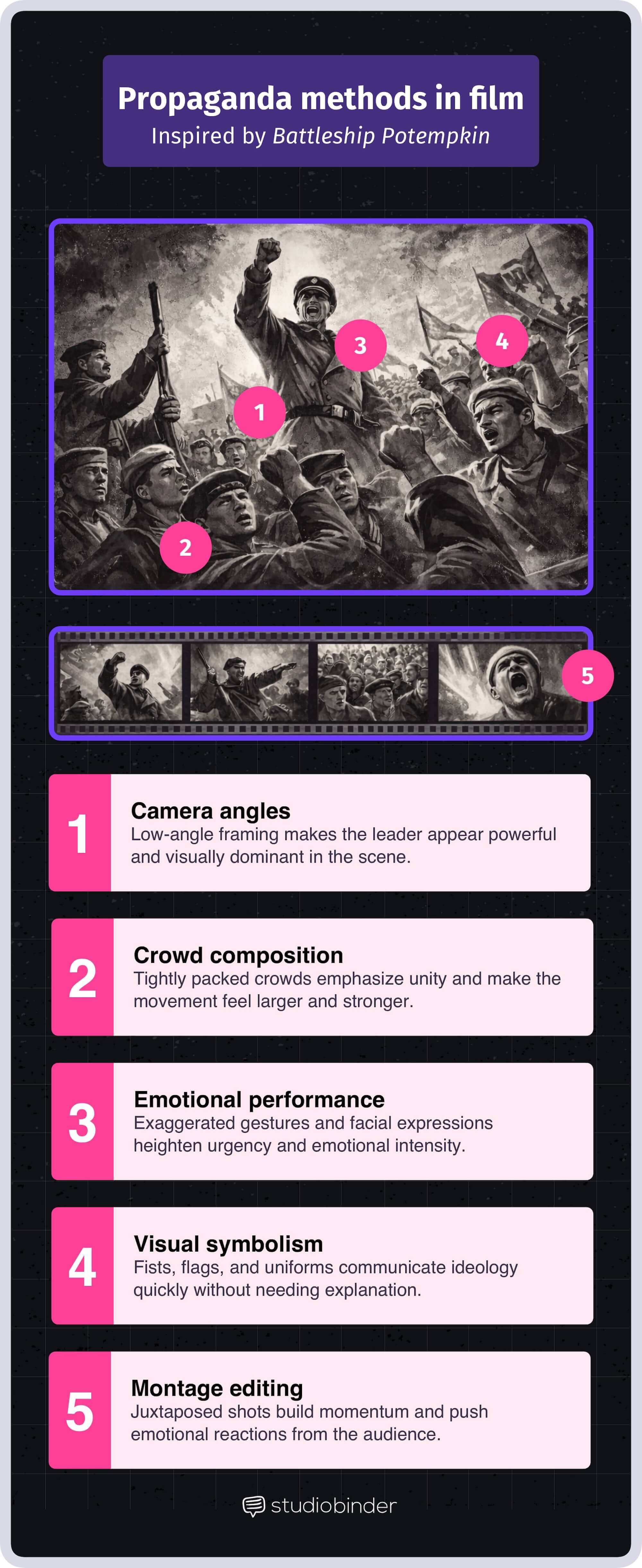
What is propaganda • Illustration of methods used in films
One of the most renowned and controversial (and not at all subtle) propaganda films is Leni Riefenstahl’s Triumph of the Will. While the film glorifies and showcases Nazi Germany, it also utilized unique filmic techniques that were seen as revolutionary.
On the other end of Triumph of the Will is Frank Capra’s Why We Fight, a seven-part series of political propaganda films directly produced by the US government. On top of being a response to Riefenstahl’s film, it’s an example of a famous Hollywood filmmaker directly getting involved with the war effort via cinema. Turns out movies can be just as influential as the printing press.
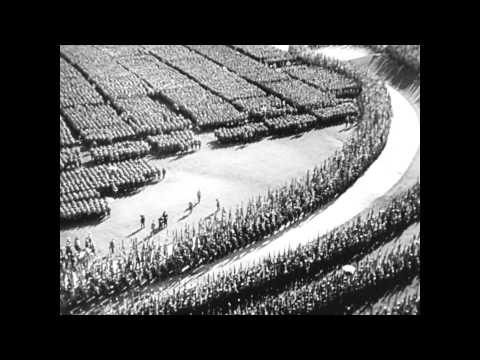


What is propaganda • history of propaganda
Of the many obvious propaganda films of the era, one of the most popular remains Walt Disney’s Der Fuehrer’s Face starring Donald Duck. It was one of several Disney propaganda animated shorts, which included films that existed to promote the “Good Neighbor” policy, which included Saludos Amigos and The Three Caballeros.
What is propaganda • Types of propaganda
These are just some of the most notable propaganda campaign examples, because propaganda films continued to get made during the Cold War and beyond. But the two World Wars remain major examples of propaganda art and film that continue to be studied, talked about, and function as an influence in the twenty-first century.
Trusted by over 1M creatives
StudioBinder for production teams
Everything you need for a successful shoot: call sheets, shot lists, scripts, and more.
Propaganda Today
Why propaganda is so powerful
Propaganda influences public opinions or actions by reinforcing particular narratives and drowning out others, frequently making repeated or emotionally charged messages appear more credible over time. This can be social and political.
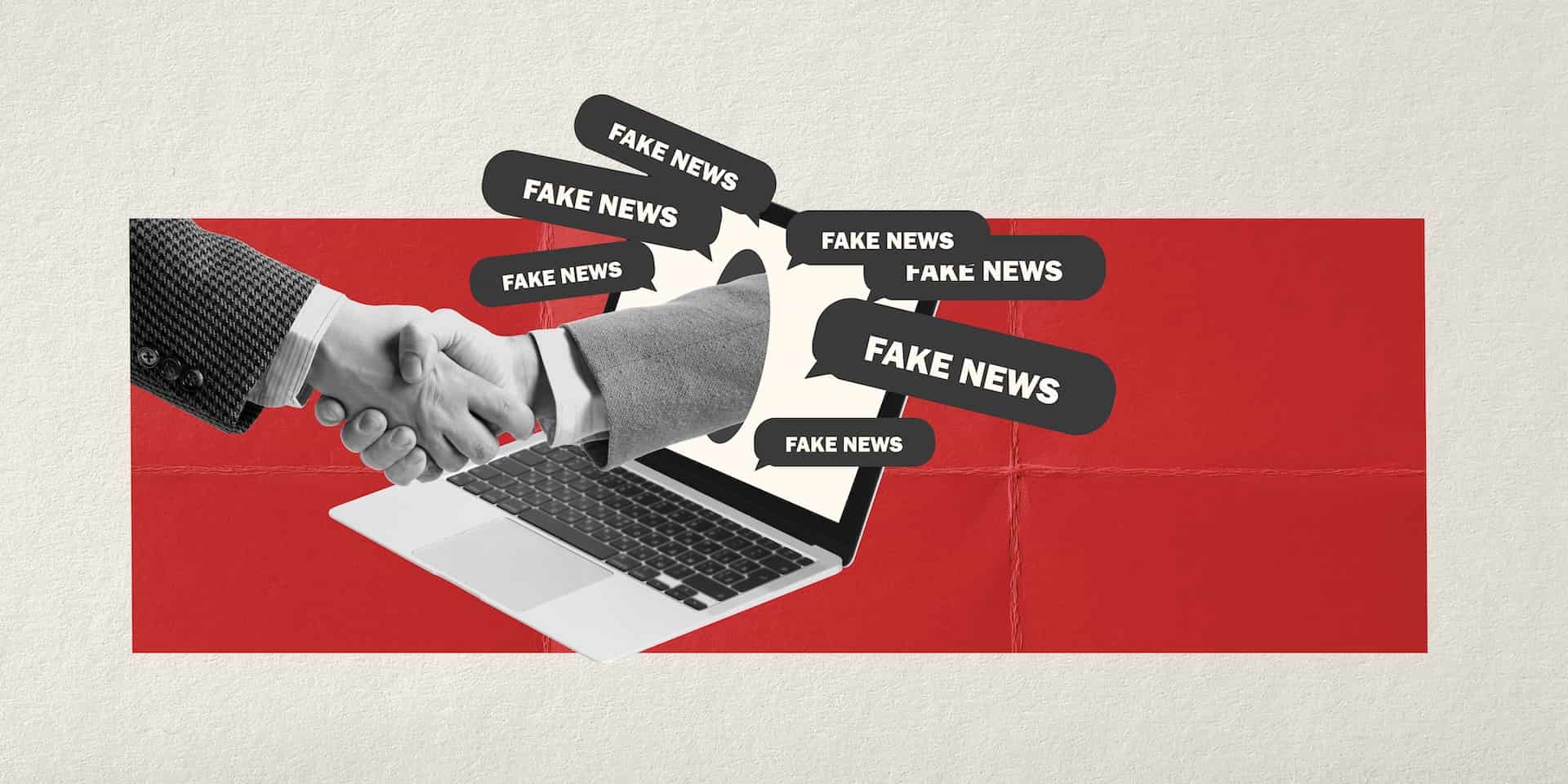
According to a Pew Research Center global research, 80% of respondents in 35 countries believe that fake or misleading news is a serious issue. This highlights the widespread impact that persistent messaging may have on perception, trust, and public opinion. A psychological warfare if you will.
Media theorist Walter Lippmann argued that people often rely on simplified representations of reality because the world itself is simply too complex to experience directly.
As he wrote in Public Opinion (1922): “The real environment is altogether too big, too complex, and too fleeting for direct acquaintance,” showing how limited perception and media representations shape what people believe and how they act.
Beyond repetition and emotional appeal, propaganda is effective because it often leverages existing beliefs rather than trying to create entirely new ones. Modern media ecosystems have amplified this effect. Social media algorithms, for example, tend to prioritize content that generates strong emotional reactions like outrage, fear, or validation. Same can be said about commercial advertising tactics.
As a result, propagandistic messages can spread faster and wider than nuanced or fact-based information. Over time, this creates echo chambers where individuals are repeatedly exposed to the same narratives, further strengthening their beliefs and reducing exposure to alternative perspectives. Ultimately, propaganda can influence opinion not just by informing people, but by framing how they interpret information.
Frequently Asked Questions
Common questions about propaganda
Not necessarily. While the term often has a negative connotation, propaganda can also be used to promote public health, safety, or social causes. The key difference lies in intent and transparency.
Persuasion encourages critical thinking and informed choice, while propaganda typically aims to influence beliefs or behavior by controlling information and emotional response.
Advertising can function like propaganda when it relies on emotional manipulation, selective information, or repeated messaging rather than clear, factual claims.
Yes. While modern propaganda may be less overt, films, videos, and digital media can still promote political, ideological, or national messages through storytelling and imagery.
Visual media combines imagery, sound, and narrative, making messages more emotionally engaging and memorable than text alone.
Up Next
What is pop art?
If you wondered what is propaganda and ideological messaging, we hope this post made it more clear! Next up, let's look at an art movement that commented and satirized propaganda. Our article on pop art covers the movement and its history, in addition to notable examples of artists and their most popular works.
Up Next: What is pop art? →