
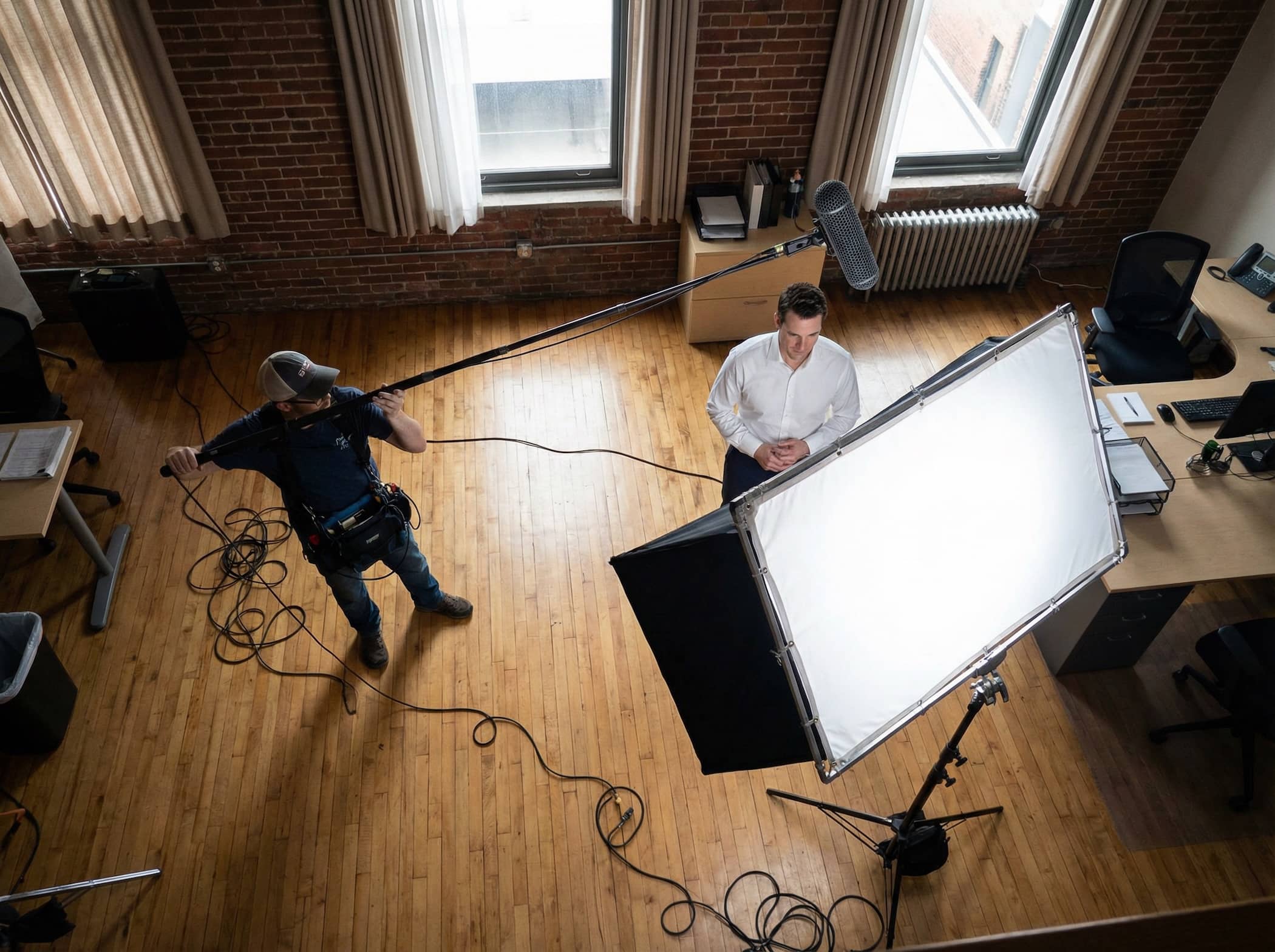
What is room tone in film? It’s actually one of the most overlooked and simple aspects of professional sound. But just because it’s overlooked, doesn’t mean it doesn’t play a crucial role in making scenes feel real and tangible. It’s that subtle background audio you don’t consciously notice, but without it, everything within a scene would feel unnatural or disconnected. In this guide, we’ll explore what room tone is, why it matters, and how filmmakers trust it to create polished, immersive sound.
Room tone in film
First, let's break down room tone
Capturing room tone is essential when it comes to properly editing sound in any kind of video project, whether it’s a feature or short film. Let’s learn about what it exactly means though:

What is room tone in film? • Subscribe to StudioBinder’s YouTube Channel
Room tone definition
What is room tone in film?
Room tone refers to the natural ambient sound of a location when no intentional noise is being made. It includes subtle sounds like electrical hums, air movement, distant traffic, or the acoustics of the room itself. When shooting a film, this "sonic fingerprint" is captured by the production sound mixer and boom operator, typically after the last take of a given scene. This way the sound can be used within the edit in post-production.
Tips on capturing room tone:
- Record at least 60 seconds of silence in every location.
- Ensure everyone on set stays completely still and quiet while capturing.
- Use the same mic placement and settings as your scene audio for consistency.
- Capture after each setup or angle change, since acoustics can shift.
- Listen closely for subtle noises with headphones on while recording.
What is room tone in film
Why room tone matters in film
Room tone is really all about maintaining an undercurrent of audio continuity. When a scene is edited together, keeping the background sound consistent is essential. Without it, audio would drop into random, unnatural silence, which would really distract the audience. You may have watched a film's deleted scenes without ambient tone and felt something off that you couldn't put your finger on.
By layering roomtone beneath dialogue, a subconsciously recognized and seamless listening experience is created. The result is audio that works to immerse you fully in the scene. For example, if a conversation scene cuts between two angles, the background sound should feel consistent. Silent tone ensures those transitions are invisible, yet highly influential to a viewer.
Editing ambient Tone in Film
How room tone is used in editing
In post-production, room tone acts as a foundation layer beneath dialogue and scene edits. Editors use it to fill gaps and maintain a consistent audio bed across a scene.
The following videos breaks down how to easily record film tone for your video project (without the stress):

Room tone example • Subscribe to StudioBinder’s YouTube Channel
If you wondering what it's actually used for, it's most commonly for the following in film:
- Smoothing cuts between takes
- Filling in gaps where audio has been removed
- Blending ADR with original dialogue
- Matching background sound across different shots
- Editors will often loop or extend room tone recordings and adjust their levels so the background remains consistent throughout the scene.
When done correctly, the audience never notices it, but they would immediately notice if it were missing.
Room tone film
How to record room tone on set in 7 steps
Recording roomtone is a simple process, but it requires consistency and attention to detail. Follow these steps to capture clean, usable audio for post-production:
1. Record it immediately after a take
Room tone should be captured right after completing a take, before anything changes in the environment. Be sure to record it for every new setup or location.
2. Keep all equipment exactly the same
Use the same microphones, settings, and placement as the dialogue recording. Even slight changes can make the room tone unusable.
3. Maintain identical environmental conditions
Leave everything as it was during the scene, including lights, air conditioning, and background elements. Consistency is key.
4. Call for complete silence on set
The assistant director should ensure the set is completely quiet. No movement, no talking, and no handling equipment while recording.
5. Record at least 30 to 60 seconds
Capture a minimum of 30 seconds, but longer recordings give editors more flexibility when filling gaps in post-production.
6. Monitor the recording carefully
The sound mixer should listen for any unwanted noise that could interfere with the recording.
7. Repeat for every setup
Each location has a unique sound profile, so room tone should be recorded whenever the setup changes.
For even more tips on capturing room tone for your video production, take a look at the following video which breaks it down well:

How to edit room tone in film • Subscribe to StudioBinder’s YouTube Channel
Room tone film
Room tone vs. ambience vs. silence
Room tone is often confused with similar audio terms, but each serves a different purpose.
- Room tone is a controlled recording of a location’s natural sound
- Ambience refers to broader environmental audio that may include movement and activity
- Silence is the absence of sound, which rarely exists in real-world environments
Room tone is more consistent and controlled than ambience, making it ideal for editing continuity.
Room tone film
What are some examples of room tone in practice?
Room tone is used across many types of productions:
- Dialogue scenes: Keeps background sound consistent between cuts
- Interviews: Prevents awkward gaps in audio
- ADR: Helps match newly recorded dialogue to the original environment
- Multi-day shoots: Maintains continuity across different filming days
Indoor room tone tends to be more controlled, while outdoor recordings may include subtle environmental movement like wind or distant activity.
Room tone film
5 mistakes to avoid with room tone
Even experienced crews can overlook roomtone. Some of the most common mistakes include:
Forgetting to record it entirely
Recording too short a sample
Changing mic setup before recording
Ignoring background changes like HVAC or traffic
Using mismatched or generic audio in post
These issues can make editing more difficult and reduce the overall quality of your sound.

Gain and room tone • Subscribe to StudioBinder’s YouTube Channel
Capturing ambient sound
Can you fix missing room tone?
If room tone wasn’t recorded on set, editors can try to recreate it using audio software. Tools like iZotope RX can help generate or repair background noise, and short clips can sometimes be looped to fill gaps.
However, these solutions are rarely as effective as properly recorded room tone from the original location. Capturing it during production is always the best option.
This video breaks done how to edit silent tone in the post-production phase, whether it's a cough in the background or anything in between:

How to edit room tone in film • Subscribe to StudioBinder’s YouTube Channel
Room tone film
5 pro tips for better room tone
There are various things you need to keep in mind when it comes to capturing silent tone. Here are a few of the things to keep in mind:
- Always record tone for every setup
- Capture more than you think you need
- Record again if the environment changes
- Clearly label files for post-production
- Monitor recordings to catch unwanted noise
Taking these extra steps will save time and frustration later in the editing process.
Related Posts
Frequently Asked Questions
Questions about room tone?
Without room tone, audio edits can sound abrupt or unnatural. Gaps between dialogue may feel silent or inconsistent, which can break immersion for the viewer.
The process of room tone in film happens usually right after a scene is filmed.
When you've captured room tone, you can easily splice the room tone throughout a timeline so it "fills the gaps" versus having silence.
At least 30 seconds is recommended, but recording 30 to 60 seconds or more gives editors more flexibility in post-production.
You can try, but it’s difficult to match the exact conditions of the original scene. Differences in environment or equipment can make it less effective.
Yes. Outdoor environments still have consistent background sound, such as wind, traffic, or distant activity, that needs to be captured for continuity.
Stock audio can be used in some cases, but it rarely matches the specific acoustics and sound profile of your location.
No. Room tone is a controlled recording of a location’s natural sound, while ambience is broader and often includes more active environmental noise.
The production sound mixer typically records room tone, while the assistant director helps ensure the set is quiet during the process.
UP NEXT
Atmosphere in film
Now that you’ve got a better idea on why (and how) to achieve room tone in film, it’s time to learn about using more atmospheric elements in your project. Atmosphere in your film can create emotional impact and transport us to alternate worlds. Learn more about that in the following blog post. Up Next: Atmosphere in film →
