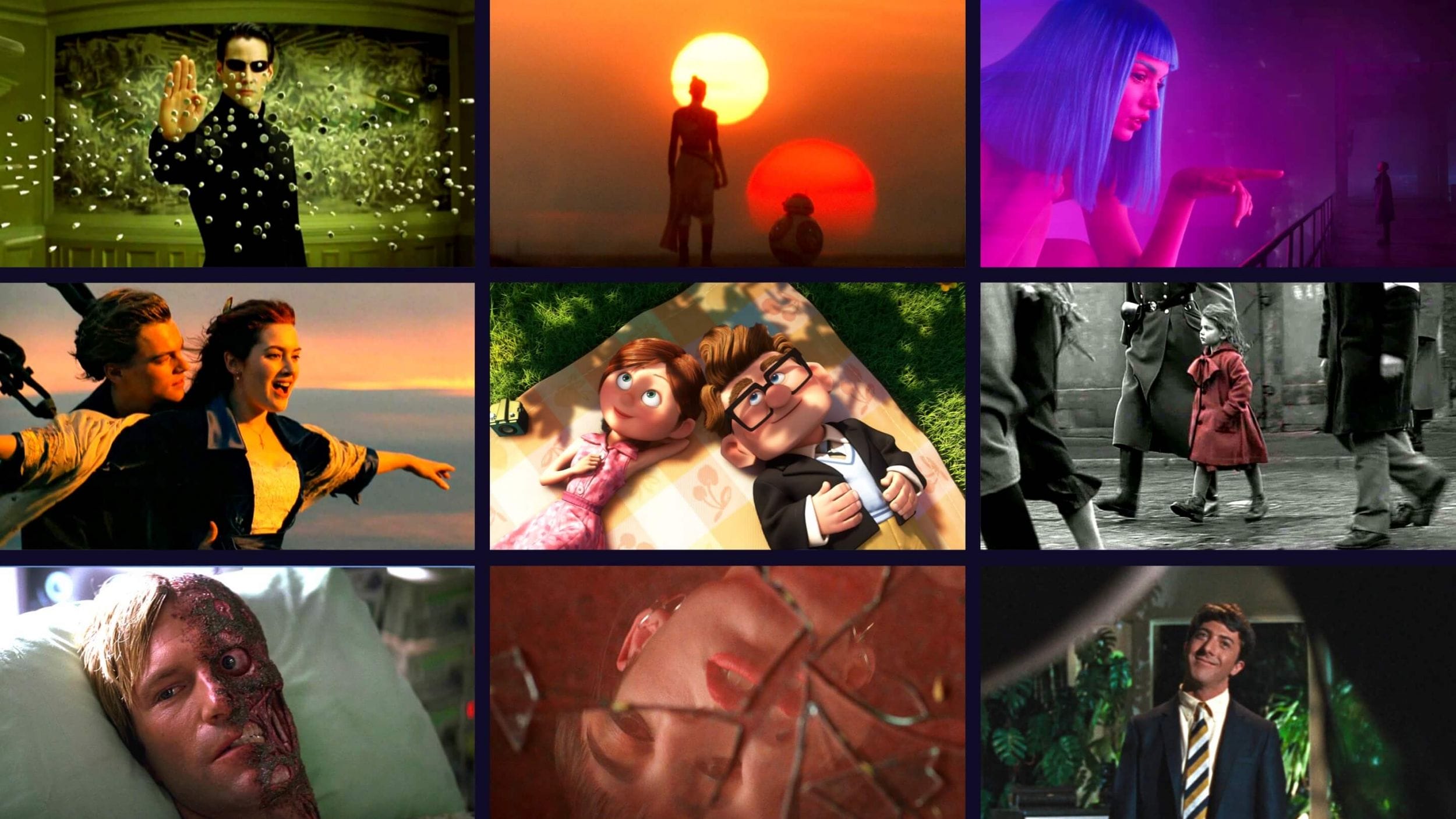
Before we wrote stories, we painted them. Humans were interpreting the world visually long before there was written language. With cave walls as canvas, early humans told stories of community, ritual, and survival.
Tens of thousands of years later, that same impulse lives on. The art of visual storytelling has evolved from cave drawings to the moving images of film and television, where a single frame can communicate a thousand words.
In this article, we’ll answer ‘what is visual storytelling?’ We’ll also explore the power of imagery to evoke emotion and how you can harness this tool to elevate your films at every stage of production, from the blank page to the edit bay. So, along with some examples of visual storytelling, you’ll soon be an expert on the topic!
The earliest examples of visual storytelling via Werner Herzog
visual storytelling definition
First, we’ll define visual storytelling
Visual storytelling is the process of conveying a story, idea, or emotion through the language of image. An important tool for multiple industries, from marketing and education to design and filmmaking, the power of visual storytelling lies in its ability to communicate without words.
VISUAL STORYTELLING DEFINITION
What is visual storytelling in film?
In film and television, visual storytelling is the art of using elements like composition, movement, and rhythm to convey a story and evoke emotion. These elements work together to tell the story without dialogue. Filmmakers of the silent film era relied heavily on visual storytelling techniques before the invention of synchronized sound.
Key Elements of Visual Storytelling:
The elements of visual storytelling will vary depending on the artist and their medium. For filmmakers, we’ll look at visual structure through the components listed in The Visual Story, by Bruce Block. According to Block, visual storytelling is not just the composition, but actually all of the components that make up the visual. Block breaks this down into seven basic ingredients:
- Space: the physical space in front of the camera, this is what we see and how (ie: perspective and size.)
- Line: the path of a moving object which communicates intensity and emotion.
- Shape: forms created by lines or tonal contrast.
- Tone: the brightness of objects in lighting, exposure, and art direction.
- Color: hue, brightness and saturation.
- Movement: occurs between people, objects, the camera, and the viewer's eye.
- Rhythm: the rhythm we can see relies on stationary objects, moving objects, and editing.
Visual Storytelling Techniques
“Don’t tell me the moon is shining”
Russian playwright Anton Chekhov is reputed to have said "Don't tell me the moon is shining; show me the glint of light on broken glass.” In other words, “show, don’t tell” when it comes to the storytelling visual code.
Now that we have the visual storytelling ingredients (space, line, shape, tone, color, movement, and rhythm), let’s look at what can be made with them. Below are some of the recipes (techniques) filmmakers use to reveal the story visually rather than explain it verbally.
Visual Storytelling Techniques:
Cinematography: the art and craft of making motion pictures by capturing a story visually. Perhaps the most widely understood as a visual technique, since this covers everything you see on screen, cinematography makes use of all seven elements. From the scale and distance that you see someone or something (lens choice) to the speed at which they approach you (camera movement), each cinematic choice relays something about the emotional life of your story.
Visual Storytelling Examples: In High and Low (1963) Akira Kurosawa and cinematographer Asakazu Nakai use blocking, composition, and camera movement to express moral and emotional tension. When the kidnapper makes a phone call from a sweltering hot shantytown at the bottom of the mountain, the air conditioned mansion they are calling looms large from up high, signifying a power difference.
Kurosawa’s lesser-seen visual masterpiece • Subscribe on YouTube
Mise-en-scène: the arrangement of scenery and stage properties in a play. Translated from French, it means setting the stage, but in film this includes: sets, props, lighting, costume, blocking, and shot composition.
Visual Storytelling Examples: A rey of mise-en-scène, director Pedro Almodóvar uses production design, color, and costume as emotional vocabulary. In Volver (2006), the color red dominates wardrobe, lipstick, and even kitchen tiles. More than just a visual feast, the specificity behind the director’s choices root back to the emotions of his story. There’s a reason Almodóvar’s films are at the top of every production design list.
Volver, starring Penelope Cruz
Editing: the art and craft of cutting and assembling finished film. Rhythm and pacing can be used to convey both a character’s internal life as well as the arc of the narrative itself.
Visual Storytelling Examples: Director Barry Jenkins and editor Joi McMillon create tenderness and empathy through the pacing of the edit in Moonlight (2016). Jenkins wanted the audience to not only meet the main character Chiron, but for us to feel what he is feeling by putting us in his body.
Empathy, identity, and masculinity in Moonlight
- Symbolism the art of imbuing objects or things with meaning, making them represent something more than the sum of its parts. This technique can begin as early as story development. By making intentional decisions on iconography and symbols, the writer is leaving clues to the emotional journey we’re on.
- Visual Storytelling Examples: Alfred Hitchcock’s spiral motif. From the opening title design to Madeleine’s hair bun, to the staircase of the bell tower. What is visual storytelling in the context of Hitchcock's use of the spiral? It's a metaphor for madness.
Symbolism in Hitchcock’s Vertigo • Subscribe on YouTube
what is visual storytelling in science
The power of visual storytelling
When we say “show, don’t tell,” we’re not just talking about style, it’s neuroscience. 90% of information transmitted to the brain is visual. Studies show that people remember 80% of what they see, and only 20% of what they do, which explains why I can still describe the outfit Dawn Weiner (Welcome To The Dollhouse) wore to the party three decades later, but not what I had for lunch yesterday.
The brain can identify images seen for as little as 13 milliseconds, which is less than the blink of an eye. Not only does visual storytelling deepen your narrative, but with 65 percent of people identifying as visual learners, it also helps your audience retain information.
what is Visual storytelling
Harnessing the power…
While you may have thought visual storytelling was in the hands of the cinematographer (yes, AND) it’s actually a tool shared by many. The best way to harness the power of visual storytelling is to implement it in every phase of the film. From writers and directors to production designers and editors, this creates a more layered film experience. Choices made from script to screen that are both intentional and interconnected gives the audience a more visceral experience.
Frequently Asked Questions
Visual Storytelling FAQs
Visual storytelling is the practice of conveying a narrative using images, composition, color, movement, and design rather than relying primarily on dialogue or text. It allows audiences to understand emotions, relationships, and themes through what they see.
Visual storytelling improves engagement and retention because the brain processes images faster than text. Strong visuals can communicate mood, character, and conflict instantly, making stories more immersive and memorable.
Core elements include composition, color, lighting, character positioning, symbolism, pacing, and framing. Together, these create emotional meaning and guide audience interpretation without exposition.
Traditional storytelling often relies on dialogue and narration, while visual storytelling emphasizes imagery and design. In film and design, visual storytelling “shows” rather than “tells.”
Filmmakers use shot composition, blocking, lighting, costume design, and editing to reveal character emotions and themes visually. For example, framing a character in isolation can communicate loneliness without a single line of dialogue.
Yes. Brands use it in advertising, designers use it in layouts, and marketers use it in infographics and interactive content. Any medium that uses visuals can tell a story.
A visual storyteller is a person who expresses ideas through imagery. The medium the visuals are being shown through can be anything, but the person must be telling some kind of story with their visuals.
The elements of visual storytelling include composition, color, lighting, framing, movement, and production design. Together, these choices communicate mood, theme, and character information without relying on dialogue.
Visual storytelling allows filmmakers to convey emotion and meaning instantly through imagery rather than exposition. It deepens audience engagement by showing the story instead of telling it.
A film’s visual style reinforces its tone, themes, and character arcs through deliberate aesthetic choices. When cinematography, color, and design align with the narrative, the story feels more immersive and cohesive.
Up Next
Take visual storytelling to the next level
Now that you understand the history and a few techniques of visual storytelling, you might be ready to level up. According to, well, us, “artists who have mastered the art of juxtaposition understand how to communicate their ideas on a more sophisticated level.” So if you’re ready to get fancy (and by fancy we mean deeper into your craft), don’t miss this video.
Up Next: Juxtaposition in Film →

Share your vision with elegant shot lists and storyboards.
Create robust and customizable shot lists. Upload images to make storyboards and slideshows.