Mad Men has some of the best characters in all of television. The combination of the characters Matthew Weiner wrote and how they were brought to life resulted in dimensional, often dynamic characters that feel like they could walk into the room you were watching the show in.
Over seven seasons on AMC, Mad Men follows the story of a New York advertising agency during one of the most changing decades in American history. Let’s dive into the Mad Men cast of characters, what they brought to the series, and the actors that brought them to life.
Mad men cast
Mad Men cast: the main characters
The Mad Men cast of characters come and go throughout the run of the show, but a few core characters become our entry point into 1960s Madison Avenue.
Start with the chart below for a brief overview, and then let's get deeper into these big personalities.

Main Characters and Actors • Mad men cast
Jon Hamm as Don Draper
Don Draper is one of television's most iconic antiheroes. When we are introduced to him at the beginning of the series, Don appears to have it all.
He’s charming, good at his job, has a beautiful wife and two kids. However, as the show goes on, Matthew Weiner and his writers' room begin to peel back the layers, revealing Don as less than the ideal man.
For more on what defines and anti-hero and what makes them so compelling, we've got just the video for you.

Subscribe to StudioBinder on YouTube • Mad men cast
Don is the creative director at Sterling Cooper, a prominent ad agency on Madison Avenue. His success, however, is built on a carefully protected lie. His true identity is Dick Whitman. After the death of his commanding officer during the Korean War, Dick takes the fallen officer's identity and continues his life as Don Draper.
This new identity gives Don a new beginning, but it also causes him to live in constant fear. Being found out would cause him to lose the family life and the career he has so carefully built.
Matthew Weiner wrote Don with many contradictions. Don is a talented ad man who is brilliant at selling the idea of identity, but he has no real identity of his own. Every pitch, every ad he creates, is in some way a construction of his own self.
He is a man selling the idea of a life that consumers wish they had, even when his own life is an illusion of perfection. What is revealed to the viewer is a flawed man trying to control his own demons, running from his past, and struggling to be truly seen.
There are some who might see Don Draper as an aspirational character. But Weiner has made it clear that Don’s story is a cautionary tale. It is the downfall of a man who has everything but is incapable of appreciating it, because deep down he doesn’t believe he deserves any of it.
Jon Hamm plays Don with nuance and restraint. His performance is a slow burn, a subtle and controlled portrait of a man who is constantly on the edge of losing all he has worked for. Around others, Don is enigmatic with a seemingly effortless charisma.
Yet as his life unravels the audience catches glimpses of his vulnerability. The brilliance in Hamm’s portrayal amongst the Mad Men cast is that he makes clear choices on when to play Don with control, and when to show his facade cracking. We see Don’s unraveling and his struggle to remain in control.

Elisabeth Moss as Peggy Olson
No character in Mad Men has a bigger character arc than Peggy Olson. She begins the series as Don’s secretary. She is inexperienced and unsure how to navigate Sterling Cooper’s male-dominated office dynamics, but she has an underlying sense of ambition and intelligence.
Her insight on the Belle Jolie campaign quickly gets her promoted to junior copywriter. As she finds her footing at the agency, her ambition intensifies, and she finds her outlet in ad writing.
Peggy is talented and works hard to rise her way through the ranks. Her arc is about discovering herself, that she doesn’t need to imitate the people around her or to become successful through the means dictated by male power systems. She excels because she rises above these power structures and uses her strengths as a woman to outwrite the men around her.
The struggles of women in the workplace are a key theme in Mad Men. Peggy’s fight to be heard is an intensely personal one. She is often self-serving, stubborn, and imperfect. But she pushes for what she believes in, even confronting Don about workplace discrimination and demanding equal pay.
She fights tooth and nail for respect, and by the end of the season, we see her as a fully self confident woman who demands it. Her transformation and growth through all seven seasons mark Peggy as the “secret protagonist,” and she is often viewed as the true hero in the Mad Men cast of characters.
Elizabeth Moss as Peggy is a force. She was given multiple awards for her performance in the series. Moss portrays Peggy’s ambition as almost physical. Her drive for success comes through in her movements and the way she speaks as though she’s demanding to be heard.
She is fully determined to make her own way, and Moss makes that determination visible in nearly every scene. Through all of Peggy’s growth and iterations, Moss shows us a character who is highly motivated and at the same time uniquely vulnerable and human.
The fact that we can see how much Peggy cares makes her arc among the larger Mad Men cast all the more satisfying to watch.

Peggy Olson scene • Mad men cast
John Slattery as Roger Sterling
Roger Sterling is Mad Men’s funniest character. But his humor and witty quips are a mask that hides his growing irrelevance. Roger is one of two senior partners at Sterling Cooper, a position that he inherited from his father.
He is extremely wealthy and possesses a kind of social charm, and in the beginning of the series is a key liaison for many of Sterling Cooper’s major accounts, including their biggest: Lucky Strike Cigarettes.
Weiner uses Rogers' character to give the viewer personal insight into the cultural shift of the 60s. With the rise of counterculture, the anti-war movement, the civil rights movement, and the youth culture’s rebellion against conformity, Roger represents the Greatest Generation, struggling to adapt to the times.
He often tries, even experimenting with drugs and free love. But it isn’t enough to overcome the cultural divide. As values shift at work and Roger is helpless to stop Lucky Strike from abruptly leaving, his role is slowly rendered obsolete by a world that no longer needs what he offers.
John Slattery plays Roger with devastating humor. He delivers his one-liners with sardonic wit at just the right moments, and Weiner uses this type of comedy as Roger’s cover. Many of Roger’s jokes are ugly and cynical, often sexist and offensive. But Slattery delivers them with just the right amount of confidence and precision to make them somehow land.
His humor gives his character a certain likability, and a cynicism which serves to highlight the absurdity of the very systems that he is a part of; office culture, advertising industry, and even his clients and coworkers.
Slattery also plays the full evolution of Roger’s relationship with Joan Holloway over all seven seasons with emotional honesty. We see two people who deeply care for each other, but can never give themselves fully to the other.
In S5E6 ‘Far Away Places’ we see Roger experimenting with LSD. It’s an example of the show at its most experimental. Weiner was inspired by French anthology and vignette films, and used multiple shorter storylines to show Peggy, Roger, and Don each in their own vulnerabilities.
After Roger’s trip, he has his first experiences of empathy, which John Slattery plays with tenderness and defenselessness. This episode shows how Weiner uses the entire ensemble of the show, interweaving each of the characters' storylines inextricably with the others in the Mad Men cast.

Roger Sterling scene pack • Mad men cast
January Jones as Betty Draper
Betty Draper is undoubtedly the most misunderstood character in the Mad Men cast. She is a young housewife married to Don and living in suburban New York. She is outwardly perfect, a mirror of Don and the family ideals of the early 1960s.
Betty was raised to believe that being a wife and mother was the only desirable outcome in life, and beauty the only virtue. She often behaves coldly towards her children, a result of her being unable to cope with the isolating reality of being a housewife.
The consequences of the era's expectations of women are clearest in Betty Draper. Her emotional immaturity is a result of her isolation, of emotions so repressed that expression has become impossible.
In the final season, when she is diagnosed with late-stage lung cancer. Betty faces her fate without flinching. Her impending death represents the death of the old values, and there is no place for them in the historical transition of the future.
January Jones’ performance as Betty cannot be overlooked in the Mad Men cast. The blankness that she portrays Betty with is an intentional choice, one that makes the character all the more devastating. Her coldness is a choice, and she plays Betty as a real person, not an ideal.
She shows that under Betty’s serene exterior is a woman who is fighting to be heard, to find happiness. When we see this controlled dignity break is how Jones shows the pressures and true effect of 60s gender roles. Jones’ shows this consistently through all seasons, cementing Betty as a cohesive and memorable character.
Even when faced with her cancer diagnosis, she accepts it with a controlled dignity and a determination that she will have what she wants, which is to be frozen in time, young and beautiful forever.

Betty Draper scene • Mad men cast
Christina Hendricks as Joan Holloway
Joan Holloway knows how her world works. Arguably even more than anyone else in the Mad Men cast. She runs the Sterling Cooper office from the beginning of the show, even if it's not in a way her male coworkers see or understand. Her strength lies in her pragmatism and knowledge of the systems of power that govern the office.
And she's not afraid to use these systems, and her own physical assets, to her advantage. She knows her world is one of misogyny, objectification, and patriarchal attitudes. She accepts those conditions but still doesn’t let them stop her.
Joan’s arc begins as head of the secretarial pool and ends with her being named a partner and owning her own production company. The way she gets there, however, is more complicated. Through Joan we see the cost of existence in a world that values a woman’s body before her mind. Joan’s intelligence and competence are what see her through; though she uses her good looks to get ahead, she doesn’t rely on them.
It doesn’t come without compromise though, and when she has to sleep with a representative from Jaguar to land the account for SCDP and, in turn, secure her role as a partner, we see the real price of institutional sexism. By the end of the show, Joan comes into herself and we see a self-assured, powerful woman, who has learned not to put up with any less than she deserves.
Through Christina Hendricks, we see Joan as a formidable woman. Everything, from the way she walks through a room, makes eye contact, to the way she speaks, conveys the self-assuredness of someone who demands to be acknowledged. This physicality is what makes Joan's character stand out.
Hendricks successfully walks the line between showing Joan’s ruthlessness and the reasons she is forced to act this way. Lines that could have seemed cruel are shown as empowering, because we can see how hard Joan has worked for all that she has.
By the end of the show, Hendricks also shows Joan’s exhaustion. Her increasing weariness to cater to the demands of the men around her humanizes her struggle. Hendricks shows both sides of Joan: a woman both resilient and imperfect, rewarded within the system and also cut down by it.

Don Draper & Joan Holloway • Mad men cast
Vincent Kartheiser as Pete Campbell
When Weiner cast Vincent Kartheiser to play Pete Campbell, he told him one thing: Pete ‘never wins’. He comes from an old-money family that lost all its status except its name, and the pressures from his family cause him to turn his efforts to his work.
Pete believes he has genuinely creative ideas, but is hired as an account executive. He feels that he deserves status and respect, yet has done little in the beginning of the show to earn it. He wants, more than anything, to be respected by those in power, especially Don.
When this desire is met with resistance, Pete becomes adversarial toward Don, initially not buying into his talents and even attempting to blackmail Don in season 1 after discovering his true identity. Pete’s marked lack of charisma and tact only serves to sink him deeper into uncomfortable situations that cause him to constantly work from behind.
Pete is flawed in a vulnerable way that the other Mad Men cast of characters are not. He begins as one of the show's more annoying characters, but he begins to show insecurities that are all too relatable. Overcoming these insecurities and finding his own self-esteem in his work becomes the core of his arc.
While he becomes essential to the agency, Weiner keeps him flawed, unable to enjoy what could be a loving marriage and family life. Pete always longs for more.
Vincent Kartheiser plays Pete with an unflinching lack of vanity, making him really stick out amongst the Mad Men cast. Pete is often pathetic, and Kartheiser allows him to be so without hiding. Pete’s flaws are relatable in a way that many of the other characters aren't. He is human, searching for purpose, almost childlike in his reactions and even in his tantrums.
But he keeps trying, and eventually grows as a result. Kartheiser’s courage in depicting Pete makes his character relatable, and gains the audience's sympathy from this choice.

Pete Campbell scene pack • Mad men cast
Supporting mad men cast
The supporting cast: who played who
Some of Mad Men’s best characters only appear for a season or two. But they are written with just as much depth and a full character arc.
Some of the Mad Men cast are in the series throughout the 7 seasons, but their arc is revealed slowly. Others simply serve to build out the world, giving every scene that they are in depth and nuance.
Robert Morse as Bert Cooper
Founding senior partner of Sterling Cooper, he holds authority.
Wildly eccentric, makes visitors remove their shoes, and operates outside the normal professional logic of the agency.
He belongs to the lost generation and often acts a mentor or ‘grandfather’ of the agency despite his unusual ways.
Played by Robert Morse, a Broadway veteran who actually performs a song and dance number as a postmortem apparition of Bert.

Bert Cooper scene • Mad men cast
Kiernan Shipka as Sally Draper
- Don and Betty’s daughter and oldest of their three children.
- She is observant and smart, often putting words to the flaws and failures of her parents.
- Played by Kiernan Shipka who aged from seven to fourteen over the show's seven seasons.
- Her performance as an actor grows over the course of filming and Sally’s coming of age arc is fully realized.

Sally Draper scene • Mad men cast
Jared Harris as Lane Pryce
- Lane Price is a British financial manager sent to oversee Sterling Cooper’s acquisition.
- He becomes a named partner, is found by Don to be embezzling funds, and subsequently hangs himself.
- Jared Harris plays Lane’s demise with a controlled anger and vulnerability that makes him unforgettable in the Mad Men cast.
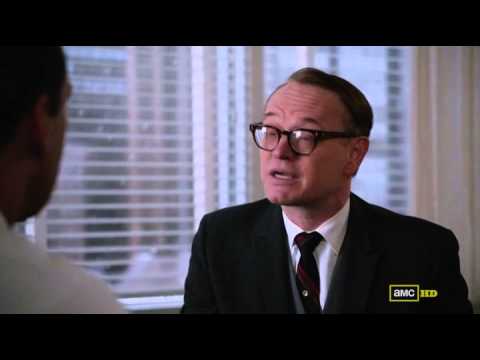
Lane Pryce scene • Mad men cast
Aaron Staton as Ken Cosgrove
- Ken Cosgrove is a competent account man at Sterling Cooper and Pete’s direct rival.
- He is optimistic and likeable through most of the show, but becomes embittered by circumstances at work.
- Aaron Staton shows Ken’s downfall as being his inability to walk away.

Ken Cosgrove scene • Mad men cast
Rich Sommer as Harry Crane
Harry Crane is an opportunist, he grows with the times from media manager to head of the television department through luck and taking advantage of changing times.
He is able to exploit the growing tv industry for his own career growth, and is often petty and self- serving.
Rich Sommer subtly plays Harry's transition from a nerdy and gentle character into one of the least likeable people in the office.
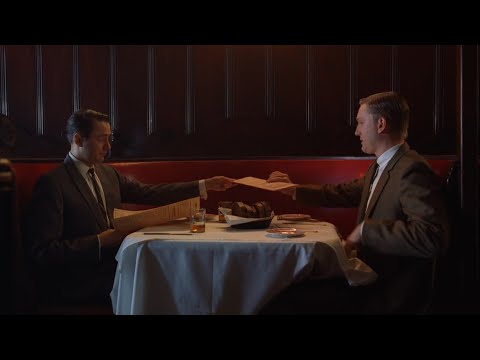
Harry Crane scene • Mad men cast
Ben Feldman as Michael Ginsberg
- Michael Ginsberg is a talented copywriter for SCDP, a true creative talent.
- His ideas are good, and they often challenge Don’s dominance.
- He suffers a mental break after the office installs a computer in the former creative room.
- Ben Feldman plays Ginsberg’s intensity as both funny and frightening.
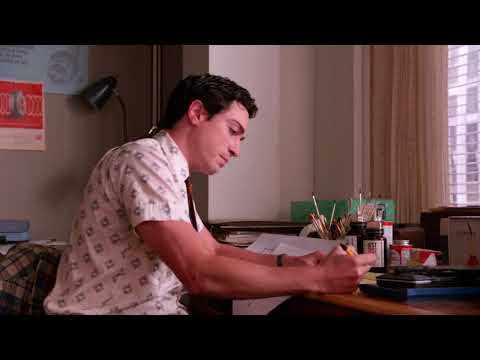
Michael Ginsberg scene pack • Mad men cast
ENSEMBLE Mad Men CAST
What made the Mad Men ensemble work
In his exit interview with TV Insider, Weiner explained that he worked to "deglamorize" the time period and show the real struggles of the people who lived through it.
This became the foundation of how he built the Mad Men cast.
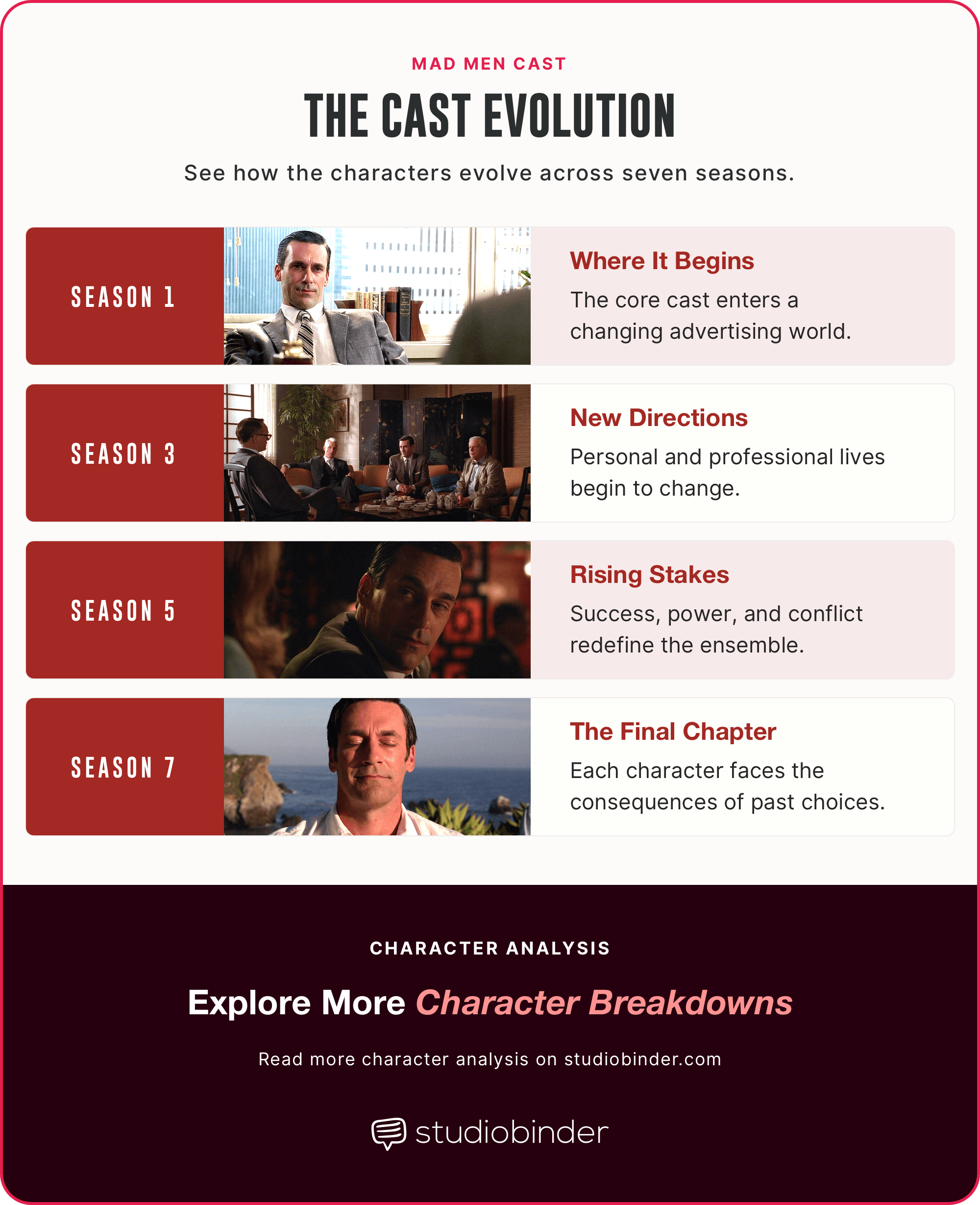
Character Evolution Across Seasons • Mad men cast
Matthew Weiner's approach to character contradiction
The series uses each character in the Mad Men cast to reveal a specific struggle of the times. It was Roger’s growing irrelevance in times that move too fast, Betty’s antiquated ideal of the role of women in the family and society, or Peggy’s constant battle to be an ambitious female professional in a deeply misogynistic industry.
Each character had aspirations both for the whole show and for a season. And much like real life, the progress toward these desires is not linear. Don gets sober, then he relapses.
Roger is enlightened through LSD, then regresses to his old ways. Peggy finally gets a better role away from Don, only to end up working for him again through a merger.
The audience watches these people circle their own patterns for seven seasons, and the drama lives in the audience's’s anticipation of when anyone will ever break the loop.
Why the show needed a true ensemble — not just a lead
Don Draper is compelling, but he couldn't carry the show alone. Weiner conceived Mad Men as fundamentally about an era, not any singular person.
Don Draper is our entry into this world, but each character builds out what this world was actually like. We experience through primary and secondary characters what the 60s was like for rich white men, aspiring young black women, the hippies, the blue collar worker.
There were no small parts in the Mad Men cast because every person who appeared on screen was an opportunity for Weiner and his writers' room to explore the era through another perspective.
And that is what makes the show so brilliant — its commitment to treating every character like the protagonist of their own story.
Related Posts
Frequently Asked Questions
Mad Men cast FAQs
Don Draper is played by Jon Hamm. The role made his career and him a household name. He’s widely regarded as one of the best television characters of all time alongside Tony Soprano and Walter White.
Don Draper (Jon Hamm) is the protagonist — the show is structured around his perspective and his secrets. But Mad Men works as a true ensemble. Peggy Olson (Elisabeth Moss) has an equally central arc, and many fans argue her storyline is the show's hero’s journey.
Mad Men ran for seven seasons on AMC from 2007 to 2015 and ran 92 episodes in total. The series finale, 'Person to Person,' aired May 17, 2015.
Jon Hamm has continued working in film and television, including The Town (2010) and Baby Driver (2017), and Top Gun: Maverick (2022).
Elisabeth Moss became one of the most in-demand actors in television, starring in The Handmaid's Tale (2017–2025) for which she has won multiple Emmy Awards.
Christina Hendricks starred in Good Girls (2018–2021).
Kiernan Shipka starred in The Chilling Adventures of Sabrina (2018–2020) and Twisters (2024)
UP NEXT
What is a Pilot Episode
Mad Men's pilot introduced one of television's greatest ensembles, the Mad Men cast. See how the episode establishes its iconic characters and sets the stage for seven seasons of amazing storytelling.