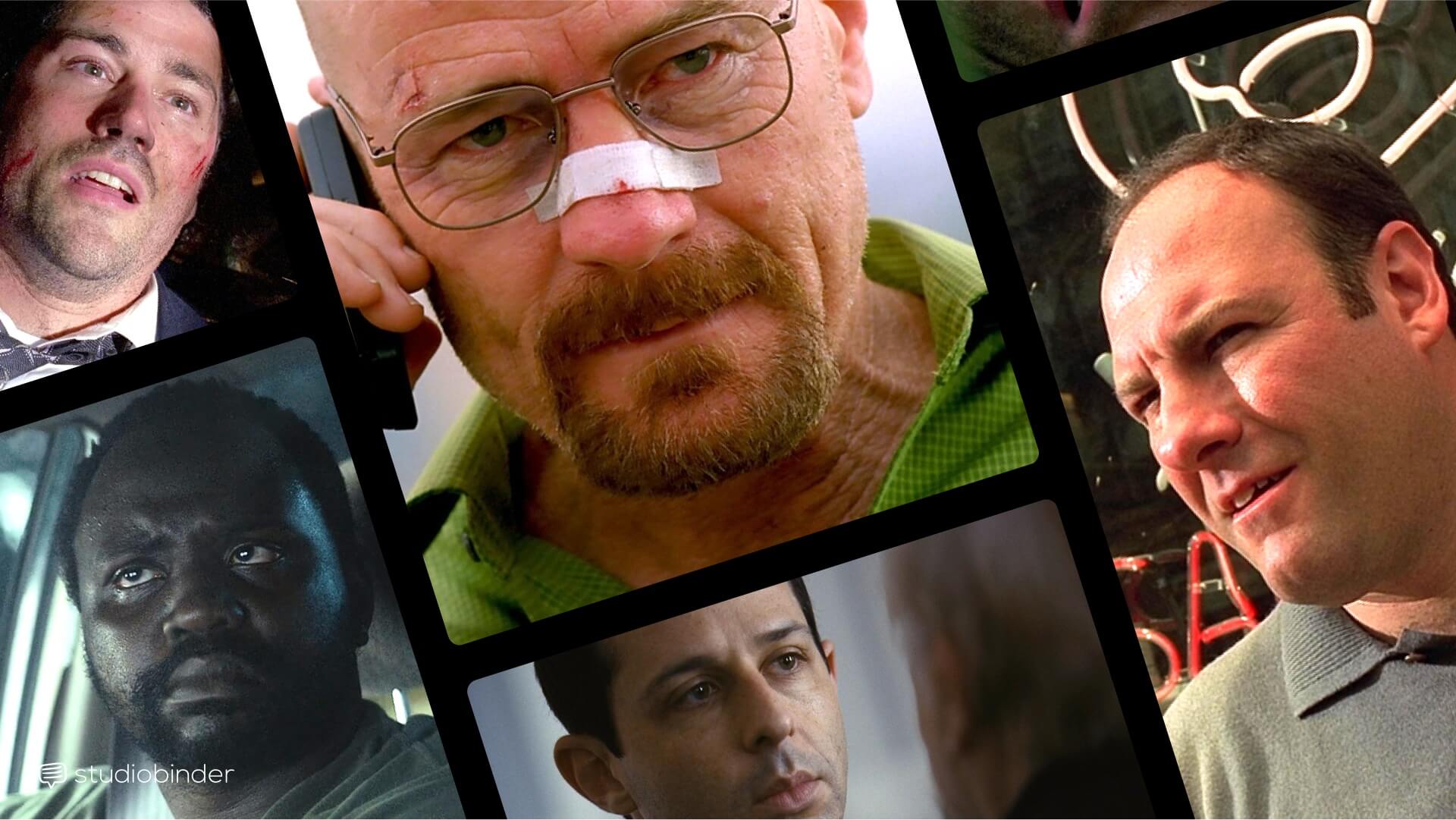
Television has reached a point where a single episode can carry the emotional weight, visual ambition, and cultural impact of a great film.
The best TV show episodes of all time are not simply memorable chapters in larger stories. They function as complete dramatic experiences, delivering character payoffs, formal experimentation, and unforgettable images in under an hour. This list ranks the episodes that changed television history.
BEST TV EPISODES OF ALL TIME
What makes the greatest episodes stand out?
You know the qualities shared by television's most unforgettable episodes when you see them. Below is a chart that details what we believe are the most notable qualities in the best tv show episodes of all time.

Defining Traits of Unforgettable Television Episodes • Best tv show episodes of all time
Mob Drama
20. "The Sopranos" Pine Barrens (Season 3, Episode 11)
“Pine Barrens” is one of the best tv show episodes of all time because it turns failure into dark comedy. Paulie and Christopher lose a Russian mobster in the snowy woods of New Jersey, then slowly unravel while trying to survive the cold, hunger, and each other. On paper, almost nothing happens. In execution, it becomes one of the best episodes in TV history because every tiny inconvenience escalates.
The episode is also a masterclass in the bottle format. Most of the runtime traps the audience with two characters who cannot cooperate, forcing tension to emerge from personality rather than plot. Director Steve Buscemi shoots the forest like hostile territory, making ordinary snow feel genuinely dangerous.

Paulie, Christopher And The Russian • Best tv show episodes of all time
One of the many things that makes “Pine Barrens” endure among the best tv show episodes of all time is its control around its filmmaking and writing tone. It moves from suspense to absurdity without breaking either mood. Television rarely balanced black comedy and mob violence this well before The Sopranos.
Horror Episode
19. "Buffy the Vampire Slayer" Hush (Season 4, Episode 10)
“Hush” exists because critics claimed creator Joss Whedon relied too heavily on dialogue. His response was to remove almost all of it.
The Gentlemen steal every voice in Sunnydale, leaving the town unable to scream while pale, smiling monsters harvest human hearts. The result is one of television’s purest demonstrations of visual storytelling. Silence forces every movement, glance, and sound effect to carry the narrative.
The episode also understands how horror works on television. The Gentlemen move slowly, politely, and almost gracefully. Their floating entrances remain among the creepiest images in TV horror history.

Buffy The Vampire Slayer • Best tv show episodes of all time
“Hush” earned an Emmy nomination for writing because it proved something essential about the medium. Great television does not depend on dialogue alone. Sometimes removing language reveals how carefully constructed a show really is. Which is why Hush earns its spot in the best tv show episodes of all time.
Grief Drama
18. "Buffy the Vampire Slayer" The Body (Season 5, Episode 16)
“The Body” strips away every supernatural element usually associated with Buffy the Vampire Slayer. Joyce Summers dies suddenly from natural causes, and nobody can fight it, reverse it, or explain it away.
There is almost no score. Long pauses replace dramatic speeches. Characters repeat themselves because their thoughts are array. The fluorescent lighting inside the hospital feels harsher than any monster the show ever created.

Buffy Finds Her Mom • Best tv show episodes of all time
What separates “The Body” from most television portrayals of loss is its refusal to simplify emotion. Buffy is frightened, irritated, numb, and practical all at once. The episode understands that grief is often logistical before it becomes emotional. It remains one of the most honest portrayals of sudden loss television has ever produced.
Related Posts
Political Drama
17. "The West Wing" Two Cathedrals (Season 2, Episode 22)
President Bartlet stands alone in a cathedral and argues with God in Latin. That image alone secures “Two Cathedrals” a place among the best TV episodes of all time. The moment is visually simple, but it captures everything that makes “Two Cathedrals” extraordinary: grief, rage, faith, guilt, and political responsibility collapsing into a single confrontation. It secured The West Wing a place among the greatest television dramas ever made.
The episode follows Bartlet after the sudden death of Mrs. Landingham, his longtime secretary and moral anchor, while he debates whether to seek re-election in the aftermath of his multiple sclerosis scandal. Mrs. Landingham’s death is not staged as a melodrama. It arrives suddenly, almost mundanely, mirroring the way devastating news often enters real life without warning or ceremony.
Martin Sheen delivers one of television’s defining performances because the script trusts silence as much as speech. Bartlet’s anger feels deeply personal rather than theatrical.

President Bartlet shouts at God • Best tv show episodes of all time
Director Thomas Schlamme stages the final press conference like a release of pressure. After an episode built around grief and indecision, Bartlet walking into the lights becomes an act of self-definition.
Aaron Sorkin’s dialogue often receives most of the attention with The West Wing, but “Two Cathedrals” works because performance, staging, and editing carry equal weight.
Best tv show episodes of all time
16. "Lost" The Constant (Season 4, Episode 5)
“The Constant” is the rare Lost episode that works even for people who never fully understood the mythology.
Desmond begins uncontrollably moving through time between 1996 and 2004. The only way to survive is finding an emotional anchor: Penny. Structurally, the episode is incredibly complicated. Emotionally, it is very simple. Someone trying desperately to reconnect with the person they love.
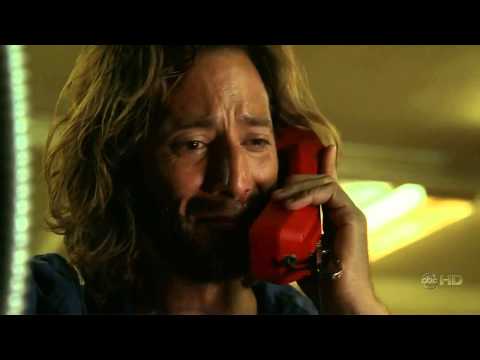
Desmond calls Penny • Best tv show episodes of all time
The famous phone call at the end succeeds because the show earns it through structure rather than manipulation. Every timeline jump increases urgency until the release finally arrives.
Science fiction television often struggles to balance concept and emotion. “The Constant” manages both perfectly, which is why it still appears on almost every list of the greatest TV episodes ever made.
Character Drama
15. "Mad Men" The Suitcase (Season 4, Episode 7)
“The Suitcase” strips Mad Men down to its emotional core. The episode traps Don Draper and Peggy Olson inside the office overnight while they struggle to create a Samsonite campaign during the night of the infamous Ali-Liston boxing match. What begins as another late work session slowly becomes something far more intimate. It develops into two people confronting grief, ambition, loneliness, and the strange emotional dependence that has formed between them.
Structurally, “The Suitcase” is a near-perfect bottle episode. Most of the runtime unfolds in confined office spaces, forcing the performances and dialogue to carry the drama. Jon Hamm and Elisabeth Moss turn ordinary conversations into emotional combat. Peggy lashes out over Don taking credit for her work.
Don responds with the now-iconic line, “That’s what the money is for!” But the argument matters because both characters understand the deeper issue underneath it: Peggy wants recognition from the one person whose opinion genuinely matters to her.

The Suitcase • Best tv show episodes of all time
The final hand squeeze between Don and Peggy the next morning is one of the most moving gestures in the series because it quietly reverses their dynamic from the pilot episode. Years earlier, Peggy reached for Don’s hand after he defended her at work. Here, Don reaches for hers. The gesture is small, but it carries the emotional history of the entire series.
What ultimately elevates “The Suitcase” into one of the best TV episodes of all time is grief. Throughout the night, Don avoids returning a phone call because it will bring something he’s desperately trying ti run away from to light. Anna Draper is dead.
Anna is the only person who fully knows Don’s real identity as Dick Whitman, which makes her death existential rather than merely tragic. When Don finally breaks down crying in front of Peggy, the episode strips away every layer of performance he normally hides behind.
The Ali-Liston fight running through the episode reinforces that theme. The office keeps discussing toughness, dominance, and winning while Don quietly collapses emotionally underneath the image he has built for himself. “The Suitcase” is really about baggage, hence the title. Professional baggage, emotional baggage, and the identities both main characters drag through their lives.
That is why the episode still feels extraordinary. It turns two people sitting in an office talking into one of television’s richest emotional studies. Few episodes reveal character with this much precision.
Related Posts
Surreal Drama
14. "The Leftovers" International Assassin (Season 2, Episode 8)
Kevin Garvey wakes up in a hotel as an international assassin tasked with killing a mysterious figure who may be a messiah. The episode never fully explains whether this world is purgatory, a hallucination, or something supernatural.
What matters is commitment.
“International Assassin” succeeds as one of the. best tv show episodes of all time because it leans into the surrealism. The hotel world operates according to dream logic, but the emotional stakes remain precise and relatable. Kevin must confront versions of himself he no longer understands.

The Leftovers 2x08 Promo "International Assassin" • Best tv show episodes of all time
Television often uses dream episodes as temporary diversions. The Leftovers instead uses surrealism to push character development further than realism could.
Very few must-watch TV episodes take risks at that level while remaining emotionally coherent.
Psychological Horror
13. "Atlanta" Teddy Perkins (Season 2, Episode 6)
“Teddy Perkins” is the episode where Atlanta stops feeling like a comedy and turns into psychological horror.
Darius, a fan favourite, arrives at a huge, decaying mansion to collect a piano from a reclusive former musician named Teddy Perkins. From the moment he walks through the front door, the episode feels wrong. The house is unnaturally quiet. Conversations drag slightly too long.
Teddy speaks softly but with an intensity that makes every interaction uncomfortable. Director Hiro Murai stretches those moments deliberately, creating tension through awkwardness rather than violence. It has the tropes of a classic psychological horror because it relies so heavily on atmosphere, isolation, and uncertainty instead of traditional scares.

'Atlanta' Director Hiro Murai Breaks Down the Teddy Perkins Episode • Best tv show episodes of all time
Donald Glover’s performance makes the episode unforgettable. Beneath layers of makeup and prosthetics, Teddy looks fragile and artificial at the same time, like someone who has spent years trying to reshape himself into another person entirely. The Michael Jackson parallels are obvious, but the episode uses them to explore a broader idea about celebrity, abuse, and performance.
Teddy repeatedly insists that suffering creates greatness, treating childhood trauma as though it were a necessary part of artistic success. It’s a direct commentary on the entertainment industry’s history of exploiting talented children while excusing the damage done to them afterward because of their success.
The mansion reflects that damage. Every room is filled with trophies, portraits, instruments, and reminders of achievement. It’s preserved not lived in. Teddy has turned the house into a monument to talent and punishment, trapping himself inside the same system that destroyed him.

'Atlanta' Director Hiro Murai Breaks Down the Teddy Perkins Episode • Best tv show episodes of all time
Darius keeps trying to stay polite because the situation is so strange he cannot fully process the danger yet. That instinct feels painfully recognizable. The tension comes less from wondering whether violence will happen and more from wondering how far the situation can keep escalating before somebody finally breaks.
By the final act, “Teddy Perkins” becomes a story about people whose identities have been consumed by performance. The episode leaves viewers unsettled because it never treats that tragedy as exaggerated or impossible. It feels disturbingly plausible. It's one of the best tv show episodes of all time if you love psychological horror.
Crime Drama
12. "The Wire" Middle Ground (Season 3, Episode 11)
Stringer Bell dies not because he is evil, but because he believes he can escape the system he helped build.
“Middle Ground” works because The Wire spends three seasons earning every consequence. Stringer tries to transform himself into a businessman while remaining trapped in the drug trade. Eventually those worlds collide.
The death scene itself is almost quiet. There is no triumphant music or heroic framing. Just inevitability.

Stringer Bell's Death • Best tv show episodes of all time
Creator David Simon has frequently argued that institutions shape individual lives more powerfully than personal morality. “Middle Ground” embodies that philosophy better than almost any other episode in the series.
Among the best episodes in TV history, few feel this socially observant while remaining dramatically devastating.
Best tv show episodes of all time
11. "The Bear" Fishes (Season 2, Episode 6)
One of the reasons “Fishes” feels so overwhelming is that the chaos is not presented as random. The episode gradually reveals the psychological system underpinning the Berzatto family dynamic.
The Bear always focused on Carmy’s anxiety. His panic attacks, obsessive perfectionism, emotional withdrawal, and inability to remain present are not portrayed as isolated traits. “Fishes” shows them as learned survival mechanisms. Growing up inside Donna’s instability means Carmy is constantly scanning rooms for emotional danger before it arrives.
Kitchens later become attractive to him precisely because professional chaos feels more manageable than domestic chaos. A restaurant at least has rules, hierarchy, and procedure. Family life never did.
The episode’s production mirrors that suffocating atmosphere. Unlike most of The Bear, which is shot digitally, “Fishes” was filmed on 35mm inside a real house in Evanston, Illinois. The grainier texture gives the episode the feeling of an old family memory that keeps getting worse the longer you sit inside it. The crowded blocking, overlapping dialogue, and constant movement create the sensation that nobody in the house can fully breathe or think clearly.
Ma Does Seven Fishes Scene • Best tv show episodes of all time
The episode also sheds light on Carmy’s relationship with food. Donna expresses love through cooking while simultaneously weaponizing that labour against everyone around her. Food becomes tied to guilt, obligation, performance, and emotional debt. That contradiction explains why Carmy both worships and fears the kitchen throughout the series. Cooking is the place where he feels most skilled yet emotionally trapped.
The ensemble cast is staggering: Jamie Lee Curtis, Bob Odenkirk, Jon Bernthal, Sarah Paulson, John Mulaney, Gillian Jacobs. Jamie Lee Curtis’ performance is central to that psychosomatic tension. Donna’s emotional state infects the physical environment itself. Pots slam, timers scream, cigarettes pile up, people stop breathing normally.
The house starts behaving like an extension of her nervous system. By the end of the episode Donna drives the car into the living room. The act is the physical manifestation of pressure that has been building all night.
Related Posts
Best tv show episodes of all time
10. "Game of Thrones" The Rains of Castamere (Season 3, Episode 9)
“The Rains of Castamere” changed television because it understood that shock only works when the audience feels safe first. For nearly an entire episode, Game of Thrones convinces viewers that Robb Stark’s political disaster might still be repairable. The wedding at the Twins feels tense, but manageable. Walder Frey insults Robb, toys with Edmure, and drags out the ceremony for his own amusement. The atmosphere is uncomfortable rather than openly threatening.
That gradual build is exactly why the ending lands with such force. The episode quietly layers warning signs throughout the feast. Walder pointedly references Robb breaking his marriage vow. Catelyn notices the chainmail beneath Roose Bolton’s clothing. Most importantly, the band begins playing “The Rains of Castamere,” the Lannister anthem associated with Tywin’s destruction of House Reyne.
The song becomes a death sentence. The episode turns tiny shifts in atmosphere into escalating dread.

The Red Wedding • Best tv show episodes of all time
What separates the ending of the Red Wedding from an ordinary twist is structural betrayal. Most central protagonists survive long enough to complete their arcs. Robb Stark feels positioned as a future king, not a cautionary tale. The episode weaponizes that expectation.
Once Talisa is stabbed and Catelyn realizes the doors have been locked, the entire logic of the series changes. The immediate aftermath of the broadcast was collective trauma, with viewers flooding online in disbelief after watching characters they assumed were protected get erased in minutes.
The violence itself is brutally staged because the episode avoids heroic framing entirely. Robb dies confused. Catelyn bargains desperately for her son’s life. Arya arrives seconds too late to save her family. There is no triumphant music or cinematic release.

Bronn and Lannisters singing • Best tv show episodes of all time
The episode remains one of television’s defining achievements because it permanently altered how audiences watched prestige drama. After “The Rains of Castamere,” viewers no longer trusted narrative safety. Major characters could die suddenly, political mistakes carried irreversible consequences, and emotional investment became dangerous.
That is why the episode still ranks among the best TV show episodes of all time. Not because it shocked audiences once, but because it permanently changed the relationship between television and its viewers.
Fantasy Action
9. "Game of Thrones" Hardhome (Season 5, Episode 8)
The final twenty minutes of “Hardhome” changed what audiences thought television action could look like.
Jon Snow arrives at a Wildling settlement attempting diplomacy. Then the dead arrive. Director Miguel Sapochnik stages the battle with extraordinary spatial clarity. Chaos never becomes visually confusing. Every movement pushes the audience deeper into panic as the Night King’s army overwhelms the settlement.
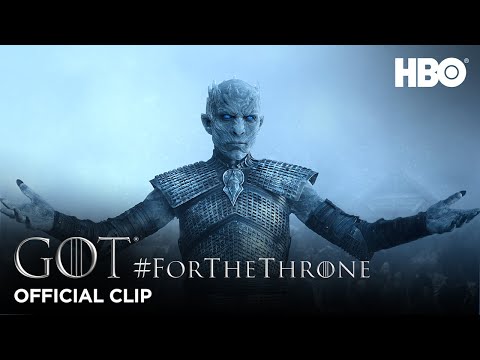
Hardhome • Best tv show episodes of all time
The ending remains iconic. The Night King silently raises the dead while Jon watches helplessly from a boat offshore. It transforms the White Walkers from background mythology into a real and present threat.
Before “Hardhome,” television rarely attempted cinematic battle sequences at this scale. After it, prestige television ambition permanently expanded.
War Episode
8. "Game of Thrones" Battle of the Bastards (Season 6, Episode 9)
“Battle of the Bastards” proved television could rival blockbuster cinema in sheer production scale.
The episode reportedly required a 25-day shoot and won five Emmy Awards, including Outstanding Directing and Outstanding Writing for a Drama Series. But spectacle alone is not why it ranks among the best TV show episodes of all time.
The battle works because the audience understands exactly what Jon Snow stands to lose. The cavalry charges and crushing crowds matter because the show spent years building toward this confrontation. The episode understands that scale means very little without emotional investment underneath it.
![[Game Of Thrones] Jon snow in The Battle of Bastards - Best part](https://i.ytimg.com/vi/O-O8Er94TJI/hqdefault.jpg)
Jon snow in The Battle of Bastards • Best tv show episodes of all time
Sapochnik stages much of the battle like survival horror rather than heroic fantasy. Mud, panic, suffocation, trampling bodies, and total spatial confusion dominate the episode. The sequence where Jon is swallowed beneath piles of soldiers is filmed like a war nightmare. Kit Harington later described Jon clawing his way back to the surface as a kind of rebirth moment for the character.
Several images from the episode became defining television visuals of the 2010s, especially Jon standing alone before Ramsay’s charging cavalry. The framing evokes war photography and historical battle paintings at the same time: one isolated figure facing overwhelming violence with nowhere left to retreat. The moment works because the show briefly strips away fantasy spectacle and reduces the battle to a single human decision. Jon knows he cannot survive the charge. He draws his sword anyway.
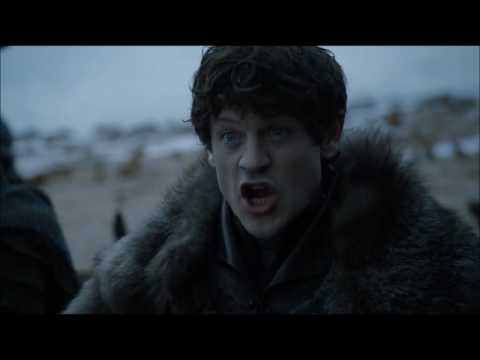
Parley between Jon Snow and Ramsay Bolton • Best tv show episodes of all time
The production itself pushed television logistics to extremes. Four camera crews filmed simultaneously. Horses, stunt performers, practical mud effects, and digital crowd expansion were blended together to make the battle feel physically chaotic instead of cleanly choreographed.
Sapochnik reportedly studied historical warfare and classic battle cinema, including Ran and Saving Private Ryan, searching for ways to keep viewers trapped inside the confusion. What ultimately separates “Battle of the Bastards” from many large-scale fantasy battles is that it understands warfare as terrifying, disorienting, and deeply personal.
Victory comes at horrific cost. Jon survives not because of strategy but because of luck, endurance, and the intervention of others. The episode strips away the romance of battle while still delivering one of the most visually overwhelming hours television has ever produced.
Few episodes combined technical ambition and emotional clarity this successfully.
Family Drama
7. "Succession" Connor's Wedding (Season 4, Episode 3)
The all consuming Logan Roy dies off-screen, and that choice is exactly what makes “Connor’s Wedding” one of the greatest TV episodes ever made.
Important television deaths are often built around spectacle or final words. Succession does the opposite. Logan collapses somewhere beyond a bathroom door on a private jet, while his children try to understand what is happening through broken phone calls and fragments of information. The audience experiences the event exactly as Kendall, Roman, and Shiv do: confused, disoriented, and unable to fully process reality in real time.
The episode’s structure is what makes it devastating. Logan’s death feels shocking partly because the show refuses to present it as a dramatic climax. Life interrupts the series mid-motion. Connor’s wedding continues awkwardly around the tragedy. Business conversations still happen. Jesse Armstrong understood that death often arrives administratively before it arrives emotionally.
Director Mark Mylod and cinematographer Patrick Capone reinforce that realism visually. The blocking in the episode constantly isolates characters inside crowded spaces. Shiv leans against railings trying to stay upright. Kendall drifts between rooms searching for answers. Roman physically retreats from conversations because accepting Logan’s death would mean confronting years of unresolved emotional dependence.
The handheld camerawork never settles, creating the sense that the ground beneath the Roy family has permanently shifted.
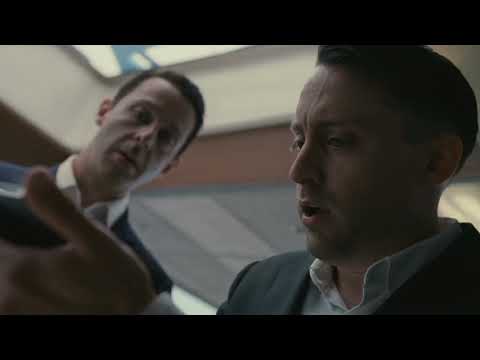
Logan Roy dies • Best tv show episodes of all time
The episode focuses entirely on reaction. Tom calling from the plane is jarring because he sounds helpless and resigned. Roman keeps insisting Logan might still recover. Kendall immediately begins thinking about corporate fallout because business has always been the family’s emotional language.
The episode is a gut-punch and one of the show’s finest hours because it fundamentally reshapes the series in a single afternoon. After four seasons of Logan dominating every room, “Connor’s Wedding” reveals how empty the Roy siblings feel without someone to resist.
It’s not really about Logan dying. It is about watching his children realise, in real time, that they have absolutely no idea who they are without him.
Series Finale
6. "Succession" With Open Eyes (Season 4, Episode 10)
“With Open Eyes” ends with Kendall Roy staring at the Hudson river.
Water follows Kendall throughout the series as a recurring symbol of guilt, rebirth, collapse, and self-destruction. He nearly drowns after the waiter’s death in season one. He floats face-down in a pool in season three. He repeatedly tries to cleanse or reinvent himself through water imagery that never fully resolves anything.
The finale completes that visual pattern by returning Kendall to the shoreline after he loses the company, placing him once again beside the thing that has haunted him for four seasons.

Succession The End • Best tv show episodes of all time
Kendall spends the entire finale believing becoming CEO will finally stabilize his identity, which has long been tied to his father and the company. For a brief moment, the episode almost convinces the audience too. The Barbados sequence lets the siblings behave like a real family for perhaps the only time in the series.The kitchen scene, the absurd “meal fit for a king,” and the ocean swim all create the illusion that Kendall is finally being accepted as Logan’s successor.
But the boardroom scene destroys that fantasy instantly.
Shiv cannot tolerate Kendall becoming their father. Roman finally admits they are “bullshit.” Kendall regresses into panic and entitlement, screaming that he is “the eldest boy” like a child demanding inheritance rather than a leader earning authority.

Succession Finale Cold Open • Best tv show episodes of all time
The finale is inevitabl because every alliance the siblings build eventually collapses under the resentment and insecurity that’s shaped them their whole lives, and will most likely continue to.
Jeremy Strong later suggested Kendall may even feel drawn toward death in that final moment, while the show deliberately leaves the outcome emotionally unresolved. That ambiguity is what makes “With Open Eyes” one of the best TV episodes of all time. The finale does not end with victory or redemption. It ends with a man staring into the same abyss the series had been quietly warning him about from the very beginning.
Greatest Episodes That Changed Storytelling Forever • Best tv show episodes of all time
Mob Drama
5. "The Sopranos" College (Season 1, Episode 5)
“College” is the episode where television fully understood Tony Soprano.
Tony takes Meadow on college visits while secretly hunting a former informant. Midway through the episode, he murders the man with his bare hands. The contrast between suburban parenting and mob violence shocked audiences at the time.
Network television rarely allowed protagonists to commit acts this morally direct. Antiheroes existed before Tony Soprano, but “College” clarified that audiences would continue following a lead character even after witnessing brutal violence firsthand.

Tony Kills Fabian Petrulio • Best tv show episodes of all time
The episode also established the tonal formula that defined prestige TV afterward. Domestic comedy and criminal brutality coexist naturally because Tony compartmentalizes both parts of himself.
Related Posts
TV Pilot
4. "Breaking Bad" Pilot (Season 1, Episode 1)
The pilot episode of Breaking Bad remains one of the clearest mission statements television has ever produced.
Walter White receives a cancer diagnosis, partners with former student Jesse Pinkman, cooks methamphetamine for the first time, and kills two men in a desert motorhome. Every major theme of the series already exists here: pride, desperation, masculinity, ego, and reinvention.
Creator Vince Gilligan famously pitched the show as turning “Mr. Chips into Scarface.” The pilot works because it immediately demonstrates how plausible that transformation feels from the onset.
The cold open also deserves attention structurally.
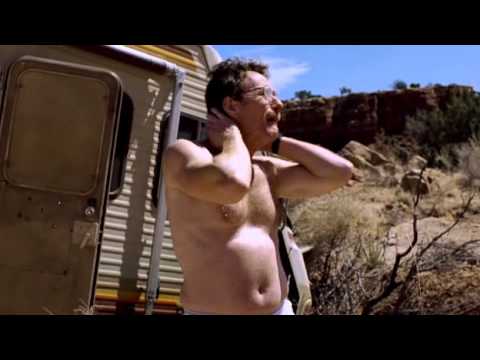
Breaking bad first minutes • Best tv show episodes of all time
Starting with Walt driving an RV through the desert in his underwear creates immediate narrative momentum before the audience understands context.
Few pilots promise so much and then actually deliver.
Series Finale
3. "Breaking Bad" Felina (Season 5, Episode 16)
“Felina” faced an impossible task: ending one of the best shows of all time without disappointing its audience.
Instead of chasing storytelling ambiguity, the finale embraces resolution. Walt returns to Albuquerque, frees Jesse, eliminates the neo-Nazis, and finally admits the truth to Skyler: “I did it for me.”
That line matters because it completes Walter White’s arc. For years he insisted his actions were about family. “Felina” finally strips away the excuse.
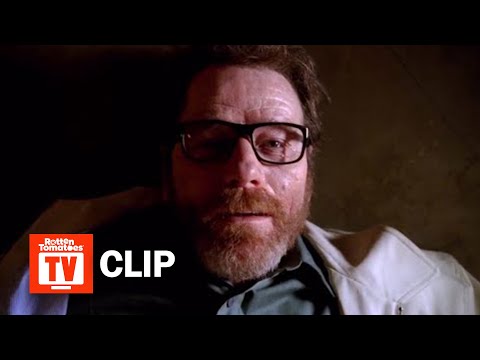
The End of Walter White Scene • Best tv show episodes of all time
The episode still divides viewers. Some argue it gives Walt too much control at the end, softening the consequences of his transformation. Others believe the satisfaction feels earned because the show spent years carefully constructing every payoff.
Either way, “Felina” demonstrates how difficult great television endings really are. Which is why we think it deserves a spot among the best tv show episodes of all time.
Crime Thriller
2. "Breaking Bad" Face Off (Season 4, Episode 13)
“Face Off” contains one of the most famous death scenes television has ever produced.
After an explosion inside a nursing home, Gus Fring calmly walks out of the room, adjusts his tie, and reveals half his face missing before collapsing. The moment is shocking, grotesque, and strangely elegant all at once.
But the episode’s real achievement is moral transformation. By orchestrating Gus’s death, Walter White crosses a line the show can never uncross. The later reveal involving the lily-of-the-valley plant confirms Walt poisoned a child to manipulate Jesse emotionally.

"I Won" Face Off • Best tv show episodes of all time
Structurally, “Face Off” reframes the entire series. Walter is no longer reacting to danger. He becomes the danger.
Vince Gilligan later called “Ozymandias” probably the best thing the show ever did. “Face Off” is the episode that made that ending inevitable.Best tv show episodes of all time
1. "Breaking Bad" Ozymandias (Season 5, Episode 14)
“Ozymandias” works because it refuses to let Walter White escape the consequences of his own mythology.
For five seasons, Breaking Bad slowly transformed Walt from an anxious chemistry teacher into a man convinced he could control everyone around him through intelligence and force. “Ozymandias” is the episode where that illusion finally collapses. Hank dies in the desert. Jesse is handed over to neo-Nazis. Skyler turns on Walt with a knife. The White family fractures permanently in under an hour.
The title matters enormously. Percy Bysshe Shelley’s poem “Ozymandias” describes the ruins of a once-powerful ruler whose empire has crumbled into dust. Walt spends the entire series trying to build something permanent through power, fear, and ego. The episode reveals how empty that empire actually is. By the end, he has money but no family, authority but no control, survival but no identity beyond destruction.
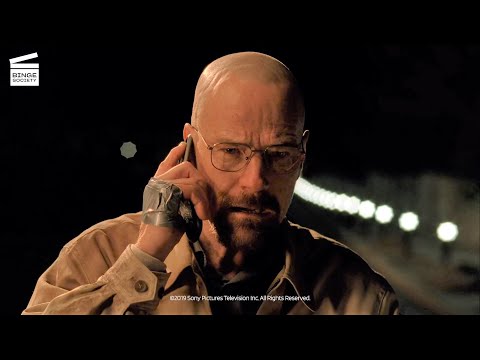
Ozymandias Voiceover • Best tv show episodes of all time
The story strips Walt of every justification he has been using since the pilot. Earlier seasons allowed viewers to rationalize Walt’s actions alongside him. “Ozymandias” removes that comfort completely. Hank’s death is not framed heroically. Walt’s kidnapping of Holly feels horrifying rather than triumphant. Even his phone call to Skyler weaponizes emotional abuse as a twisted form of protection.
The episode’s structure makes it devastating. There is almost no relief. Every scene escalates the emotional damage further. Director Rian Johnson stages the family fight in the White household with terrifying intimacy. Walt Jr. shielding Skyler from his father becomes the clearest possible proof that Walter White no longer resembles the man his family once knew.

Walter Tells Jesse the Truth • Best tv show episodes of all time
What separates “Ozymandias” from many prestige TV climaxes is payoff precision. Nearly every major emotional thread established since the pilot reaches its breaking point here. Skyler’s fear. Jesse’s betrayal. Hank’s pursuit of Heisenberg. Walt’s need for recognition. Nothing is postponed for later episodes emotionally, even though the plot continues afterward.
The episode also contains one of the most painful scenes in television history: Walt collapsing to the ground after Holly says “Mama.” For perhaps the first time, Walt fully understands the scale of what he has destroyed. The image mirrors the emotional ruin described in Shelley’s poem. A man who once believed himself monumental reduced to isolation and grief.

Walter White Falls Clip • Best tv show episodes of all time
“Ozymandias” became the highest-rated television episode in IMDb history because it achieves something extraordinarily rare. It functions simultaneously as narrative climax, character tragedy, thematic conclusion, and emotional reckoning. Every decision the show made across five seasons pays off here with brutal clarity.
That is why it belongs at #1 on any serious ranking of the best TV show episodes of all time. Not because it shocks viewers the most, but because no other episode so completely fulfills the promise of the series that created it.
Related Posts
Frequently Asked Questions
Best TV Episodes FAQs
“Ozymandias” from Breaking Bad is currently the highest-rated TV episode in IMDb history. The episode holds a perfect 10.0/10 user score with more than 237,000 votes, making it the benchmark against which many of the greatest TV episodes are measured.
The best TV episodes of all time combine craft, emotional consequence, and standalone storytelling. A great episode does not simply advance the plot. It creates a complete dramatic experience with memorable performances, visual identity, and thematic payoff strong enough to remain powerful even outside the larger series.
Breaking Bad has four entries on this ranking: “Pilot,” “Face Off,” “Felina,” and “Ozymandias.” The show’s final seasons produced multiple episodes that work both as individual masterpieces and as crucial turning points within one of television’s most acclaimed character arcs.
Yes. The greatest TV episodes often achieve emotional depth that films cannot because television allows audiences to spend dozens of hours with characters before delivering payoffs. Episodes like “Ozymandias,” “The Body,” and “Connor’s Wedding” demonstrate why many of the best shows of all time now rival cinema artistically.
UP NEXT
The best TV Shows of all time
The best tv show episodes of all time rarely exist in isolation. “Ozymandias,” “Fishes,” “Battle of the Bastards,” and “Long, Long Time” work because they emerge from shows that spent years building character, tension, and history before reaching those breaking points.
Next, explore the greatest television series ever made. Everything from crime dramas like The Sopranos and Breaking Bad to modern character studies like The Bear and ambitious fantasy epics like Game of Thrones is included. We break down the shows that permanently changed television storytelling, production scale, and audience expectations across decades of TV history.