
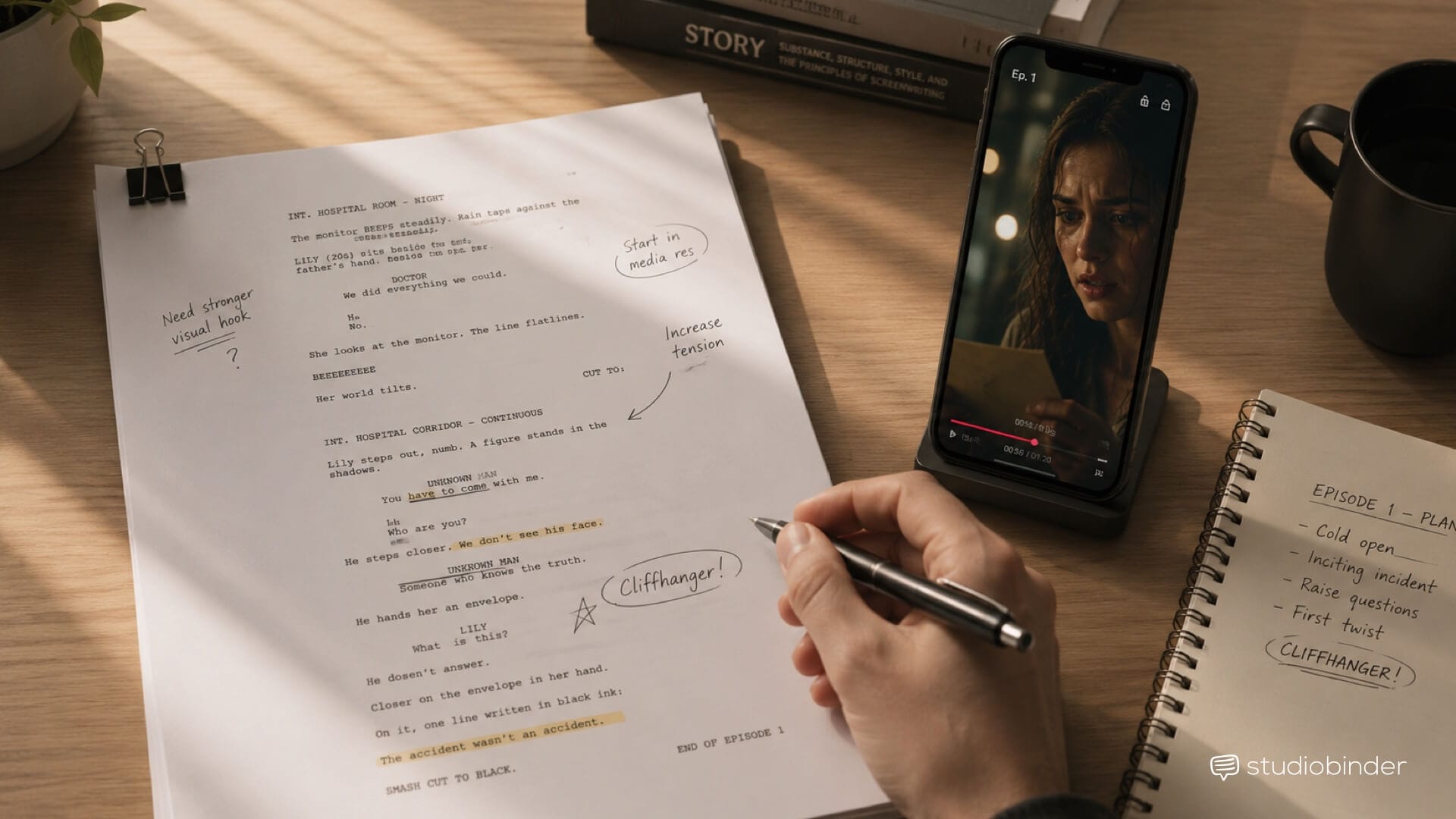
Micro-dramas are a format that asks writers to think differently from the very first page. A feature script can spend ten minutes introducing the protagonist. A vertical drama has less than a minute to make viewers interested enough to keep watching.
That pressure shapes everything. Premise, structure, dialogue, pacing and more. Every episode needs a reason for the audience to come back. Here’s how the format works and how to build a micro drama script that can sustain an entire season.
micro drama script
What makes micro-drama writing different?
Watch enough vertical dramas and a pattern starts to emerge. In feature and television scripts a writer might spend several scenes establishing a character before placing them under pressure. Vertical dramas work the other way round. The pressure arrives first and character emerges from the response.
The format itself encourages that approach. Viewers are watching on a phone or mobile device. Faces occupy most of the screen. A reaction carries a lot of weight. That’s one reason why vertical dramas live or die on relationships. The frame naturally favors tension between people.
You also have to consider volume. A feature might ask for one hundred pages. A vertical drama could ask for eighty episodes. Individually, those episodes are short. Collectively, they demand an enormous amount of story. Writers spend less time asking, “What happens in Episode 1?”, and more time asking “What keeps happening after Episode 30?”
Paywalls have a habit of turning structural questions into story questions. Most platforms place their paywalls around episode 10. That’s the point where it will matter where the secret comes out, where the first kiss lands, and which episode ends with somebody opening the door.
Check out the below video from Creating with Conor to get a feel for all the essential beats to consider while writing your micro drama script.

How to make micro dramas · Micro drama script
Micro drama script
Micro drama script structure
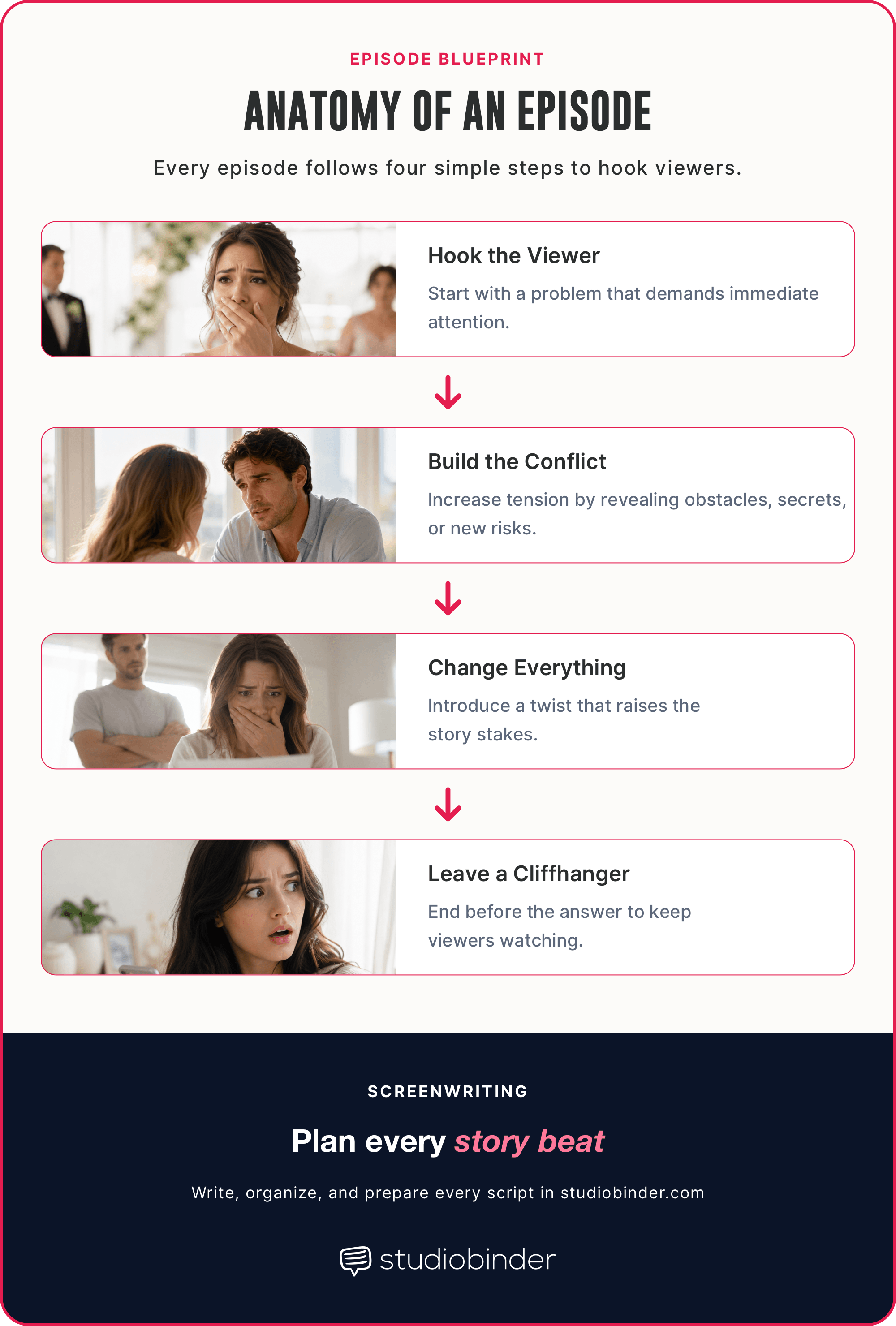
Open any successful vertical drama and you’ll be dropped into the middle of something. A woman is about to walk down the aisle. A man is standing outside a hospital room. Someone has just received a text they weren’t supposed to see. By the time the audience drops into the story, the situation is already in motion.
Episodes then do one thing: they make that situation worse. The bride sees someone she recognises. The hospital patient isn’t who everyone thinks they are. The text reveals a lie. New pieces enter the story, they increase the pressure, then that episode ends. Not after the fallout; just before it.
That’s the basic rhythm behind most micro-dramas. Something happens. The situation becomes more complicated. The audience reaches the moment they actually want to see. Cut.
Then the next episode picks up the consequences.
The challenge comes from repetition. A micro drama script series might need sixty, eighty or one hundred episodes that feel distinct from one another. That’s why it can be useful to start mapping out episode endings before writing scenes. If the cliffhangers don’t escalate, the season won’t either.
Episode 3 of a micro drama script needs to feel bigger than episode 2. Episode 20 needs to matter more than episode 10. Episode 60 can’t be asking the same questions episode 5 already asked. Think of it as one long chain of cause and effect. Every reveal should create a new problem and every answer should lead to a more difficult question.
Anatomy of an episode - Micro drama script
how to write a micro drama script
How to write a micro drama script — step by step
Making a micro drama script sounds fun in theory, but how do you pick from all those potential choices to write about? We've broken down some pointers to consider below.
Step 1 — Pick a high-concept trope and premise
A vertical drama doesn’t have much room to warm up. The premise needs to come with a problem, high concept trope, or both. A woman meets a billionaire is not enough on its own. A woman discovers the billionaire buying her company is her childhood love gives the script something to play from the first episode.
That’s why so many vertical dramas use familiar engines. Secret marriages, hidden heirs, revenge plots, enemies to lovers etc. The set up is understood quickly which means the episode can move straight into pressure.
Before writing the script, try writing the premise in one sentence.
If the conflict only appears after a long explanation the idea probably needs sharpening.
Step 2 — Map the season as a hook ladder
Start with the endings, not the full scene when writing a micro drama script. Open a blank document and write down the ending of every episode.
Episode 1: She finds the photograph.
Episode 2: He claims the photograph is fake.
Episode 3: Her mother recognizes the man in it.
Keep going from there.

Building a hook ladder - Micro drama script
By the time you’ve reached episode 60, 80 or episode or 100, you’ll have a much clearer sense of whether or not the story is building or if it’s simply finding new ways to delay the same reveal. The early episodes should establish the central conflict. The middle stretch of a micro drama script should complicate it.
The biggest turns often arrive around the point where viewers are deciding whether to keep paying for the story. Exactly when that happens varies between the platforms, but often the paywall comes at around episode 10.
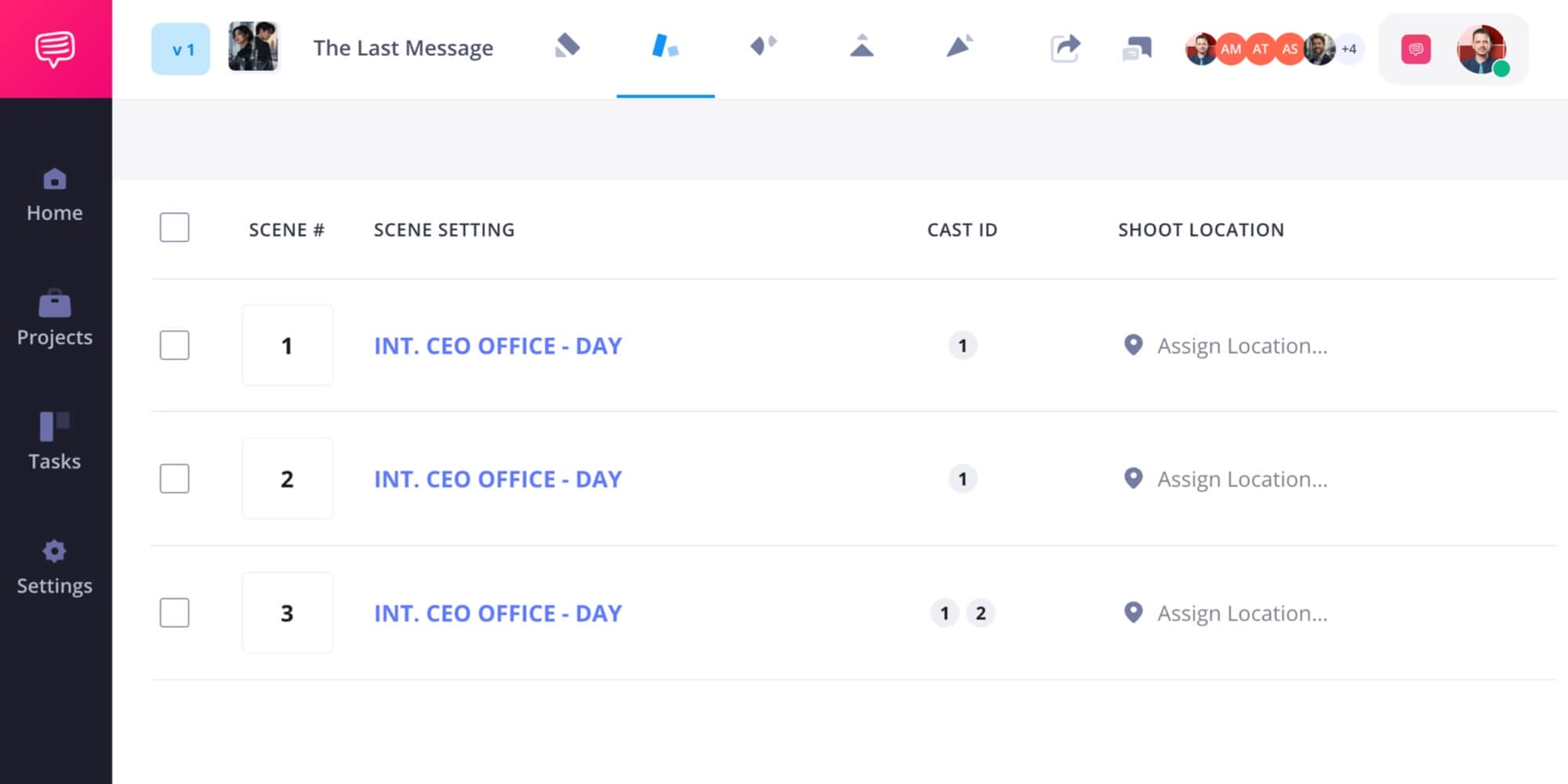
At that point, there needs to be something to keep the audience invested. StudioBinder's Scriptwriting software can help map this as a scene or episode breakdown. Use it to number and track episode beats across the season.
Script Breakdowns - Micro drama script
And since a micro drama script comes with the story baggage of every episode before it, that's where the script outline notepad can help. Instead of fumbling through multiple documents, it sits right next to your script so you have a trusty, customizable story outline throughout the entire writing process.
Once you’re working across several episodes on a micro drama script, keeping every cliffhanger, reveal, and story turn in one place is much easier than bouncing between documents. Sending the season laid out episode by episode also makes repetition easier to spot before it reaches the final script.
Step 3 - Write the cold open + cliffhanger for episode 1
Once the ending of your micro drama script is clear, work backwards.
What does the viewer need to know before the final story beat lands?
What could make that knowledge more devastating or impactful? Constantly build the stakes.
What pressure should the character be under?
What piece of information can arrive late?
What should be withheld until the next episode? This keeps the episode from wandering.
A micro drama script does not need a lot of fluff. It needs a clean route to the moment that changes something. The cold opening should place the viewer close to conflict. The middle should tighten it. The ending should leave the consequence hanging.
Step 4 - Format and episode breakdown
Keep dialogue short and loaded in your micro drama script. Dialogue in a vertical drama has very little time to behave politely or explore scenes.
Characters are generally accusing, hiding, bargaining, provoking, confessing or trying to confess. Small talk dies quickly in this format. During revisions on your micro drama script, look at each line and ask yourself what it changes.
Does it reveal something?
Does it shift the power dynamic?
Does it elevate the situation?
If it only repeats something that’s been done or that the audience already knows, cut it.
Step 5 - Write for the phone screen
Vertical drama lives close to the face. That affects the micro drama script. A reaction needs more care than a location. Instead of writing “she reacts”. Try allowing for better direction.
“She looks at him then at the ring on his finger. Whatever she was about to say disappears”.
That is the kind of moment the format can sustain. Big actions, complex geography and wide visual setups are harder to read in a 9:16 frame. A hand tightened around a phone is more doable and will play better than a wild chase scene.
Step 6 - Format the episodes cleanly.
Use standard screenplay format but make the episode structure impossible to miss. Label each episode of your micro drama script clearly:
EP 01
EP 02
EP 03
Keep each episode focused. They usually run for about one or two pages.
For each episode it can help to track:
Episode Number
Main Location
Characters Present
Final Beat
Cliffhanger or unresolved question
StudioBinder’s scriptwriting software lets you keep your micro drama script episode files organized, track changes and prepare a cleaner handoff once the script moves toward production.
Script Breakdowns - Micro drama script
By the time a director, producer, or assistant director reads the project, they should not have to guess where Episode 37 begins or what its ending is doing.
Related Posts
Micro drama script
Micro-drama writing tropes that convert (and clichés to avoid)
The more vertical dramas you watch the more you’ll notice certain setups appear again and again. Not because writers have run out of ideas, but because some premises arrive carrying more story than others.
A secret marriage storyline can generate dozens of episodes before the truth comes out. An enemies to lovers dynamic gives conversation weight and somewhere to go. The common factor isn’t the trope itself; it’s pressure. Pressure is the key to successful storylines. The situation itself is generating problems before the writer starts adding new ones.
That’s why immediate status reversals appear so often in the micro drama script format. A character who loses everything in episode 1 has somewhere to climb. A character who discovers they have power they didn’t know about has somewhere to fall.
The protagonists who sustain long- running storylines also tend to have something in common. They make choices. Things happen to them as well; but throughout it all they’re actually choosing, lying, retaliating, pursuing and more. A character who spends eighty minutes waiting to be rescued rarely holds attention for long.
The bigger danger is not using a familiar trope. It’s exhausting a good one too quickly. There are always new avenues to explore.
A secret revealed in Episode 2 can’t carry Episode 20. A relationship that reaches its final form too early needs another source of tension.
The strongest vertical dramas keep finding new consequences and twists rather than repeating old conflicts.
Some traps to avoid:
The first episode of a micro drama script spends more time explaining the premise than dramatizing it.
Characters keep discussing a secret instead of discovering new information about it.
Cliffhangers begin to resemble each other.
The audience is waiting for a reveal that should have happened ten episodes ago.
Trusted by over 1M creatives
Script breakdowns made easy
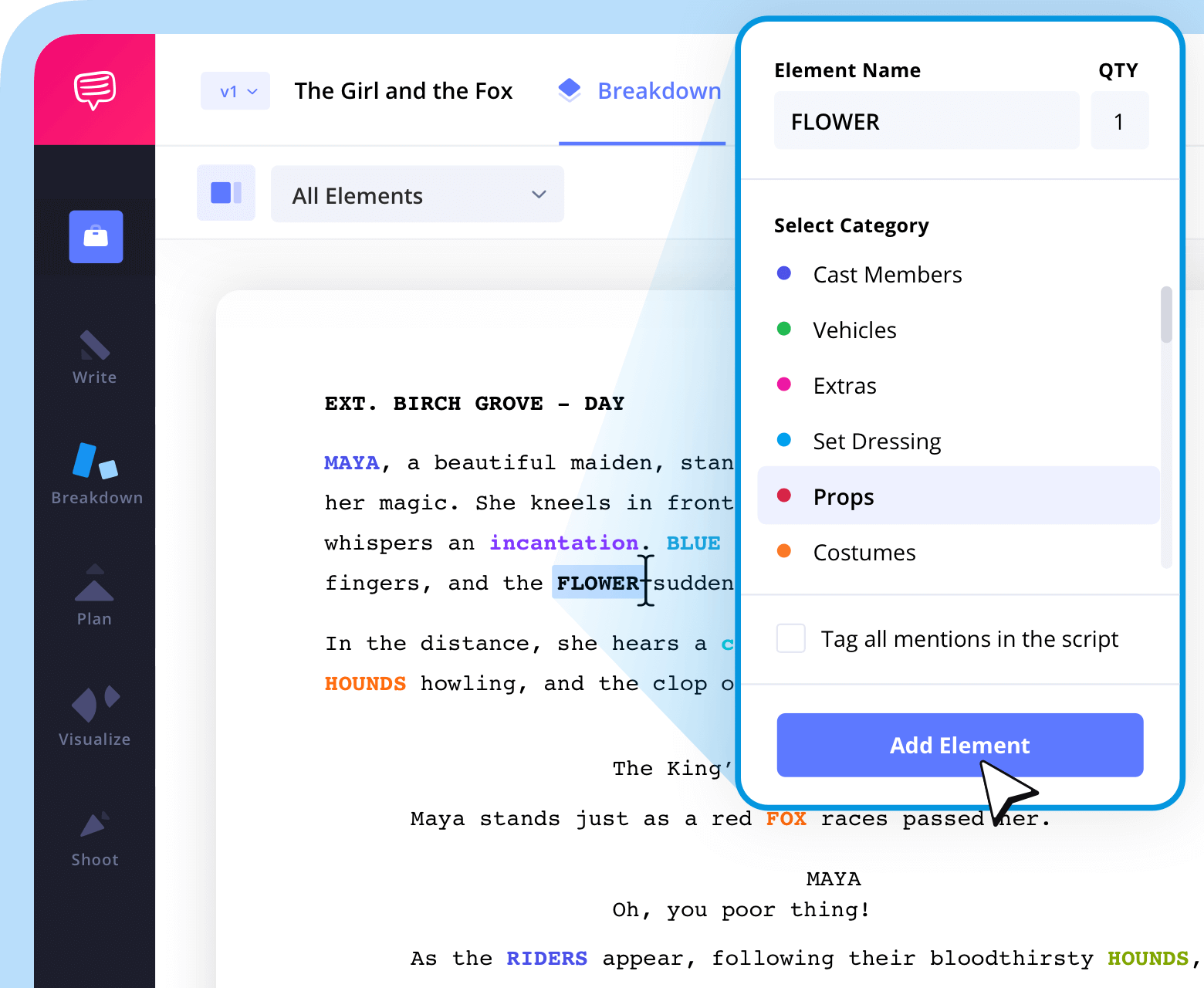
Tag script elements, organize by category, and share breakdown reports.
Micro drama script
Common micro drama script writing mistakes
Micro drama script writing comes with its own potential story traps and mistakes. We broke down the most essential ones to look out for below.
Treating Episode 1 like an introduction
The audience has not arrived to watch the setup. They’ve arrived for the conflict. If the story only becomes interesting halfway through the first episode, start later.
Running on the same piece of tension
A surprising amount of vertical dramas spend thirty episodes asking the same question. The question gets repeated. The answer gets delayed. Nothing genuinely changes. Good cliffhangers in a micro drama script create new problems rather than postponing existing ones.
Overwriting action lines
A vertical drama script is usually short.
Long descriptions slow the read and often describe things the audience will understand immediately on screen.
Keep the focus on what matters.
What changes?
What is revealed?
What does the character notice?
Writing dialogue that explains too much
Vertical drama conversations carry pressure.
Somebody wants something. Somebody is hiding something. Somebody knows more than they are saying.
Once characters start explaining the story to one another, momentum usually drops.
Forgetting where the season is going
Many micro drama scripts have a strong Episode 1 and a weak Episode 25.
Not because the writer cannot write scenes, but because the season was never mapped properly. If the major turns are not escalating, the episodes won’t either.
Treating the paywall as somebody else’s problem
The audience doesn’t experience the paywall as a business model.
They experience it as part of the story.
If the episodes leading into that point feel padded, viewers notice immediately.
The micro drama script episodes around the paywall should feel as though the story is opening up, not buying time.
Related Posts
Frequently Asked Questions
Micro-Drama Script FAQs
Episodes usually run between one and two screenplay pages, which usually translates to around 60 to 120 seconds of screen time. A complete season can easily exceed one hundred pages once all episodes are combined.
Many vertical dramas run between 60 and 100 episodes. Formats vary by platform and territory. The episode count is usually driven by the story engine and release model rather than a target page count.
Writers use standard screenplay formatting with clearly labelled episodes. Each episode should have its own number, concise action lines, and a clearly identifiable ending beat.
AI can generate scenes, dialogue, and episode ideas. The more difficult task is maintaining escalation across dozens of episodes without repeating the same conflict. Most AI-generated drafts still benefit from substantial human revision and restructuring.
UP NEXT
How to Produce a Vertical Drama
Finishing the micro drama script is only the beginning.
A season that looks manageable on the page can quickly become complicated once dozens of episodes, locations, actors, props, and shooting days enter the picture.
The next challenge is turning that script into a production plan. Learn how to produce a vertical drama with the link below.

From script to production. Write, collaborate, and produce all in one place.
Write scripts online for free. Track versions. Share for feedback and approval. When you're done transition seamlessly to script sides, shot lists, storyboards, schedules, breakdowns, call sheets and more.


