

An 80-episode micro-drama season might contain more episodes than an entire run of prestige television. Yet many vertical dramas are shot in little more than a week.
That’s because vertical drama production isn’t traditional television at a smaller scale. It’s a fundamentally different production model. In this guide, we’ll break down pre-production, scheduling, script breakdowns, shooting techniques, delivery requirements, and realistic cost expectations for today’s micro-drama market. By the end, you’ll know how to film short drama clips like a pro.
How to film short drama clips
What it takes to produce a vertical drama
Learning how to film short drama clips means creating somewhere around 60 to 100 short episodes, typically between 60 and 120 seconds each, on an extremely compressed production schedule.
Unlike traditional television, which might spend several days shooting a single episode, vertical productions are designed around volume. Entire seasons are frequently filmed in a matter of days rather than weeks.
Multiple industry sources report productions shooting 60–80 episodes in as little as five to ten shooting days. The two defining constraints are format and speed.
Format matters because every creative decision assumes the audience is holding a phone upright. Blocking, framing, graphics, captions, and editing all have to work within a vertical frame.
Speed matters because the economics of the format depend on producing large amounts of content efficiently. A production that loses half a day to poor scheduling can lose a significant percentage of its budget.
That’s why successful vertical drama production begins long before the cameras roll.
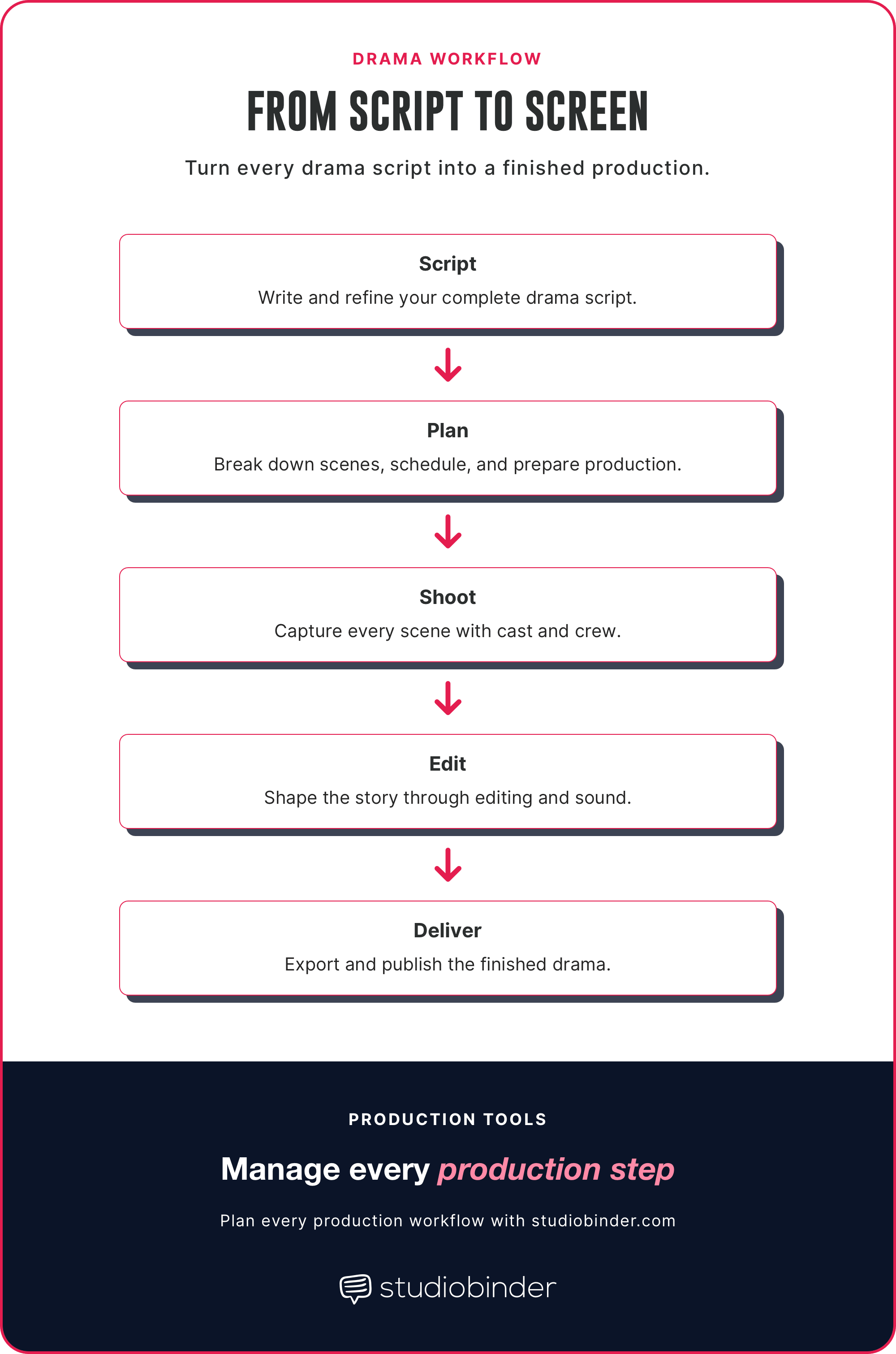
From script to screen - How to film short drama clips
How to film short drama clips
Pre-production for micro-dramas
First-time producers might assume the difficult part is shooting 80 episodes when it comes to how to film short drama clips.
The reality is that the difficult part is organizing them.
If you’re a producer or 1st AD prepping a vertical drama shoot, the numbers quickly become intimidating. A season may only contain 70 to 140 script pages, but those pages can be divided into hundreds of micro-scenes spread across dozens of locations, character combinations, costume changes, and recurring props.
A traditional feature film may contain around 100 scenes. A vertical drama season of similar page length may contain 250–350 scenes or more.
Every one of those scenes needs to be scheduled, assigned a location. They also need to be linked to cast availability, connected to wardrobe continuity, and organized into a shoot that can realistically be completed within days rather than weeks.
The production challenge isn’t page count. It’s scene count.
Budgeting a vertical series
One reason learning how to film short drama clips has grown so quickly is the relatively low production cost compared to traditional television.
A creator-led production can be made for a few thousand dollars. Professionally produced platform-distributed series can cost hundreds of thousands. Most independent productions fall somewhere in the middle.
A rough guide looks like this:
- Micro-budget: $5,000-$15,000
- Indie/semi-professional: $15,000-$75,000
- Professional platform production: $75,000-$300,000+
Several factors help keep costs lower than traditional television.
First, crews are smaller. Many productions operate with only a director, DP, sound recordist, producer, and a small support team.
Second, locations are often practical spaces rather than purpose-built sets.
Third, schedules are dramatically shorter.
A traditional television production may budget weeks of principal photography. Vertical dramas are designed to move much faster.
That doesn't mean costs disappear. They simply move elsewhere.
When establishing how to film short drama clips, producers still need to budget for:
- Cast
- Locations
- Equipment
- Post-production
- Captions and subtitles
- Episode thumbnails
- Platform formatting requirements
- Deliverable preparation
One misconception about the micro drama budget is that production value is the primary cost driver. In reality, time is usually more important.
Every additional shoot day increases crew costs, cast costs, transportation, catering, equipment rentals, and post-production expenses. Efficient scheduling often saves more money than cutting a lighting package or reducing art direction.
Breaking down the script and shot lists
Before scheduling can happen, the script needs to be broken down.
Script breakdown is the process of identifying every production element required to shoot the project.
That includes:
- Cast
- Extras
- Props
- Wardrobe
- Locations
- Vehicles
- Stunts
- Visual effects
- Special effects
- Sound requirements
On a feature film, this process is already substantial.
On an 80-episode vertical drama, it becomes one of the most important stages of pre-production. The reason for that is repetition.
A recurring prop may appear across dozens of episodes.
A wardrobe item may need to remain consistent despite scenes being filmed weeks apart in story chronology.
A location may appear repeatedly throughout the season.
Missing one of those connections during prep can create expensive continuity issues later.
This is why experienced producers complete the entire breakdown before location scouting, scheduling, or crew booking.
The goal isn’t simply understanding what each scene needs. It’s understanding how those needs connect across the entire season.
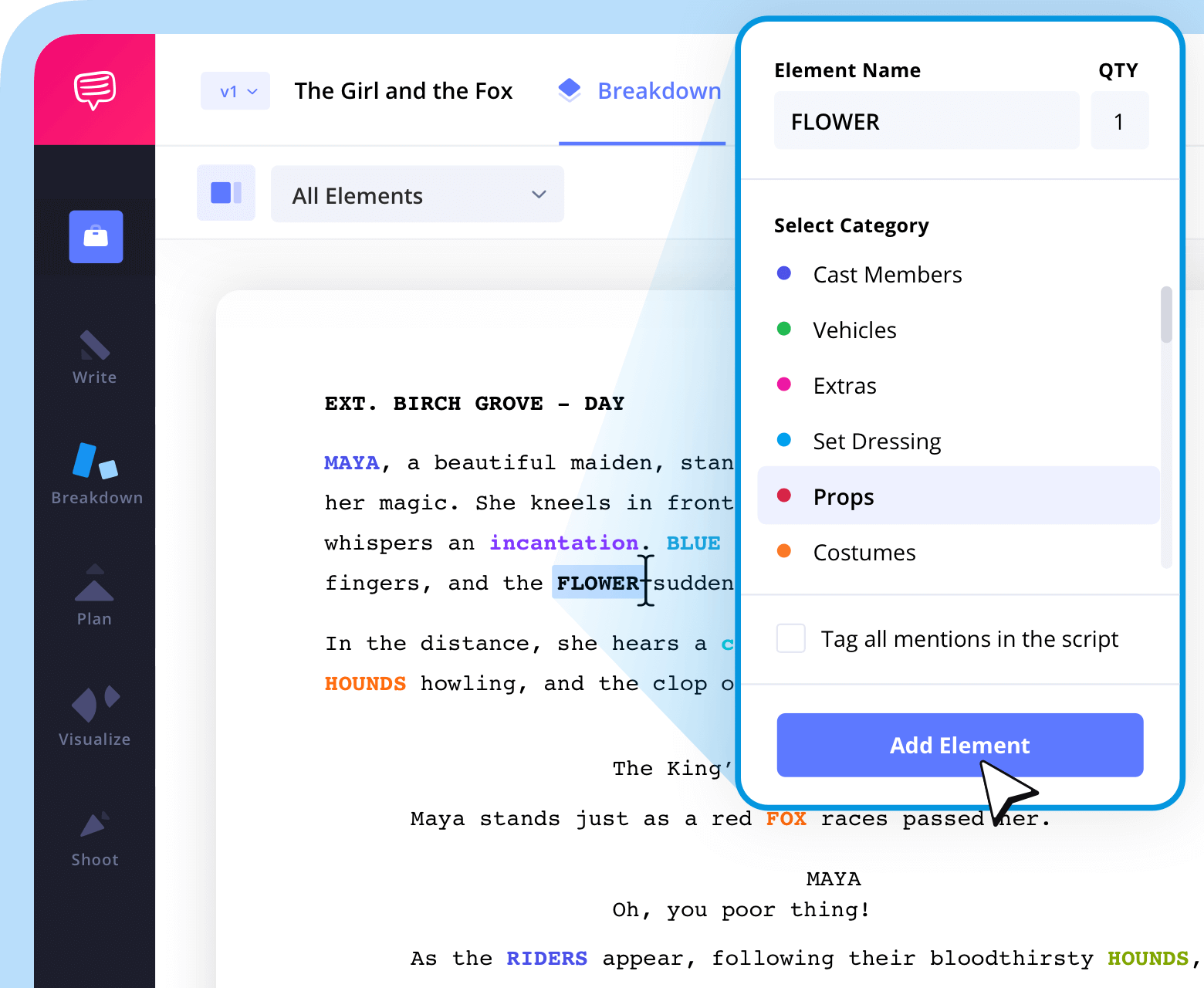
Once the script has been broken down, every department has a clear record of the production elements required for each scene. Rather than relying on color-coded paper scripts or spreadsheets, many productions now use digital breakdown tools such as Studiobinder’s Script Breakdown software, which allows producers to tag elements directly into the screenplay.
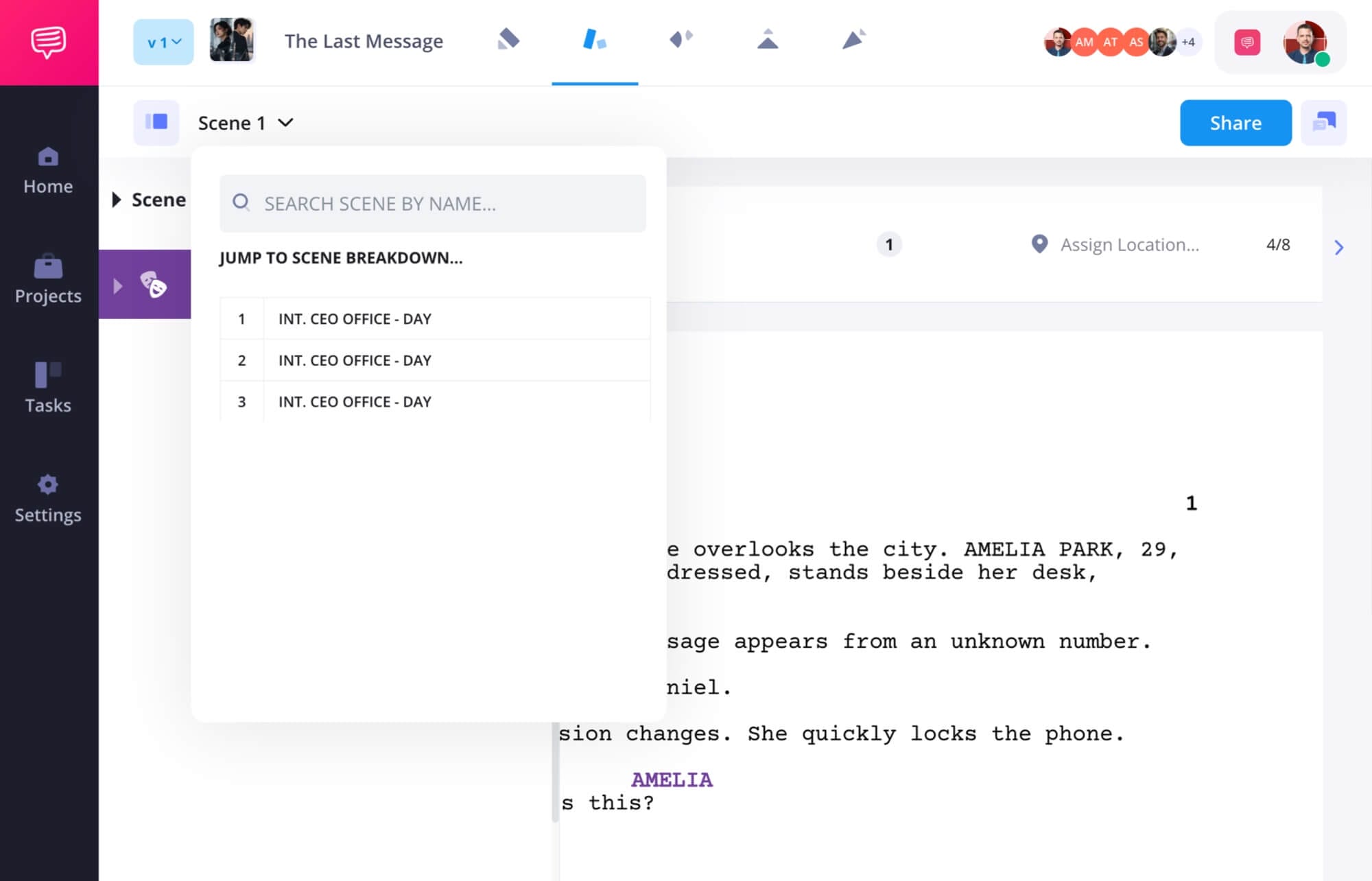
Script Breakdowns - How to film short drama clips
It can also generate department-specific reports, and keep breakdowns synced with revisions as the script evolves. That becomes especially valuable when learning how to film short drama clips, where recurring props, costumes, and locations may reappear across dozens of episodes.
Scheduling 60-100 episodes
Scheduling is where how to film short drama clips becomes a different discipline altogether.
A traditional television production might be scheduled by episode. But vertical dramas rarely do that. Instead, scenes are grouped by location, cast availability, and production efficiency.
Imagine a CEO office that appears in episodes 2, 11, 24, 39, and 67.
The audience experiences those scenes over hours of viewing. The production team may shoot them all on the same afternoon.
That’s because company moves are one of the most expensive activities on any production. Every location change costs time, money, and momentum. Vertical productions are built around minimizing those moves.
Location-first scheduling allows crews to stay in one place and capture material from multiple episodes before moving on.
The result is a production schedule that bears almost no resemblance to the final viewing order.
This is why stripboarding becomes essential.
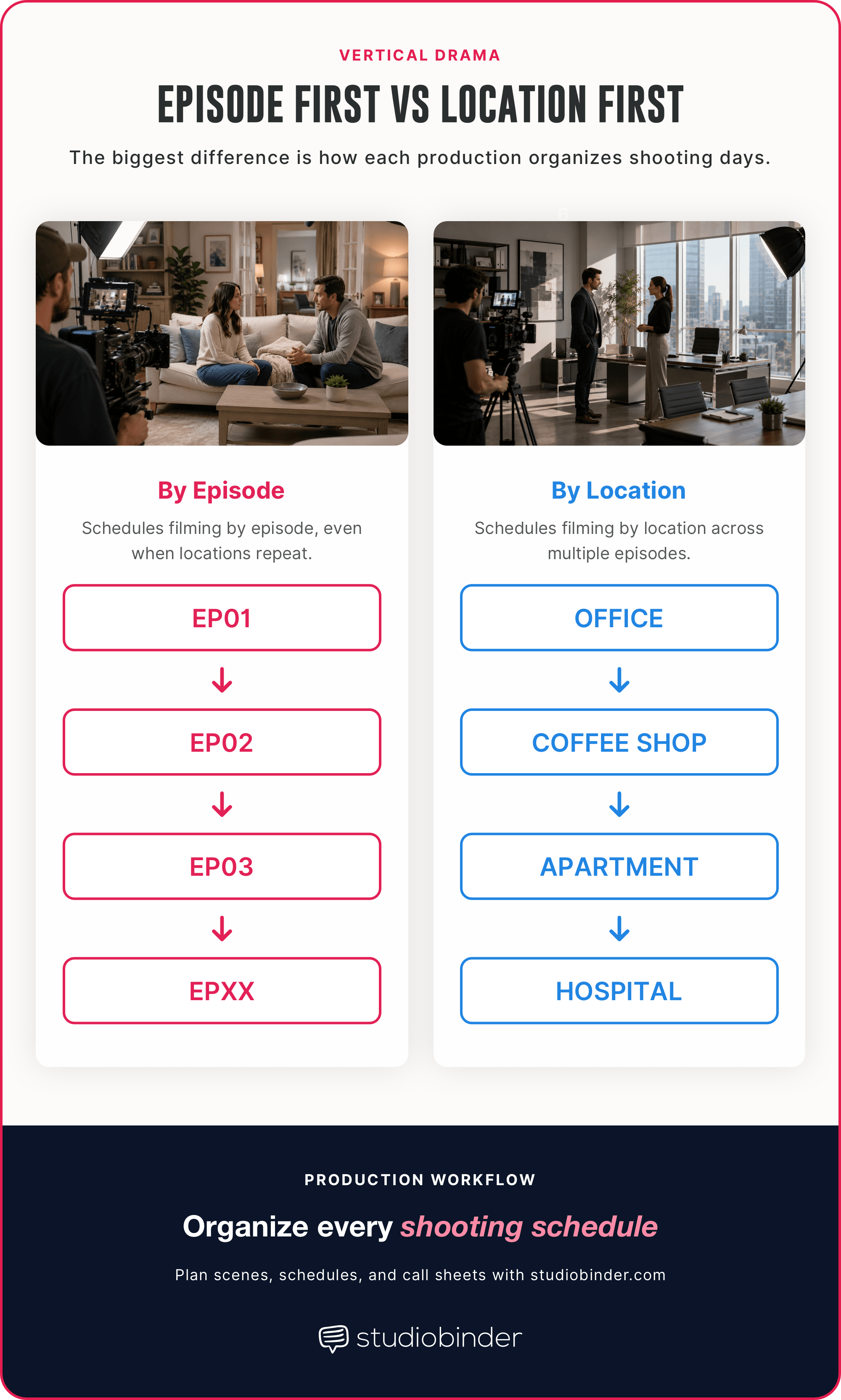
Episode first vs location first - How to film short drama clips
A season may contain hundreds of scenes. Trying to manage those scenes manually across multiple locations and shooting days quickly becomes unmanageable.
A stripboard allows producers to organize scenes by:
- Location
- Cast
- Day/night requirements
- Shooting day
- Special equipment needs
- Production priority
Instead of seeing Episode 1, Episode 2, and Episode 3, the producer sees Location A Day, Location A Night, Location B Day, and so on.
That’s the level where production decisions actually happen.
StudioBinder’s Stripboard tool is designed specifically for this kind of scheduling workflow. Producers can reorganize scenes quickly, identify scheduling conflicts, and build a practical production schedule before crew members ever arrive on set.
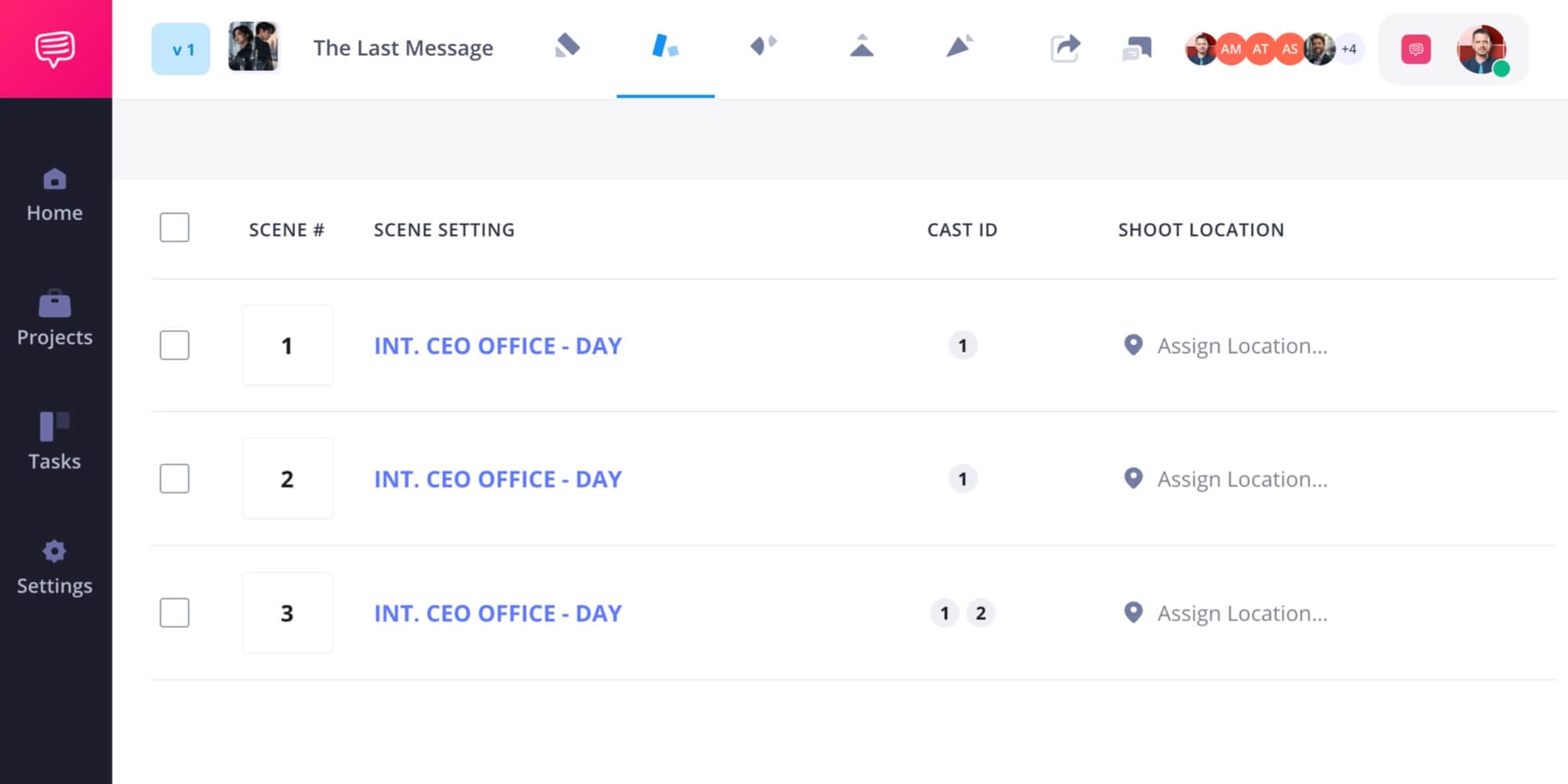
Script Breakdowns - How to film short drama clips
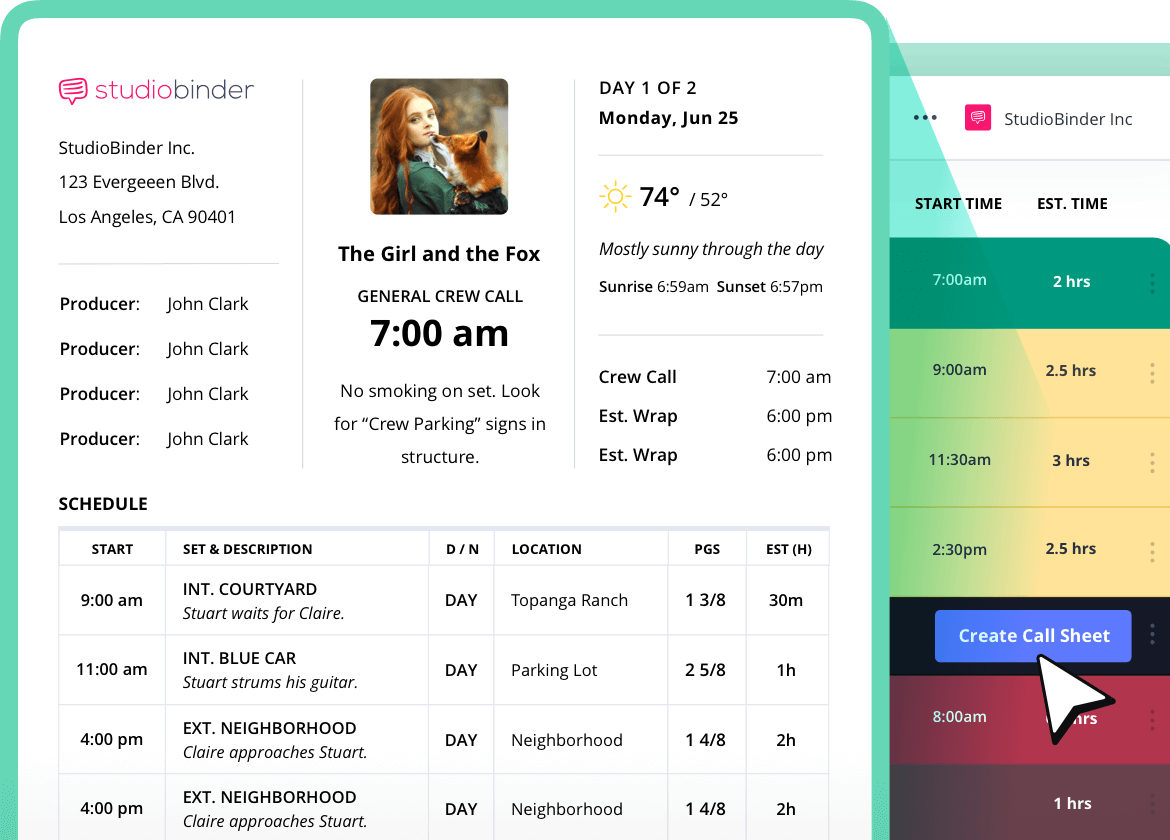
With the fast paced shooting that happens with short drama clips, this stripboard tool also automatically provides the day's weather expectations, as well as space to add private notes and crew parking directions. This way, you're always ahead of any conflicting elements the day might bring.
Shot lists
Shot lists are particularly important in learning how to film short drama clips because coverage is limited. A 90-second episode doesn’t have room for endless camera setups. Scenes can be captured with only three to five setups total. That means every shot has to justify its existence.
Crucially, producers need to identify the episode’s key emotional beats and cliffhanger. The final image often determines whether viewers continue watching.
StudioBinder’s Shot List software allows producers to organize those setups in advance, ensuring the most important moments receive the coverage they need while keeping the production moving.
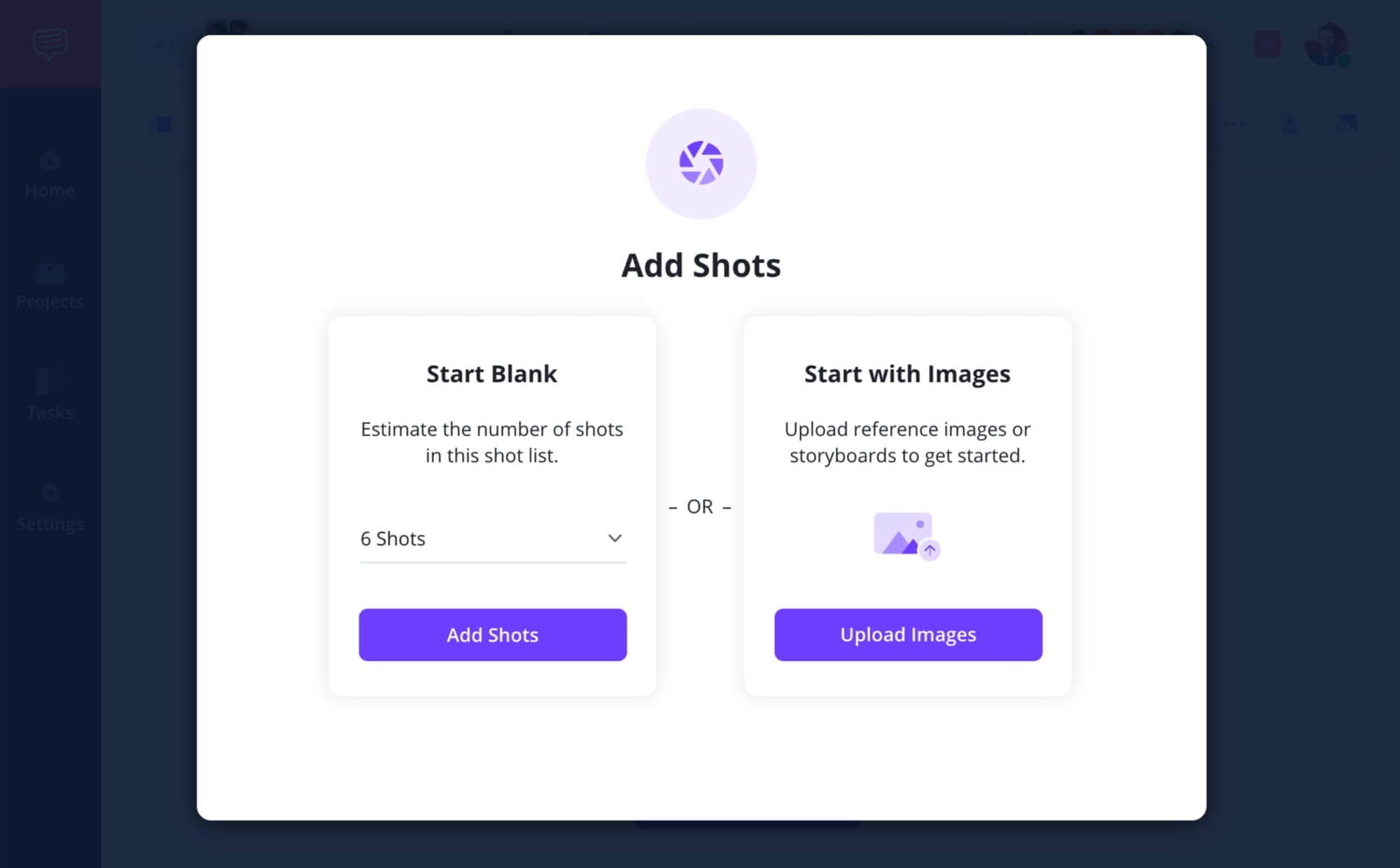
Shot List - How to film short drama clips
This shot list also allows you to customize your layout. Keep it simplified by filtering the columns to show only what each short drama clip needs and filter out the rest.
Call Sheets
Once the schedule is approved, call sheets become the next challenge next to learning how to film short drama clips.
In a traditional production, a call sheet may cover material from one episode.
On a vertical production, a single call sheet may cover scenes from ten, fifteen, or even twenty episodes. That makes accuracy critical.
StudioBinder’s Call Sheet software allows producers to generate and distribute call sheets directly from the schedule, reducing the risk of version-control problems and communication errors.
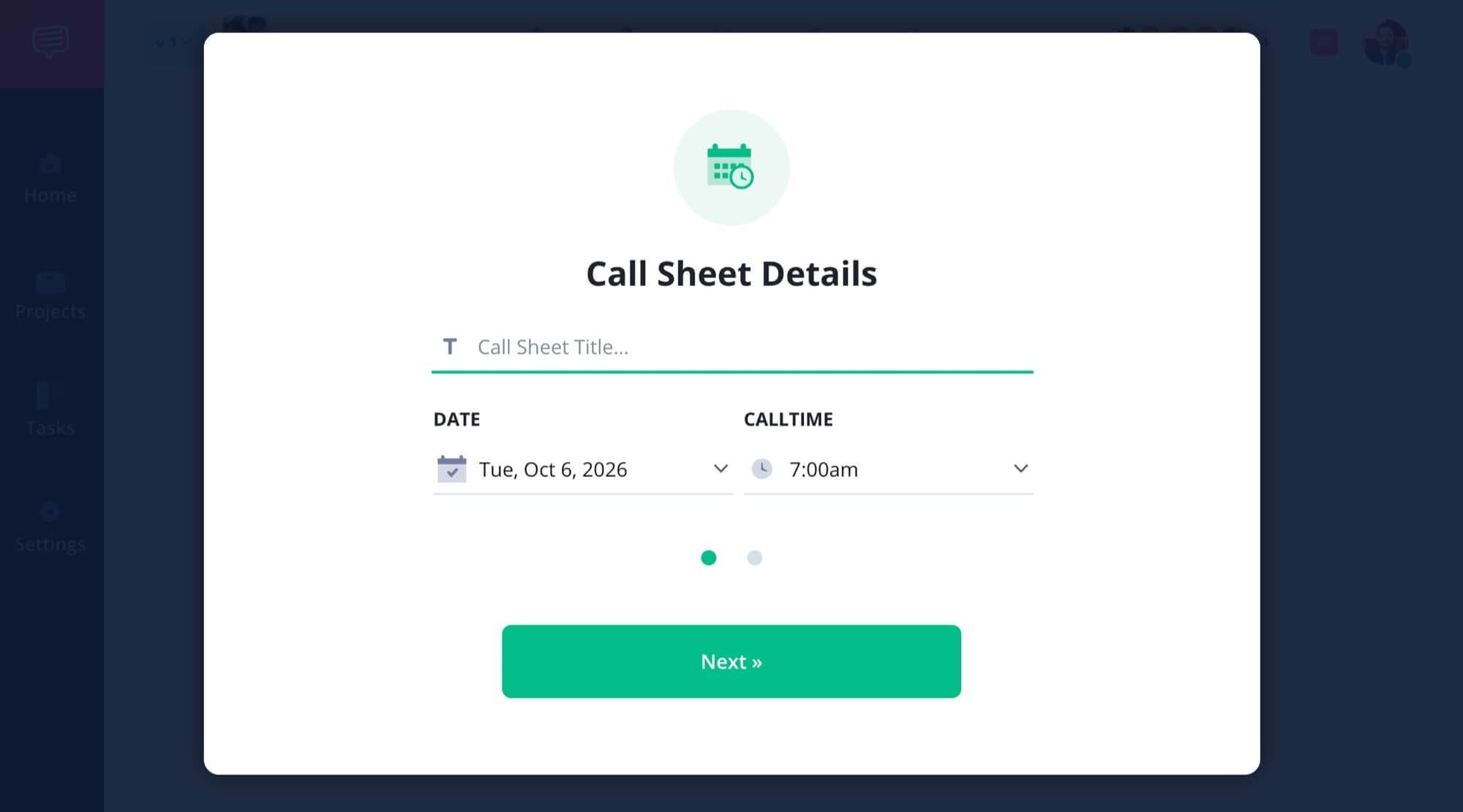
Call Sheet - How to film short drama clips
The faster the production moves, the more valuable that becomes. And with your call sheet fully customized to your unique production needs, you can save it as a template to get a head start on all those future shoot days.
Related Posts
How to film short drama clips
Shooting vertical. 9:16 framing for micro-drama
Understanding how to film short drama clips for mobile audiences requires a different visual mindset.
The audience isn't sitting in a cinema.
They're holding a phone.
That changes everything.
The 9:16 aspect ratio naturally favors faces, reactions, and close-up storytelling.
Wide shots still have value, but they play a much smaller role than they do in traditional filmmaking.
Vertical dramas rely heavily on:
- Close-ups
- Medium close-ups
- Two-shots
- Tight reaction shots
The goal is clarity.
Small screens reward simple, direct visual storytelling. Blocking should reflect that reality.
Actors often remain closer together than they would in a traditional widescreen production because the frame has less horizontal space available.
Eyelines also become more important. Many directors prefer positioning key visual information in the upper portion of the frame where viewer attention naturally settles when holding a phone.
Coverage planning becomes critical. A 90-second episode may only justify three to five setups. If the production doesn’t know exactly what coverage is required before arriving on set, valuable time disappears quickly.
Lens choice deserves special consideration as well. Wider lenses create intimacy and immediacy but can introduce distortion.
Portrait lenses often produce a more natural image for dialogue-heavy scenes. There is no single correct choice. Testing is essential.
Audio is another area where inexperienced producers frequently struggle. Viewers can tolerate modest production design. They will not tolerate unintelligible dialogue. Close-miking performers, monitoring audio carefully, and prioritizing clean dialogue often has a greater impact on perceived quality than expensive camera equipment.
Film lighting tends to follow the same philosophy. Because vertical frames show less environment, compact lighting setups and practical fixtures are often more efficient than large traditional film packages.
The goal is delivering professional-looking footage at the speed the format requires.
Trusted by over 1M creatives
Call sheets that save you time
Create personalized call sheets, send via email and text, and track confirmations.
How to film short drama clips
Post-production and delivery for app platforms
Finishing a vertical drama isn’t simply a matter of exporting the final edit.
In many ways, post-production is where the realities of the format become most apparent. It's where you'll truly come around to learning how to film short drama clips
A traditional film may result in a single master file. A television episode may require a handful of deliverables. A vertical drama season can require dozens of individual exports, captions, thumbnails, metadata packages, and platform-specific assets.
An 80-episode season doesn’t get delivered as one project.
It gets delivered as 80 separate pieces of content.
That means organization is just as important in post-production as it is during production.
Aspect Ratio and Export Requirements
The standard delivery format for vertical drama is 9:16 aspect ratio.
Many platforms accept 1080x1920 as a baseline delivery resolution, although higher-resolution masters are becoming increasingly common. It depends on the delivery specifications of the platform.
Regardless of resolution, producers should always review exports on an actual phone before delivery.
Compression artifacts, framing problems, subtitle issues, and color inconsistencies often appear differently on a mobile screen than they do on a desktop monitor. The audience will experience the series on a phone. Quality control should therefore happen on a phone.
Episode Delivery Workflow
Unlike traditional long-form projects, vertical dramas are usually delivered episode by episode. Each episode should be exported as a separate file with a consistent naming convention.
For example:
- EP001.mp4
- EP002.mp4
- EP003.mр4
This may seem like a minor administrative detail, but managing dozens of episodes quickly becomes difficult if file structures aren’t established early. Version control becomes even more important once revisions begin. Without a clear naming convention, producers can easily find themselves delivering outdated exports or duplicate files.
Captions and Subtitles
Captions aren’t an optional extra in vertical drama. They’re part of the viewing experience. Viewers consume content in public spaces, on public transport, or in environments where audio is muted. As a result, subtitles often carry a significant portion of the storytelling burden. Producers should determine platform requirements early.
Whatever the delivery format, captions should be treated as a creative and technical requirement rather than a final-step addition. Consider it an import part of knowing how to film short drama clips.
Music and Sound Delivery
Music rights can create significant problems during distribution.
Major platforms use automated copyright detection systems that identify unlicensed material.
Using a popular song without proper clearance can result in rejected uploads, muted content, monetization issues, or removal requests.
For most independent productions, licensed music libraries remain the safest option.
Dialogue should receive equal attention.
Many micro-drama viewers watch with headphones, making poor audio quality particularly noticeable.
A clean mix often contributes more to perceived production value than expensive visual effects or elaborate camera work.
Compression and Quality Control
Phone screens are unforgiving. Modern OLED displays make compression problems immediately obvious.
Over-compressed footage can appear soft, muddy, or artifact-heavy, especially in darker scenes.
Before delivering an entire season, producers should review multiple episodes on the devices their audience is most likely to use.
Fixing quality issues before delivery is dramatically easier than re-exporting and re-uploading eighty episodes after platform review.
Trusted by over 1M creatives
Script breakdowns made easy
Tag script elements, organize by category, and share breakdown reports.
How to film short drama clips
How much does a micro-drama cost to produce?
One of the most common questions about how to film short drama clips is also one of the hardest to answer.
How much does a micro-drama cost?
The answer depends on production scale, market, cast size, crew structure, and distribution goals.
That said, there are several broad production tiers.
Micro-Budget Production
Estimated range: $5,000–$15,000
At this level, productions typically rely on:
- Small crews
- Available locations
- Minimal lighting packages
- Limited wardrobe requirements
- DIY post-production
Many creator-led projects and proof-of-concept series fall into this category.
The trade-off is time. Lower budgets often require crew members to take on multiple responsibilities simultaneously.
Semi-Professional Production
Estimated range: $15,000–$75,000
This is where many independent vertical dramas operate.
Budgets at this level may include:
- Professional cast
- Dedicated cinematography
- Art direction
- Licensed music
- More extensive post-production
The production still runs lean, but departments begin to specialize.
This is often the range where producers start balancing efficiency against production value when it comes to how to film short drama clips.
Professional Platform Production
Estimated range: $75,000–$300,000+
At the upper end of the market, productions may include:
- Experienced department heads
- SAG-eligible performers
- Dedicated post-production teams
- Multiple locations
- Expanded art departments
- More extensive visual effects
These productions are still far cheaper than most traditional television projects, but they operate at a significantly larger scale than independent productions.
The Real Cost Driver
The most important budgeting lesson for new producers learning how to film short drama clips is simple:
The primary cost driver isn't camera quality.
It isn't production design.
It isn't wardrobe.
It's time.
Every additional shooting day affects:
- Crew costs
- Cast costs
- Equipment rentals
- Catering
- Transportation
- Insurance
- Post-production
That’s why efficient scheduling remains the most powerful cost-control tool available to a producer.
A well-organized production schedule can save more money than cutting production value. Studiobinder’s scheduling software goes a long way towards helping a production be more well-organized.
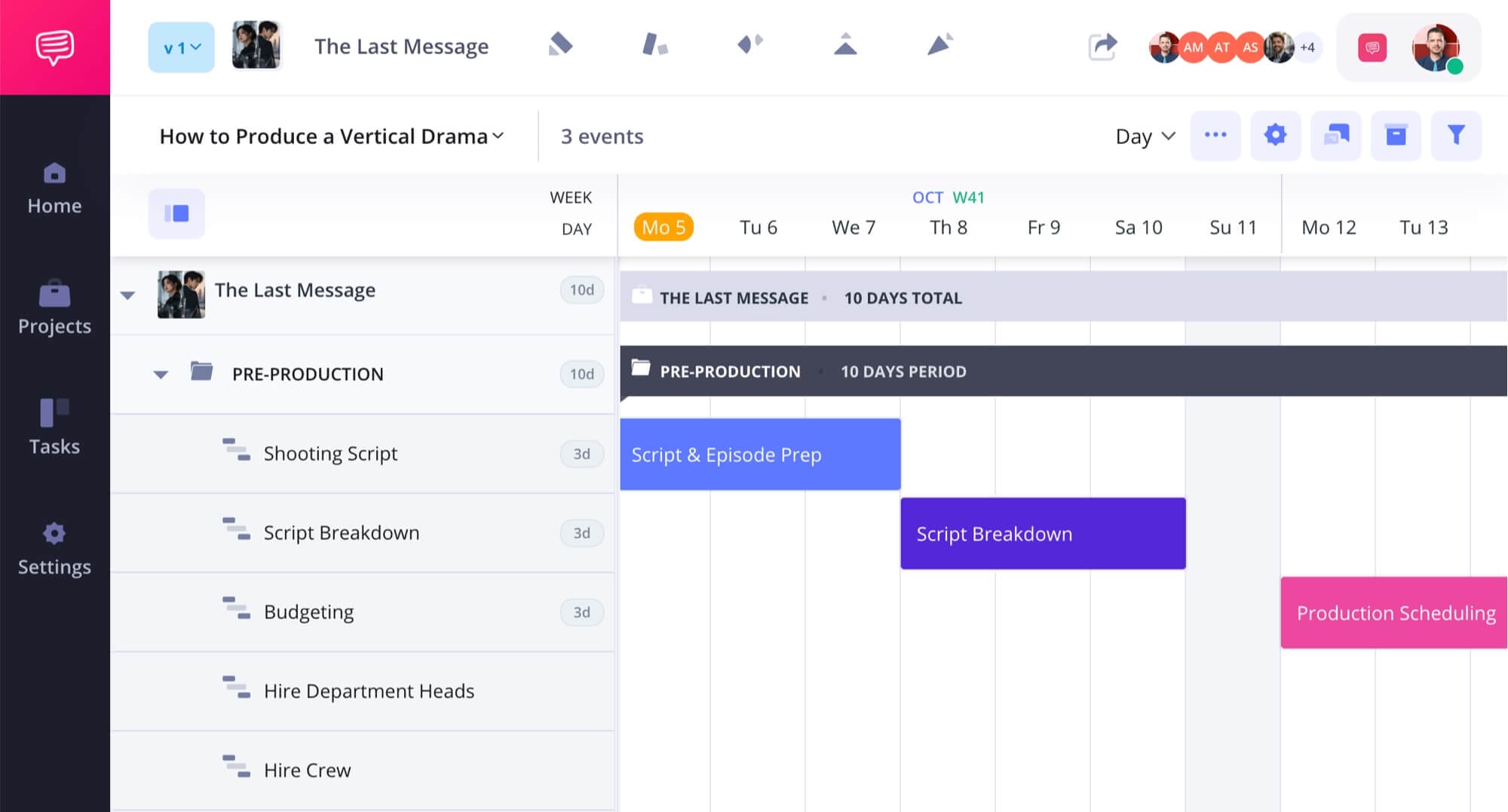
Episode first vs location first - How to film short drama clips
You can import your script directly into StudioBinder and have every scene automatically added to your stripboard. This way you're ready to build your shooting schedule as fast and efficiently as possible.
Related Posts
Frequently Asked Questions
Micro-Drama Production FAQs
Micro-drama budgets range from under $15,000 for creator-led productions to $300,000 or more for professionally produced platform-distributed series. Most independent productions fall somewhere in the middle, with costs driven primarily by shoot days, locations, cast size, and post-production requirements.
Most independent vertical dramas operate with lean crews of three to seven people. A typical setup includes a director, DP, sound recordist, producer, and one or two production assistants. Larger productions may add dedicated art, costume, makeup, and assistant director departments.
Many vertical drama seasons are shot in three to ten days. While that sounds quick, episodes are typically only 60–120 seconds long. Efficient productions group scenes by location and cast availability rather than episode order, allowing them to shoot material for multiple episodes each day.
Dedicated vertical drama platforms continue to grow globally. Different platforms have different submission requirements. Platforms include ReelShort, DramaBox, FlexTV, and MoboReels. ShortTV is thought to have the most lightweight submission process.
Independent distribution through TikTok, YouTube Shorts, and Instagram Reels also remains a viable path for audience building and proof-of-concept releases.
Most productions don’t schedule by episode. Instead, they organize scenes by location, cast availability, and production efficiency. A single location day may contain scenes from dozens of episodes, allowing producers to reduce company moves and maximize shooting time.
For most producers, the challenge isn’t filming vertically. It’s managing volume. An 80-episode season may contain hundreds of scenes that need to be scheduled, shot, edited, captioned, quality checked, and delivered on an extremely compressed timeline. The productions that succeed are usually the ones that solve the logistics problem first.
UP NEXT
What Is a Micro Drama
Now that you understand how to film short drama clips, it’s worth stepping back and looking at the format itself.
Production workflows, audience expectations, episode structure, monetization models, and platform economics all stem from the unique characteristics of the format.

Share your vision with elegant shot lists and storyboards.
Create robust and customizable shot lists. Upload images to make storyboards and slideshows.


