If it can be written, or thought, it can be filmed.” Famed director Stanley Kubrick said these words. Over his long career, Kubrick developed many trademark camera and directing techniques to take things from his mind to the screen. From The Shining to Eyes Wide Shut, Kubrick’s films were known for their fascinating visual language, which included iconic shots and visually precise camera movements.
One of Kubrick’s most well-known techniques is known as the “Kubrick Stare.” The Stanley Kubrick Stare appears often throughout his filmography, and is still imitated and widely used by artists in film today. What is The Kubrick Stare, and what are some Kubrick Stare examples? Read on to find out.
Kubrick Stare meaning
First, let’s define The Kubrick Stare
What is the Kubrick Stare? The Kubrick Stare was a trademark move of director Stanley Kubrick, and appears often in his filmography over the course of his long career.
KUBRICK STARE DEFINITION
What is the Kubrick Stare?
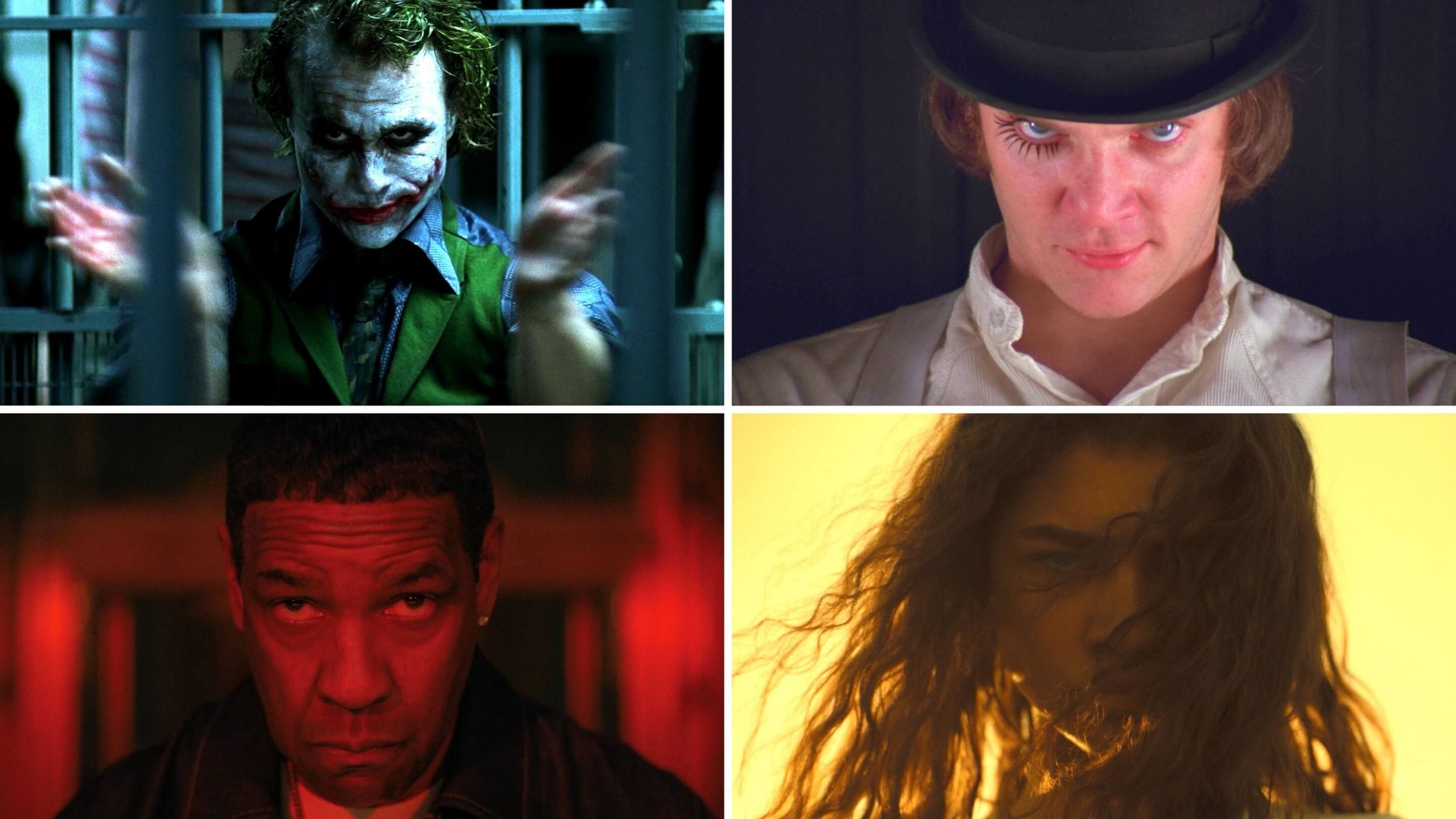
The “Kubrick Stare” is a facial expression used by some characters in Kubrick films. To understand the look, let’s talk about how to do the Kubrick Stare. First, the character tilts their head down, while their eyes look up and directly into the camera.
Then, the look is combined with a lingering shot and filmed at an angle to make the character seem intimidating, unhinged, or convey that they are going mad. Since many Kubrick films were tales of characters battling psychosis, this shot became associated with conveying dark moments where a character gives into their evil side, or accepts villainy.
Perhaps you’ve seen the A Clockwork Orange Kubrick Stare, or a Full Metal Jacket Kubrick Stare, or perhaps most famously, a Jack Nicholson Kubrick Stare. Kubrick used this shot in multiple films, and it became one of his most iconic legacies. Read below to see examples of the Kubrick Stare from some of Kubrick’s most well-known works. Have you seen any of these movies, and can you think of the shot where you saw the Kubrick Stare?
Movies that use the Kubrick Stare:
- 2001 Space Odyssey
- The Shining
- A Clockwork Orange
- Eyes Wide Shut
- Paths of Glory
- Lolita
The Kubrick Stare is a highly effective technique if you want a character to seem intimidating or scare your audience. By lingering on the character’s menacing expression, the shot gives the viewer a sense of unease that can convey the broader themes of the story.
Did You Know?
The Kubrick Stare originated with actor Malcolm McDowell during the filming of A Clockwork Orange, McDowell plays the leader of a gang of teenagers who go on a rampage around England. There is a famous shot of McDowell staring directly into camera with his head tilted, a bowler hat on, and a menacing smile. According to actor McDowell, the expression was achieved when Kubrick asked him to react to Beethoven’s Choral Symphony for a scene. McDowell tried a few different expressions, and he and Kubrick finally picked the best one. This became the Kubrick Stare, and it’s why the shot of McDowell doing it in the film is often considered the quintessential example of the technique.
Stanley Kubrick Stare
Stanley Kubrick Stare Examples
Now you understand the answer to the question: “What is the Kubrick Stare?” But did only Kubrick use this technique? Hardly! The Kubrick Stare left a great impact on audiences, who felt the distress, vengeance, or madness of the moment when it was used.
So it’s no surprise that this haunting expression has been widely imitated since Kubrick first used it. Directors sometimes choose to have their characters utilize a Kubrick Stare during a story moment of dark transformation, or traumatic change.
A montage of examples of the Kubrick Stare in different films
Below are some examples of movies not directed by Kubrick that feature a Kubrick Stare in their shots:
Non-Kubrick Movies that use the Kubrick Stare
- The Dark Knight
- Psycho
- Silence of the Lambs
- Donnie Darko
- Gone Girl
- Marathon Man
- Cape Fear
- Schindler’s List
- Misery
Related Posts
Up Next
Kubrick’s Directing Style
Director Stanley Kubrick is an interesting character. He is both widely celebrated as a visionary, and often criticized as problematic by modern standards due to his harsh directing style. Read on to learn more about his work.
Up Next: Kubrick's Directing Style →

Share your vision with elegant shot lists and storyboards.
Create robust and customizable shot lists. Upload images to make storyboards and slideshows.