Conflict is at the heart of drama. It is what forces a hero to grow or change, making a story memorable. Few character types are better at creating conflict for a story’s protagonist than the archenemy.
Some of the most iconic character dynamics in cinema are between a hero and their archenemy — Batman and The Joker, Luke Skywalker and Darth Vader, and Harry Potter and Lord Voldemort. The best heroes often have an equally formidable foe in their archenemy.
What is an Archenemy in Storytelling?
First, let’s define archenemy
An archenemy falls under the umbrella of the antagonist character. However, it differs in one key — the consistency of their opposition.
ARCHENEMY DEFINITION
What is an archenemy?
An archenemy is a primary and often most formidable opponent. The term "archenemy" originates from the Greek word "archi-" meaning chief or principal, combined with "enemy," signifying a person's principal foe. An archenemy often embodies the direct opposite qualities of the hero, creating a natural source of conflict.
Unlike a regular antagonist who may pose temporary challenges, an archenemy represents a persistent and central source of opposition throughout a story. The consistent opposition that they pose to a hero's journey is what sets them apart from other antagonists.
Characteristics of an Archenemy
- Personal Connection
- Equal or Greater Strength
- Opposite Qualities
- Persistence
What is an Archenemy Used For Narratively?
Purpose of an Archenemy
As an antagonist to a story's protagonist, an archenemy is a primary source of conflict that drives a plot forward while forcing a character to grow or change. In this way, an archenemy can greatly impact the development of a story and its characters. A well-crafted archenemy creates tension, suspense, and drama, making every scene they are in engaging.
Driving the Plot Forward
An archenemy provides continuous tension and challenges for the protagonist, which can be the main mechanism for maintaining a story's momentum. Their actions and schemes are catalysts for major plot points, forcing the hero to take action.
Creating Tension and Conflict
The relationship between the protagonist and their archenemy usually involves deep-seated animosity and personal stakes. This can tie back to personal history with each other.
Archenemies also have a unique ability to pinpoint and target a hero's specific vulnerability, such as in the interrogation room scene from Christopher Nolan's The Dark Knight. We brought this scene into StudioBinder’s screenwriting software to analyze on a script level.
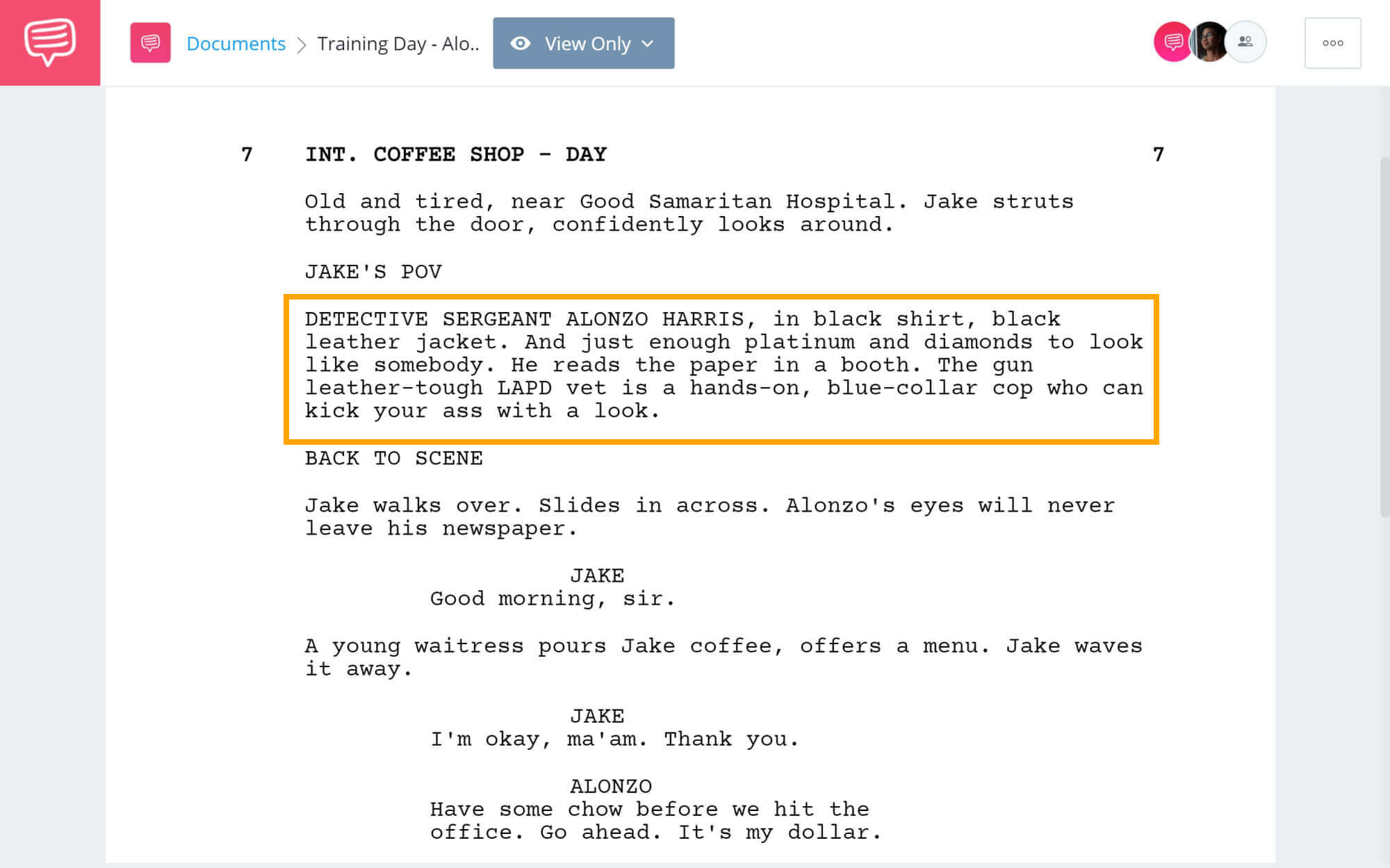
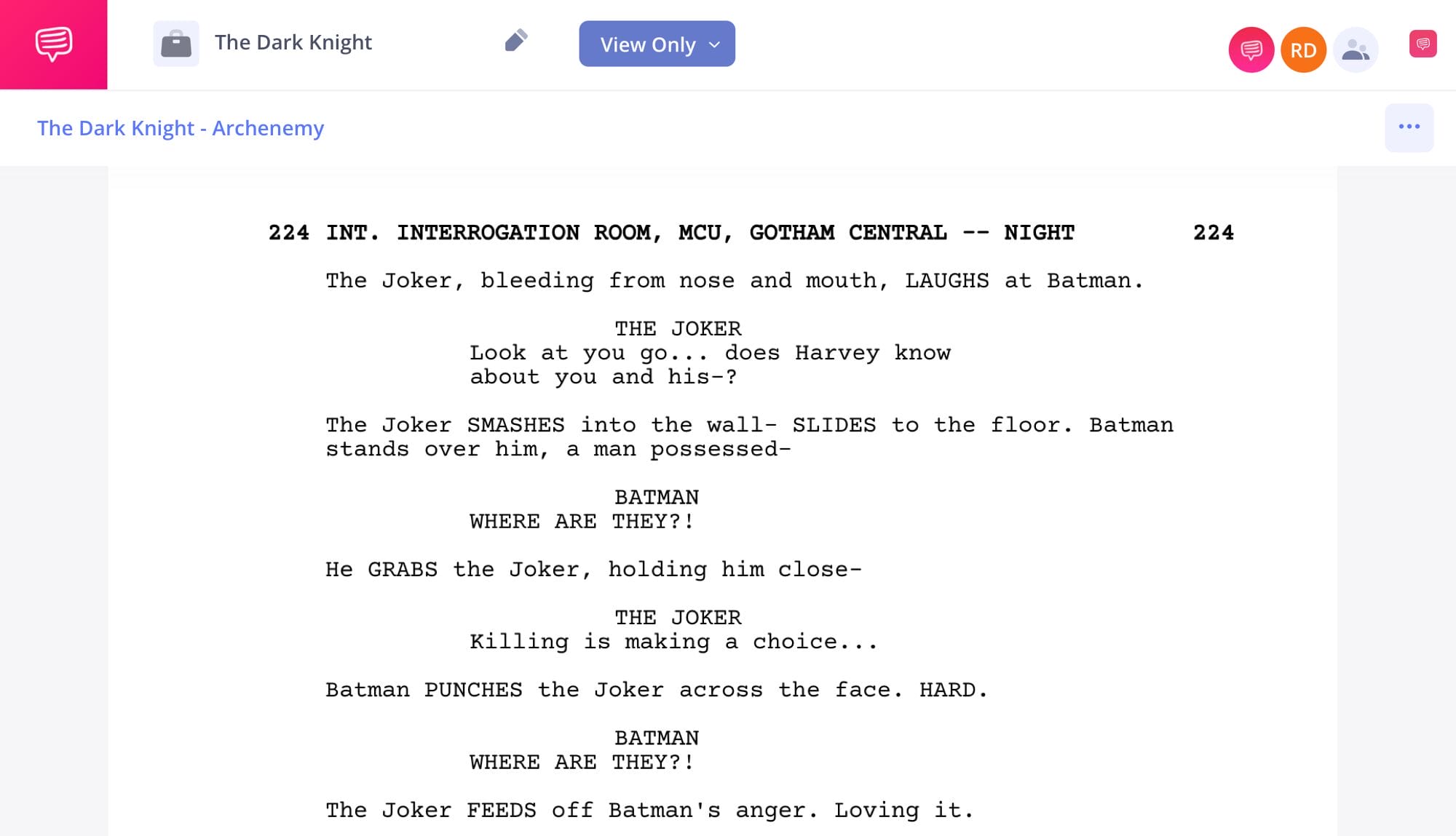
The Dark Knight • Script Analysis
This ongoing conflict throughout the story builds and builds, leading to the eventual showdown between these two forces. This is how so many great climaxes are crafted.
Psychological and Emotional Impact on the Protagonist
An archenemy can affect the protagonist on a deeply personal level, often exploiting their weaknesses and fears. This psychological warfare will force a protagonist to confront and overcome their internal and external struggles — an important moment in any character following the hero's journey.
Thematic Significance and Moral Lessons
Writers often use archenemies to explore thematic elements within a story. Moral beliefs, philosophical debates, and personal values can all be represented in the conflict between a hero and their archenemy. Through this dynamic, a story can challenge an audience to ask themselves important questions regarding complex topics.
Related Posts
Archenemies in Cinema
Examples of Archenemies
Cinema and literature are riddled with iconic hero and archenemy combinations. But let's analyze three archenemy duos that work on different levels as well as various genres.
Professor X vs. Magneto
The genre with the most archenemy dynamics, and rightfully so, is the superhero genre—good versus evil, hero versus villain. In the X-Men franchise, Professor X and Magneto represent opposing views on how mutants should coexist with humans. Their ideological differences lead to a long-standing feud, creating conflict and moral ambiguity throughout the franchise.
Coin Scene • X-Men First Class
In the film X-Men: First Class, we learn more about their personal history and how their friendship turned into an enmity, adding further depth to their dynamic as archenemies.
Michael Myers vs. Laurie Strode
In the Halloween franchise, Michael Myers and Laurie Strode have a complex relationship as archenemies. The classic horror series follows the ongoing battle between Laurie and Michael, as she tries to survive his relentless, violent pursuit.

Halloween Franchise
Many speculate, given narrative exposition, that Laurie is actually Michael's sister, adding a twisted and personal connection to the archenemies.
Randle Patrick Murphy vs. Nurse Ratched
Now, let's turn our attention to classic dramas. One Flew Over the Cuckoo's Nest follows Randle Patrick Murphy, known as McMurphy, as he challenges the oppressive and controlling Nurse Ratched within a psychiatric hospital.
McMurphy represents the rebellious spirit against oppressive authority. His archenemy, Nurse Ratched, is a cold and calculating figure who embodies the strict rules and regulations of society. Their constant power struggle reflects the individual versus society, conformity versus rebellion, and constraint versus freedom.
The film's narrative focuses on the conflict between the two characters who are opposite in nearly every way. It is a recipe for a brilliant drama.
Ambiguous Endings • Do We Need Them?
While each example comes from a different genre, they all highlight the ability of an archenemy to serve not just as an obstacle but as a reflection of the protagonist's inner battles, often acting as a dark mirror revealing a hero's strengths and vulnerabilities.
The best archenemies are formidable, nearly unbeatable, as they push a hero to their limits. Without them, a hero or protagonist may never reach their full potential and never fully realize their own strength. The drama archenemies create directly influences the impact of a story's climax when a hero finally realizes their full potential, transcending their own limitations.
Up Next
Types of Villains
While the concept of an archenemy offers an exploration of conflict and antagonizing forces, not all villains fit this mold. The next article will look into various types of villains, each with unique characteristics and purposes within a story.