The data is in. According to Wyzowl, 91% of businesses now use video as a marketing tool. Cisco has reported that video accounts for 82% of all internet traffic. Video is not a luxury anymore. It is a requirement.
Here is what most brands miss: posting random clips is not a video marketing strategy. It is noise. HubSpot found that 66% of consumers find short-form video the most engaging format, yet most brands still fail because they have no plan behind it.
This guide is your roadmap. A practical, step-by-step framework packed with video marketing tips to help you stop guessing and start getting results.
Strategy Definition
What is a video marketing strategy?
A video marketing strategy is your master plan. It covers your goals, your audience, and how you will measure success. It answers five questions before you shoot a single frame.
Too many brands think posting on social media counts as a strategy. It does not. Knowing exactly why you are filming, who is watching, and where the video will live, that is a strategy. It is the why that makes the how actually work.
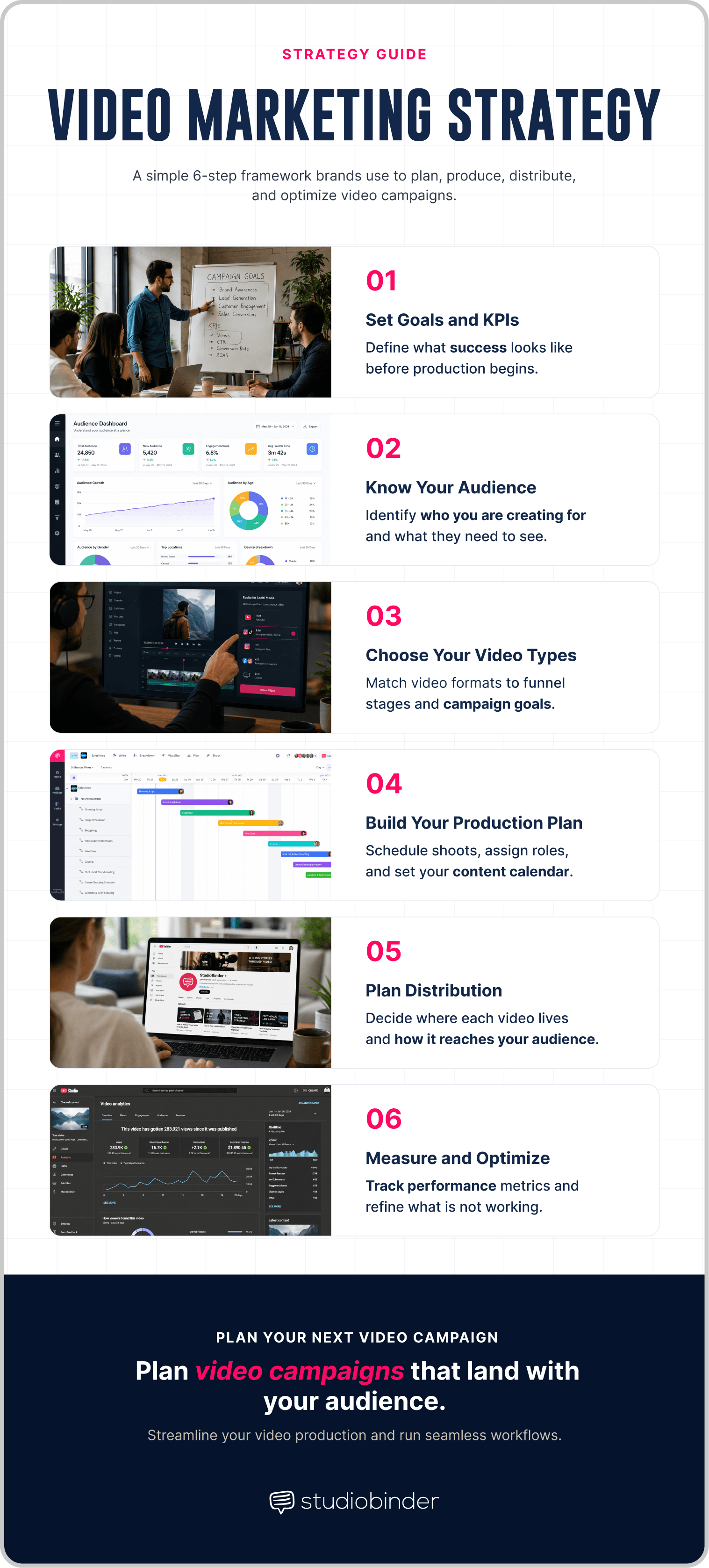
Video Strategy Process • Try StudioBinder's Video Production Calendar
These are the top 5 questions to ask when creating a video marketing strategy that is successful.
1. What are you trying to achieve?
Most brands skip this step. They say brand awareness because it sounds safe. That is not specific enough. A goal needs three things: a direction (increase, decrease, maintain), a specific metric (views, leads, revenue), and a number.
Increase brand awareness is too vague. Increase YouTube channel reach by 25% quarter over quarter, measured by unique viewers, is a goal. Pick one primary goal per campaign and write it down before you write a single line of script.
2. Who are you talking to?
You need a specific person with a specific problem at a specific moment. Answer three sub-questions: Where does this person watch video? A C-suite executive watches LinkedIn on a commute. A teenager scrolls TikTok after school. A B2B buyer searches YouTube for product reviews. The platform is not a preference, it is a behavior.
What do they need from the video right now? A top-of-funnel viewer wants quick answers or a hook. A bottom-of-funnel viewer wants proof and a path to purchase. How do they actually watch? Most viewers are on mobile with the sound off. If your captions are auto-generated and never proofread, you are losing them.
3. What type of video will get you there?
Once you have a goal and an audience, choose the format that connects the two. Do not start with lets make an explainer video. Start with the goal, then the audience, then ask which format bridges them.
An explainer works if your audience is searching YouTube for answers. It will not work if they have never heard of your brand and are scrolling Reels for entertainment.
4. How will you produce it and repurpose it?
Pre-production is where your video marketing plan pays off. A shot list tells the camera operator exactly what to capture. A storyboard shows the director what the edit will look like. A call sheet tells the crew who needs to be where and when. Walk onto the shoot knowing exactly what you need.
One 20-minute customer interview can become: 2 two-minute clips for LinkedIn, 4 fifteen-second clips for TikTok and Instagram Reels, 3 pull quotes as static graphics for ads or landing pages, 1 blog post with the video embedded, and 1 email to your list with a highlight clip. That is how small teams compete with big budgets. Produce once. Distribute ten times.
5. Where will you distribute it, and how will you measure it?
Distribution is not a post to all platforms. That is spam. YouTube is for search and depth. LinkedIn is for B2B trust. Instagram and TikTok are for discovery. Your website is for conversion.
Landing pages with embedded video drive 86% higher conversion rates than text-only pages, according to the Digital Applied Video Marketing Statistics Guide. Place video where buyers make decisions and purchase intent is highest. Then measure the metric that matches your goal, not just views.
If you cannot answer these five questions, you do not have a video marketing strategy yet. A strategy is not we should make more videos. It looks like this: We will produce three explainer videos for YouTube to drive top-of-funnel traffic. Budget is $X. We will repurpose each into two short clips for LinkedIn. We will measure success by watch time and demo requests. That is a plan.
Building influence through video takes consistency and intentionality. Alex Hormozi breaks down how to think about social media reach beyond raw view counts in this practical walkthrough:

The NEW Way to WIN on Social Media • Video Marketing Strategy
That's a data-driven breakdown of what actually builds video marketing strategy reach, from one of the most-watched creators in the marketing space.
And if you want the best pro tools in the box to help with your video marketing strategy, StudioBinder's Shot List maker can help you plan both simple and complex filming ideas.
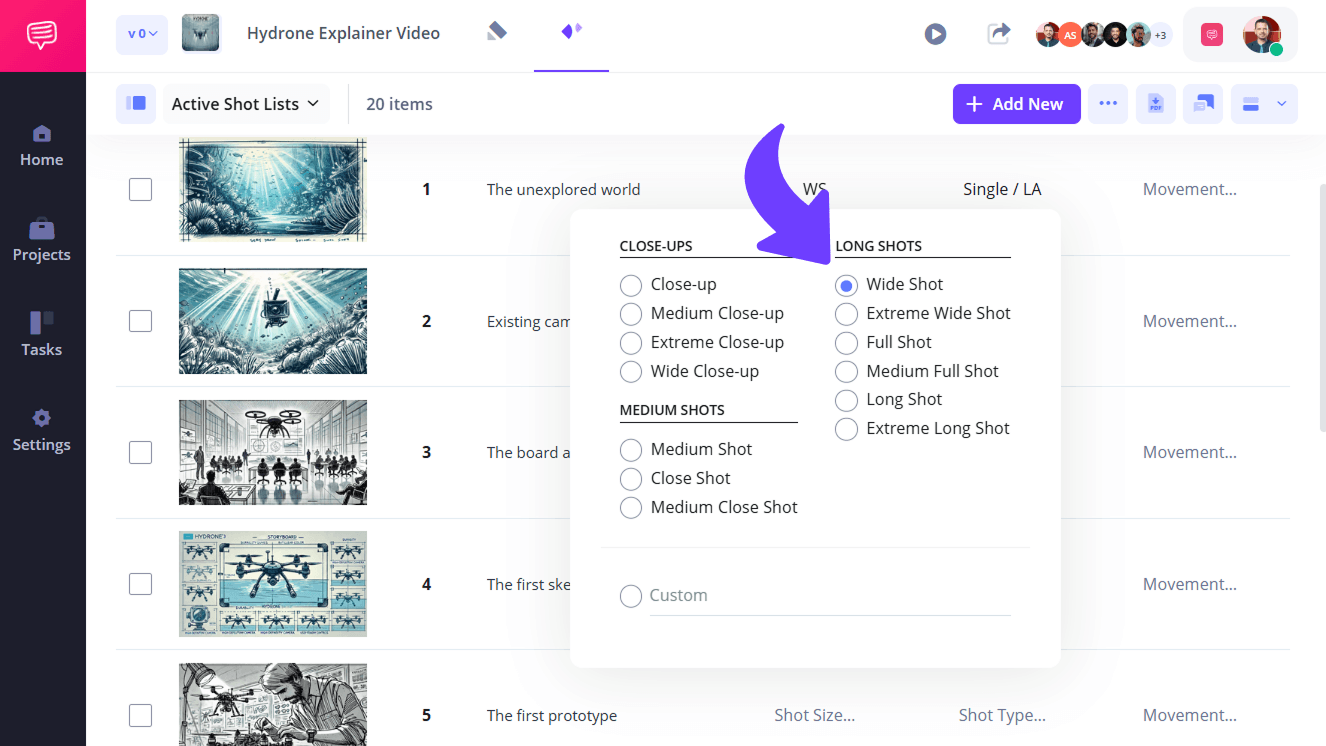
Shot Lists • Video Marketing Strategy
StudioBinder shot lists and call sheets plug directly into your video marketing plan, turning strategy documents into coordinated shoot-day execution. Now let's move over to defining your video marketing strategy more clearly.
Campaign Goals
1. Define your video marketing goals
Goals determine format before anything else. Format then determines budget. Your budget shapes your entire approach to production.
Awareness (Top of Funnel): You want reach. You want new people to know you exist. Metrics: views, reach, impressions, brand lift. Formats: brand films, explainer videos, YouTube pre-roll ads. You are not asking for a sale yet. You are asking for attention.
Consideration (Mid-Funnel): You have their attention. Now you educate. Metrics: engagement, leads, email signups. Formats: product demos, testimonials, webinars, comparison videos. This is where you prove your product solves a real problem.
Conversion (Bottom of Funnel): Now you want transactions. Metrics: purchases, sign-ups, direct revenue. Formats: case studies, product walkthroughs, landing page videos, limited-time offer videos. You caught their attention. You educated them. You built trust. Now close.
Most brands try to do all three in one video. That rarely works. A viewer at the top of the funnel is not ready to buy. A viewer at the bottom does not need a brand film. Match the goal to the placement. Then build the video that serves that exact moment.
Target Audience
2. Know your audience
You cannot speak to everyone. If you try, you speak to no one. You need more than a buyer persona. You need video-specific data about where and how your audience actually watches.
TikTok and Instagram Reels are discovery engines. People go there to be entertained, surprised, or taught something in under sixty seconds. They are not researching vendors. They are scrolling. Your video needs a hook in the first two seconds or you lose them.
YouTube is a search and depth platform. People arrive with intent: How do I fix this? Which product is better? What is the cheapest way to do X? Your video needs to answer a specific question thoroughly. YouTube rewards watch time. Give them fifteen minutes of real value and they will stay. Trust this video marketing strategy.
LinkedIn is for professional trust and B2B relationships. People are in work mode. They want evidence, case studies, and credible opinions. A polished, data-driven video works here. A shaky vertical rant does not.
Email is for existing relationships. Someone on your list has already raised their hand. They want exclusives, updates, early access, and seasonal offers. Video in email works when the thumbnail is compelling and the link is obvious.
Your video marketing strategy must match the platform to the audience habit. Do not post the same thirty-second Reel on LinkedIn. Do not drop a ten-minute tutorial into TikTok. Study the videos your audience already shares. Look at the comments. See what questions go unanswered. Then give them what they want, or better, what they did not know they needed.
None of this is guesswork. This is research. Do it before you spend a dollar on production.
HubSpot breaks down platform-specific video trends in depth here, including data on brand clarity and content strategy worth building into any video marketing plan:

6 Marketing Trends ACTUALLY Working Right Now • Video Marketing Strategy
HubSpot's State of Marketing report covers the video formats and platform behaviors driving real engagement right now.
Content Styles
3. Choose your video types
Once you have a goal and an audience, pick the format that connects the two. Here is a quick reference for how each corporate video type maps to your funnel stage:
Explainer videos (animated or live action): Best for top of funnel. Simplify complex products or services for audiences new to your brand.
Product demo videos: Mid-to-bottom funnel. Show the product solving a real problem in real time. High conversion potential.
Testimonial and case study videos: Social proof at consideration and conversion stages. Let your customers do the selling.
Brand films: Build emotional connection at the awareness stage. Not a conversion tool.
Tutorial and how-to videos: Use on YouTube to capture SEO-driven organic traffic. High watch time potential.
Social media short-form (Reels, TikTok, Shorts): Maximum reach and discoverability. Optimize for the first two seconds.
Webinars and thought leadership: Strong for lead generation, email capture, and establishing authority in a niche.
Production Plan
4. Build your video marketing plan
Moving from video marketing strategy to execution requires a clear system. Here is what that system looks like in practice.
Editorial calendar: Consistency builds audience. Without a publishing schedule, even a strong video marketing plan falls apart. Map your publishing frequency, platforms, and formats before you produce a single video. Decide how often you will post on each channel and stick to it.
Production budget: About 59% of marketers produce video in-house. That does not make freelance the wrong call. In-house works for volume and brand consistency. Freelance or agency makes sense for hero content that needs to perform. Know which you need before you commit the budget.
The production pipeline: A professional video marketing plan follows five stages: brief, pre-production, shoot, post-production, and distribution. Skipping pre-production is the most common reason video budgets blow out. Brief the shoot thoroughly, storyboard the edit, and build your call sheet before anyone sets foot on location.
Repurposing: This is where leverage happens. One hero video becomes ten short clips, three blog posts with embedded video, multiple social cuts, thumbnails, and quote graphics. Work smarter than your budget allows on paper.
You can't have a video marketing strategy without a strong visual timeline. With StudioBinder's Production Calendar software, you can create a Gantt chart to visualize the entire production process of your upcoming campaigns.
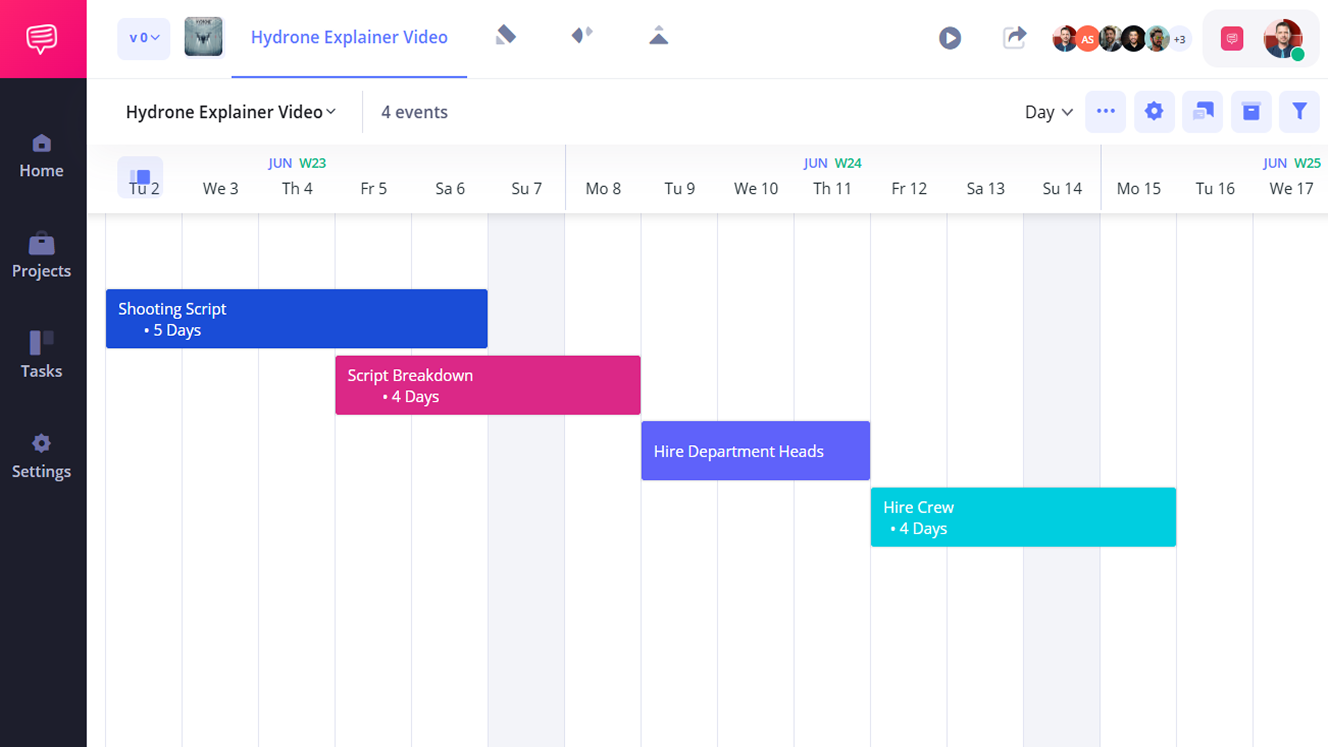
Salesforce Video Marketing Strategy • Try StudioBinder's Production Calendar Software
StudioBinder's production calendar and stripboard tools turn your video marketing plan into a coordinated shoot schedule your whole team can follow.
Trusted by over 1M creatives
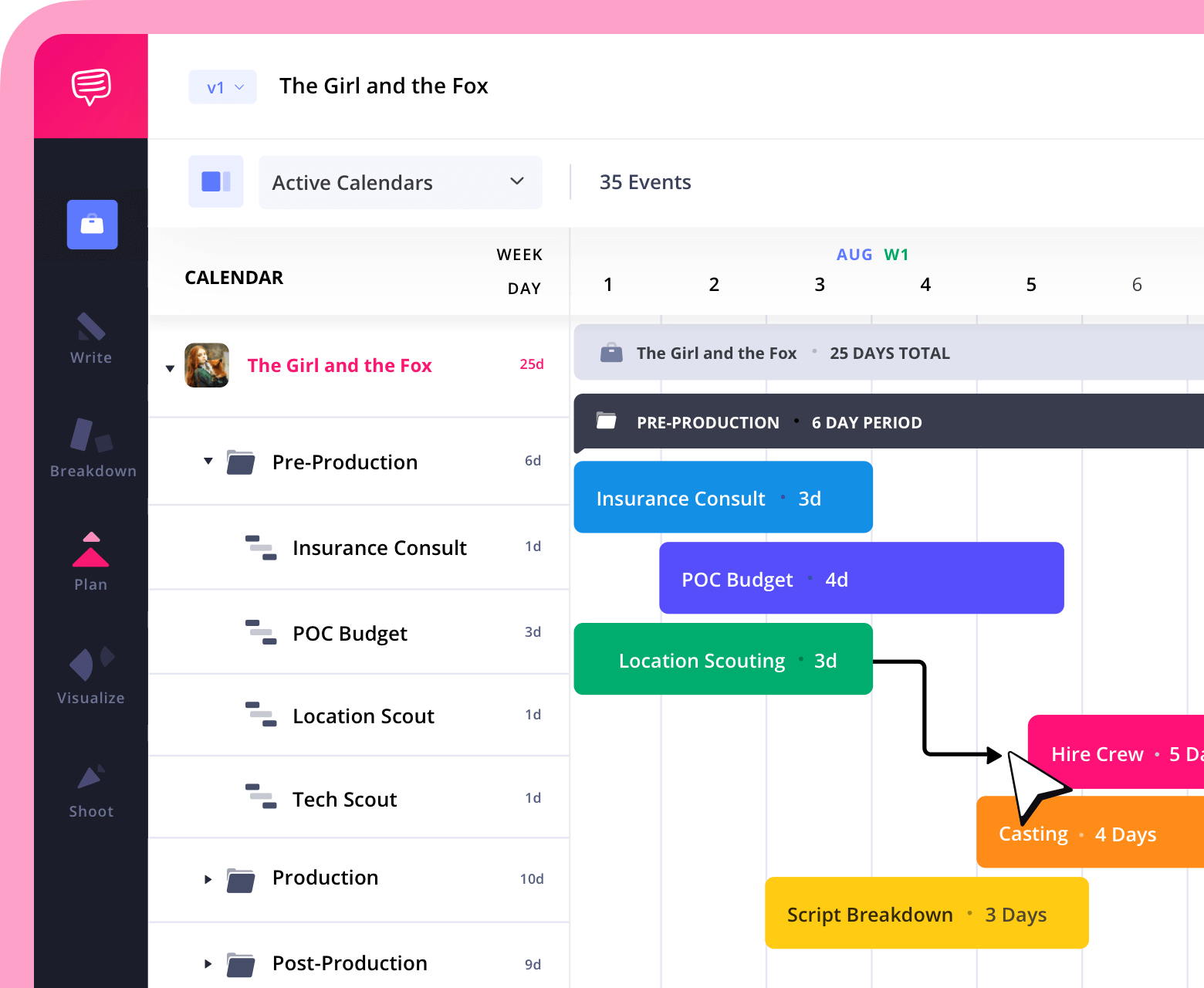
Production timelines, visualized
Plan and share production milestones, tasks, and files to stay ahead of schedule.
Distribution Channels
5. Choose your distribution channels
Where you place your video matters as much as what is in it. Each platform serves a different function in your video marketing strategy.
YouTube: Best for SEO, tutorials, long-form education, and product reviews. The algorithm rewards watch time. Hook viewers in the first 5 to 10 seconds. Use keywords in titles, descriptions, and tags. Optimize thumbnails. YouTube is the second-largest search engine in the world.
Instagram and Reels: Best for brand personality, behind-the-scenes content, quick tips, and emotional storytelling. Short-form dominates. Reels reach further than static posts. Use trending audio. Keep captions on screen.
LinkedIn: Best for B2B thought leadership, professional demos, and company culture. Video drives 5x more engagement on LinkedIn than other content types. Keep videos under five minutes for organic reach. Native uploads outperform links.
TikTok: Best for reach, trends, and wide consumer audiences. Raw and authentic content often outperforms polished production. Use trending sounds and hashtags. Hook viewers in the first two seconds.
Facebook: Best for older demographics, community building, and paid ads. Organic reach is low. But paid video ads still perform for local businesses. Use captions. Keep videos short.
Website and landing pages: Best for conversion. Embedding video on a landing page can lift conversions by 80 to 86%. A product video on a pricing page removes friction. A customer testimonial on a checkout page builds trust. Place video where buyer intent is highest.
Performance Metrics
6. Measure video marketing success
Success is more than view count. If you cannot measure it, you cannot improve it. Different goals require different metrics. Pick the metrics that match the goal you defined in Step 1.
Awareness: views, reach, impressions, brand lift
Engagement: watch time, completion rate, click-through rate, shares, comments
Conversion: lead form fills, purchases, email signups, demo requests
ROI: cost per view, cost per lead, revenue attributed to video
Do not track awareness metrics for a conversion campaign. Do not judge a brand film by lead form fills. Measurement only works when it is connected to intent.
Actionable Tips
7 video marketing strategy tips
Here are video marketing tips that separate brands that grow from brands that spin their wheels.
- Start with the goal (not the format). Too many teams produce video without knowing what they want the viewer to do next. Define the desired outcome first. Then choose the format that delivers it.
- Optimize thumbnails and titles. On YouTube, your thumbnail and title drive 80% of the click. Test them. Use contrasting colors, real faces, and curiosity gaps. Small details compound into big gains over time.
- Short-form is not low-value. A 30-second Reel can drive more qualified traffic than a 10-minute explainer if the hook and targeting are right. It takes real skill to tell a story in 15 seconds. Respect the format.
- Batch your production days. Shoot five customer testimonials in one day instead of five separate days. The setup, crew, and travel costs stay the same. Your output multiplies.
- Repurpose everything. A 60-minute webinar becomes 10 short clips, 3 YouTube videos, and 1 blog post. Every production day should generate a library of content.
- Use captions on every video. According to AMZG Media, 85% of social video is watched without sound. Auto-generated captions are not enough. Review every caption file, fix errors, and add punctuation.
- Test and learn. One video is not a video marketing strategy. Build a repeatable process. Publish five videos, measure what worked, do more of it, and stop what did not.
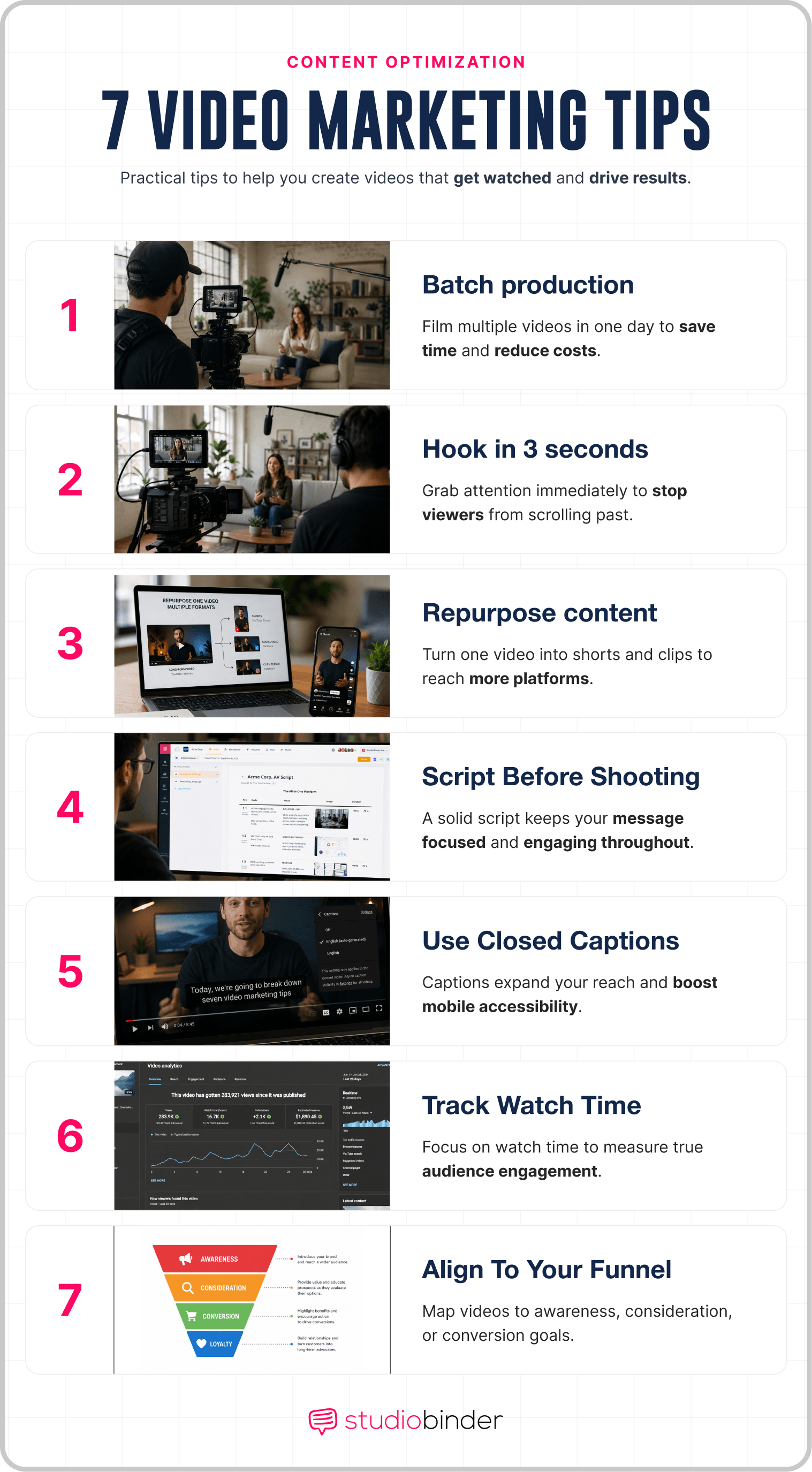
Optimization Tips for Video Content Drive • Video Marketing Strategy
Neil Patel breaks down the specific video marketing tips worth betting on. These are worth adding to any video marketing plan:

The 8 Trends I'm Betting My Entire Marketing Strategy On • Video Marketing Strategy
With these video marketing strategy trends from Neil Patel, shaping production and distribution decisions will only get easier.
Frequently Asked Questions
Video marketing strategy FAQs
A video marketing strategy is a documented plan that defines your goals, target audience, video formats, distribution channels, and success metrics before you produce anything. It answers five questions: what you want to achieve, who you are talking to, what type of video will get you there, how you will produce and repurpose it, and where you will distribute it. Without those answers, you are producing content without direction.
Start with one clear business goal and one specific audience. Define which funnel stage you are targeting (awareness, consideration, or conversion) and choose the video format that serves that stage. Build a simple editorial calendar, set a production budget, and pick one or two distribution platforms where your audience is most active. Measure results against the metric that matches your goal, not just views.
A solid video marketing plan includes your target audience profile, a defined funnel stage for each video, a content calendar with publishing frequency, a production budget, platform-specific distribution guidelines, and a measurement framework. It should also include a repurposing plan so each production day generates more than one asset.
For conversion, the highest-performing video types are customer testimonials, product walkthroughs, case study videos, and landing page videos. These formats work because they reduce purchase friction and provide social proof at the moment a buyer is deciding. Pair them with a direct CTA and place them on pages where buying intent is already high.
Measure success against the goal you defined before production. Awareness campaigns: track views, reach, and impressions. Engagement campaigns: watch time, completion rate, click-through rate. Conversion campaigns: lead form fills, sign-ups, purchases, and demo requests. Tracking the wrong metric for your goal will make every video look like it underperformed.
There is no fixed number. Start with a cadence you can sustain. One well-produced video per week on the right platform beats five rushed videos spread across every platform. Build in repurposing from the start so each shoot generates multiple assets. As you find what works, scale the output. Consistency matters more than volume.
Posting videos is activity. A video marketing strategy is a system. The difference is intent: every video in a strategy has a defined goal, a specific audience, a chosen platform, and a measurable outcome. Without that structure, even great videos fail to move business metrics because they are not placed, timed, or targeted correctly.
[SB CTA: Ready to execute your video marketing strategy on set? StudioBinder gives you shot lists, call sheets, production calendars, and storyboards in one platform, so your team shows up to every shoot prepared. Try it free. | https://app.studiobinder.com/register]
UP NEXT
Video marketing examples
Now that you have a video marketing strategy, see it in action. Our next post breaks down 20+ real video marketing campaigns across brand film, product demo, social, and B2B, so you can study what actually worked and apply those patterns to your own plan.

Create production calendars with a drag-and-drop timeline
Create customizable production calendars for your next video or photoshoot. Add events, tasks, and dependencies. Invite your team and share calendars with clients.