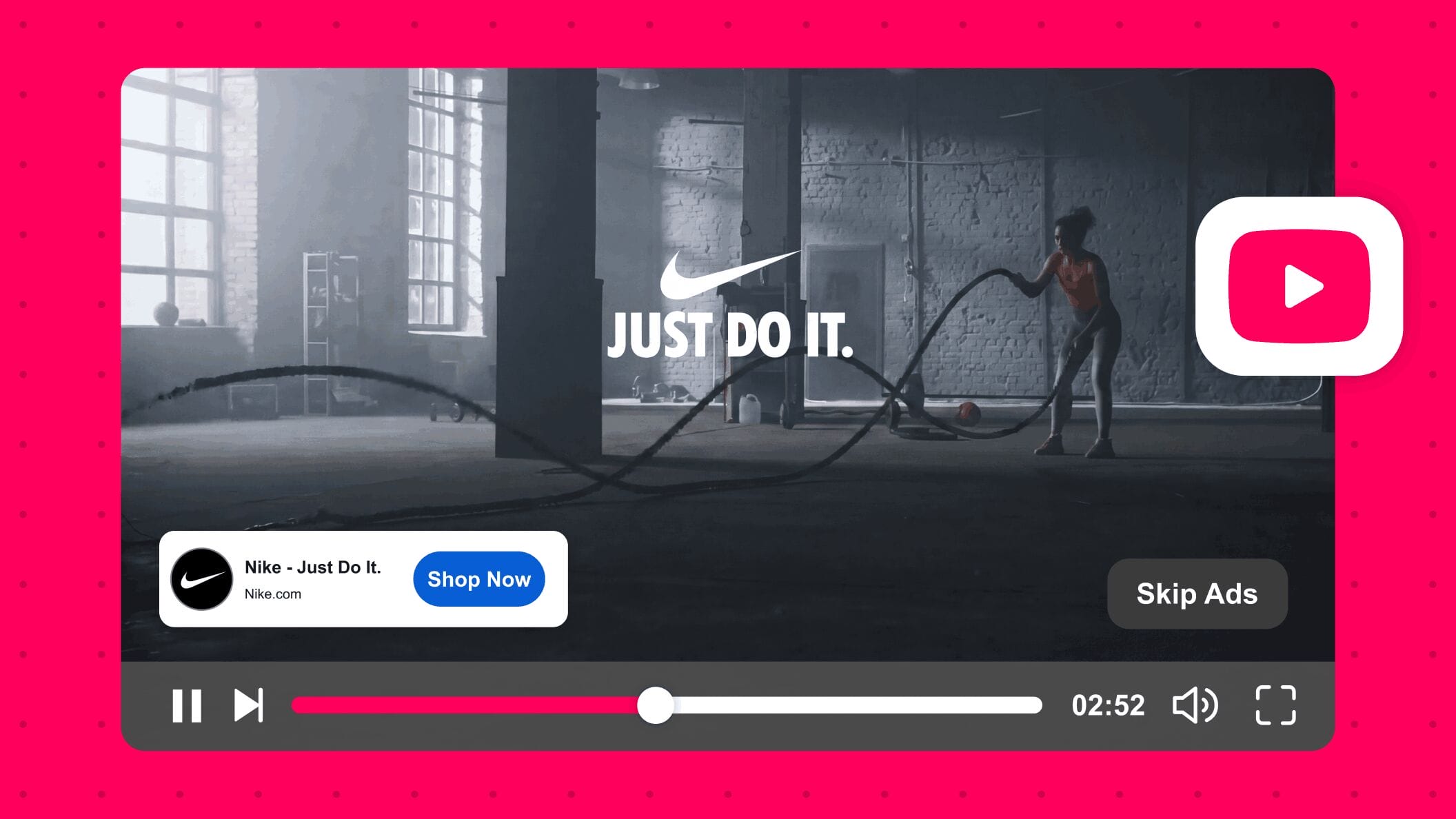
If you’re like any other red-blooded human being, you probably use YouTube. With billions of users and deep integration into Google’s ecosystem, YouTube advertising is no longer optional for serious marketers. This guide breaks down how to advertise on YouTube effectively, from strategy to execution, with a focus on performance and scalability.
YouTube Advertising Definition
First, let’s define YouTube advertising
If you’ve used YouTube, you’ve seen YouTube advertising. Let’s take a closer look at what that term really means.
YouTube Advertising Definition
What is YouTube Advertising?
YouTube advertising refers to paid video promotion that allows brands to reach targeted audiences across YouTube and its partner network. Unlike organic content, which relies on the YouTube algorithm and discovery systems, paid ads guarantee distribution to specific audiences.
Understanding the distinction between organic and paid video is critical. Organic content builds long-term authority and audience retention, while paid advertising accelerates reach and drives immediate results.
Types of YouTube ads:
- Skippable in-stream ads: Play before or during videos and can be skipped after 5 seconds
- Non-skippable ads: 15–20 second ads that must be watched
- Bumper ads: 6-second non-skippable ads
- In-feed ads: Appear in search results
- Shorts ads: Vertical, mobile-first ads shown in the Shorts feed
How YouTube ads work within Google Ads
YouTube ads are managed through Google Ads, which means campaigns benefit from one of the most advanced advertising infrastructures available. This includes access to detailed audience targeting, real-time performance tracking, and flexible bidding strategies.
Advertisers create campaigns, define audiences, set budgets, and upload video creatives. Google’s system then distributes those ads based on your targeting and bidding preferences, offering some of the highest visibility advertising in social media.
For a step by step walk through of getting your ad on YouTube, here’s a great video on the subject:

YouTube ad tutorial • Best YouTube ad strategies
Where ads appear across YouTube
YouTube ads can appear in multiple placements, depending on the format you choose. These placements influence both user experience and performance.
Common placements include:
Before, during, or after videos
In YouTube search results
On the YouTube homepage feed
Within Shorts content
Each placement serves a different purpose, from discovery to conversion.
YouTube Advertising Platform
Why advertise on YouTube in 2026?
Competition is increasing across digital platforms, so advertisers are looking for channels that combine scale, engagement, and measurable ROI. YouTube stands out: it delivers all three while supporting both brand-building and direct response.
Strategically, YouTube plays a critical role across the funnel, from awareness to conversion, making it one of the most versatile platforms in modern video content strategy.
Reach and targeting power
YouTube reaches over 2.7 billion monthly users (yes, you read that right), giving advertisers access to a massive global audience. More importantly, it allows for highly specific targeting based on behavior, interests, and intent.
This combination of scale and precision makes it effective for both broad campaigns and niche B2B video marketing.
Video’s role in modern marketing funnels
Video is increasingly central to how consumers research and make decisions. It communicates value faster than text and builds trust more effectively than static formats.
On YouTube, this translates into stronger engagement signals like watch time and click-through rate, which directly impact performance.
When YouTube ads outperform other platforms
The best marketing campaigns use YouTube. YouTube often outperforms other platforms when the message requires explanation, demonstration, or storytelling. Products with longer consideration cycles tend to benefit most.
Here’s a more detailed rundown on why YouTube stands out as a great ad platform, particularly against another very popular social media site you may have heard of.
YouTube vs. Facebook ads • Best marketing strategies
It is particularly effective for:
- High-ticket offers
- SaaS and B2B services
- Education and training products
Related Posts
Advertising on YouTube
Types of YouTube ads
Choosing the right ad format is crucial to say the least. Each type serves a different purpose within your YouTube marketing strategy. The format you select has a wide array of consequences, influencing cost, engagement, and overall results.
Here’s a breakdown of the main formats and when to use them depending on the digital trends you’re chasing.Skippable in-stream ads
These ads play before or (unfortunately for viewers) during videos and can be skipped after 5 seconds.
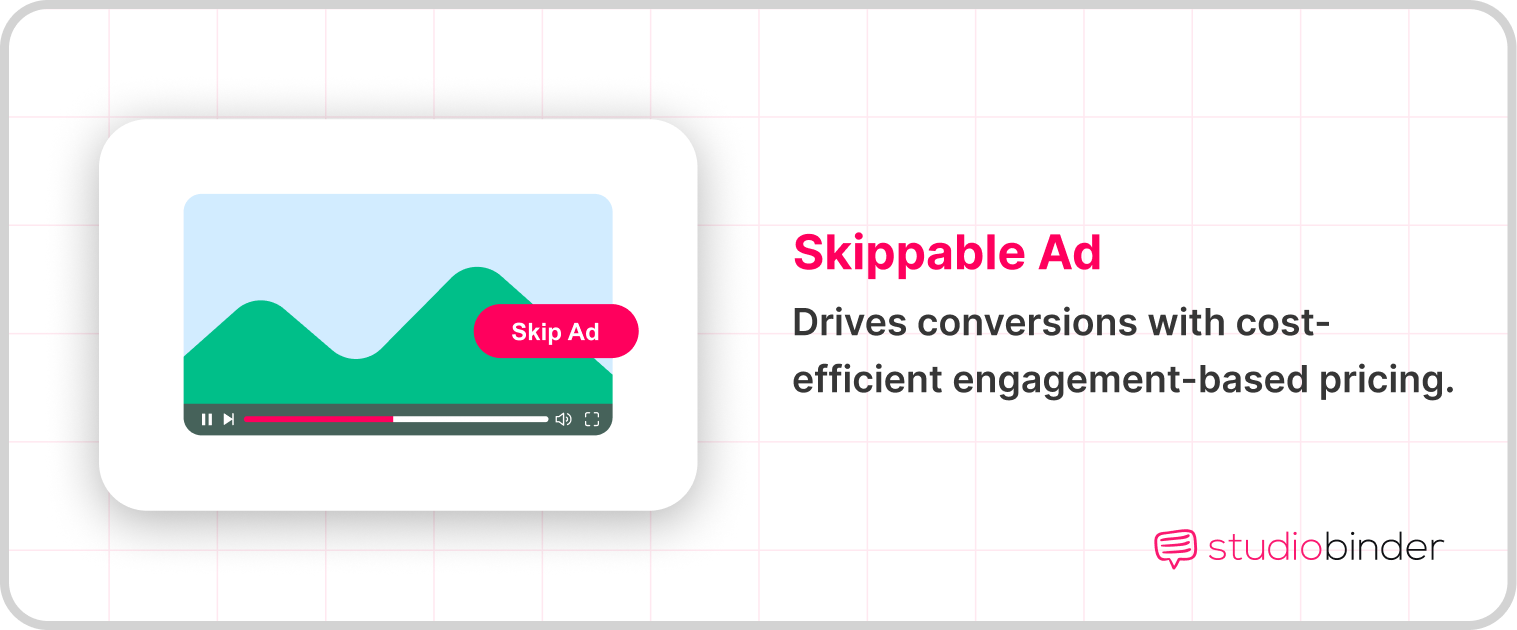
Skippable Ad • YouTube advertising
They are ideal for:
- Driving conversions
- Testing creative variations
- Scaling campaigns efficiently
Because you only pay when viewers engage, they’re one of the most cost-effective formats.
Non-skippable ads
Non-skippable ads: torturous for users, great for advertisers. They force viewers to watch the entire message, typically lasting 15–20 seconds.
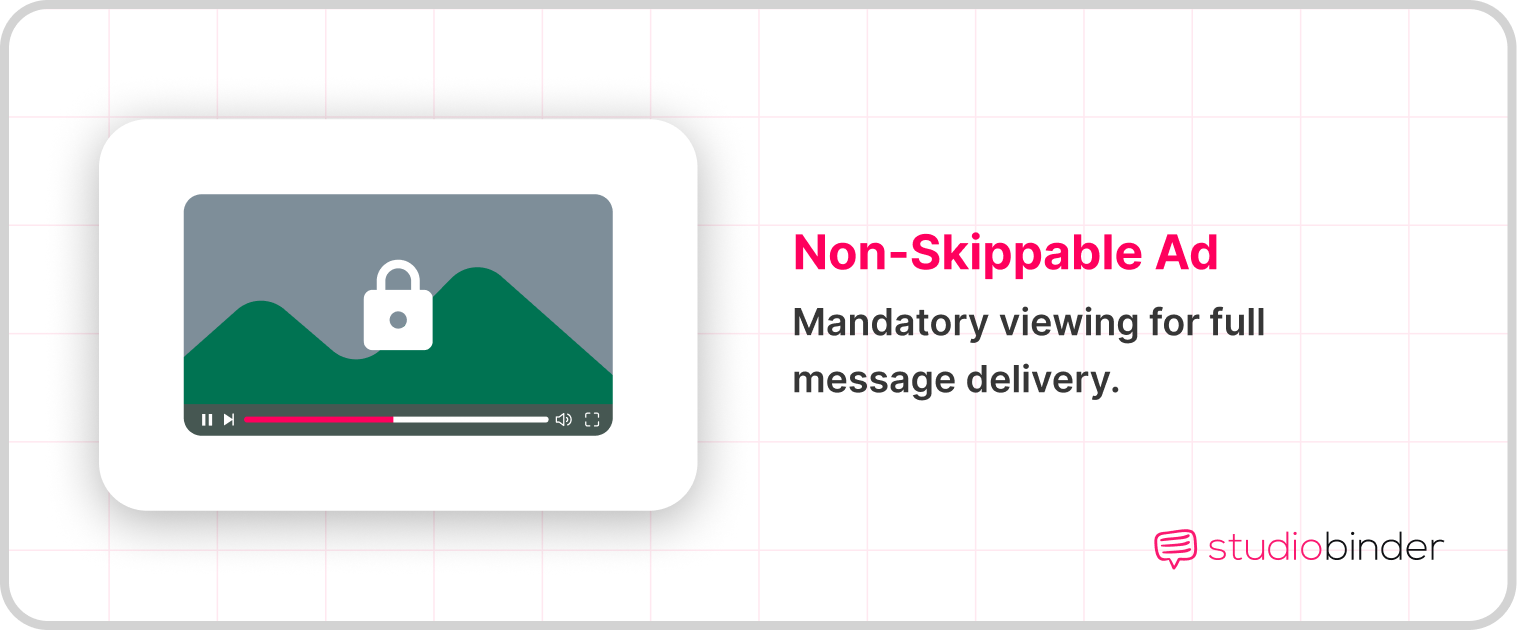
Non-Skippable Ad • YouTube advertising
They work best for:
- Brand awareness campaigns
- High-impact messaging
- Product launches
However, they require strong creative to avoid negative user experience. Really good creative.
Bumper ads
Bumper ads are short, 6-second non-skippable videos designed for quick and effective exposure.
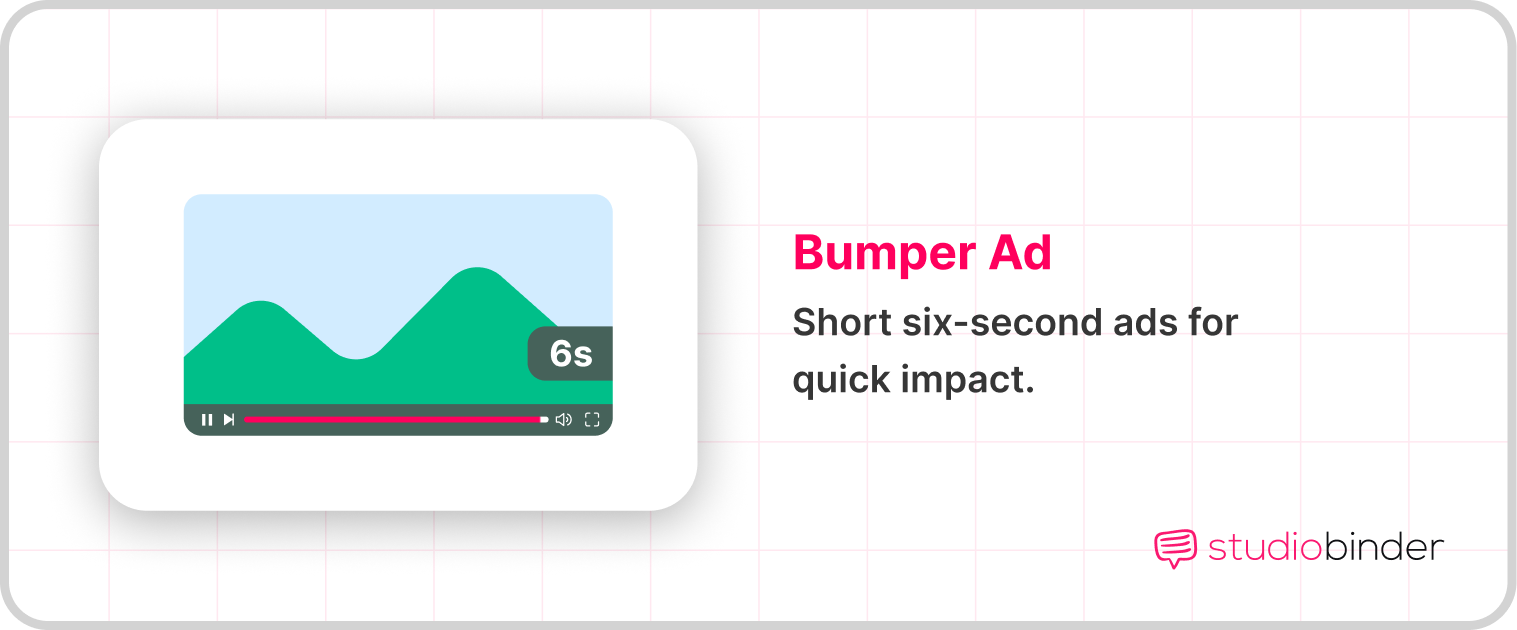
Bumper Ad • YouTube advertising
They’re commonly used for:
- Reinforcing brand awareness
- Retargeting audiences
- Supporting larger campaigns
In-feed ads
These ads appear in search results and suggested video feeds.
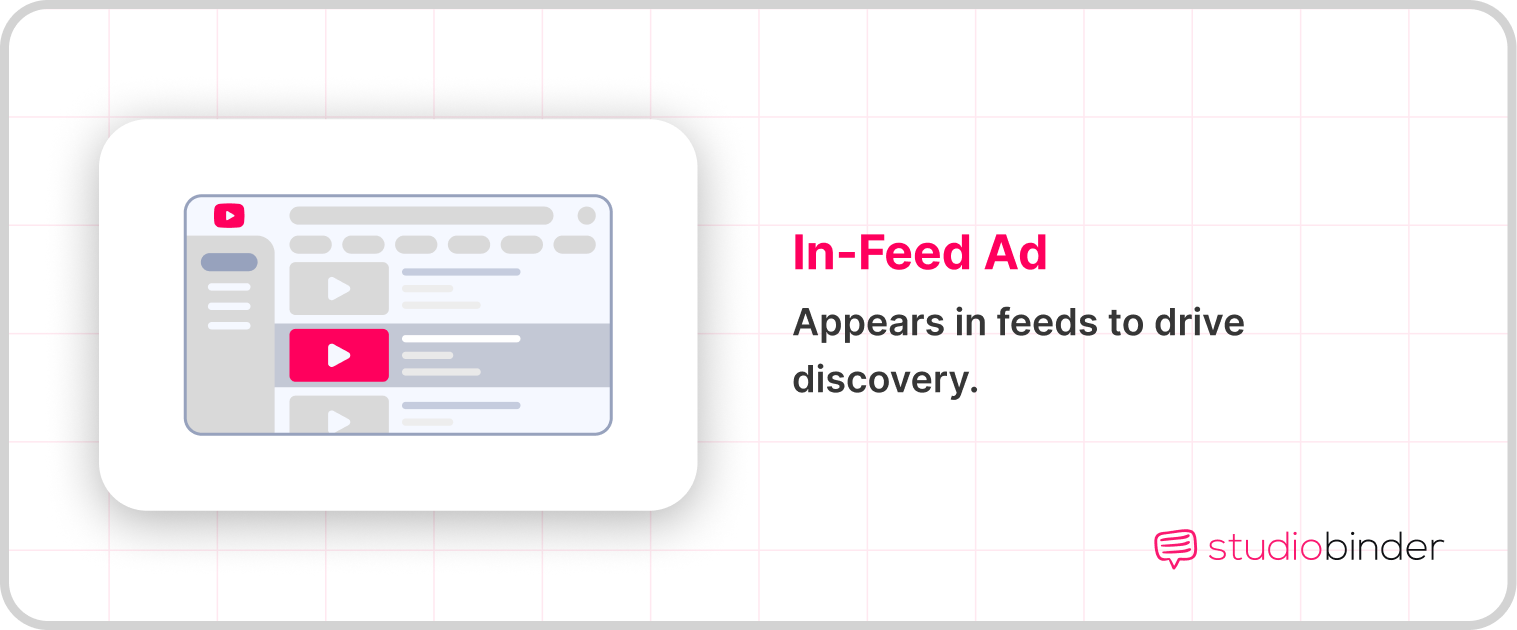
In-Feed Ad • YouTube advertising
They function more like organic content and are effective for:
- Driving clicks
- Increasing watch time
- Supporting YouTube SEO efforts
Shorts ads
Shorts ads appear within YouTube’s short-form video feed and are optimized for mobile viewing.
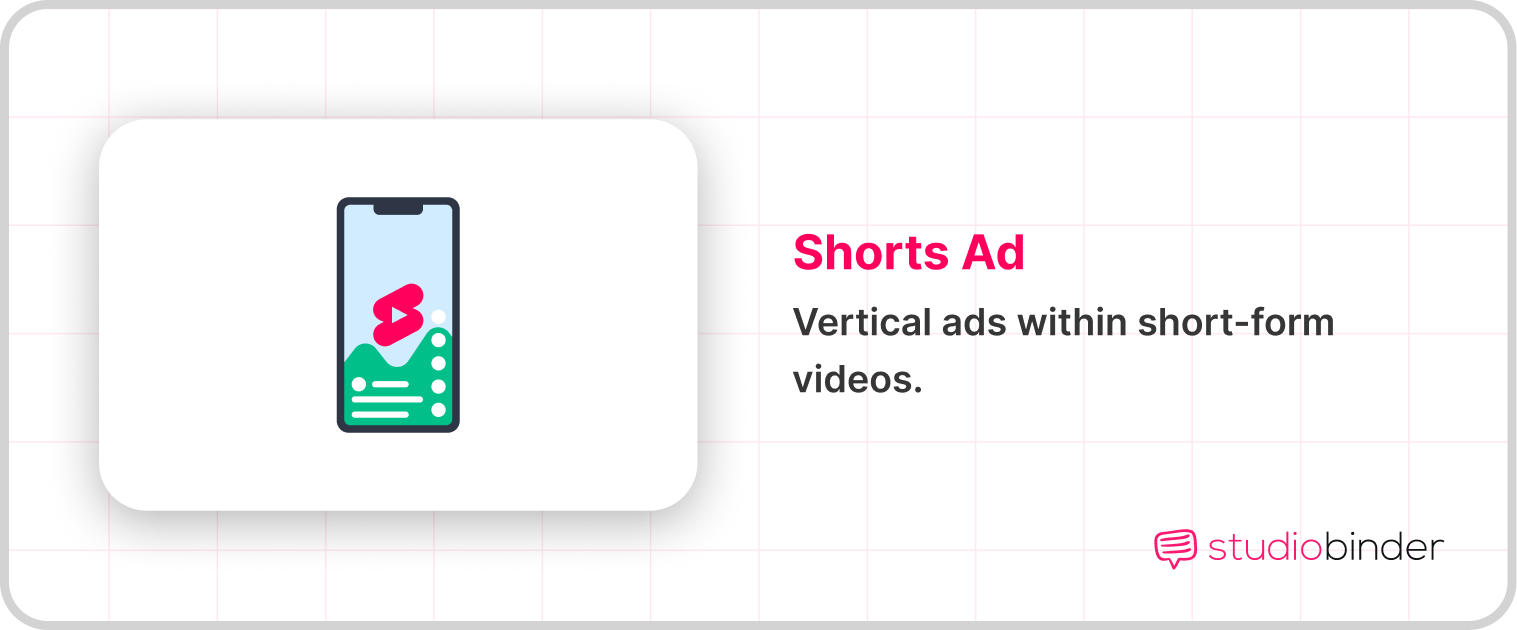
Shorts Ad • YouTube advertising
Shorts ads appear within YouTube’s short-form video feed and are optimized for mobile viewing.
They are especially powerful because:
- Shorts receives billions of daily views
- Content is highly scroll-driven
- Attention is immediate and fast-paced
Shorts ads work best when they feel native to the platform. Quick hooks, vertical formatting, and fast pacing are essential for performance.
Masthead ads
Masthead ads appear at the top of the YouTube homepage and offer massive visibility.
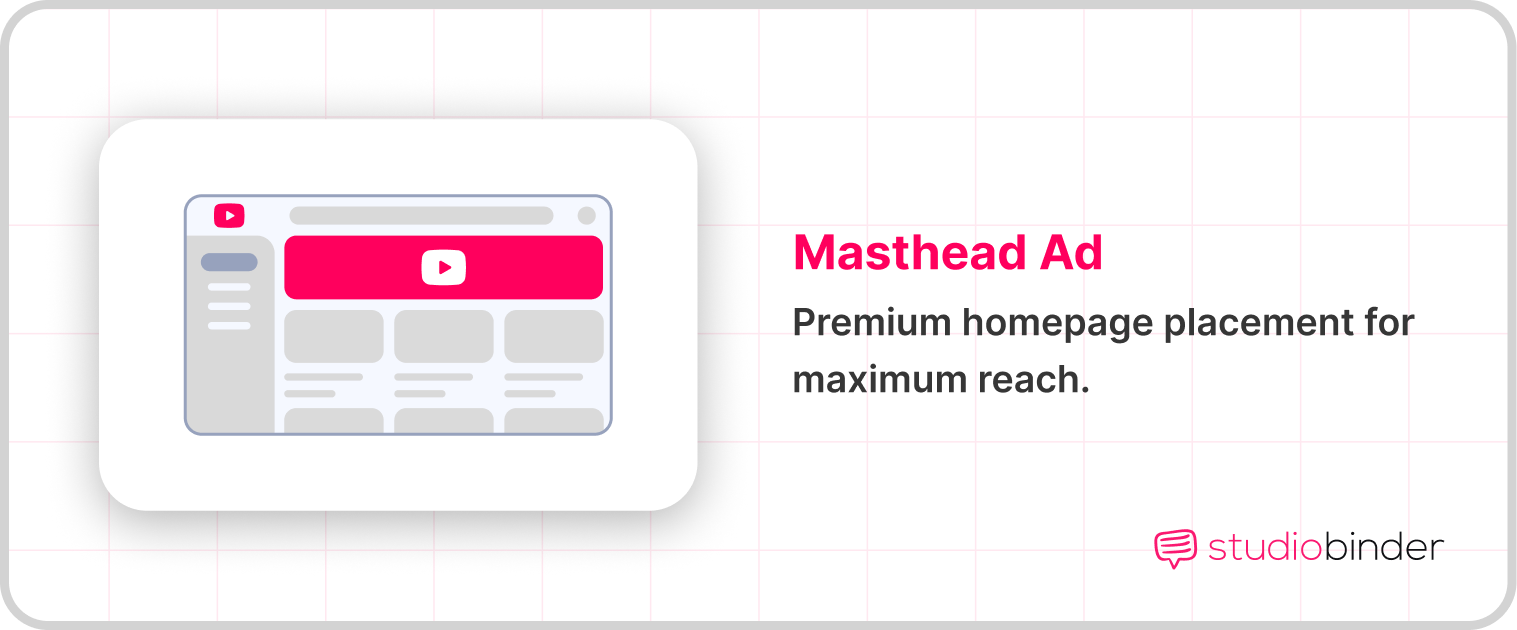
Masthead Ad • YouTube advertising
Masthead ads appear at the top of the YouTube homepage and offer massive visibility.
They are typically used by large brands for:
- Major announcements
- Product launches
- High-reach campaigns
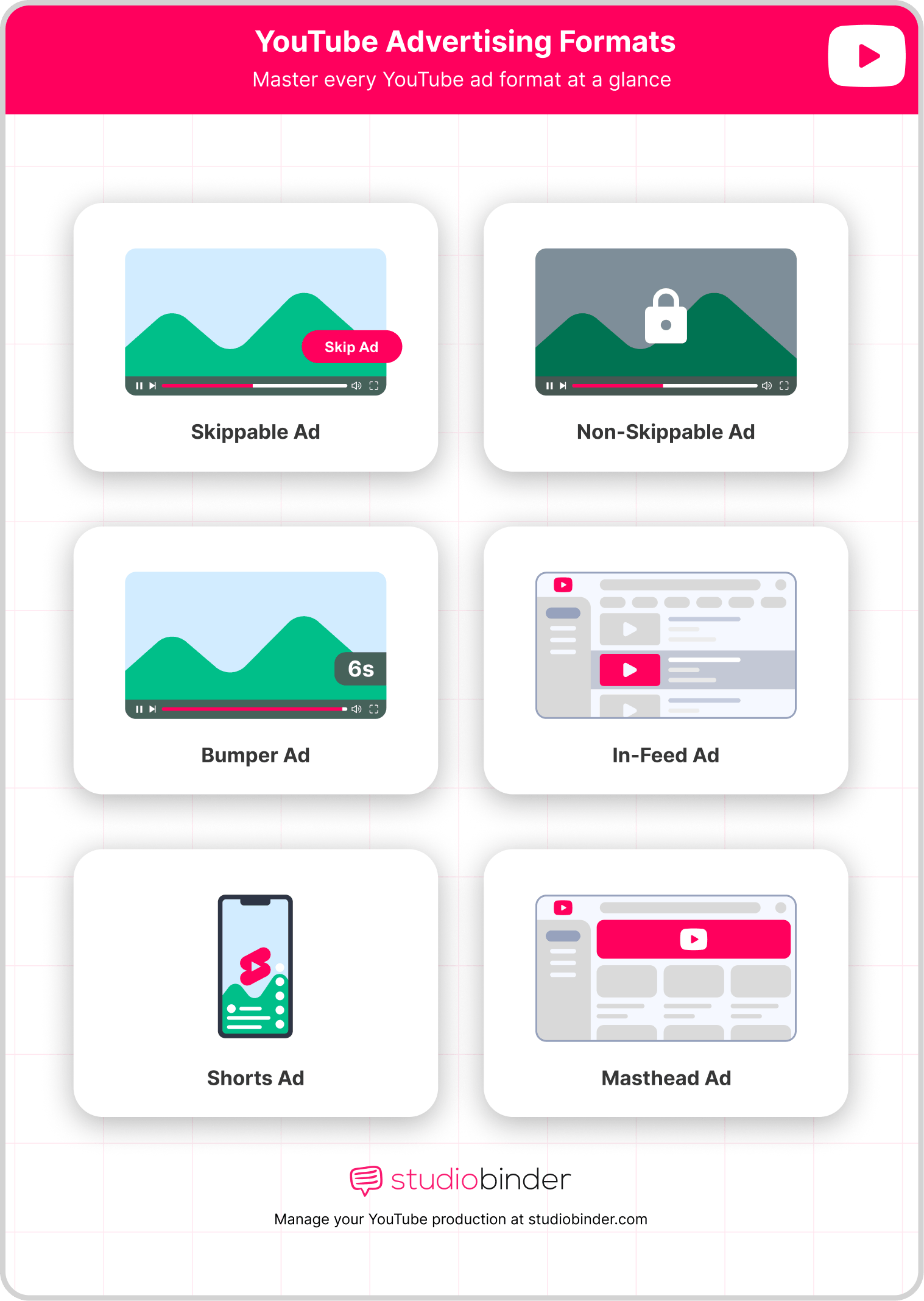
Complete list of Video Ad Formats • YouTube advertising
This video goes deeper into your ad format options, and shows you some solid use cases for each.

Ad types • YouTube advertising
YouTube Advertising Cost
How much do YouTube ads cost?
Understanding YouTube advertising cost is absolutely essential for setting realistic expectations. Costs vary widely—pricing is based on targeting, competition, and creative quality.
Rather than focus on exact numbers, it’s useful to understand how pricing models work and what benchmarks to expect along the way.
Average costs and benchmarks
Here’s a simplified view of common pricing models:
Pricing Model | Typical Range |
|---|---|
CPV (Cost per view) | $0.10 - $0.30 |
CPM (Cost per 1,000 impressions) | $4 - $10 |
These numbers can change depending on audience targeting and wider industry competition. For more on how much you can really expect to pay, give this video a watch:
YouTube advertising costs explained • YouTube advertising
Budgeting strategies
Budgeting should align with your campaign goals and your testing strategy. Start small—that will allow you to validate creatives before you scale.
A typical approach includes:
- Initial testing budget
- Scaling budget for winning ads
- Retargeting budget for conversions
Bidding models explained
YouTube offers a bunch of bidding options, each suited for different objectives.
Common models include:
- CPV for engagement-focused campaigns
- CPM for awareness campaigns
- CPA for conversion-driven campaigns
Choosing the right model depends on your goal and funnel stage.
How to Target on YouTube Ads
YouTube advertising targeting options explained
Audience is everything, folks, and targeting is one of the biggest advantages of advertising on YouTube. The platform allows you to reach users based on both who they are and what they intend to do.
This level of precision is especially valuable for lead generation for agencies and B2B campaigns.
Audience targeting types
YouTube offers several core audience types:
- Demographics
- Interests
- Affinity audiences
- In-market audiences
These allow you to reach users based on behavior and preferences.
Custom and intent-based targeting
Custom audiences let you target users based on specific search behavior.
For example:
- People who searched for “video production services”
- Users researching software tools
This makes it highly effective for capturing demand.
Remarketing strategies
Remarketing enables you to re-engage users who have already interacted with your content.
This includes:
- Website visitors
- YouTube channel viewers
- Previous ad interactions
Remarketing is often one of the highest-performing strategies.
Setting Up YouTube Advertising
How to set up a YouTube advertising campaign (step-by-step)
Ready to get started? Setting up a campaign is straightforward, but success depends on clarity and execution. Each step needs to align with your broader video production marketing goals.
1: Set up Google Ads
Create or access your Google Ads account and link it to your YouTube channel.
2: Choose campaign goal
Select a goal such as:
- Sales
- Leads
- Website traffic
- Brand awareness
3: Define audience
Use targeting options to define your ideal client profile.
4: Set budget and bidding
Choose your budget and bidding strategy based on campaign objectives.
5: Create and upload your ad
First, you need an ad. Get started by writing it in an AV script format. StudioBinder provides software to write these kinds of scripts with all the formatting in place, so you can focus on the content.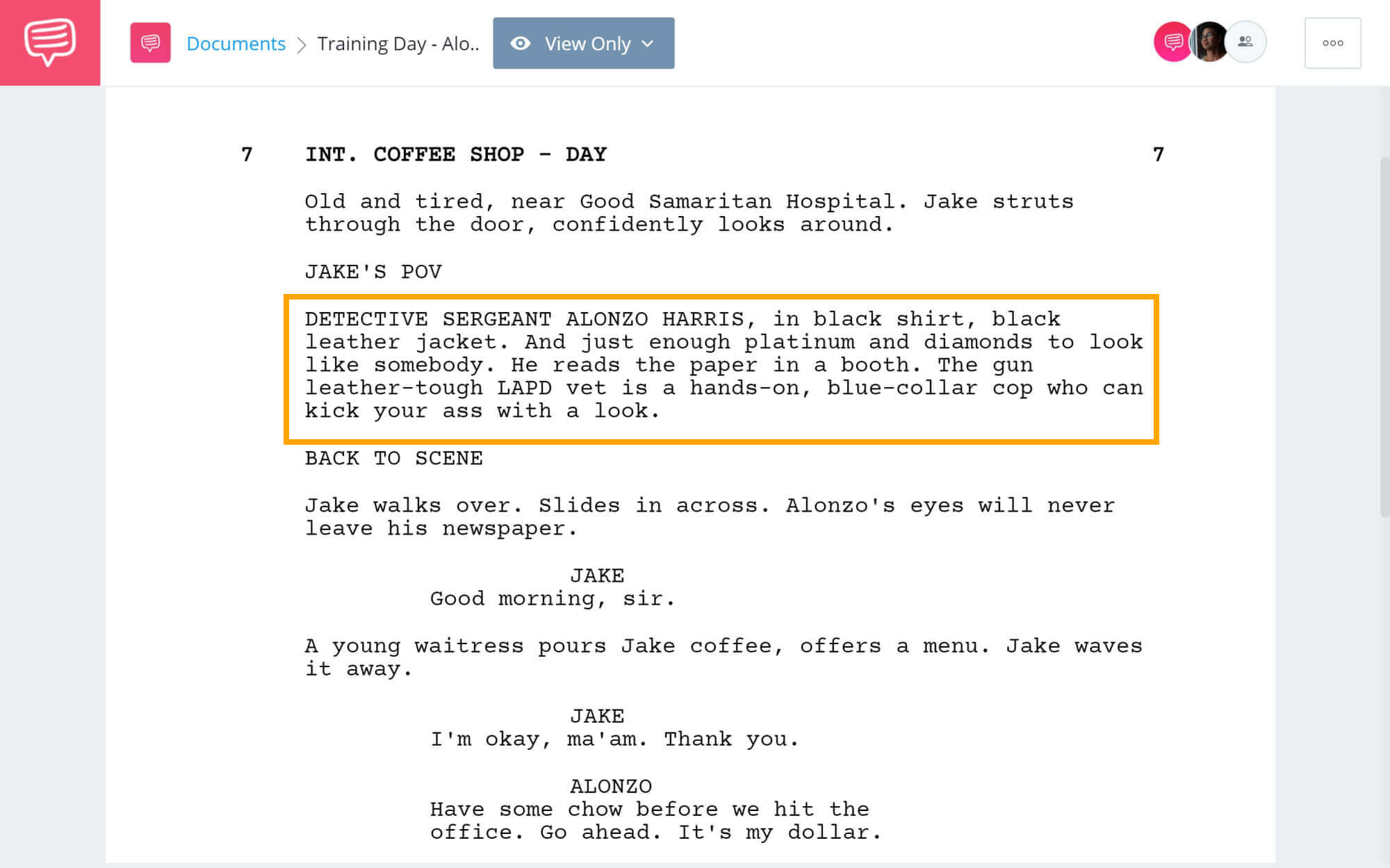
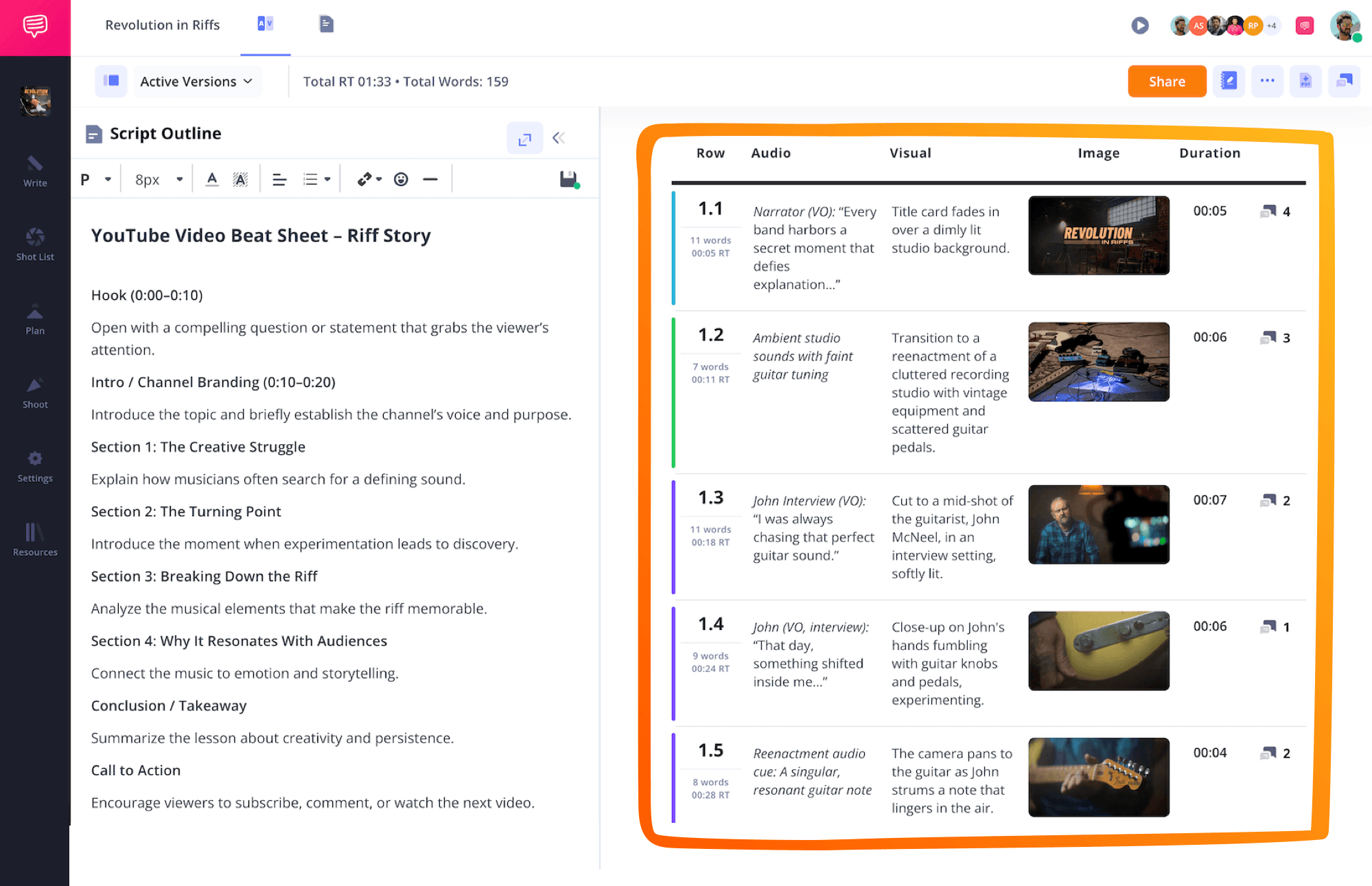
Related keyword phrase - Focus keyword
Once you’re done, upload your video and configure ad settings, including placements and CTA.
6: Launch and monitor
Once live, monitor performance through YouTube analytics and optimize accordingly.
High performance YouTube Advertising
YouTube advertising creative strategy (how high performing ads are built)
Creative is the single biggest factor in ad performance—hopefully that comes as no surprise. Even with perfect targeting, weak creative will limit results. Great ads are built with structure, clarity, and audience psychology in mind.
The first 5-second hook framework
The first few seconds determine whether viewers continue watching.
Effective hooks often:
- Call out the audience directly
- Present a problem
- Create curiosity
The hook is vitally important. To better understand how you can make an impact fast, check out this video:

Video hooks • YouTube advertising
Storytelling structures for ads
The best ads follow clear structures, such as:
Problem → Solution → Outcome
Before → After → Bridge
These frameworks improve engagement and retention.
Branding and CTA placement
Branding should appear early but feel natural.
CTAs should be:
Clear
Specific
Aligned with the offer
Mobile-first creative
Most YouTube consumption happens on mobile devices.
This means:
Clear visuals
Readable text
Fast pacing
The ABCDs Framework (Attention, Branding, Connection, Direction)
Google’s ABCDs framework emphasizes:
Attention in the first seconds
Clear branding
Emotional connection
Direct call-to-action
Pro Tip
Knowing your ad is working
Don’t judge your ad based on views alone. A video with lower views but higher watch time and conversion rate is often far more valuable than one with cheap clicks but no action. Optimize for outcomes, not vanity metrics.
How to Approach Funnels with YouTube Advertising
YouTube advertising funnel strategy
To maximize performance, campaigns should align with different stages of the funnel. Sounds good, but what does that mean?
Not every ad idea should try to convert immediately: forcing conversion too early often leads to wasted spend and regrettable results.
Instead, a structured funnel approach allows you to guide viewers more subtly from awareness to action over time. Match the right message to the right stage, and you improve efficiency, increase engagement, and ultimately drive better conversions.
Awareness campaigns
At the very top, the goal is to introduce your brand to new audiences. These campaigns prioritize reach and visibility, which can help you build familiarity and recognition.
Goal:
- Introduce your brand
- Generate impressions
Consideration campaigns
Viewers are aware of your brand. The next step? Build trust and deepen engagement. Consideration campaigns focus on delivering value, answering questions, and positioning your brand as a credible solution.
Goal:
- Increase watch time
- Educate the audience
Conversion campaigns
Last but not least: at the bottom of the funnel, the focus shifts to driving action. These campaigns target users who are already familiar with your brand and are therefore much more likely to convert.
Goal: Generate leads or sales
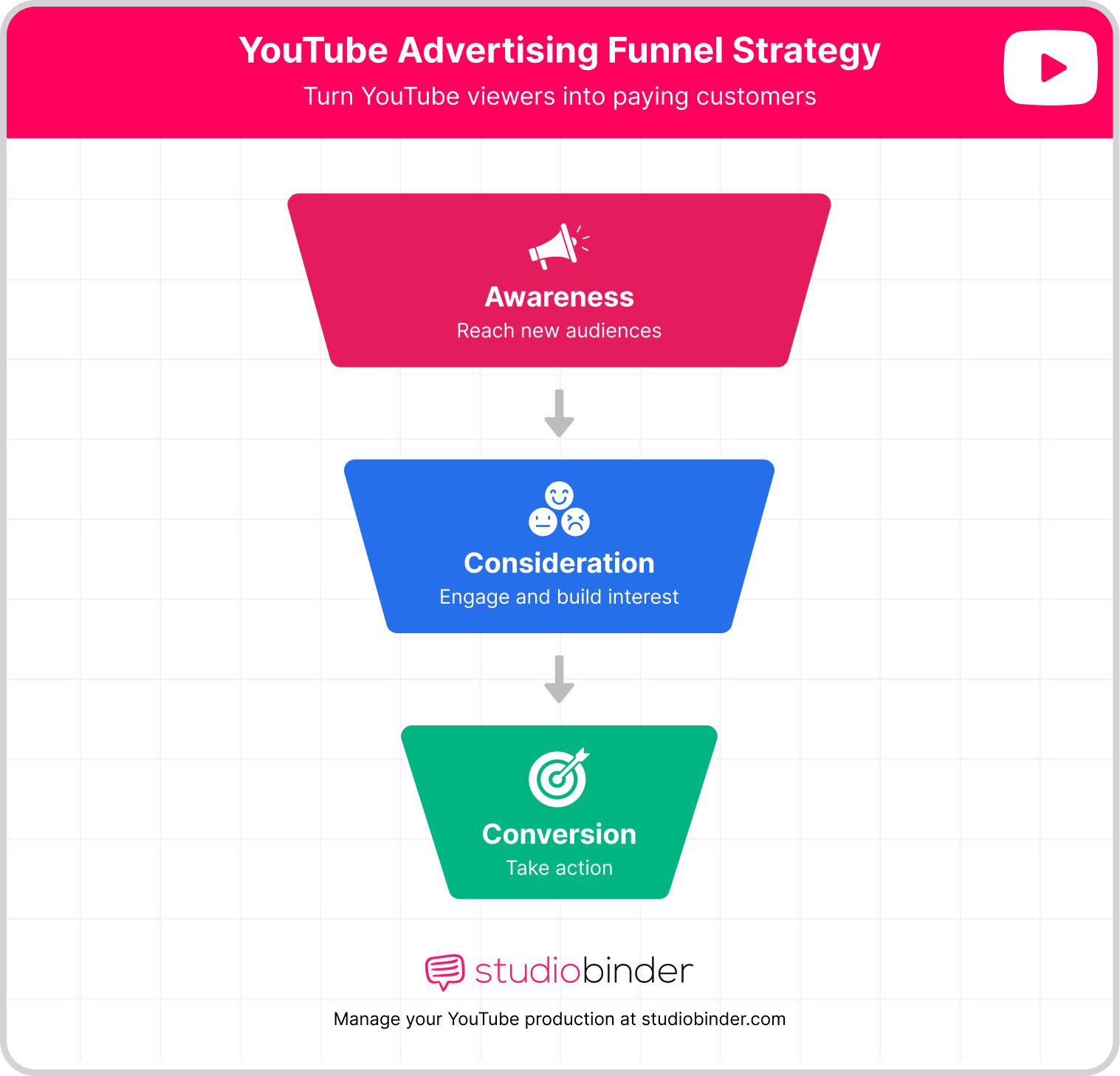
Conversion funnel sample • YouTube advertising
How Do YouTube Ads Compare
YouTube ads vs other platforms
Each platform has its own strengths and weaknesses, and understanding these differences can help you allocate budget more effectively.
YouTube does great with depth and storytelling, while other platforms like Instagram will often prioritize speed and volume.YouTube vs TikTok ads
YouTube is stronger for long-form storytelling and intent-driven viewing. TikTok is better for rapid discovery and viral potential.
This is just the top level of this debate. Marketing strategists are still trying to figure out how the two ad campaigns compare. This video delves deeper into the discussion:

YouTube vs. TikTok marketing tactics • YouTube advertising
YouTube vs Meta ads
YouTube offers stronger engagement and watch time. Meta platforms often provide faster testing and broader reach.
When to use each
Use YouTube when:
You need to explain a product
You want high-quality engagement
Use other platforms when:
You need fast iteration
You want quick reach
Related Posts
The Impact of YouTube Advertising
Measuring YouTube advertising performance & optimization
Performance measurement is what separates average campaigns from high-performing ones. Data allows you to refine strategy and scale effectively. Solution 8 dissects how to measure your ads success, and how you can read the metrics your seeing:

Best measuring tactics • YouTube advertising
Key metrics to track
Important metrics include:
Click-through rate
Watch time
Audience retention
Conversion rate
A/B testing strategies
Testing should focus on:
Hooks
Thumbnails
CTAs
Small changes can lead to significant improvements.
When to scale or kill ads
Scale ads when:
Performance is consistent
CPA is profitable
Pause ads when:
CTR is low
Retention drops early
Did You Know
YouTube’s algorithm doesn’t just evaluate your ad in isolation. It also considers how viewers behave after watching it, including whether they continue watching other videos. Ads that lead to longer overall session time can be rewarded with better delivery and lower costs.
YouTube Advertising Examples
Real YouTube ad examples
Studying real examples helps translate theory into execution. High-performing ads follow consistent patterns. Here are a few strong examples.
Example 1: High-performing brand ad
Here’s an ad from Gymshark that focuses on three act storytelling (albeit absolutely ridiculous) and emotional engagement. Strong visuals and clear messaging drive awareness.
Gymshark example • Best YouTube ads
Example 2: Direct response ad
This ad from Nectar Mattress taps into the frustration of poor sleep and positions its mattress as the instant solution. With a calming message and a strong “Rest Your Mind” angle, it builds emotional trust while guiding viewers toward a clear, action-driven purchase.

BetterHelp ad • Best YouTube ads
Example 3: Shorts ad
Here's a fast-paced, mobile-first, and visually engaging shorts ad from NordVPN. It’s designed to stop the scroll quickly.

NordVPN ad • Most effective YouTube ads
Advertising on YouTube
Common mistakes to avoid
Many YouTube ad campaigns fail. This isn’t because the strategy is flawed, but because of small execution errors that compound over time. These mistakes can go unnoticed, and they then significantly reduce performance, increase costs, and limit scalability. Identifying and correcting them early can dramatically improve results and make your campaigns far more efficient.
Weak hooks
The first few seconds of your ad determine whether viewers keep watching or skip. If your hook fails to capture attention immediately, retention drops and performance suffers across the board. Strong hooks should clearly signal value, create curiosity, or directly address the viewer’s problem.
Poor targeting
Even great creative will underperform if it is shown to the wrong audience. Broad or misaligned targeting leads to wasted spend and low engagement. Defining a clear audience based on intent and behavior is essential for efficient campaigns.
No clear CTA
Viewers are sheep! Just kidding, but they do need clear direction on what to do next after watching your ad. Without a strong call-to-action, even high engagement will not translate into results. Effective CTAs are specific, visible, and aligned with the viewer’s stage in the aforementioned funnel.
Ignoring data
Running ads without analyzing performance data can be utterly disastrous. Metrics like click-through rate, watch time, and conversions provide truly vital insights into what is working. Consistent optimization based on data is what separates successful campaigns from flops.
FAQs
More YouTube advertising questions
YouTube ads typically cost between $0.10–$0.30 per view, depending on targeting and competition. Costs vary widely based on your audience, industry, and bidding strategy, with total budgets scalable from a few dollars per day to enterprise-level spend.
Yes, YouTube ads can be highly effective for small businesses due to flexible budgets and precise targeting. They are especially valuable for building brand awareness and retargeting audiences who have already shown interest.
Skippable in-stream ads are generally the most versatile, balancing cost-efficiency with reach. However, the best format depends on your goal. Bumper ads are effective for awareness, in-feed ads for discovery, and Shorts ads for mobile engagement.
Effective YouTube ads are typically 15–30 seconds long, but the most important factor is capturing attention within the first 5 seconds. Shorter formats often perform better for awareness, while longer videos can work for storytelling.
Yes, you can start with as little as $5–$10 per day. The key is focusing on a specific audience and testing creatives rather than trying to reach everyone at once.
UP NEXT
YouTube monetization requirements
YouTube advertising is not just about running ads. It is about building a system that connects creative, targeting, and strategy.
For businesses, creators, and agencies, it offers a scalable way to generate awareness, engagement, and conversions. When aligned with clear goals and strong execution, it becomes one of the most effective tools in a modern youtube marketing guide.
Now you know truly everything you need to know about YouTube advertising. But there are other ways to make cash on YouTube. We’ll show you how.

Project management for video creatives. Tasks, file sharing, calendars and more.
Manage video production timelines, tasks, storyboards, shot lists, breakdowns, call sheets. Made for video creatives, new media and film.