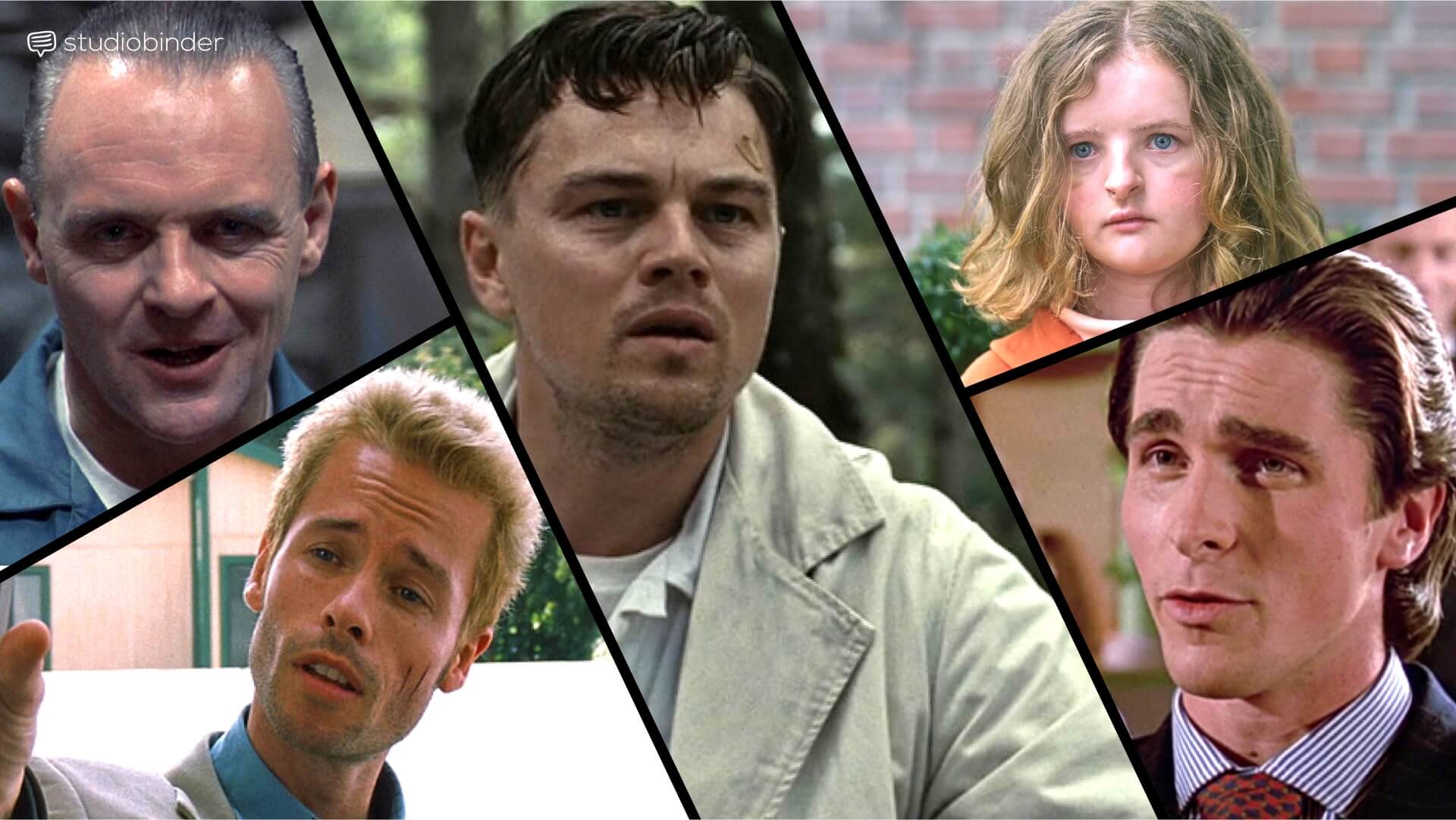
Psychological thrillers do not just scare you. They destabilize you. The real danger is rarely the killer, monster, or conspiracy itself. It is the collapse of trust inside the protagonist’s mind.
That is what separates the best psychological thrillers from standard suspense films. A traditional thriller asks whether the hero will survive. A psychological thriller asks whether the hero understands reality at all. Memory, paranoia, identity, guilt, obsession, and perception become weapons.
The best psychological thriller movies stay with audiences because they force viewers into uncertainty alongside the characters. These 20 films represent some of the most influential, disturbing, and technically brilliant psychological thriller movies ever made.
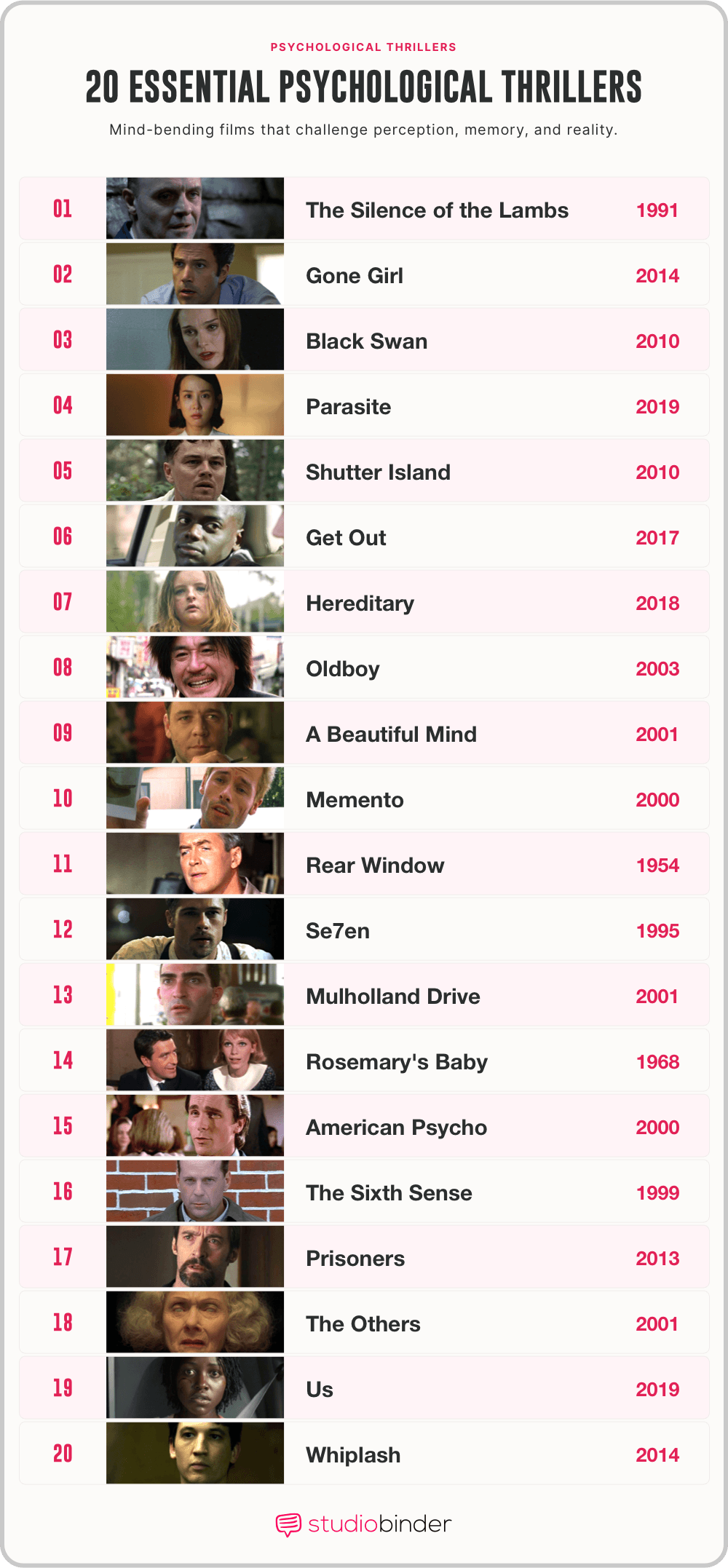
Essential Films That Challenge Perception And Reality • Best psychological thriller movies
Psychological Horror
1. The Silence of the Lambs (1991)
Jonathan Demme’s The Silence of the Lambs remains the benchmark for best psychological thrillers. On paper, the story is a procedural about an FBI trainee hunting a serial killer. In execution, it becomes a psychological duel between Clarice Starling and Hannibal Lecter.
What makes Lecter terrifying is that he rarely needs physical violence. He attacks psychologically. Every conversation becomes an act of penetration. He studies Clarice, identifies insecurity instantly, and weaponizes intimacy against her.
Demme’s direction intensifies that pressure through direct eyeline close-ups. Characters stare directly into camera during conversations, which traps the audience inside Clarice’s discomfort. This is one of the most classic and best psychological thriller movies.
Example: Clarice meets Lecter
The scene works because Hopkins barely moves. Stillness becomes threatening.

The Silence of the Lambs Trailer • Best psychological thriller movies
Lecter controls the room entirely through vocal precision and psychological observation. It is a masterclass in suspense filmmaking within a tight two-person scene
Unreliable Narrator
2. Gone Girl (2014)
David Fincher's Gone Girl turns the unreliable narrator into an entire structural philosophy. Few best psychological thrillers use this device as aggressively or as structurally.
The film constantly changes audience alignment. First, Nick appears guilty. Then Amy becomes monstrous. Then the film destabilizes that certainty too. Nobody is trustworthy for long.
Fincher’s direction reinforces emotional coldness. The camera remains clinically distant even during moments of extreme manipulation. That detachment makes viewers complicit in the spectacle.
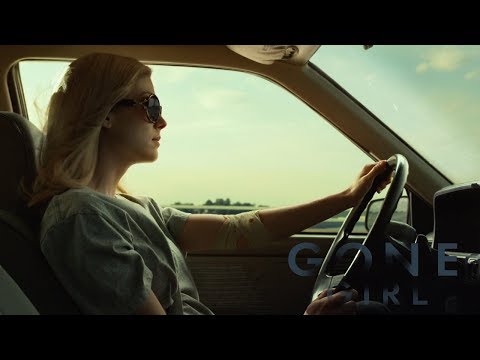
Rosamund Pike’s “Cool Girl” monologue remains one of the defining speeches in modern psychological thriller movies because it reframes the entire relationship dynamic underneath the story.
Example: The “Cool Girl” monologue
The monologue works because Pike delivers it with icy control rather than emotional explosion.
Gone Girl • Best psychological thriller movies
Amy sounds intellectually superior to everyone around her.
Psychological Horror
3. Black Swan (2010)
Darren Aronofsky’s Black Swan portrays psychological collapse through visual language.
Nina’s breakdown is never fully explained. The film constantly blurs reality, hallucination, body horror, and artistic obsession together. Mirrors fracture identity throughout the film. Reflections move incorrectly. Physical transformation may or may not be real.
Natalie Portman’s performance works because she keeps Nina emotionally compressed for most of the runtime. Every moment feels restrained until the character can no longer contain herself.
The film also weaponizes performance anxiety. Ballet becomes psychological warfare which is why this is one of the best psychological thriller movies.
Example: Nina transforms during the final performance
The scene works because Aronofsky commits fully to Nina’s subjective perspective.

Black SwanS Trailer • Best psychological thriller movies
The audience experiences triumph and terror simultaneously.
Social Thriller
4. Parasite (2019)
Bong Joon-ho's Parasite constantly mutates genre. It begins as a con film, transforms into social satire, then descends into psychological horror. As one of the best psychological thrillers to win the Academy Award for Best Picture, it redefined what the genre could accomplish.
The psychological tension comes from aspiration. The Kim family enters a world they can imitate but never truly belong to. Every scene carries anxiety about exposure.
Bong’s screenplay structure withholds information masterfully. New revelations reframe previous scenes repeatedly. The audience is always one step behind the film.
The house itself becomes psychological architecture. Upstairs and downstairs spaces physically embody class hierarchy and repression. This isn't your average psychological thriller movie.
Example: The discovery in the basement
The sequence works because Bong shifts tone gradually rather than suddenly.

Parasite Trailer • Best psychological thriller movies
Comedy drains from the film scene by scene until dread completely takes over.
Mind-Bending Thriller
5. Shutter Island (2010)
Martin Scorsese uses genre filmmaking to explore grief, guilt, and self-deception in Shutter Island. It is a psychological thriller movie that operates through sustained emotional disorientation rather than shock.
The film’s twist matters less than the emotional logic supporting it. Teddy Daniels constructs an elaborate conspiracy because accepting reality would psychologically destroy him.
Leonardo DiCaprio plays Teddy with constant instability. Anger, paranoia, trauma, and denial bleed into every interaction. The performance makes the final revelation emotionally tragic rather than simply shocking.
Scorsese also fills the film with visual clues that become obvious only after rewatching. This is also why Shutter Island is one of the most rewatched (and best) psychological thriller movies of all time of all time.
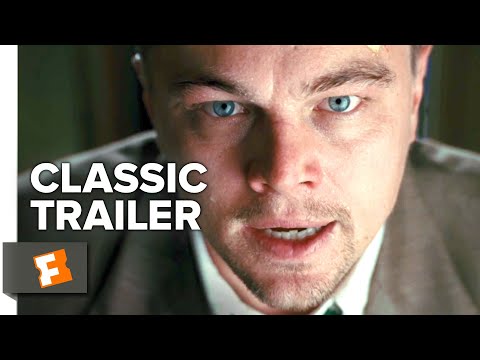
Example: Teddy interrogates the patients
The scene works because every patient appears to know more than Teddy does.
Shutter Island Trailer • Best psychological thriller movies
The audience senses instability long before understanding its source.
Psychological Horror
6. Get Out (2017)
Jordan Peele’s Get Out transformed social anxiety into psychological horror by making politeness terrifying -- and there's a reason Get Out is considered one of the best psychological thriller movies of all time.
The film’s dread comes from contradiction. Chris constantly notices behaviour that feels wrong, yet every interaction remains superficially friendly. Peele weaponizes the discomfort of social performance. The audience senses danger long before the film openly confirms it.
That tension is rooted in psychological realism. Chris spends much of the film questioning his own instincts because the Armitage family never behaves aggressively in obvious ways. Their manipulation depends on making him feel unreasonable for noticing warning signs at all. The horror comes from forced self-doubt.
Peele also understands micro-behaviour exceptionally well. Small pauses, frozen smiles, awkward compliments, and slightly delayed reactions create constant unease. The party sequence is terrifying because every interaction feels performative. Chris is treated less like a person than like an object being evaluated.
The film’s psychological architecture also depends heavily on isolation. Chris gradually loses control over space, conversation, and even his own body. The audience experiences that loss of agency alongside him.
The “Sunken Place” remains one of the strongest visual metaphors in modern psychological thriller movies because it externalizes helplessness physically. Chris becomes trapped inside his own consciousness, able to observe reality but unable to control it. Peele turns psychological paralysis into cinematic space.
Daniel Kaluuya’s performance is essential to why the film works. He plays Chris with careful emotional restraint. Much of the performance happens silently through observation. Kaluuya lets audiences watch Chris calculate danger in real time.
Peele also structures the screenplay carefully around delayed recognition. The audience pieces together information slightly ahead of Chris, which creates unbearable tension as viewers wait for him to understand the truth.
Example: The hypnosis scene
The scene works because Catherine Keener never raises her voice. Calmness becomes threatening. Every pause feels controlled and deliberate.

Get Out The Sunken Place Scene • Best psychological thriller movies
Peele also slows the rhythm dramatically. Silence stretches between lines until ordinary conversation begins feeling ritualistic. The teacup sound becomes psychologically invasive because it interrupts Chris’s autonomy repeatedly.
Kaluuya’s physical stillness is equally important. His face remains controlled while panic builds underneath. That separation between visible calmness and internal terror defines the entire film.
Related Posts
Trauma Horror
7. Hereditary (2018)
Ari Aster’s Hereditary treats grief like psychological contamination.
The first half functions almost entirely as a family trauma drama. Horror emerges slowly through emotional breakdown rather than jump scares.
Toni Collette gives one of the defining performances in modern horror because she refuses melodrama. Annie’s grief feels ugly, exhausting, and psychologically destabilizing.
The film also creates dread through inevitability. Characters feel trapped inside emotional and supernatural systems they cannot escape.
Example: Annie confronts her son after the accident
The scene works because Collette lets grief become physically uncontrollable.

Hereditary Dinner Scene • Best psychological thriller movies
The screaming sounds genuinely involuntary.
Revenge Thriller
8. Oldboy (2003)
Park Chan-wook’s Oldboy may be the most extreme example of psychological revelation as narrative structure.
The mystery is simple: why was Oh Dae-su imprisoned for fifteen years? The answer destroys the protagonist psychologically.
Park controls information with extraordinary precision. Every revelation reframes previous scenes morally and emotionally.
The violence is brutal, but the true horror is psychological humiliation. This is one of the best psychological thriller movies that pulls you in.
Example: The hallway fight
The scene works because exhaustion matters. Oh Dae-su struggles physically throughout.
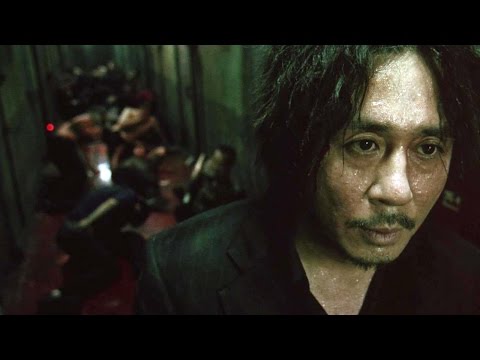
Oldboy The Corridor Fight Scene • Best psychological thriller movies
The violence feels punishing rather than empowering.
Unreliable Narrator
9. A Beautiful Mind (2001)
A Beautiful Mind succeeds because it treats the unreliable narrator sympathetically rather than manipulatively.
The audience experiences John Nash’s hallucinations as reality because the film commits fully to his perspective. Howard never signals artificiality early on. Charles, Marcee, and Parcher are filmed naturally within scenes, which means viewers emotionally trust them alongside Nash.
That trust is what makes the revelation devastating instead of gimmicky. The twist does not simply surprise the audience. It forces viewers to re-evaluate how perception itself shapes reality.
Russell Crowe’s performance is crucial to the film’s psychological credibility. Nash never feels defined entirely by mental illness. Crowe balances arrogance, insecurity, intellectual obsession, loneliness, and vulnerability simultaneously.
The performance also avoids melodrama. Nash’s deterioration happens gradually through behavioural detail. Eye contact becomes more difficult. Speech patterns tighten. Physical isolation increases scene by scene.
The film’s story structure mirrors Nash’s own psychological fragmentation. The audience slowly realizes that certainty itself has become unstable. Once viewers understand the hallucinations, every earlier interaction acquires emotional tragedy retroactively.
What makes the film especially effective as a psychological thriller is that the conflict is internalized completely. Nash’s mind becomes both protagonist and antagonist.
The screenplay also explores why delusion can become emotionally necessary. Nash does not simply “believe false things.” He constructs relationships and systems that help him survive emotional isolation and fear.
Example: Nash realizes Marcee never ages
The scene works because the revelation arrives through logic rather than emotional explosion. Nash notices a small inconsistency and quietly follows it to its horrifying conclusion.
Crowe underplays the realization brilliantly. Terror arrives slowly across his face as intellectual certainty collapses into psychological panic.

A Beautiful Mind She Never Gets Old Scene • Best psychological thriller movies
Howard also avoids dramatic editing during the moment. The simplicity makes the revelation feel emotionally real rather than theatrically engineered.
Related Posts
Psychological thriller movies
10. Memento (2000)
Christopher Nolan’s Memento turns structure itself into psychological experience.
The reverse chronology does not exist as a stylistic gimmick. It forces the audience to experience Leonard’s condition directly. Because viewers constantly lose narrative context, we share his confusion, paranoia, and dependence on external information.
That formal design transforms the audience into unreliable narrators themselves.
Most thrillers create suspense through hidden information. Memento creates suspense through unstable memory. Every scene begins disoriented. We do not know where we are, who can be trusted, or what just happened moments earlier.
Nolan also uses fragmentation to examine self-deception. Leonard depends on photographs, tattoos, and notes because he believes physical evidence is objective. Gradually, the film reveals that even those systems can be manipulated.
That realization destabilizes the entire narrative. Leonard may not simply suffer from memory loss. He may actively reshape reality in order to preserve emotional purpose.
Guy Pearce’s performance works because Leonard constantly swings between confidence and vulnerability. One moment he appears methodical and intelligent. The next, he becomes frightened and helpless because memory disappears again.
The film also explores how identity depends on narrative continuity. Leonard cannot evolve psychologically because he cannot retain experience long enough to process it.
That existential horror makes Memento one of the most formally ambitious psychological thriller movies ever made, and one of the best psychological thriller movies to weaponize structure itself as a narrative device.
Example: Leonard explains his condition
The scene works because Nolan initially frames Leonard as trustworthy. His explanations sound rational and controlled.
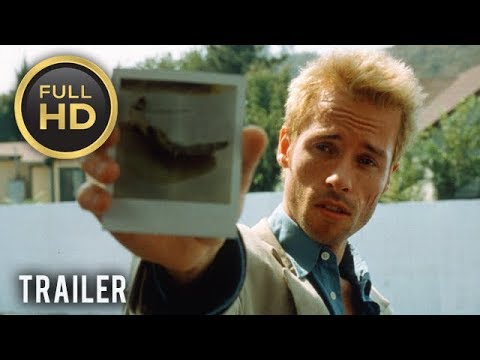
Memento Trailer • Best psychological thriller movies
But the structure gradually undermines that trust. As contradictions accumulate, the audience realizes Leonard’s narration may be psychologically self-protective rather than truthful.
Pearce’s delivery is essential here. Leonard sounds rehearsed, as though he has repeated the explanation to himself hundreds of times in order to preserve stability.
The complex psychology of Memento stated on the page. If you're looking to write the next great thriller, StudioBinder's screenwriting software can help.
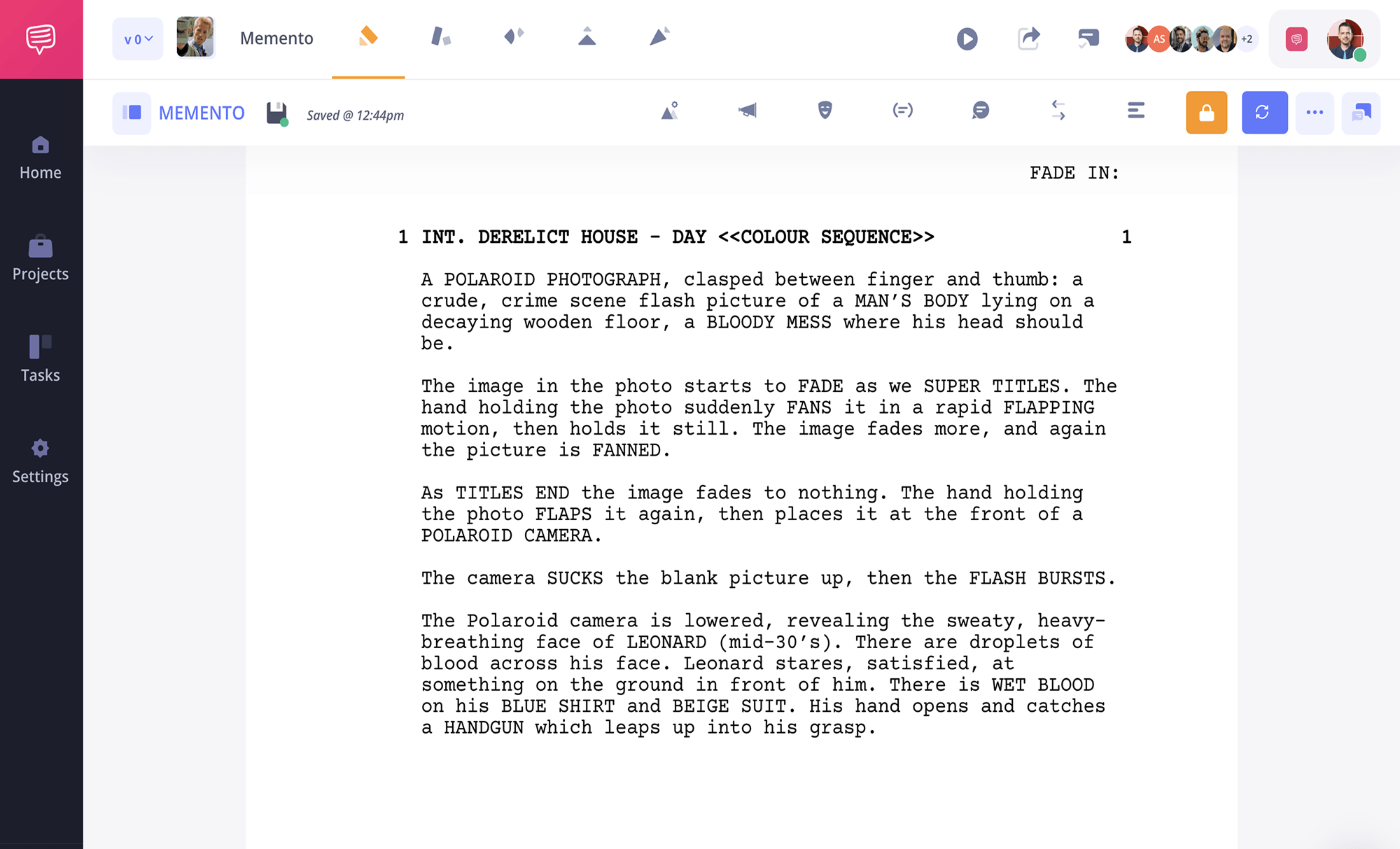
Screenplay • Best psychological thrillers
With all of StudioBinder's scriptwriting tools on your side, you'll be set. It sets you up with the proper format, a script outlining notepad, and organizes every version of your script as you chip away at psychological depth.
Suspense Classic
11. Rear Window (1954)
Alfred Hitchcock’s Rear Window established many of the foundations of the suspense film genre and remains one of the best psychological thrillers ever put on screen.
Jeff watches his neighbors from his apartment window and becomes convinced he witnessed murder. The audience shares his voyeurism completely.
Hitchcock manipulates perspective brilliantly. We only know what Jeff knows. Suspicion grows through observation rather than direct evidence.
The film also implicates the audience morally. Watching becomes invasive.
Example: Jeff watches the apartment across the courtyard
The scene works because Hitchcock stretches uncertainty.
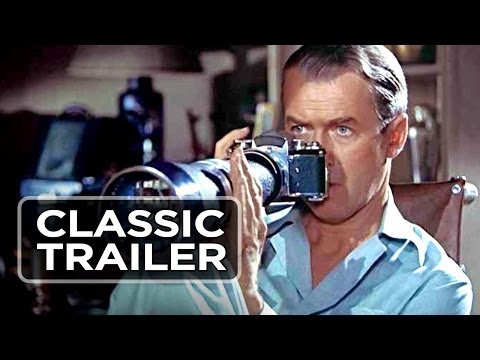
Rear Window Trailer • Best psychological thriller movies
The audience desperately searches for proof alongside Jeff.
Crime Thriller
12. Se7en (1995)
David Fincher’s Se7en builds psychological dread through accumulation.
Each murder deepens moral exhaustion. By the finale, the audience feels psychologically worn down alongside the detectives.
Fincher’s visual style intensifies decay. Rain, darkness, claustrophobic interiors, and corrupted spaces create constant emotional pressure.
The final plot twist works because the film earns it psychologically rather than simply shocking viewers. It is a structural gut punch that reframes every scene of moral exhaustion that came before it.
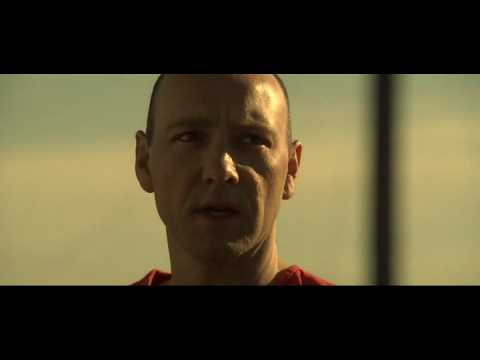
Example: “What’s in the box?”
The scene works because Brad Pitt’s emotional collapse feels completely uncontrollable.
Se7en The Box Scene • Best psychological thriller movies
The horror comes from inevitability.
Surreal psychological Thriller movies
13. Mulholland Drive (2001)
David Lynch’s Mulholland Drive remains one of the most ambitious mind-bending movies ever made. As a piece of surrealist suspense cinema, it resists every genre convention and creates its own rules.
Lynch refuses traditional explanation. The film operates through dream logic, emotional association, and subconscious fragmentation.
The psychological dread comes from instability beneath beauty. Hollywood glamour slowly decays into guilt, delusion, and self-hatred.
The confusion is intentional. Lynch wants viewers to feel psychological disorientation rather than solve a puzzle mechanically.
Example: Club Silencio
The scene works because Lynch reveals the artificiality of performance itself.

Mulholland Drive Diner Scene • Best psychological thriller movies
Emotion remains real even when illusion is exposed.
Psychological Horror thriller
14. Rosemary's Baby (1968)
Rosemary’s Baby turns gaslighting into sustained psychological terror.
The film constantly forces Rosemary to question her own perception. Everyone around her dismisses her fears calmly and rationally.
That calmness makes the manipulation more disturbing.
Roman Polanski builds dread through domestic familiarity. Apartments, neighbors, pregnancy, and marriage become psychologically threatening.
Example: Rosemary confronts her husband
The scene works because nobody behaves overtly villainously.

Rosemary's Baby "What have you done to its eyes?" • Best psychological thriller movies
Manipulation hides behind politeness and concern.
Psychological Satire
15. American Psycho (2000)
Mary Harron’s American Psycho uses satire to destabilize reality.
Patrick Bateman may be a serial killer. He may also be fantasizing entirely. The film never confirms either interpretation completely.
Christian Bale’s performance works because Bateman feels performative even when alone. Identity itself becomes artificial.
The film also critiques capitalist conformity psychologically. Bateman’s obsession with surfaces destroys authentic selfhood entirely.
Example: Bateman’s morning routine
The scene works because Bale treats vanity like ritualized insanity.

American Psycho "Morning Routine" • Best psychological thrillers
Every gesture feels obsessively controlled.
Plot Twist Thriller
16. The Sixth Sense (1999)
M. Night Shyamalan’s The Sixth Sense changed how audiences watched thrillers.
The plot twist works because the film plays fair. Clues exist throughout the runtime, but viewers interpret them incorrectly. It is one of cinema's most carefully engineered misdirections.
Shyamalan controls audience attention carefully. Emotional investment distracts from logical observation.
The film also succeeds emotionally because Malcolm’s storyline is fundamentally about regret and disconnection.
Example: “I see dead people”
The scene works because Haley Joel Osment delivers the line quietly.

I See Dead People Scene • Best psychological thriller movies
Fear sounds exhausted rather than theatrical.
Crime Mystery
17. Prisoners (2013)
Denis Villeneuve’s Prisoners explores how desperation corrupts morality.
Keller Dover begins as a sympathetic father searching for his daughter. Gradually, he becomes psychologically consumed by obsession and vengeance.
The film forces audiences into uncomfortable moral territory. We understand Keller’s pain while recognizing his actions as monstrous.
Roger Deakins’s cinematography also intensifies emotional suffocation through darkness and coldness.
Example: Keller interrogates Alex
The scene works because Hugh Jackman lets panic overpower rationality gradually.

Prisoners Trailer • Best psychological thriller movies
The violence feels psychologically inevitable.
Gothic Thriller
18. The Others (2001)
The Others builds psychological horror through repression and denial.
Nicole Kidman’s Grace refuses to confront reality emotionally, which shapes the film’s entire structure.
Alejandro Amenábar also uses atmosphere carefully. Silence, darkness, and isolation create tension without relying heavily on shock.
The twist succeeds because it recontextualizes character psychology rather than simply surprising viewers.
Example: Grace hears movement in the house
The scene works because the film weaponizes uncertainty.

The Others "Strange Voices" • Best psychological thriller movies
Every sound becomes psychologically threatening.
Psychological Horror
19. Us (2019)
Jordan Peele's Us transforms doppelgangers into psychological and social horror. It ranks among the best psychological thrillers of the 2010s for the way it fuses personal terror with systemic critique.
The terror comes from confrontation with the self. The “Tethered” represent suppressed identity, inequality, and buried violence.
Lupita Nyong’o’s dual performance is extraordinary because both characters feel psychologically distinct through posture, rhythm, and vocal texture alone.
Peele also expands his critique beyond individual racism toward broader social systems and privilege.
Example: Adelaide meets Red
![Us - Official Trailer [HD]](https://i.ytimg.com/vi/hNCmb-4oXJA/hqdefault.jpg)
Us Trailer • Best psychological thriller movies
The scene works because Nyong’o differentiates the characters physically and vocally without losing emotional connection between them.
Psychological Drama
20. Whiplash (2014)
Whiplash sits on the edge of the psychological thriller genre, but it belongs in any list of the best psychological thriller movies because the central conflict is psychological domination.
Fletcher terrorizes students emotionally in pursuit of greatness. The film constantly asks whether abuse can produce artistic excellence.
J.K. Simmons plays Fletcher with terrifying unpredictability. Calmness can become explosive rage instantly.
Andrew’s real opponent is not Fletcher alone. It is his own obsession with achievement.
Example: Fletcher throws the chair
The scene works because Chazelle delays the explosion.

Why do you suppose I just hurled a chair at your head, Neiman? • Best psychological thrillers
The silence beforehand creates unbearable tension.
Defining Characteristics And Themes Of The Genre • Best psychological thrillers
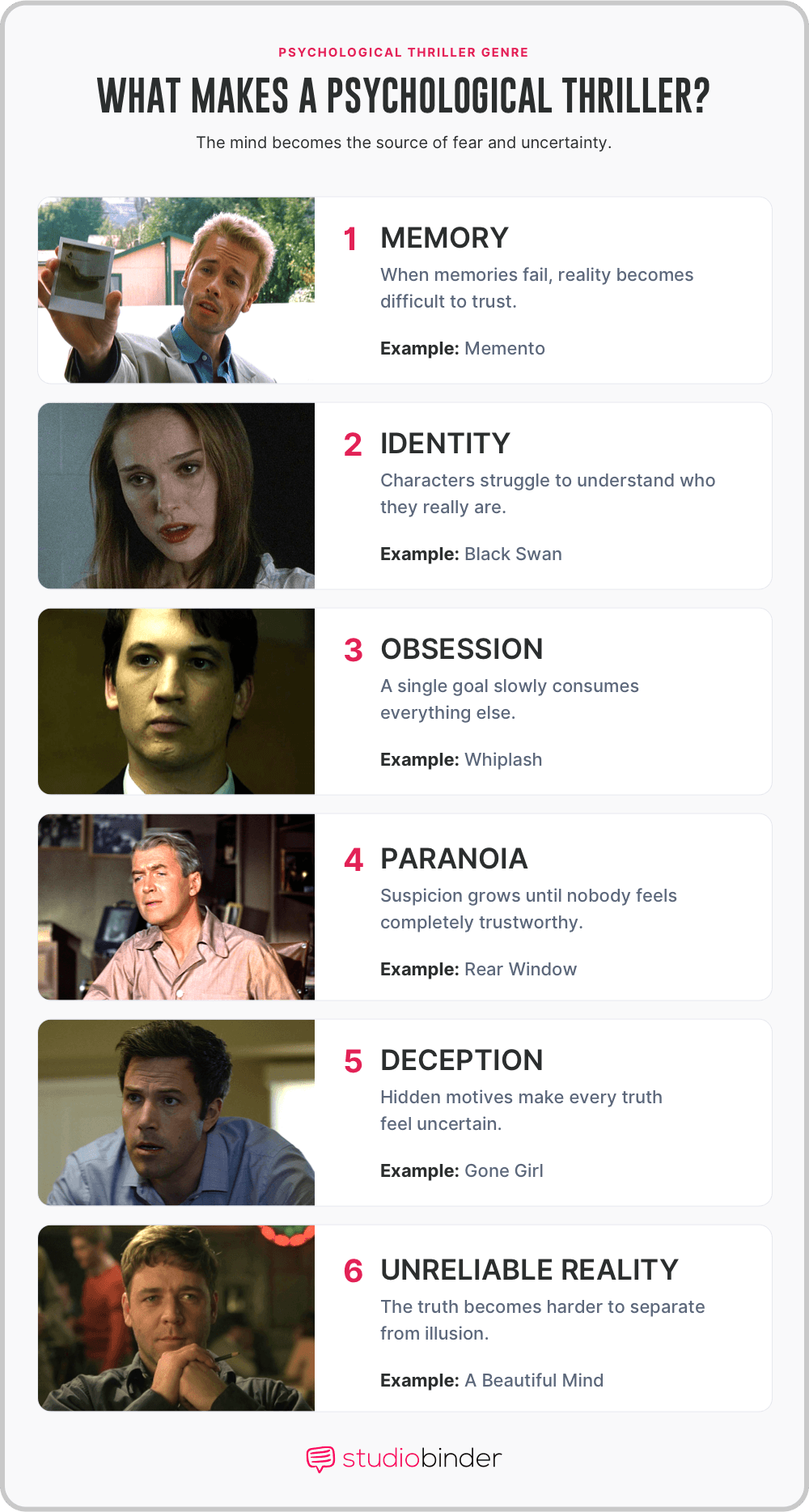
Psychological thrillers create tension by challenging perception, memory, and identity. Rather than relying on physical danger alone, they place characters in situations where reality becomes uncertain and every decision feels increasingly unstable.
Trusted by Over 1M Creatives
Screenwriting from draft to set
Write, format, and share your script. Ready for production when you are.

Frequently Asked Questions
Psychological Thriller FAQs
Psychological thrillers work differently from standard suspense films because they destabilize perception itself. The danger is often internal before it becomes physical.
The Silence of the Lambs is one of the most consistently cited answers. Rear Window remains hugely influential historically, while films like Gone Girl and Get Out helped redefine the genre for modern audiences.
Strong psychological thriller movies usually rely on unreliable perception, sustained dread, morally complex characters, and revelations that recontextualize earlier scenes.
Not exactly. Horror primarily aims to frighten. Psychological thrillers focus more on destabilizing perception and emotional certainty. Many films overlap both genres.
An unreliable narrator is a character whose account of events cannot be fully trusted. In the best psychological thrillers, this technique drives the entire structure. Films like Gone Girl, Memento, and A Beautiful Mind use unreliable narrators to force audiences to question everything they have seen. The device works because viewers naturally trust the perspective they are given, which makes the eventual revelation far more disorienting.
UP NEXT
What Is an Anthology Series?
Learn what an anthology series is, how anthology TV shows differ from traditional series, and explore some of the format's most popular examples.