Martin Scorsese’s Shutter Island features one of cinema's most debated endings: did Andrew Laeddis choose lobotomy over living with the truth? When it comes to the Shutter Island ending explained, there's more than meets the eye. Laeddis’ psychiatrists took a massive gamble in 1954, a time when two ideological fields of psychiatry were at war. On one side stood Dr. Cawley, a physician who believed that all patients, regardless of their actions, could be healed through listening, care, and a respect for their basic humanity. His ideological foes, represented by Dr. Naehring and the Warden, championed the authoritarian approach. They…
On paper, Ari Aster’s 2018 debut Hereditary is a gore-gone-wild take on what happens when you can’t outrun your genetics. For those who took a chance on this first time director’s idea of ‘hereditary’ horror, the story turned out to be a much greater, much more layered tale about motherhood and psychology than maybe bargained for.Slowly but surely, the story weaves together a twisted mosaic of events viewers might not have been able to quantify, with a final sequence just as loud, dark, and layered as that first shot of Peter’s bedroom. In this article, we’ll give you a complete…
Awoman stands in a laundromat trying to organize receipts for an IRS audit while her marriage quietly collapses around her. That is how Everything Everywhere All at Once begins. The setting could not be more ordinary. Taxes. Broken machines. Family disappointment. Yet within minutes, the film expands into parallel universes, martial arts, existential dread, and a cosmic bagel capable of swallowing reality itself.That contrast is the point.The film translates depression, immigrant anxiety, generational trauma, and nihilism into something visually chaotic but emotionally recognizable.The film looks like infinite possibility. Underneath, it is about a mother finally seeing her daughter clearly.But to…
Psychological thrillers do not just scare you. They destabilize you. The real danger is rarely the killer, monster, or conspiracy itself. It is the collapse of trust inside the protagonist’s mind. That is what separates the best psychological thrillers from standard suspense films. A traditional thriller asks whether the hero will survive. A psychological thriller asks whether the hero understands reality at all. Memory, paranoia, identity, guilt, obsession, and perception become weapons. The best psychological thriller movies stay with audiences because they force viewers into uncertainty alongside the characters. These 20 films represent some of the most influential, disturbing, and…
The Bildungsroman (BIL-dungs-roh-mahn), a German term translated as “novel of education,” centers on the narrative formation of a young protagonist’s journey from innocent childhood to becoming an experienced adult who has grown in every way: morally, intellectually, psychologically, spiritually, and emotionally. It’s not always an exciting journey, often mundane, and the ending isn’t guaranteed to be happy, clear, or satisfying. The Bildungsroman is life.Continue reading What Is a Bildungsroman? Definition, Meaning & Film Examples
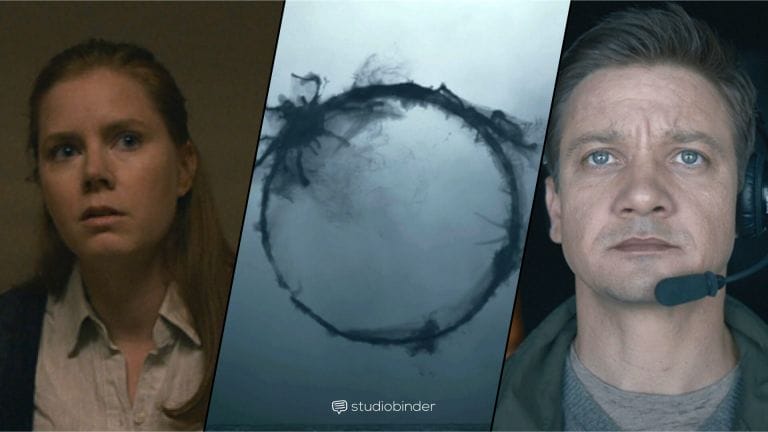
You just finished watching Arrival. You feel it in your gut. Something profound happened. Something about time. Something about memory and loss. But you’re not quite sure what. The mechanics of it all. Why Louise sees what she does. What the heptapods give to humanity, and what the ending means.That’s okay. Denis Villeneuve’s masterpiece is designed to haunt, not to hand you answers on a silver platter. It’s a puzzle box wrapped in a tearjerker, disguised as a first‑contact thriller.This is the definitive arrival movie explained. We’ll walk through the plot. We'll decode the heptapod language and break down the…
You can often tell when you’re watching an A24 film before the logo appears onscreen. Not because every film looks identical, but because many of them share the same visual instincts. Whether it’s the intimacy of Moonlight, the domestic dread of Hereditary, or the endless sunlit nightmare of Midsommar, the cinematography tends to lean into emotion. The images used rarely feel “lit” in the traditional Hollywood sense. Rooms glow from practical lamps. Faces are covered by shadow. Handheld movement is attached to breath and body rather than action choreography. Even when the visuals become surreal, they usually stay emotionally grounded.…
Based on Cormac McCarthy's novel, the 2007 Coen Brothers film No Country for Old Men is full of dynamic, unforgettable No Country for Old Men characters. Protagonist Llewelyn Moss (Josh Brolin) is one of the most compelling. Moss' actions begin the plot and much of the story is presented from his perspective. However, an unconventional plot twist changes everything. Spoilers for No Country for Old Men follow:Continue reading Who Is Llewelyn Moss in No Country for Old Men?
After two hours of non-stop tension, the Coen Brothers end their 2007 hit No Country for Old Men, in the most unexpected way possible. The hero is dead, the villain is free (with $2 million in cash), and the sheriff describes his dreams to his wife. Cut to black. That’s it.It’s no wonder why the film’s conclusion is one of the most hotly debated in all of cinema.In this No Country for Old Men Ending explained article, we’ll dive into:The film’s final scenes.The meaning behind the story’s themes.Why the Coens decide to twist the audience's expectations.Continue reading No Country for…