The most successful TV shows of recent years hail from an increasingly wide variety of genres and styles. But many of these otherwise disparate shows are made in the same distinctive format: many are “anthology series.” An anthology series tell groups of complete stories that are only loosely connected, if at all.
Anthology series definition
What is an anthology series?
The anthology series meaning is straightforward: anthology series are scripted television series that tell multiple distinct stories. These stories are told over the course of individual episodes or seasons. While often connected by shared characters, locations, and/or actors, the plots of each installment are standalone.
The most useful anthology series definition centers on one quality: the creative reset between each installment. This is what does anthology series mean at its core: each installment stands on its own. In many cases, this story structure also allows different creators to work on only select installments.
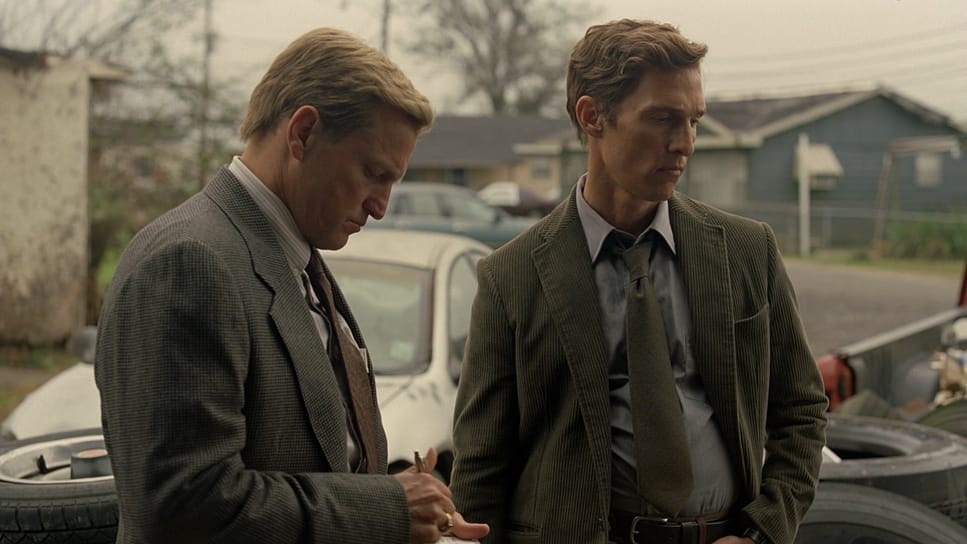
Actors Woody Harrelson and Matthew McConaughey • What Is an Anthology Series?
Anthology meaning
What makes a series an anthology?
There are three major qualities that set anthologies apart from other scripted series:
- Shared identity: Despite the standalone plots, entries in an anthology share other characteristics. Creators often work on multiple entries, with actors sometimes playing various separate roles. And the stories are typically part of the same larger genres, despite their other differences. Each season of True Detective has a separate cast, for example, but all seasons depict complex police investigations. Likewise, episodes of Black Mirror tell standalone stories. But all relate to dangers of technological advancement.
- Self-contained seasons: Each season, or episode for short-form anthologies, tells a standalone story. These stories do not require knowledge of previous or future installments to be understood.
- No continuity obligation: The plots of individual installments are usually unrelated. Therefore, viewers can watch entries in various orders. Most importantly, they can do so without becoming confused by chronological or continuity details.
Related Posts
How do anthologies work?
How does an anthology series work?
The nature of what is an anthology series gives it key characteristics popular with both artists and film studios. Take a look at the infographic below to give you a better sense of it:
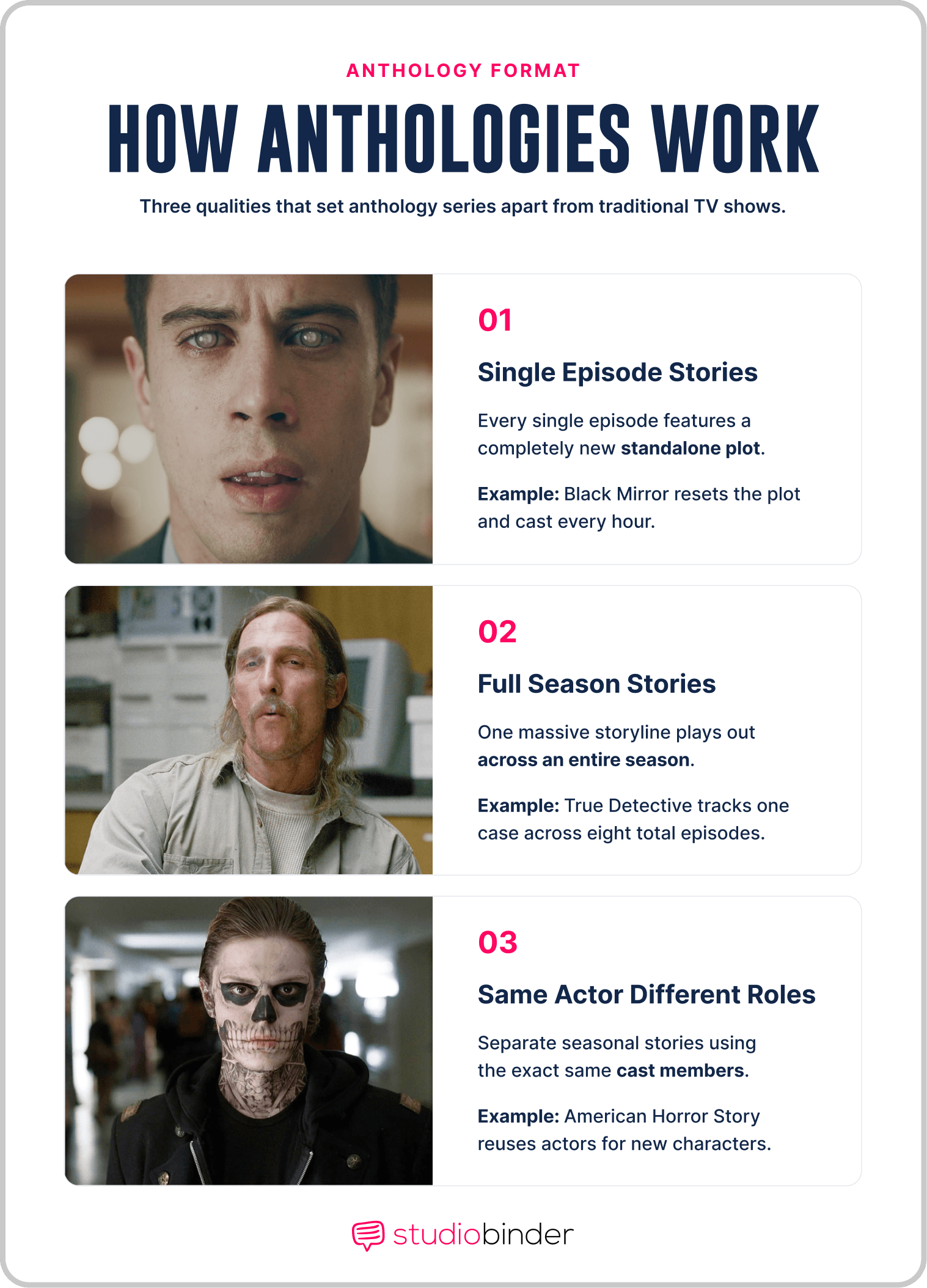
Core Formats of TV Anthology Shows • What Is an Anthology Series?
This is why so many anthology TV series pitches are produced and remain successful:
No franchise trap: The lack of long-term time commitments makes anthologies attractive to A-list talent. High-profile actors known for working in film are often hesitant to sign on to traditional, multi-season TV shows. However, many of them do appear in individual seasons or episodes of anthologies.
- Built-in audience: Anthologies’ minimal continuity caters to viewers who prefer shorter stories. But their shared titles also attract returning viewers who are familiar with the series’ larger themes and style.
- Creative freedom: Anthologies give writers and TV producers more creative freedom than usual for television. They can do almost whatever they want with individual installments. They are not burdened with the concerns about long-term plotting and worldbuilding that restrict other shows.
Short-form vs. Long-form anthology
'What is an anthology series' can be answered with two distinct sides of the coin. The two basic types of anthology series are short-form and long-form like the graphic below shows:
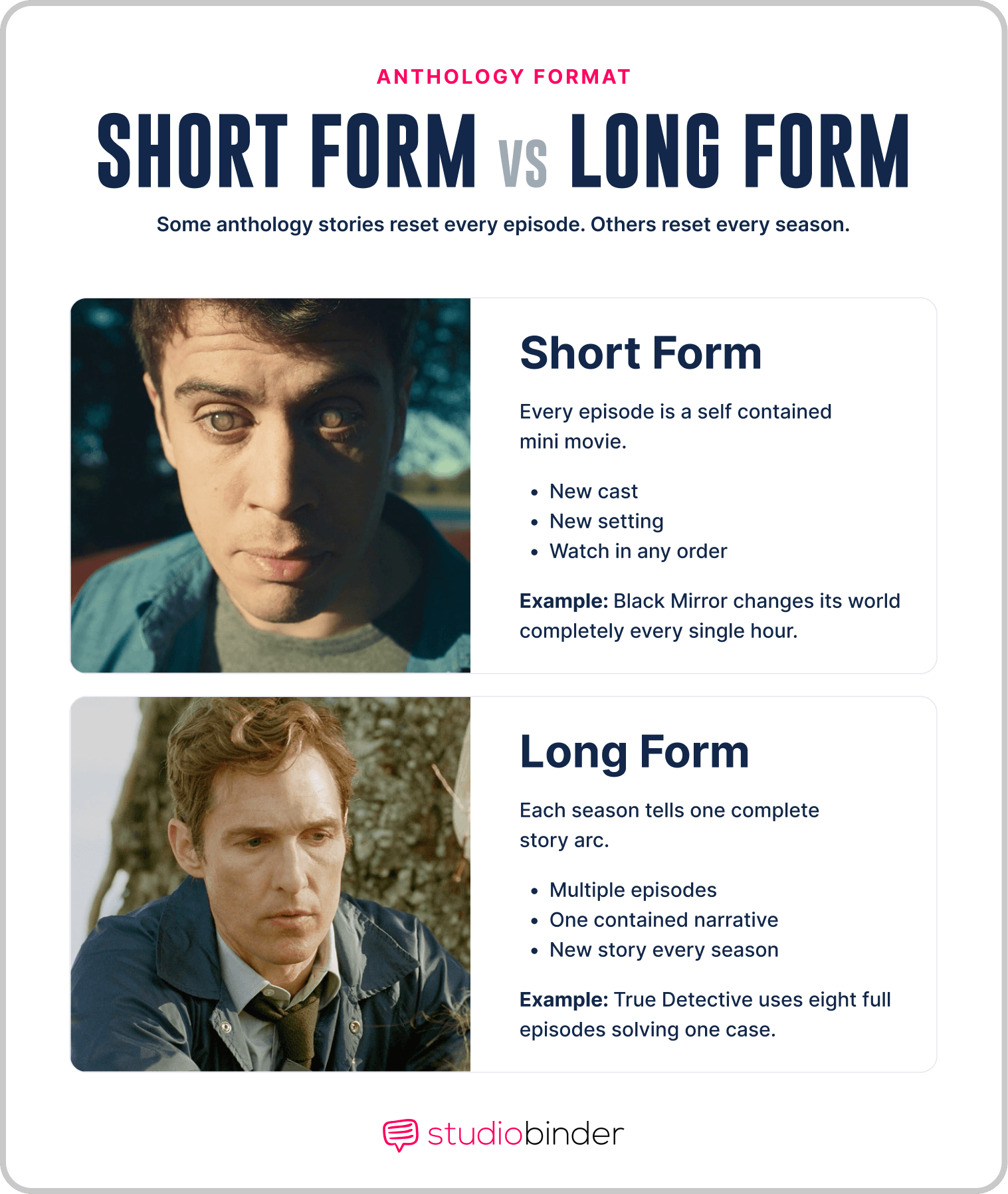
Short Form Versus Long Form Structure Comparison • What Is an Anthology Series?
Short-form (episode-level):
Short-form anthologies are built on standalone episodes — each one tells a distinct, complete story. Arguably the most famous examples of this type are The Twilight Zone and its modern equivalent, Black Mirror. In these series, the standalone episodes often feature dramatically different creative teams and casts.
There are two main exceptions to the episodic storytelling reset rule of this format. Multi-part episodes tell singular stories whose lengths cover more than one standard installment. These episodes need to be watched in chronological order to fully understand their stories.
Some anthologies also present “sequels” to particularly successful episodes. Like sequel films, these installments adhere to the continuity of a specific predecessor. Even The Twilight Zone, which is famous for having especially distinctive episodes, has one such pair. However, the follow-up was released during one of the series’ revivals, not its original run.
Long-form (season-level):
The long-form anthology format is currently more common. In these series, each self-contained season tells a complete story from beginning to end. Viewers do have to watch all episodes in a season, in order, to experience it fully. Examples of this type include Fargo, American Horror Story, and True Detective, among many others.
Individual seasons of these shows often revolve around different sets of characters and events. Law enforcement investigations and specific historical events are frequently used topics. Each season is designed to tell a full, individual story. But there are often narrative connections of varying significance between specific seasons.
Each season of The White Lotus takes place at a different location’s edition of the fictional titular hotel chain. However, actor Jennifer Coolidge played the same character in both of the first two seasons, and Jon Gries has done so in all three seasons. In addition to Gries, Natasha Rothwell also reprised her role from Season 1 in Season 3. This gives the show a greater degree of continuity than most anthologies. Other series, like American Horror Story, have actors play different characters in separate seasons.
Anthology vs. limited series
Anthology series vs. limited series vs. mini-series
Knowing what is an anthology series also means knowing how it differs from related formats. The terms "limited series" and "mini-series" are often used interchangeably with anthology series, but the three don't actually refer to the same type of show.
What is an anthology series: The anthology series meaning describes a series designed to tell multiple separate, standalone stories. Each new season of Fargo or new episode of Black Mirror establishes new casts and/or premises. If there are connections to previous plots, they're usually minor and not always noticeable.
What is a limited series: Limited series is the current term used to describe shows designed to tell only a single story over the course of a single season. Clear examples include many series which are based on specific real-life events like Say Nothing and Under the Banner of Heaven.
However, several recent series have created confusion about how the category is defined. Big Little Lies is a prominent example. Based on a novel of the same name, the dark comedy TV show premiered on HBO to critical and popular acclaim in 2017. The first season was openly described and marketed as a limited series that told a complete story. However, creators and cast members soon became open to the idea of expanding the narrative due to the show's initial success.
A second season was ultimately released in 2019. The decision was divisive. This was partially because the show had already won major awards across Limited Series Emmy Award categories. Season 2 received fewer Emmy nominations, all instead in Drama Series categories.
The White Lotus’ categorization was also changed. HBO also marketed that show’s first season as a limited series. The season won the Emmy for Outstanding Limited or Anthology Series, among others. The second and third seasons instead competed in Drama categories. This change in categorization was seemingly due to the recurring characters.
Mini-series: “Mini-series” is essentially a synonym for limited series — it's just the older of the two terms. It was used mainly in the early days of the format, referring to shows like Band of Brothers, which unambiguously ran for single seasons.Related Posts
What is an anthology series
What are the different types of anthology series
Understanding what is an anthology series in practice means exploring its major subgenres. The anthology format could likely be used to tell stories in any scripted television genre. But four specific subgenres or variants have arguably seen the most success so far:
Horror anthology
The horror anthology series has been a popular format since the successful 2011 debut of Ryan Murphy's American Horror Story. American Horror Story, a long-form anthology, distinguishes its seasons with individual subtitles. Each season focuses on specific topics (like asylums or witches) or niches within the larger horror genre. The series is known for casting a group of regular actors in different roles across seasons.
Mike Flanagan’s two-season series The Haunting also used subtitles and a recurring cast. However, the seasons were otherwise more distinct than those of American Horror Story. Both seasons were based on unrelated source material by different authors.

American Horror Story trailer • What Is an Anthology Series?
Crime anthology
Crime anthologies are one of the most common and clearly defined types. They typically follow different law enforcement investigations or mysteries in each installment. While some feature certain characters and actors recurring across seasons, this is not the norm. Several examples also set installments in distinctive settings.
The most famous examples of this variant, such as True Detective and Fargo, are long-form anthologies. Some episodic series have enjoyed recent success, but are harder to distinguish from procedurals.

True Detective trailer • What Is an Anthology Series?
Sci-Fi / Speculative anthology
Speculative anthologies dramatize fears about new technology, scientific discoveries, and other sociopolitical issues. These stories are usually pessimistic and dark in tone. Some series incorporate elements of horror filmmaking. The most famous examples, The Twilight Zone and Black Mirror, are short-form, episodic anthologies.
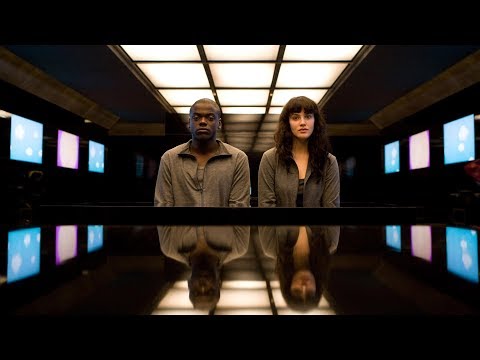
Black Mirror trailer • What Is an Anthology Series?
Prestige Drama anthology
The anthology format’s recent popularity has led to the development of a new variant. Prestige anthologies place less emphasis on specific genre elements like those of sci-fi or horror. This gives them reputations for being more "serious" or “dramatic” art. This in turn allows them to attract especially popular and acclaimed actors and creators. Many of the anthologies that are sometimes labeled limited series, like The White Lotus and Monster, are part of this subset.

The White Lotus trailer • What Is an Anthology Series?
Type | Format | Tone | Key Examples | Defining Quality |
|---|---|---|---|---|
Horror | Long-form | Dark, frightening | American Horror Story, The Haunting | Recurring cast explores different horror subniches each season |
Haunting | Long-form | Gritty, investigative | True Detective, Fargo | Law enforcement or mystery arc with a fresh cast per season |
Crime | Long-form | Gritty, investigative | True Detective, Fargo | Law enforcement or mystery arc with a fresh cast per season |
Sci-Fi / Speculative | Short-form | Pessimistic, dystopian | Black Mirror, The Twilight Zone | Standalone episodes built around technology and societal fears |
Prestige Drama | Long-form | Serious, literary | The White Lotus, Monster | A-list ensembles in standalone high-prestige narratives |
What is an anthology series
Why filmmakers love the anthology format
Once you understand what is an anthology series, its appeal to filmmakers becomes clear. Anthologies offer several specific advantages to filmmakers:
A-list talent access
While television is more respected than ever before, there are still some actors and filmmakers who are known for and prefer to work in film. True Detective Season 1 stars Woody Harrelson and Matthew McConaughey are prime examples. They agreed to appear in the season because it told a complete story and didn’t require them to make an open-ended, multi-year commitment.
Writer freedom
Traditional series are often influenced by a variety of outside factors, such as scheduling and renewals. Most serialized show writers aren’t able to even consider killing off their main protagonists until the final season, for example. Anthology writers are largely free of these restrictions. They are usually able to plot individual installments however they think is best for the story. Aspiring anthology writers face the same blank-page challenge every season — a new world, new characters, and a complete story arc from scratch. Having the right tools makes a difference.
Reinvention without reboot
Regular series have to respect the events of prior installments while maintaining their core appeals. Presenting new plots each season or episode allows anthologies to frequently reinvent themselves. This attracts new viewers and avoids repetition. But the core brand identity simultaneously retains its established audience.
Trusted by Over 1M Creatives
Screenwriting from draft to set
Write, format, and share your script. Ready for production when you are.

What is an anthology series
The best anthology series to watch
For new anthology viewers unsure where to start, here are 7 of the format’s essential series:
1. The Twilight Zone (1959): This groundbreaking classic used science fiction and horror tropes to explore societal problems.
2. True Detective (2014): This iconic series sees star-studded casts investigate horrific crimes in remote American regions.
3. Black Mirror (2011): This Netflix anthology series presents episodic depictions of technology's destructive potential.
4. Fargo (2014): Based on the iconic Coen Brothers film, this black comedy presents surreal crime stories set in the American Midwest.
5. American Horror Story (2011): A rotating ensemble of actors explore various horror subgenres in this landmark horror anthology series from Ryan Murphy.
6. The White Lotus (2021): This dark comedy hit sends A-list ensembles to exotic locations to satirize wealthy economic classes.
7. The Haunting (2018): Creator Mike Flanagan and a talented cast of regular actors adapt horror stories by two separate authors.
Frequently Asked Questions
Questions about anthology series'
An anthology series resets its story with each new season or episode. Regular series maintain continuing characters, plots, and continuity throughout their run. Anthologies are defined by this creative independence between installments — each tells its own complete story. Some recurring elements, like actors or themes, may appear across entries, but the plots remain standalone.
It depends on the format. Short-form anthologies like Black Mirror can be watched in almost any order, since each episode tells a separate story. Long-form anthologies like Fargo or True Detective require watching individual seasons in sequence, but each season can be experienced independently of the others.
Movie stars often avoid traditional TV because of multi-year commitments. Anthology series sidestep this. By limiting the commitment to a single season or episode, what is an anthology series becomes appealing to talent who would otherwise pass on television entirely. True Detective Season 1 drew Woody Harrelson and Matthew McConaughey precisely this way.
The anthology format has roots in radio drama, but its television history begins in the early 1950s. The Twilight Zone (1959) established the template for episodic anthologies. The modern long-form anthology series took shape in the 2010s, with American Horror Story (2011) and True Detective (2014) defining what the format could achieve.
Yes, though it varies by series. Many anthologies use the same group of actors across seasons, with each playing different characters. American Horror Story and The Haunting both do this. What is an anthology series in these cases still applies — the plots reset even if the faces are familiar.
Not exactly. The Emmy Award categories for anthology series fall under the Limited or Anthology Series umbrella. Shows are classified based on their season structure rather than their genre. Horror anthology series like American Horror Story compete alongside crime and prestige anthologies in the same Emmy category.
UP NEXT
Big movie stars in TV series
Now that you understand what is an anthology series and how the format works, it's time to mix things up and look at the biggest stars that make up our favorite tv series, anthology or otherwise. Click the link below to explore A-list Hollywood movie stars who made the daring leap into television.
Start Your AV Script
Start planning your next video with a structured AV script. Whether for commercials, corporate videos, or social media, our templates provide the perfect framework.