The most successful TV shows of recent years hail from an increasingly wide variety of genres and styles. But many of these otherwise disparate shows are made in the same distinctive format: many are “anthology series.” An anthology series tell groups of complete stories that are only loosely connected, if at all. Continue reading What Is an Anthology Series? Meaning and 7 Best Shows
Most Oscar-winning films start as something else. A novel. A memoir. A short story. Adaptation is not the exception in film history. It is the norm. That makes how to adapt a book into a screenplay one of the most valuable skills in screenwriting. But it is also one of the most misunderstood. A novel and a screenplay are not the same thing at different lengths. They are different forms. A novel lives inside a character's thoughts. A screenplay lives in action, image, and behavior. What reads well on the page often fails on screen. This is why many book…
The Sopranos season 1 premiered on HBO on January 10, 1999. At the time, the top television shows were ER, Friends, and Frasier. Home television sets were filled with quick plot turns on the procedural table, coffee shop couch chats, and high-rise Seattle sitcoms. So when David Chase came onto the scene with a story about a mob boss who is just as likely to kill someone as he is to cry in a therapy session, audiences and critics did not see it coming.It marked a new era of television, not because it followed what came before, but because The…
Narrative elements are the building blocks of every story — whether you're writing a screenplay, directing a documentary, or producing a brand video. Every story that resonates does so because its narrative elements work together: a protagonist with a goal, a conflict that tests them, a theme that gives the whole thing meaning.This guide breaks down each of the seven core narrative elements, shows how they function in film and video, and gives you practical tools for strengthening your own work.Continue reading 7 Narrative Elements: Definition, Types and Examples
Watching a film is easy. Understanding how it works is not. Most viewers follow the story. They track characters. They react to emotion. But film analysis asks a different question. It asks how those reactions are created in the first place. Every film is built from choices. Where the camera sits. How a scene is lit. When a cut happens. What sound is heard, and what is left out. These choices shape meaning. They guide attention. They control how the audience feels, often without the audience noticing. This is where film analysis becomes useful. It turns instinct into method. Instead…
Many readers first encounter Cormac McCarthy through film. Often it’s No Country for Old Men or The Road. The films are precise. They are controlled. But they only show part of what McCarthy does.No Country for Old Men. The novels ask something different. They do not guide you through a clear argument. They do not explain what events mean. Instead, they present action, dialogue, and imagery. Meaning has to be built by the reader. This is what separates McCarthy from most contemporary writers. He does not prioritise clarity. He prioritises experience. The reader is not given a message. The reader…
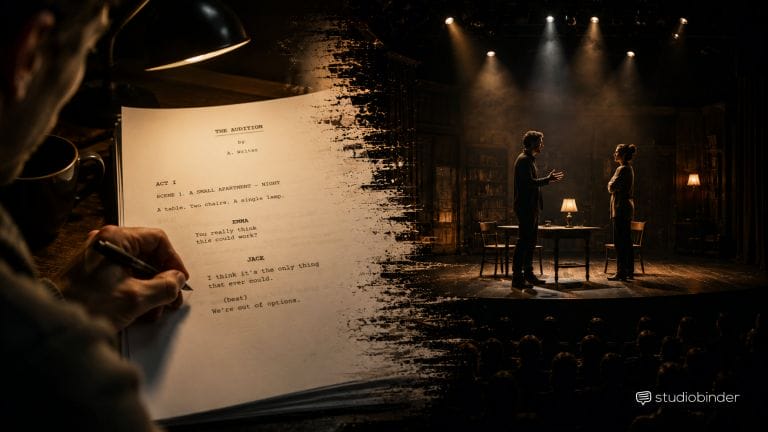
Astage play is one of the oldest forms of storytelling. It is also one of the most demanding. There are no close-ups. No editing tricks. No camera movement to guide the audience. Everything happens live in front of the crowd. That changes how a writer builds character, conflict, and dialogue. Learning how to write a stage play means learning how to write for actors, space, rhythm, and silence. It also means understanding stage play script format, dramatic structure, and the mechanics of live performance. In this guide, we will break down how to write a play from the ground up.…