The best liminal space movies create a unique feeling of being caught between places that feel familiar yet strangely unsettling. Through empty hallways, deserted malls, endless corridors, and dreamlike landscapes, these films use liminal spaces to evoke a sense of nostalgia, anxiety, curiosity, and wonder within the viewer.
From psychological horror to surreal drama, the movies on this list showcase some of cinema’s most memorable examples of liminality.
Liminal space movies
First, let's define what liminal spaces are
Before diving deep into liminal space movies and their examples throughout media, let's first establsih a definition of what liminal spaces actually are.
Liminal Space definition
What is a liminal space?
A liminal space is a place you pass through, not a place you stay. Hallways, airport terminals, empty parking garages, hotel corridors at 3 a.m. They exist between one thing and another, and that in-between quality is exactly what makes them feel slightly off.
The idea traces back to anthropologist Arnold van Gennep, who used the word "liminal" to describe the middle phase of a ritual, the moment after you have left one state but before you have arrived at the next. Architects and psychologists later borrowed the term for physical spaces that carry that same unsettled energy.
Examples of liminal spaces in film & media:
- The Shining — empty hotel halls
- Lost in Translation — quiet hotel rooms
- Eraserhead — industrial interiors
- Backrooms — endless office corridors
- Drive — empty parking garages
- The Truman Show — staged transition spaces

Watch: The Psychology of Liminal Spaces


Subscribe for more filmmaking videos like this.
Liminal space movies
The visual language of liminal space in cinema
Liminal space movies do not rely on haunted houses or a monsters. They rely on craft. A few deliberate choices in lighting, camera framing, or sound can turn a grocery store parking lot or a hotel hallway into something deeply unsettling.
Here is how directors and cinematographers go about building this feeling that you experience, but can't quite put your finger on.
Lighting and color grading that signals 'wrongness'
Fluorescent light is the go-to tool. It's flat, it hums, and it makes skin look slightly wrong. Stanley Kubrick used it throughout the Overlook Hotel corridors in The Shining, mixing it with warm practicals to keep the eye slightly off balance.
Nothing is fully dark, nothing is fully warm. That in-between quality is exactly the point.
Under the Skin (2013) has a unique approach, using near-black interiors against the ordinary grey daylight of Glasgow streets. This contrast makes both spaces feel wrong in different ways. When filmmakers color grade a liminal space, just using desaturation is not enough. The goal is to make the palette feel slightly off from how your memory sees it, not simply dim.
Framing and negative space
Wide angle lenses and centered, symmetrical framing show up constantly in liminal space movies. This is because they flatten depth and make rooms feel like they go on endlessly.
Kubrick's one-point perspective shots down the Overlook hallways are the clearest example. The geometry is too perfect. Eyes Wide Shut (1999) uses the same approach inside the Somerton mansion, where every doorway frames another doorway behind it.
Negative space matters just as much. Leaving a large portion of the frame empty, especially above or beside a character, makes the location feel larger than it should be. It also shows the character at a scale that makes them feel exposed. Suddenly, the location stops being a background and starts being a presence.
Sound design and silence as a tool
Silence in a space that should have ambient noise is one of the fastest ways to create unease. A shopping mall at night should have HVAC hum, distant echoes, the sound of a floor buffer somewhere.
Remove all of that and the silence becomes a character. Under the Skin uses Mica Levi's score to replace natural room tone with something that sounds almost biological, so the locations feel like interiors of something alive rather than built spaces.
For filmmakers working on liminal space movies and projects, the decision to pull room tone or replace it with a low-frequency drone is often more powerful than any visual effect. Let the sound mix do work the camera can't capture. The audience will sense the strange result.
Let's watch a scene from Kane Parsons' Backrooms movie to ease us into the liminal vibe:

Backrooms scene · Liminal space movies
Liminal space movies
13 best liminal space movies of all time
Some films use liminal spaces as a sort of backdrop. The best ones use them as the epicenter of the whole point. Here are the films that do it best in our opinion, broken down by the kind of unease they create within us.
1. The Shining (1980)
This is the obvious starting point, and for good reason. Who could forget the image of the Overlook Hotel as one long liminal space. It consists of empty corridors that go nowhere, a hedge maze that swallows people, a ballroom frozen between a party that ended and one that never started.

The Shining trailer · Liminal space movies
Kubrick shoots it all with wide lenses and symmetrical framing that make every room feel like a waiting room. You are never sure what you are waiting for, and that sense of feeling unsure of intent crawls under your skin.
2. Lost Highway (1997)
This film takes the liminal idea and makes it literal. The night highway in the opening scene has no discernible destination or origin.

The Lost Highway trailer · Liminal space movies
David Lynch shoots it all from the front of a car, headlights eating the dark, and the road never changes. That image sets the tone for a film where identity itself becomes a corridor you cannot find your way out of.
3. It Follows (2014)
It Follows fills Detroit's emptied neighborhoods with a slow dread that the film's monster almost seems secondary to.
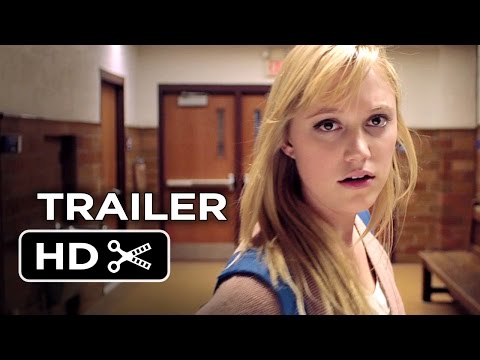
It Follows trailer · Liminal space movies
The characters move through houses where families used to live, pools no one swims in, and streets between places. The geography is the horror as much as anything chasing them. The time period seems to take place in the past, present and future simultaneously. There's no sense of placement or security, making its horror deeply unsettling.
4. The Blair Witch Project (1999)
This classic horror film turns the woods into a space that feels like it should be easy to find your way out of but never is. The trio keep returning to the same creek, the same log arrangements, as if the forest is a hallway that loops absurdly and endlessly.

The Blair Witch Project trailer · Liminal space movies
The liminal quality is in that repetition, the sense of being between entry and exit with no way to reach either one of those vital points. That's when insanity ensues.
5. Backrooms (2026)
Backrooms is based on the viral phenomenon that hit the internet like a storm in 2019. It transforms endless yellow hallways and empty office-like environments into a deeply unsettling and inescapable experience.

Backrooms trailer · Liminal space movies
By emphasizing isolation, repetition, and uncanny familiarity, Backrooms shows movie audiences why liminal spaces have become such a powerful tool for modern horror and visual storytelling.
6. Annihilation (2018)
Annihilation builds an entire film around a zone that sits between the known world and something that has no name. The Shimmer is a border region in the most literal sense, and the lighthouse at its center is neither a destination nor an escape.

Annihilation trailer · Liminal space movies
Alex Garland shoots the environments with a softness that makes flowers and flesh feel interchangeable, which is exactly the point.
7. Stalker (1979)
Stalker by Andrei Tarkovsky is probably the purest liminal space film ever made. The Zone is defined entirely by what it sits between: the gray industrial world outside and a Room at its center that supposedly grants wishes.

Stalker trailer · Liminal space movies
The characters spend most of the film in tunnels, flooded chambers, and overgrown lots that exist only as passage. Tarkovsky holds on these spaces in long takes until the emptiness starts to feel inhabited.
8. Coherence (2013)
Coherence had a budget of almost nothing and still managed to achieve so much with so little. A dinner party during a comet passing becomes a film about parallel versions of the same house.

Coherence trailer · Liminal space movies
The characters move between identical living rooms and kitchens, and the small differences between them (a new variation of a photo on the wall, a different name on a notepad) generate more dread than most high-budget horror. The familiar space made slightly wrong is exactly what liminal means, and this handles it exceptionally well among the catalogue of liminal space movies.
9. Vanilla Sky (2001)
Vanilla Sky uses New York City as a liminal space by emptying it. The early sequence of Tom Cruise running through a deserted Times Square is one of the most effective uses of a real city to create displacement.

Vanilla Sky trailer · Liminal space movies
A place everyone in the audience knows well has now been stripped of everyone who makes it feel real. As a result, it essentially stops being a place at all. It becomes a space between memory and something else. How does that not give you goosebumps?
10. Synecdoche, New York (2008)
Synecdoche, New York builds a warehouse set that is a replica of New York inside New York, and then builds a replica of the warehouse inside the warehouse (hopefully we haven't lost you yet).
Synecdoche, New York trailer · Liminal space movies
The film itself is a sort of liminal space by design. Its characters live in copies of places rather than places themselves, always between the life they are rehearsing and the life they are failing to live. It is exhausting in the best way, and it feels weirdly true to real life despite its striking surrealism.
11. Lost in Translation (2003)
Lost in Translation uses the Park Hyatt Tokyo as a holding space. Bob and Charlotte are both between versions of themselves, and Sofia Coppola shoots the hotel's upper floors, empty bars, and pre-dawn corridors as something quietly beautiful instead of frightening.

Lost in Translation trailer · Liminal space movies
The liminal feeling here is not dread like a lot of the liminal space movies on this list. Rather, it's the loneliness of being suspended between who you were and who you might become.
12. 2001: A Space Odyssey (1968)
2001: A Space Odyssey gives you the Star Gate sequence and the white room at the end, and neither one has any clear function, except transition.
![2001: A Space Odyssey - Trailer [1968] HD](https://i.ytimg.com/vi/Z2UWOeBcsJI/hqdefault.jpg)
2001: A Space Odyssey trailer · Liminal space movies
The room Bowman ages through is a space outside of time, between human life and whatever the Monolith is pulling him toward. Kubrick appears twice on this list because no one else has used threshold spaces as consistently or as well.
13. Mulholland Drive (2001)
Mulholland Drive turns Los Angeles into a city of corridors. Diner booths, parking garages, and a theater called Silencio. It's the back alley behind a restaurant that hides something that should not exist.
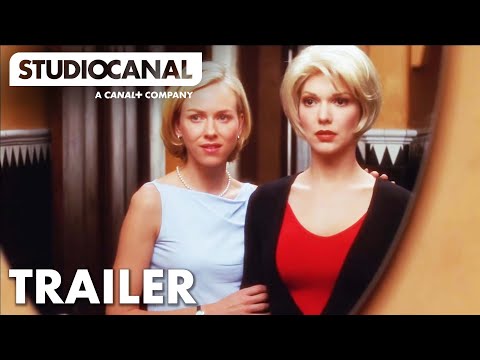
Mulholland Drive trailer · Liminal space movies
David Lynch treats every location as a space between one state of mind and another. The more you try to map the film, the more corridor-like it becomes. Few liminal space movies capture the dream-like quality Lynch captured here.
Related Posts
Liminal space movies
How directors choose liminal locations for their films
Liminal space movies only work if the audience feels the location authentically in their gut. That liminal feeling from observing such a space is impossible to fake, which is why most directors go out searching for real locations instead of building them from scratch for their film.
Real locations carry something a set cannot
A decommissioned hospital has scuffed floors, stained ceiling tiles, and hallways that go nowhere obvious. A built setting has none of that history baked in. Cinematographers will tell you the light behaves differently too, bouncing off surfaces that were never designed for a camera.
Stanley Kubrick spent years on location research before a single frame was shot. For The Shining, he studied dozens of mountain resorts before the Overlook Hotel took shape. The off-season emptiness of those places fed directly into how the finished film feels.
Sofia Coppola took a similar approach with her film, Lost in Translation. she shot it almost entirely inside the Park Hyatt in Tokyo. The real corridors, the real elevator banks, the real low hum of an expensive hotel at 3 a.m. It all gave Bill Murray and Scarlett Johansson nowhere to hide from the isolation the story needed. The result are performances that feel authentic to the setting.
Where directors actually look
Empty airports, parking garages, shopping malls before opening hours, and closed theme parks show up again and again in liminal space movies and videos because they are built for crowds. Something just feels wrong without them.
Location scouts target places in transition A mall losing its anchor stores for example. Or a hotel between ownership transition. An emptier than average school during summer. That in-between status is exactly the point. The architecture was designed for a purpose, and now that purpose is paused or gone. And that creates a feeling in our mind that almost can't be explained.
Why this aesthetic works in favor of low-budget filmmakers
An empty space is often cheaper to rent than a dressed set, and it needs less art direction too. If you can get access to an off-season motel, a closed office floor, or a parking structure at midnight, the atmosphere is already there, you just need to capture.
It's less about building a mood and more about finding one. Trust your own gut feelings while location scouting. Many first-time directors have used this to their advantage, letting the location do the real work while they focus on performance and camera framing.
The true key to it all is getting the details right: fluorescent lights, long corridors, and that specific quality of silence all need to read as clear as day on camera. So be sure to get out there and scout with your director of photography, rather than just looking at a simple phone snapshot as reference.
Liminal space movies
The Backrooms and internet liminal culture's influence on film
The internet did not invent the feeling that liminal space movies have been replicating, but it did give it a name. Once the original Backrooms image spread across Reddit and TikTok in 2019, filmmakers suddenly had a shared visual shorthand to work with.
The Backrooms meme started with a single grainy photo of an empty, yellow-carpeted office. That simple image spread because it captured something people already recognized from movies like The Shining and Lost Highway: the dread of a space that exists just slightly outside normal life.
Short films and found-footage horror on YouTube ran with that visual language fast. Kane Parsons built an entire fan-made Backrooms film series that racked up tens of millions of views. It works because it borrows directly from the pacing and color grammar of indie horror cinema.
That influence moves in both directions. A24 films like Hereditary and Midsommar use long, still shots of domestic and rural spaces to produce the same unease. The rooms feel too big, too quiet, too ordinary. Directors working in that orbit, including music video directors and short film makers, have picked up on the connection.
You can see it in the treatment of hallways, parking garages, and fluorescent-lit corridors being used across low-budget horror right now. The aesthetic is cheap to shoot and emotionally loaded, which makes it practical for small productions.
For filmmakers, the useful takeaway is simple but enlightening. Liminal space movies work because of what they leave out, not what they put in. Empty space, flat light, and ambient sound do the heavy lifting.The internet just reminded a new generation of directors that audiences already understand the language, they just have to show it to them.
Now let's watch Kane Parsons' first Backrooms video to see how the snowball started:

The Backrooms (Found Footage) · Liminal space movies
Liminal space movies
How to use liminal spaces in your own film
Watching liminal space movies is one thing. Pulling off that feeling in your own work takes a few deliberate choices across location, camerawork, and editing. None of this requires a big budget. But it does require patience and intention.
Finding and scouting liminal locations
The best liminal locations are already out there. Airport terminals between flights, parking garages on Sunday mornings, school hallways in July, highway rest stops at 2 a.m.
The key is timing. Show up when the space is empty or nearly empty. A McDonald's at 4 a.m. reads completely differently than the same exact location at noon. Shoot in off-hours and you get the eerie vacancy for free. Scout during the day, then return at the right time. Be sure to ask permission early so you are not scrambling on the day.
Camera and lens choices that amplify the effect
A wider lens (somewhere around 18mm to 24mm on a full-frame body) stretches the depth of a corridor or waiting room and makes the space feel bigger and slightly off. A longer lens (85mm or beyond) flattens the space and isolates a figure inside it, cutting them off from any sense of escape.
Both approaches work. The choice depends on whether you want the space to swallow your subject or press in on them. And this will all come down to your story and the best way you see to capture it. Mount the camera on a tripod or use a slow, almost imperceptible dolly shot.
Any shaking you typically get from a handheld camera breaks the spell. Meanwhile, locked-off frames and unhurried moves tell the audience to sit inside the discomfort.
Editing rhythm and pacing
The best liminal editing tips: cut slower than you think you need to. Hold the empty hallway just a beat past comfort. That extra second is where the feeling lives.
On the sound side, resist the urge to score everything. Ambient sound, a humming fluorescent light, distant HVAC, a faraway PA system, does more work than most music tracks. If you do use music, sparse and tonal tends to fit better than anything with a strong rhythm.
Think about what Hereditary does with near-silence in its wide domestic shots, or how Lost in Translation lets Tokyo hum underneath scenes without pushing an emotion. The edit should feel like the space has its own slow pulse that's lulling the audience in and immersing them.
Liminal space movies
Why liminal space cinema resonates so deeply
Something shifted in how audiences respond to empty hallways and fluorescent-lit waiting rooms. Liminal space movies were always around, but they hit differently now, and the reasons are not hard to find if you look at what the last several years did to everyday life.
The pandemic emptied out the physical world in a way most living people had never seen. Airports, schools, shopping malls, office lobbies — places that only made sense when filled with people suddenly became vacant for months. Millions of viewers lived inside that peculiar feeling.
When a film like Lost in Translation holds on a hotel corridor at 3 a.m., or The Shining rolls its camera down an endless carpeted hallway, there is now a muscle memory attached to that image. Audiences have felt it in their bodies. Their recognition makes the uncanny hit harder than it used to.
Director David Lowery has spoken about how in-between spaces carry grief more honestly than any direct dramatic scene. Critic Angelica Jade Bastién has written about how certain films use architecture the way a novelist uses silence, allowing the empty room say what the characters simply cannot.
That idea is at the heart of why this aesthetic keeps pulling filmmakers back. Digital life adds another layer. When so much of daily experience happens on a screen, the physical world can start to feel staged, slightly off, like a place you are passing through rather than living in.
Liminal space cinema is able to name that feeling out loud. It also allows audiences to share and recognize that feeling together, which can in turn be therapeutic.
None of this is a new invention. Franz Kafka wrote it. Edward Hopper painted it. Antonioni built whole films around it decades before anyone had a word for the aesthetic. What has now changed is the cultural appetite for it.
Right now that hunger is real, and the best liminal space movies feed it, not by chasing a trend, but by returning to something ancient in storytelling: the idea that the spaces between things are where the most riveting stuff lives.
Related Posts
Frequently Asked Questions
Liminal spaces FAQs
Liminal spaces are transitional or in-between environments—such as empty hallways, parking garages, schools at night, or abandoned malls—that feel familiar but strangely unsettling due to the absence of people and activity.
Backrooms is a liminal horror concept and film inspired by a viral internet creepypasta. It depicts an endless maze of yellow-tinted office-like rooms that exist outside normal reality, creating a sense of isolation and psychological dread.
Liminal spaces feel unsettling because they combine familiarity with absence. The lack of human presence, repetition of structures, and “in-between” quality of these environments triggers discomfort, nostalgia, and unease.
No. The Backrooms are fictional, but they are inspired by real-world liminal environments like empty offices, hotels, and public buildings that feel disorienting when stripped of people and purpose.
Backrooms is primarily categorized as analog horror and liminal horror, blending found-footage aesthetics, surrealism, and psychological horror to create a disorienting, atmosphere-driven experience.
UP NEXT
Wrapping up
Liminal spaces in film reveal how cinema transforms the familiar into something uncanny, using emptiness, repetition, and transitional environments to evoke a unique psychological unease.
From classic surrealist influences to modern horror like The Backrooms, these “in-between” worlds continue to shape some of the most striking visual storytelling in cinema. Get ready for a lot more liminal space movies on the horizon.
To explore more filmmaking techniques behind atmosphere and visual storytelling, take a look at StudioBinder’s guide to cinematic mise en scène and mood next.

Share your vision with elegant shot lists and storyboards.
Create robust and customizable shot lists. Upload images to make storyboards and slideshows.